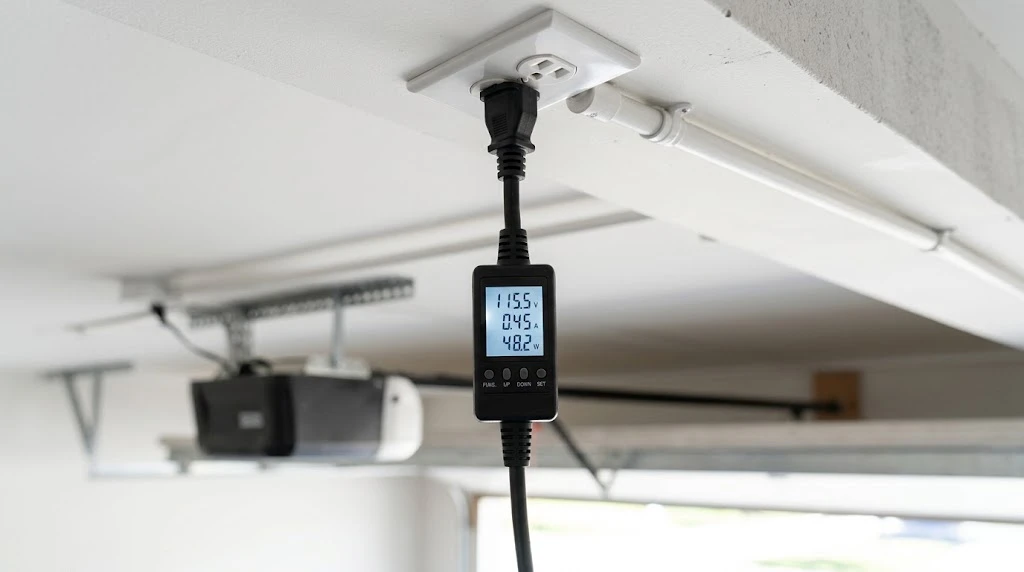
Your garage door opener runs every single day, but it’s probably not costing you what you think. Most homeowners guess high — some worry it’s like running a space heater. The real number is small enough that it barely shows up on your bill.
A typical garage door opener uses between 0.5 and 1.5 kilowatt-hours (kWh) per month, which usually costs less than $0.25 a month to operate. Even with a high-powered ⅔ HP or 1 HP motor, the door only runs for a few seconds at a time, so the actual electricity draw stays tiny.
The bigger factor isn’t the motor — it’s the standby power your opener pulls 24/7 just sitting there, plus any battery backup or smart features like MyQ that stay connected to WiFi. Let’s break down exactly where that electricity goes. In our experience, the people most surprised by this math are the ones who assumed a bigger motor meant a bigger bill.
Short Answer
A garage door opener typically uses 0.5 to 1.5 kWh per month, costing $0.10 to $0.25 on a typical electric bill. Most of that comes from standby power, not the motor running the door. A ½ HP chain drive opener pulls about 500-600 watts only while moving, for roughly 10-15 seconds per cycle. WiFi-connected openers with battery backup use slightly more due to constant standby draw.
How Much Power Does a Garage Door Opener Actually Use?
Garage door opener motors are rated in horsepower, not watts, which confuses a lot of homeowners. Here’s the real wattage draw by motor size, based on typical LiftMaster, Chamberlain, and Genie models.
| Motor Size | Running Watts | Watts Per Cycle (10 sec) | Typical Use Case |
|---|---|---|---|
| ½ HP (chain/belt) | 350-450W | ~0.001 kWh | Standard single-car door |
| ⅔ HP (belt/screw) | 500-600W | ~0.0015 kWh | Double-car or heavier doors |
| 1 HP (DC motor) | 550-700W | ~0.0018 kWh | Insulated or oversized doors |
Here’s the part that surprises people: even 4-6 cycles a day, that motor draw adds up to less than 1 cent a month. A door opening and closing twice a day for a month uses roughly the same electricity as running a microwave for two minutes total.
DC motor openers, common in newer LiftMaster and Chamberlain models with battery backup, are actually more efficient during operation. They ramp up and down smoothly instead of pulling a hard start like older AC motors, which reduces the current spike each cycle.
The Real Cost: Standby Power, Not Motor Power
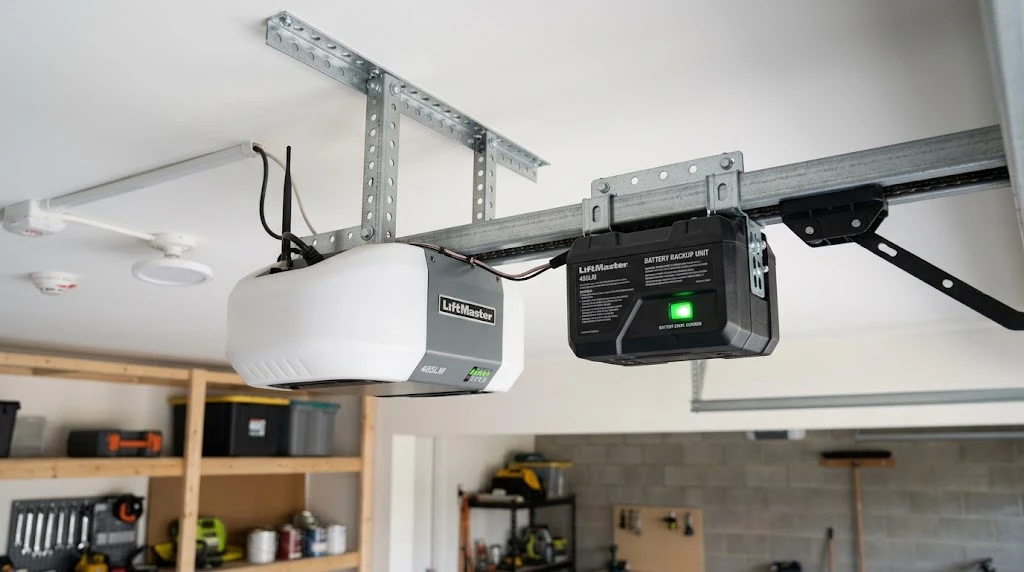
Your garage door opener isn’t off when it’s not moving. The logic board, WiFi radio, keypad receiver, and any connected lighting all draw a small continuous current. This standby power is what actually shows up on your electric bill.
| Component | Standby Draw | Monthly Cost (avg $0.15/kWh) |
|---|---|---|
| Basic opener (no WiFi) | 3-5 watts | $0.11-$0.18 |
| WiFi-enabled opener (MyQ, etc.) | 5-8 watts | $0.18-$0.29 |
| Opener with battery backup charging | +2-4 watts | +$0.07-$0.14 |
| Built-in LED light (left on) | 10-15 watts | $0.36-$0.54 |
Notice the light bulb line. If your opener’s light stays on longer than the standard 2.5-4.5 minute auto-off timer — because the sensor’s stuck or someone disabled the timer — that’s where real cost creeps in, not the motor.
Battery backup systems, standard on many LiftMaster models since 2018, trickle-charge constantly to stay ready for outages. That’s a small but real draw you can’t avoid if you want backup power during a storm.
If you’re off the grid or want to cut this standby draw entirely, it’s worth reading whether a solar powered garage door opener makes sense for your setup.
Does a Bigger Motor Mean a Bigger Electric Bill?
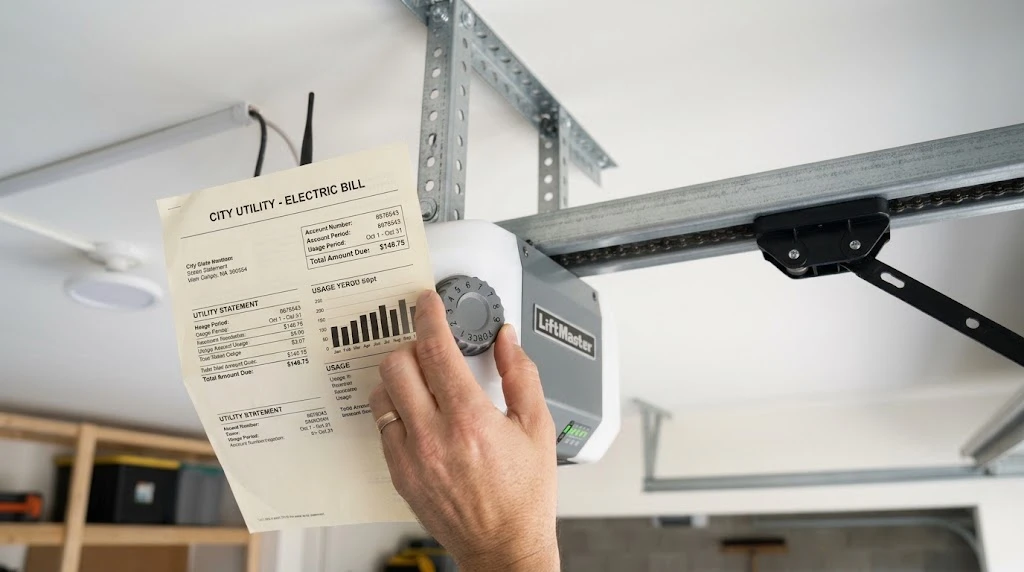
Not really, and this trips up a lot of homeowners shopping for a new opener. A 1 HP motor pulls more watts than a ½ HP motor, but only while it’s running — and that’s still just a few seconds per cycle.
The difference between a ½ HP and 1 HP opener over a full year is typically under $1 in electricity, assuming average use of 4-6 cycles per day. You should size your motor for your door’s weight and size, not to save on power.
What actually matters for sizing: an 8-foot single door usually needs ½ HP, a 16-foot double door needs ⅔ HP minimum, and heavily insulated or wood-composite doors often need 1 HP DC motors to avoid strain. Undersizing the motor causes more wear and eventual failure — that repair costs far more than any electricity you’d save. If you’re unsure what your door needs, see our breakdown on whether ½ HP is enough for your garage door opener.
How to Estimate Your Own Opener’s Cost
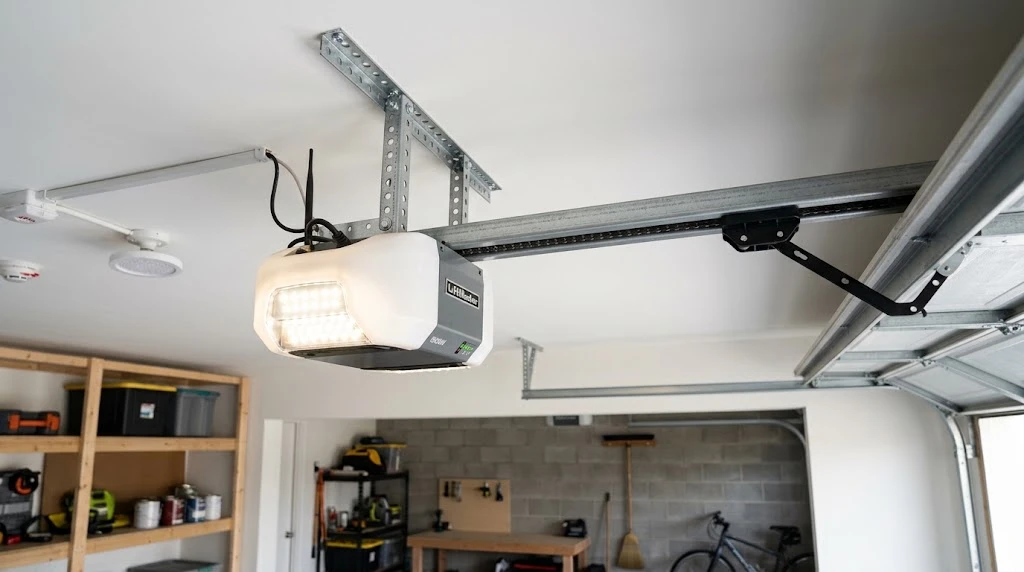
Want your exact number instead of an estimate? Here’s the simple math homeowners can do themselves.
- Find your motor’s running wattage — check the label on the motor unit or the manual. Most list amps; multiply amps × 120 volts to get watts.
- Estimate daily cycles — count how many times the door opens and closes per day. Average households run 4-6 cycles.
- Calculate cycle time — most doors take 10-15 seconds to fully open or close, so each full cycle (open + close) is about 20-30 seconds.
- Add standby draw — 3-8 watts running 24 hours a day, depending on whether you have WiFi and battery backup.
- Multiply by your rate — check your electric bill for your per-kWh rate, typically $0.10-$0.30 depending on your state.
Run the numbers and you’ll almost always land under $3 a year for motor operation, plus $2-6 a year for standby power. Total: usually under $10 a year to run your garage door opener.
When Electricity Use Signals a Problem
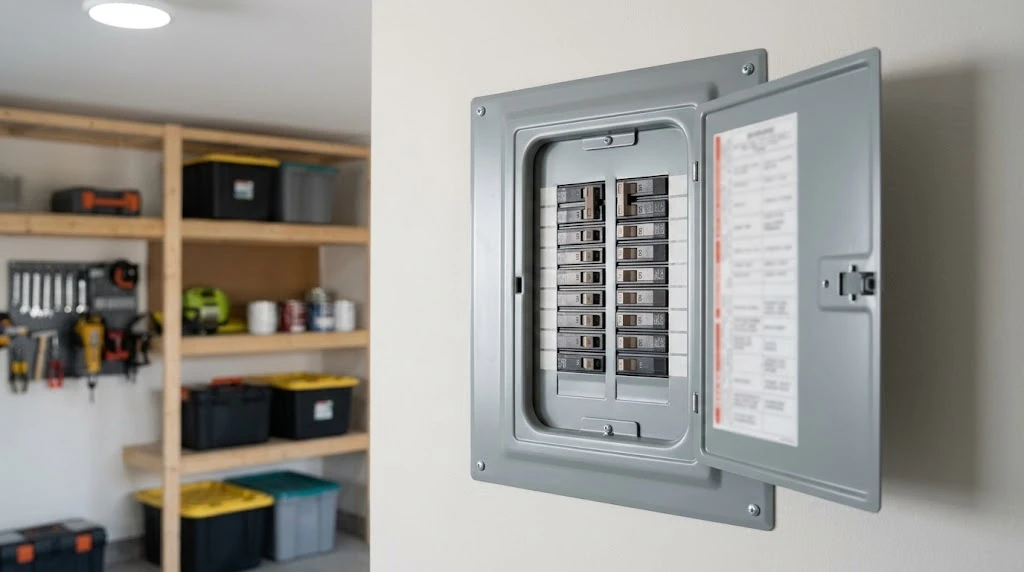
If your opener’s power draw feels unusually high — breaker tripping, motor running hot, or a noticeable jump on your electric bill — that’s not normal wear. It’s a warning sign.
| Symptoms | Probable Causes | DIY Suitability | Safety Risk Level |
|---|---|---|---|
| Motor runs longer than 15-20 seconds per cycle | Worn drive gear, misaligned track, or unbalanced springs forcing motor to work harder | Professional required for springs | Medium |
| Breaker trips when door operates | Failing motor capacitor or short in wiring | Professional required | High |
| Motor housing hot to the touch | Overworked motor from heavy or unbalanced door | Professional required | Medium |
| Light stays on constantly | Stuck relay or disabled auto-off setting | Safe for DIY | Low |
An unbalanced door is the most common hidden cause of higher electricity use. If your springs aren’t doing their job, the motor compensates by pulling more current every single cycle. Test this by disconnecting the opener and lifting the door by hand — it should stay balanced at any height. If it drops or shoots up, call a professional for spring adjustment. Torsion springs store dangerous tension and aren’t a DIY repair. A loud hum from the transformer is another electrical symptom worth checking — see our guide on garage door transformer buzzing to tell normal hum from a real problem.
Ways to Reduce Your Opener’s Electricity Use
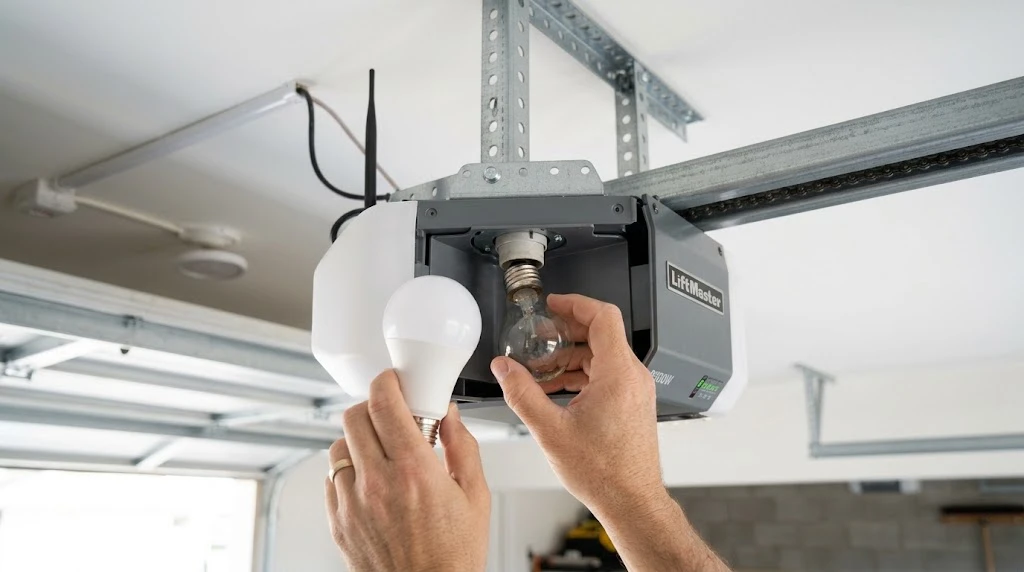
You won’t save much money here, but small habits still help, especially for standby power and light usage.
- Check your auto-off light timer — most openers default to 2.5-4.5 minutes. Confirm it’s not disabled.
- Switch to an LED bulb — if your opener still has an incandescent bulb, swapping to a garage door opener LED bulb cuts that draw by 75-85% and avoids the radio interference some standard LEDs cause.
- Keep the door balanced — annual spring and track maintenance keeps the motor from overworking.
- Unplug during extended vacations — only if you don’t need remote access or battery backup readiness.
- Skip unnecessary WiFi hubs — if you don’t use smart features, a non-connected opener draws less standby power.
None of these changes will meaningfully move your electric bill. The honest takeaway: garage door opener electricity use was never something worth optimizing. Your dishwasher and water heater cost more in a single cycle than your garage door opener costs in a year.
Frequently Asked Questions
Does leaving my garage door opener plugged in waste electricity?
Barely. Standby power for an unplugged-vs-plugged opener is 3-8 watts continuously, costing about $0.10-$0.29 a month. Unplugging saves a few cents but disables battery backup, remote access, and WiFi features, so it’s rarely worth the tradeoff.
Do smart garage door openers use more electricity than basic ones?
Yes, slightly. WiFi-enabled openers like MyQ-compatible models draw 5-8 watts on standby versus 3-5 watts for basic models, adding roughly $0.10-$0.15 a month. The convenience of remote monitoring usually outweighs this small cost difference.
Will a bigger motor increase my electric bill noticeably?
No. The difference between a ½ HP and 1 HP motor is typically under $1 per year in electricity, since the motor only runs for seconds per cycle. Size your motor for your door’s weight, not for energy savings.
Can a failing garage door opener use more electricity?
Yes. A motor working against unbalanced springs, worn gears, or a misaligned track pulls more current every cycle and runs hotter. This usually shows up as a slightly higher bill and a motor that sounds strained, not a dramatic spike.
Does running my garage door opener during a power outage work?
Only if your opener has battery backup, standard on many LiftMaster and Chamberlain models since around 2018. Without it, you’ll need to manually release the trolley using the emergency release cord and lift the door by hand.
Related Guides
For our garage door electrical guides, see Does a Garage Door Opener Need a Dedicated Circuit? (NEC Rules), Problems with Garage Door Opener Extension Cord Explained, Why is my Garage Door Opener Tripping GFCI?, Extra Lights Controlled by the Garage Door Opener, Genie Garage Door Opener Amp Draw, Garage Door Keypad Not Working in Cold Weather and Best Surge Protector for Garage Door Opener.
For official data on household electricity use, see the U.S. Energy Information Administration (EIA).