
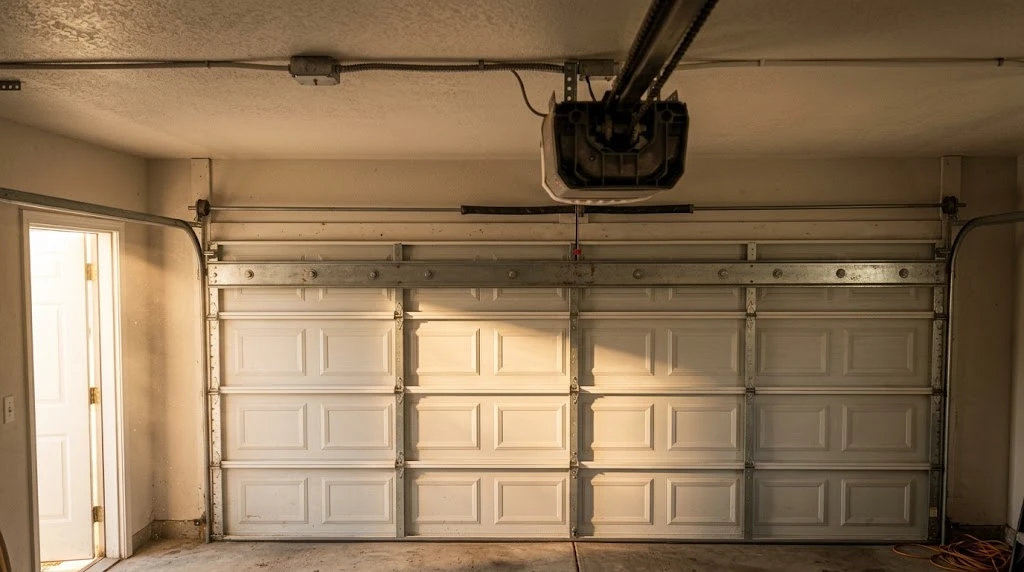
Installing a garage door opener on a flimsy or older door often causes problems — the door flexes under motor load, the top section cracks at the attachment point, and the opener strains on every cycle — which can lead to issues like LiftMaster error code 4-1 from excessive force detection. Reinforcing the door before installing an opener prevents all of this and extends the life of both the door and the motor.
This guide walks through exactly how to reinforce a garage door for an opener, including the right hardware, where it installs, and what to do if your door is already showing damage at the opener attachment point.
Short Answer: To reinforce a garage door for an opener, install a horizontal reinforcement strut across the top section and add a vertical strut down the center if the door is wider than 10 feet or made of thin single-layer steel. The strut attaches to the existing hinges using the same bolt holes, and the opener bracket mounts to the strut instead of directly to the door panel.
Why Garage Doors Need Reinforcement for Openers
A garage door opener attaches to the door at a single point near the top center. Every time the motor runs, it pulls or pushes that one spot. On a solid wood door or a heavy triple-layer steel door, this is fine. On a thin single-layer steel door or an older hollow-core door, repeated stress at that point causes the panel to bow, crack, or pull the hinge bolts through the material over time.
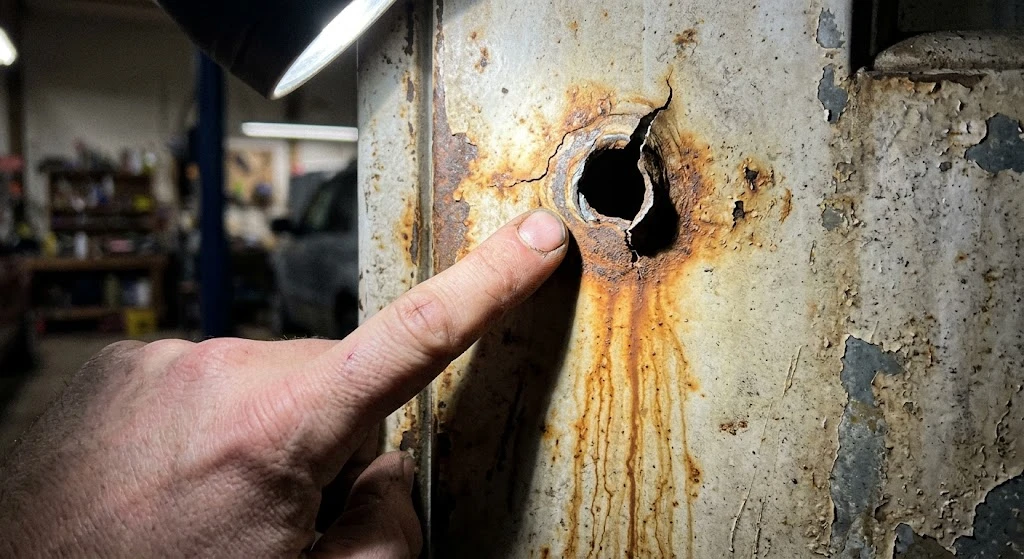
Wider doors and lighter-weight doors need reinforcement most. A 16-foot wide door being pulled from the center by a motor flexes far more than a 9-foot single-car door under the same load.
Signs your door needs reinforcement before adding an opener:
- Single-layer steel panels (no foam or polystyrene backing)
- Door is 14 feet wide or wider
- Existing top section shows bowing or flexing when lifted manually
- Door panels are hollow or feel thin when you knock on them
- Previous opener caused cracking around the top bracket
What You Need: Reinforcement Struts and Brackets
The main reinforcement component is a horizontal strut — a steel bar that runs the full width of the top section. It stiffens the panel so the opener’s pull force spreads across the whole door width instead of concentrating at the center bracket.
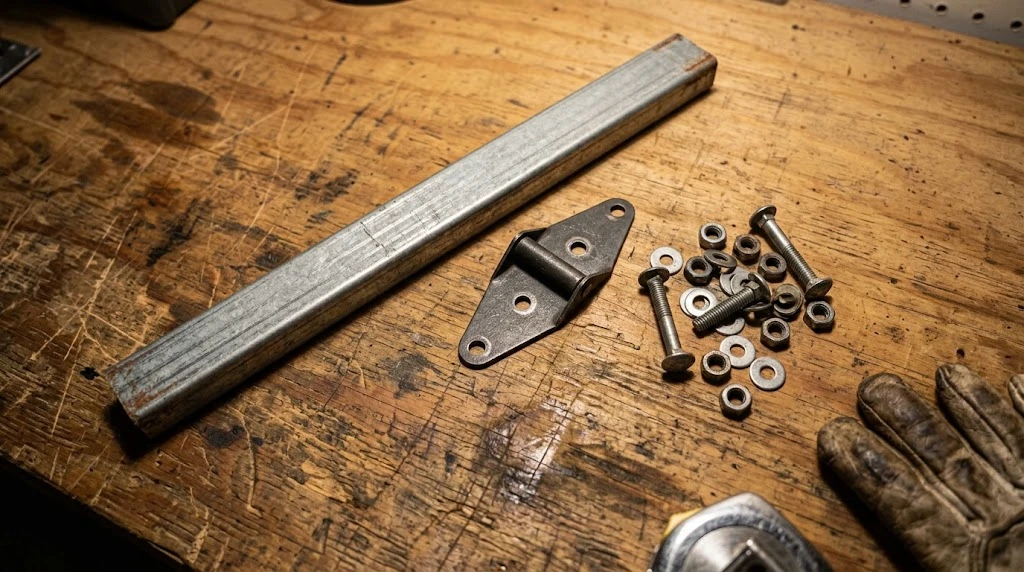
Most garage door manufacturers sell struts for their specific door models. Universal struts are also available and work with most sectional doors. For a 16-foot door, you’ll need a strut at least 16 feet long — these ship as two 8-foot sections that bolt together in the middle.
What to buy:
- Horizontal reinforcement strut (sized to door width)
- Top section reinforcement bracket (if not included with strut)
- Vertical center strut for doors wider than 10 feet (optional but recommended)
- Carriage bolt kit (typically 5/16″ x 3/4″)
- Self-tapping metal screws (#14 x 3/4″, sometimes labeled TEK screws) for attaching brackets to steel panels
Tools required: drill, socket set or ratchet wrench, ladder, tape measure.
| Door Width | Strut Needed | Vertical Strut | DIY Suitability |
|---|---|---|---|
| 8–10 ft | Single horizontal strut | Not required | Safe for DIY |
| 10–14 ft | Single horizontal strut | Recommended | Safe for DIY |
| 14–16 ft | Single or double horizontal strut | Required | Safe for DIY |
| 16+ ft | Double horizontal strut | Required | Professional recommended |
How to Install the Reinforcement Strut
Install the strut before mounting the opener. With the door closed and resting on the ground, follow these steps:
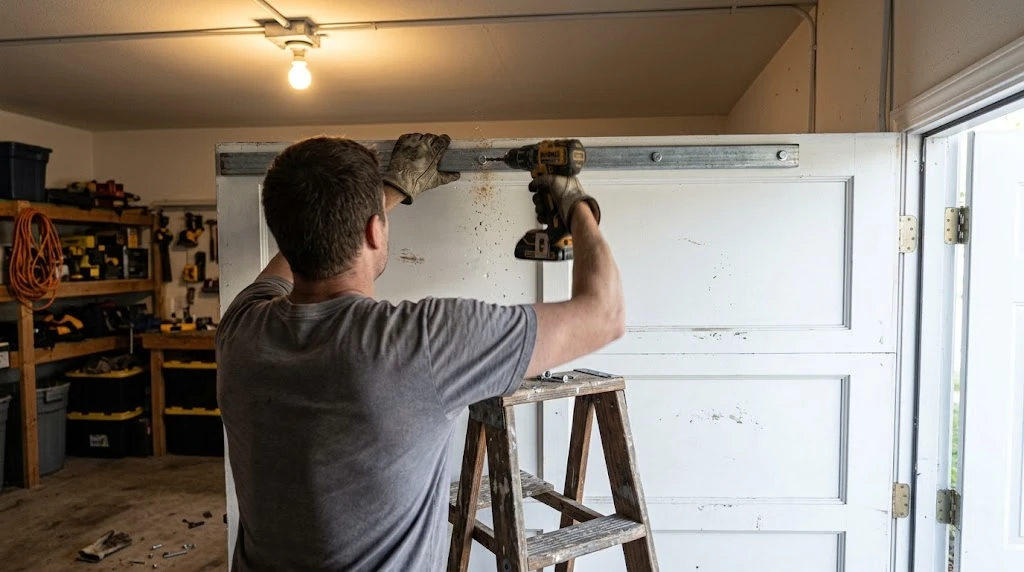
Safety first: if your door has a manual pull-down rope, remove it before installing an automatic opener. Leaving it in place is a strangulation risk for children and pets once the door is motorized.
- Position the strut. Place the horizontal strut across the inside of the top door section, centered side to side. The strut should sit flat against the door panel with the flanges (the bent edges) pointing toward the door.
- Align with existing hinge holes. Most struts are pre-drilled to line up with the standard hinge bolt pattern. Slide the strut until the holes align with the existing hinge holes on the door.
- Attach at each hinge point. Insert carriage bolts through the strut and door panel at each hinge location. Thread on nuts and tighten firmly — do not overtighten on thin steel panels, which can crush the material.
- Install the center bracket. The opener’s curved arm attaches to a bracket at the center of the top section. Mount this bracket to the strut, not directly to the door panel. Most kits include the bracket; if not, buy it separately for your opener brand. This part is often called an Opener Reinforcement Bracket (ORB), and most manufacturers recommend one even on doors that do not need a full-width strut.
- Test the door. Open and close the door manually several times to confirm the strut doesn’t bind the door’s movement and all connections are tight.
For smooth travel, the opener rail should sit two to five inches from the face of the door when the door is fully open. Keep this range in mind when you set the bracket height.
Common mistake: installing the strut after the opener is already mounted. Always install the strut first, then attach the opener arm to the strut’s center bracket.
Struts add real weight, often 10 to 20 pounds, which can throw off the door’s spring tension. If the door feels noticeably harder to lift by hand after installing a strut, have the springs rebalanced before relying on the opener full time.
Repairing a Damaged Top Section First
If the door already has cracking or deformation around the opener attachment point, reinforce and repair before reinstalling the opener.
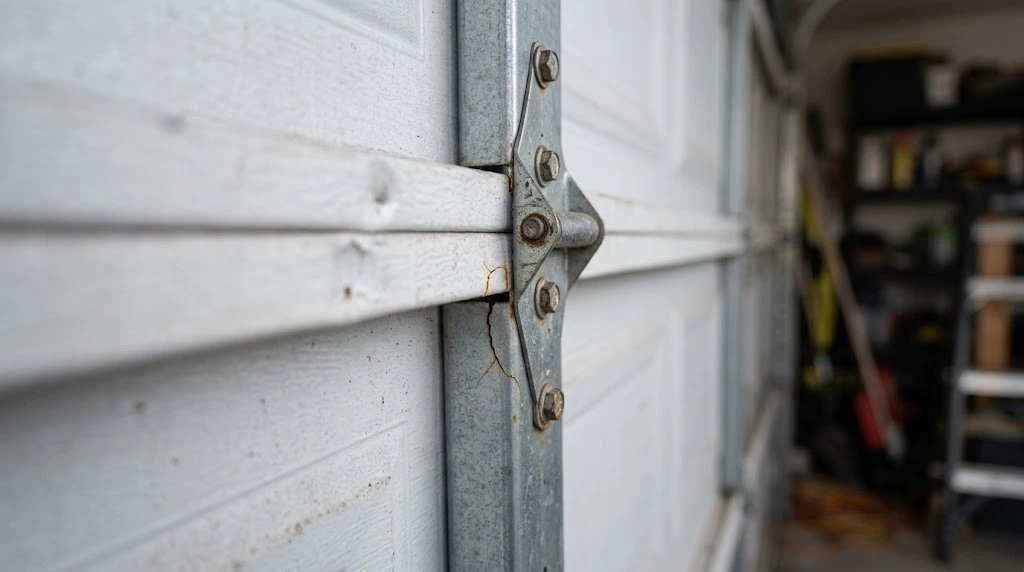
Minor bowing can be corrected when the strut is installed — the strut physically straightens the panel as it’s bolted in place. Significant cracking at hinge holes means those holes have pulled through and need to be addressed with backing plates before the strut goes on.
If a panel is severely damaged, replacing the top section is cheaper than patching it. Most door manufacturers sell replacement panels that match existing door styles — check the model number on your door’s inside panel.
For more on what causes garage door panels to fail and how to assess damage, our guide on garage door shifted to one side covers related structural issues.
Opener-Specific Reinforcement Notes
Different opener types put different stress patterns on the door:
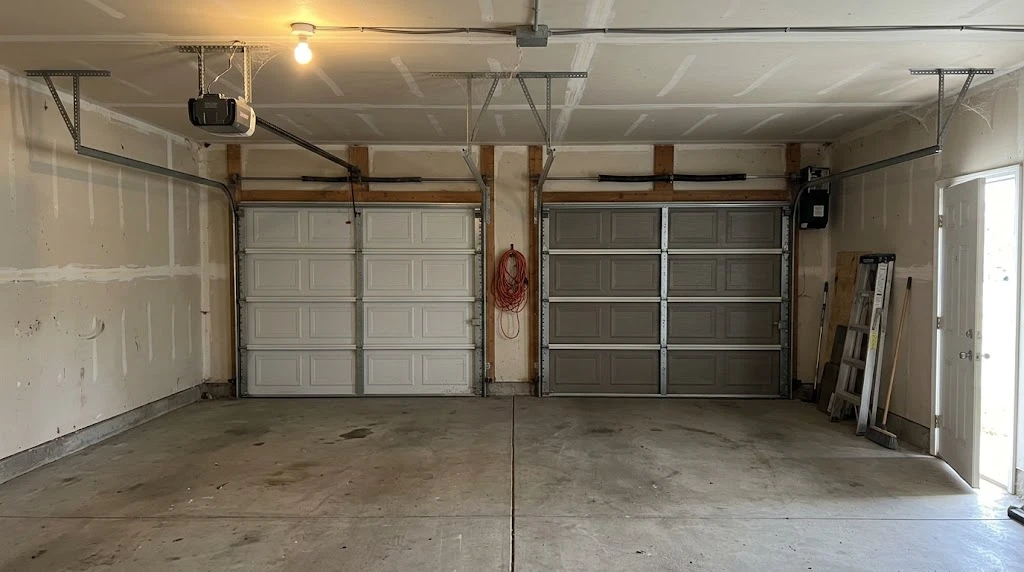
Chain drive openers produce more vibration and jerking than belt drives, which increases stress at the attachment point. Reinforcement is especially important with chain drives on light doors.
Belt drive openers are smoother but still need reinforcement on thin or wide doors. The smooth operation doesn’t eliminate the need — it just reduces wear rate slightly.
Jackshaft/wall-mount openers (like the LiftMaster 8500W) attach to the torsion bar shaft, not the door panel, so they don’t require top-section reinforcement at all. This is one advantage of wall-mount openers on older or lighter doors.
If you’re choosing a new opener specifically because your door is light or fragile, our guide on openers for heavy doors covers models with gentler start/stop motion that reduce door stress. And if you need a dedicated circuit for your new opener installation, our garage door opener circuit guide covers the electrical requirements.
Frequently Asked Questions
Does every garage door need reinforcement for an opener?
No. Heavy triple-layer steel doors, solid wood doors, and modern insulated doors are typically strong enough for a standard opener without added reinforcement. Single-layer steel doors, wide doors (14 feet or more), and older hollow-core doors benefit significantly from a horizontal reinforcement strut before opener installation.
What is a garage door reinforcement strut?
A reinforcement strut is a steel bar that runs the full width of the top door section. It distributes the opener’s pull force across the entire panel instead of concentrating it at the center bracket. Struts bolt to the existing hinge positions and cost $30–$80 depending on door width and material quality.
Can I install a garage door reinforcement strut myself?
Yes, for most standard residential doors. The installation requires a drill, socket set, and ladder, and typically takes 30–60 minutes. The main challenge is positioning the strut correctly and not overtightening bolts on thin steel panels. For doors wider than 16 feet or with significant existing damage, professional installation is recommended.
How much does garage door reinforcement cost?
A horizontal reinforcement strut costs $30–$80 for the part. If you’re doing it yourself, that’s the main expense. Professional installation adds $75–$150 in labor. If combined with opener installation, most technicians include strut installation in the overall opener install quote.
Will reinforcing my garage door void the opener warranty?
No. Adding a reinforcement strut is a standard installation step recommended by most opener manufacturers. Using a strut and proper center bracket to attach the opener arm is actually the correct method per most installation manuals — attaching the arm directly to an unreinforced thin door panel is what can cause problems.
Related Guides
For our installation and framing guides, see How to Install a Garage Door in a Cinder Block Wall, Garage Door 45 Degree Corners, Garage Door in a Grain Bin, What Size Header Do I Need for a 16 Foot Garage Door?, Carpenters Blocks Garage Door: Shim a Frame Right, Will a Doorbell Button Work for a Garage Door Opener?, False Wall Behind a Garage Door, Replacing a Garage Door With a Sliding Glass Door and False Wall in Front of a Garage Door.
For official manufacturer guidance, see the Door and Access Systems Manufacturers Association (DASMA).