
A garage door opener does not require a dedicated circuit by the National Electrical Code. But it does require a 20-amp circuit with GFCI protection — and that circuit cannot serve the garage lighting. Sharing the circuit with a freezer, air compressor, or shop tools causes breaker trips and slowly damages the opener logic board. Here is exactly what the code requires and when a dedicated circuit is the smarter choice.
Short Answer: No dedicated circuit is required by NEC 210.11(C)(4), but your garage door opener must be on a 120V, 20-amp circuit with GFCI protection per NEC 210.8(A)(2). That circuit cannot supply garage lighting. A dedicated circuit costs $150 to $350 installed and is worth it if the breaker trips when the opener runs.
Does a Garage Door Opener Need a Dedicated Circuit? What NEC Actually Says
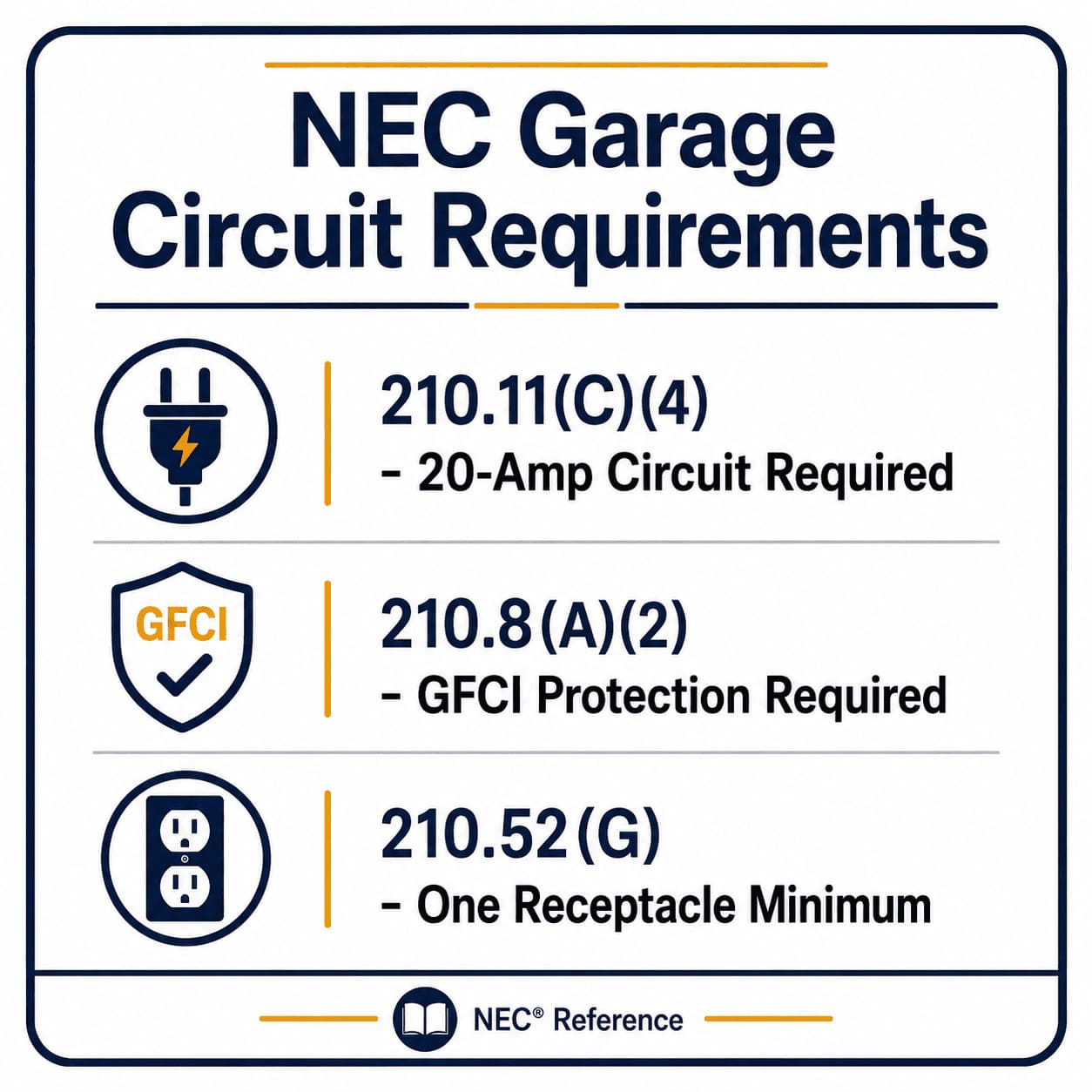
NEC 210.11(C)(4) — added in the 2017 code cycle — requires at least one 120-volt, 20-amp branch circuit installed to supply receptacle outlets in any attached or detached garage of a dwelling unit. The intent is clear: garages commonly use power tools, air compressors, and openers that draw 12 to 16 amps. A 15-amp circuit shared with garage lighting — which was the old standard — is no longer acceptable for new construction or major renovations.
The critical restriction: the last sentence of NEC 210.11(C)(4) states this circuit shall have no other outlets. That means you cannot run the garage lighting from this circuit. There is one exception — the circuit may also supply readily accessible outdoor receptacle outlets directly adjacent to the garage.
| NEC Code | Requirement | What It Means for You |
|---|---|---|
| 210.11(C)(4) | At least one 20-amp garage circuit | Your opener cannot share with lighting |
| 210.8(A)(2) | GFCI protection on all garage receptacles | Outlet must be GFCI even on a shared circuit |
| 210.52(G) | At least one receptacle outlet in each attached garage | Outlet must be installed, not just an extension cord |
Does the Opener Need GFCI Protection?
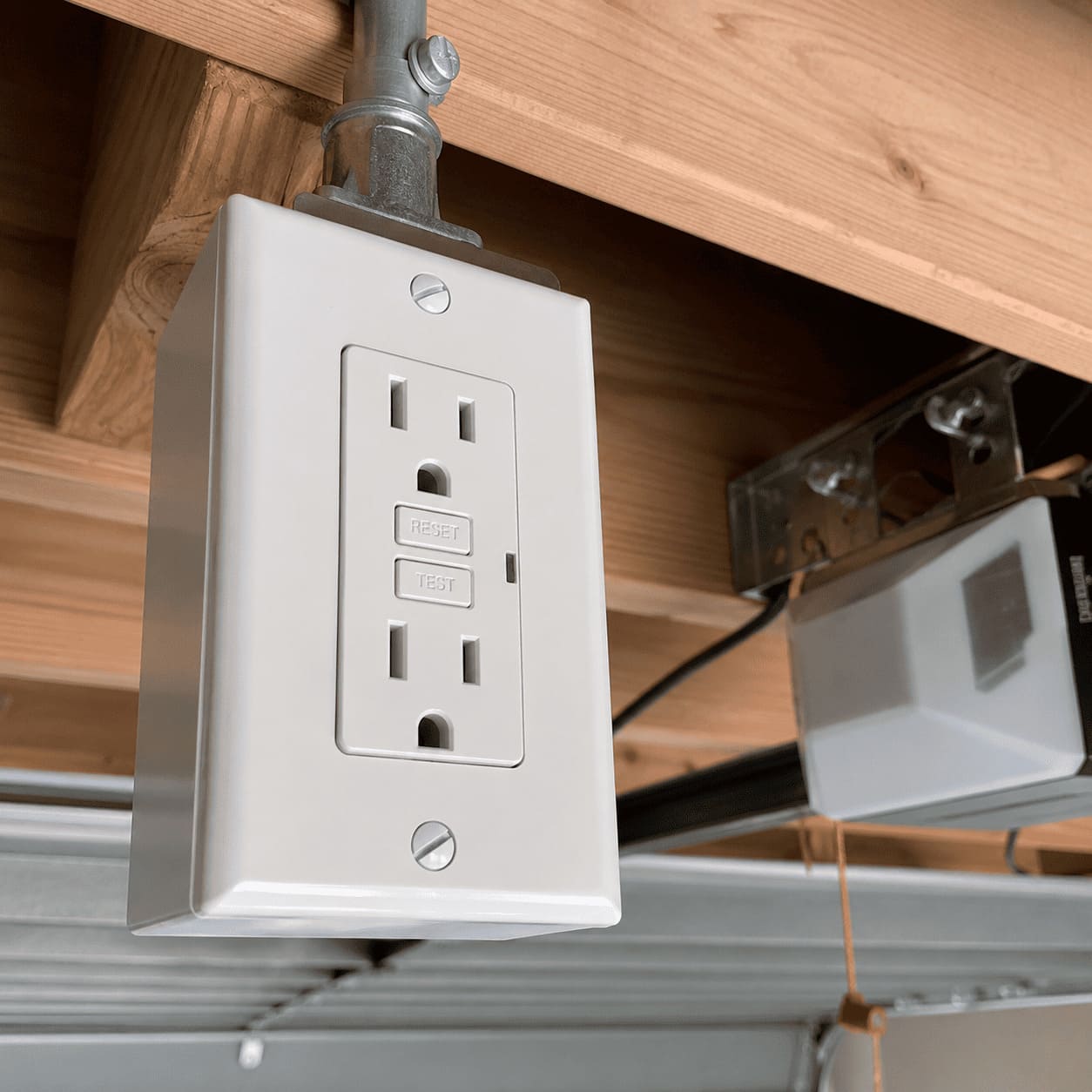
Yes, and this is not optional. NEC 210.8(A)(2) requires GFCI protection on all 15 and 20-amp, 125-volt receptacles in garages of dwelling units. This applies whether your opener is on a dedicated circuit or a shared one. Garages are damp environments — GFCI protection prevents electrocution if moisture reaches the outlet or the opener motor.
The outlet is typically installed on the ceiling near the opener, supplied from the load side of a GFCI circuit breaker or from a GFCI receptacle located elsewhere in the garage. The GFCI device must be readily accessible — a ceiling-mounted GFCI outlet next to the opener motor satisfies this requirement for most inspectors.
Shared Circuit vs Dedicated Circuit: Which Is Better?
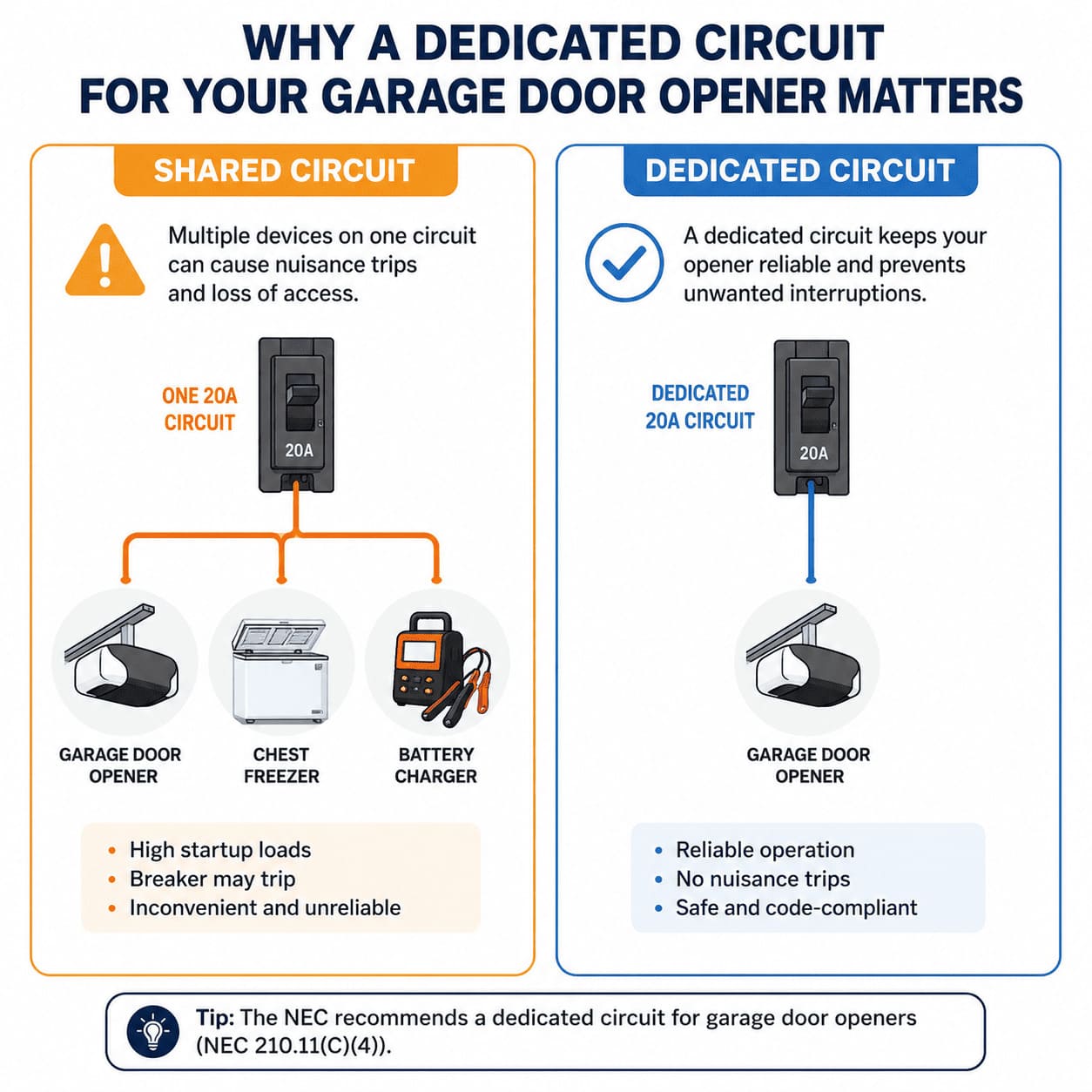
The NEC sets the minimum. What is actually smart for your opener is a different question. A garage door opener draws about 4 to 6 amps running and spikes to 10 to 15 amps on startup. On a shared 20-amp circuit with a chest freezer (6 amps) and a battery charger (4 amps), that startup spike regularly hits the breaker limit — and a nuisance trip every few weeks shortens logic board life.
| Setup | Code Compliant? | Practical Risk | Recommended? |
|---|---|---|---|
| Shared 20-amp circuit, no lighting | Yes | Trips if circuit is loaded | Acceptable |
| Dedicated 20-amp circuit | Yes | Minimal | Best practice |
| Shared 15-amp circuit | No (post-2017) | Breaker trips, logic board risk | No |
| Extension cord permanent install | No | Fire hazard, voids warranty | Never |
| Shared with garage lighting | No | Code violation | No |
This post contains one affiliate link (an outlet tester). If you buy through it, we may earn a small commission at no extra cost to you. We only recommend tools we’d use ourselves.
Signs Your Garage Circuit Is Overloaded
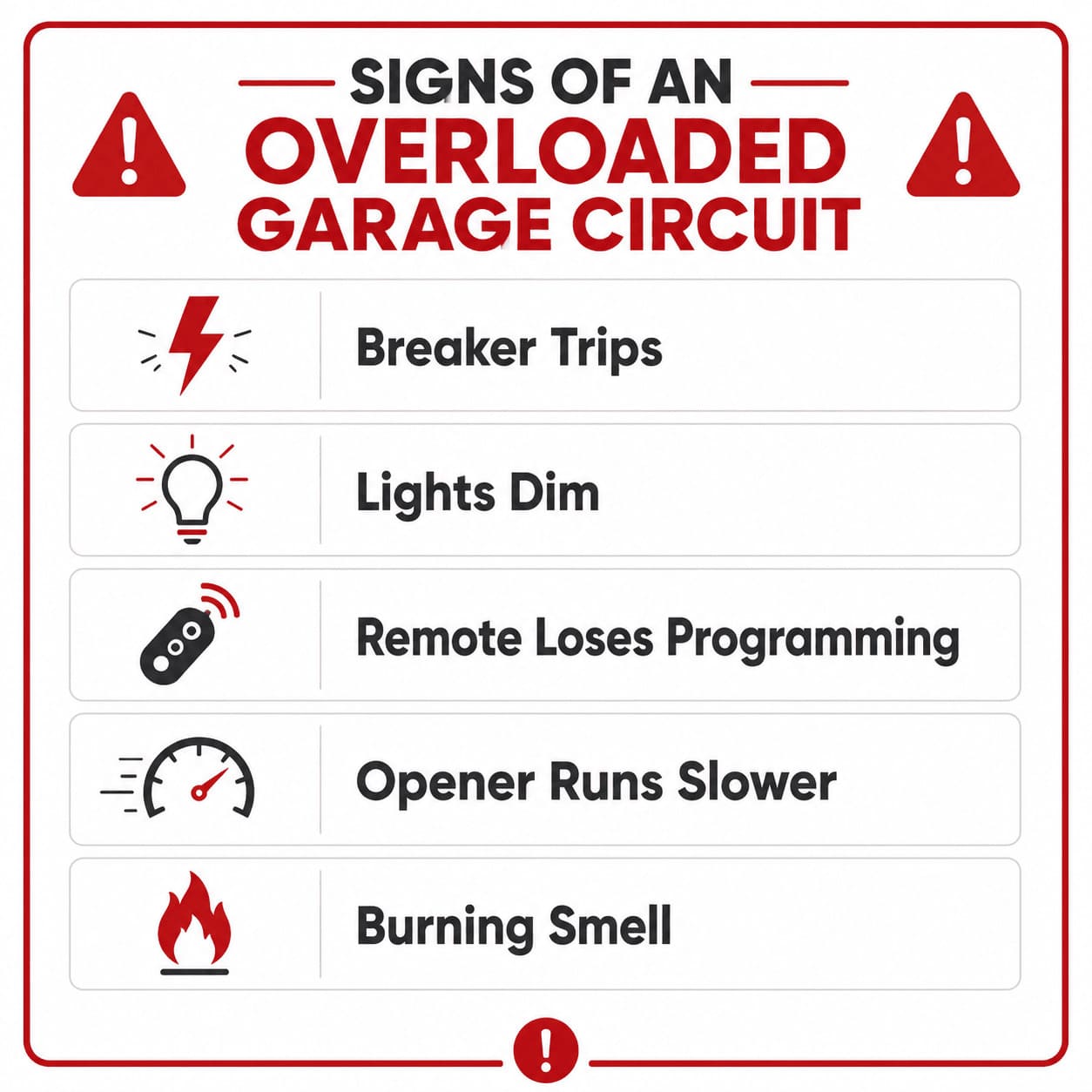
These warning signs mean your opener is not getting clean, stable power:
- Breaker trips when the opener runs — circuit is near its capacity limit on startup surge
- Lights dim when the door moves — voltage is dropping under load, a sign of an overloaded shared circuit
- Opener remote loses programming randomly — the logic board is resetting from power instability
- Opener runs slower than usual — motor is not receiving full voltage
- Burning smell near the outlet — stop immediately and call a licensed electrician
A $10 plug-in outlet tester from any hardware store confirms whether your receptacle has proper grounding and GFCI protection. Takes 30 seconds and is worth doing before assuming the opener is faulty.
Quick DIY Test: Find Your Opener’s Breaker in 2 Minutes
Before assuming the circuit is overloaded, confirm exactly which breaker feeds your opener. This takes two minutes and needs no tools beyond a small lamp or radio.
- Plug a small lamp or radio into the same outlet the opener uses (or the nearest garage outlet on the same run), and turn it on.
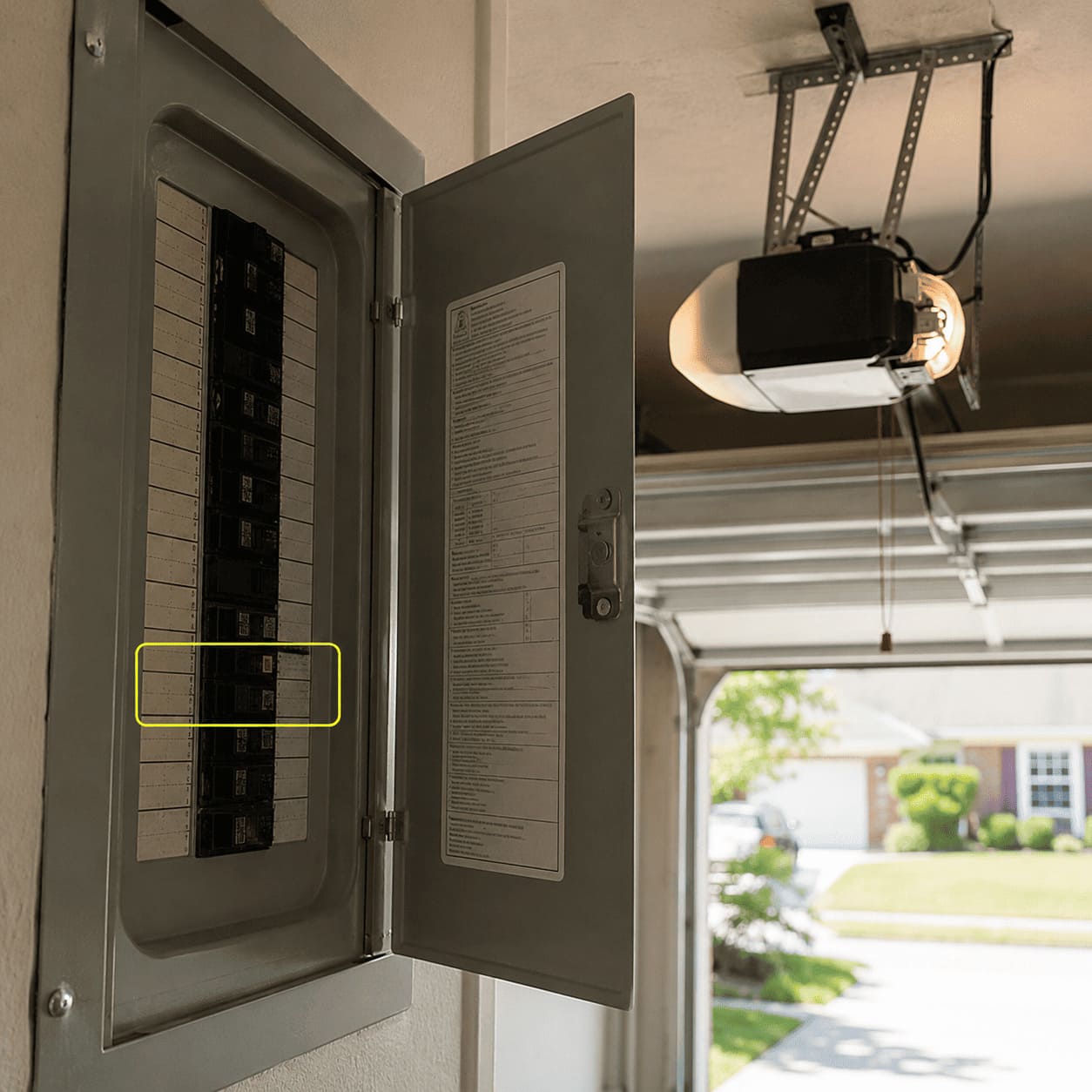
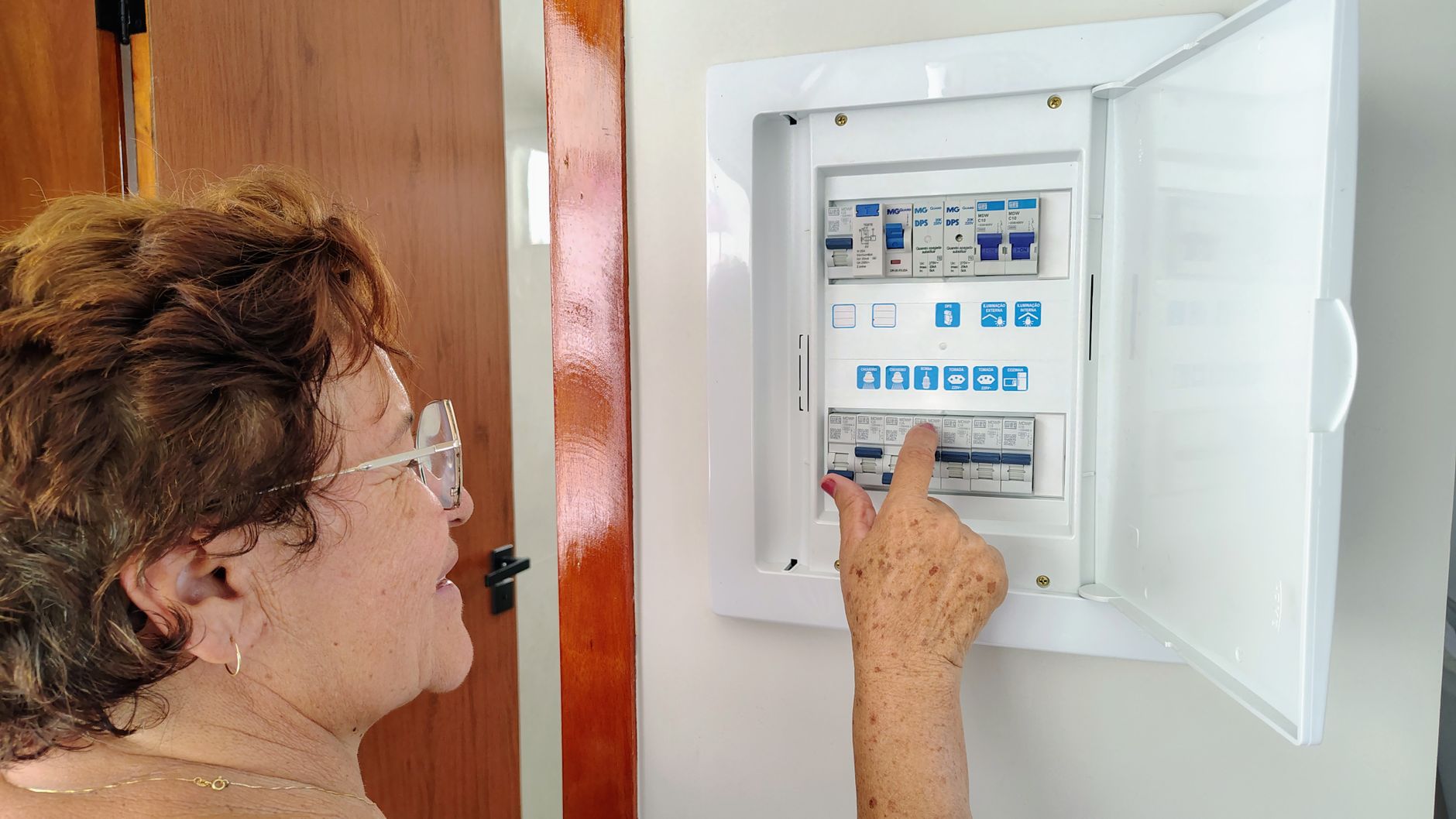
- Have someone watch the lamp while you go to the main electrical panel and switch off breakers one at a time — never touch the main breaker.
- When the lamp turns off, that breaker feeds the opener’s circuit. Check the panel label, or write one in if it is missing.
- While you are at the panel, glance at what else that breaker’s label already lists — if it also covers garage lighting, that is a code violation under NEC 210.11(C)(4) and worth flagging to an electrician.
Knowing the exact breaker also saves time later: if the opener ever trips a breaker unexpectedly, you can isolate and reset just that circuit instead of guessing across the whole panel.
How Much Power Does a Garage Door Opener Use?
Understanding your opener’s actual draw helps you decide whether sharing a circuit makes sense.
| Opener Type | Running Draw | Startup Surge | Annual kWh (est.) |
|---|---|---|---|
| 1/2 HP chain drive (LiftMaster 8365) | ~4 amps / 480W | ~10 amps | ~10 kWh |
| 3/4 HP belt drive (Chamberlain B6765) | ~5 amps / 600W | ~12 amps | ~14 kWh |
| 1 HP commercial (LiftMaster 8500W) | ~7 amps / 840W | ~15 amps | ~20 kWh |
| DC motor smart opener (myQ) | ~2 amps / 240W | ~8 amps | ~8 kWh |
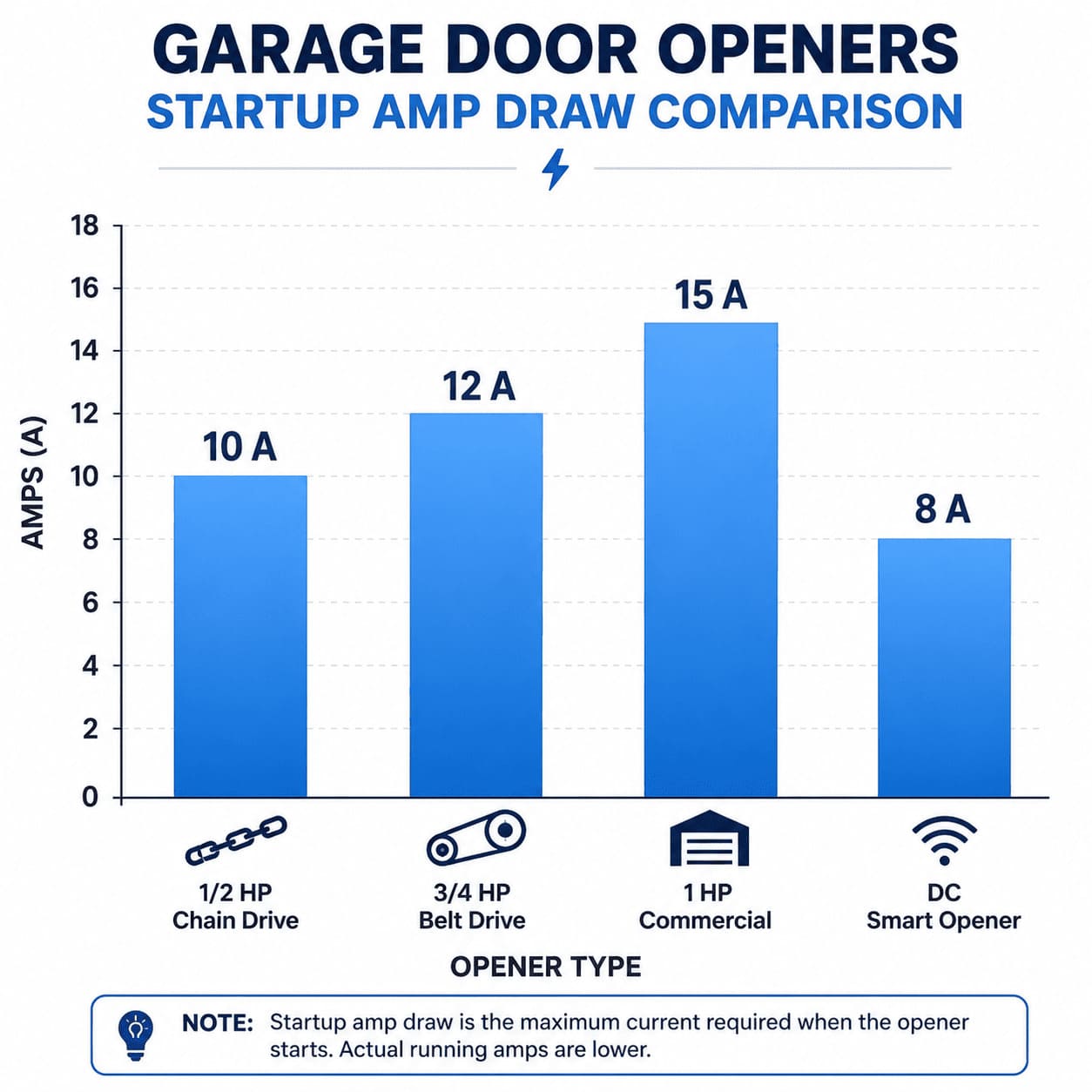
On standby with the light off, most openers draw less than 5 watts. The door itself opening or closing accounts for almost all the power use. Running costs are low — the circuit concern is the startup surge, not the monthly bill.
What Type of Outlet Does a Garage Door Opener Need?
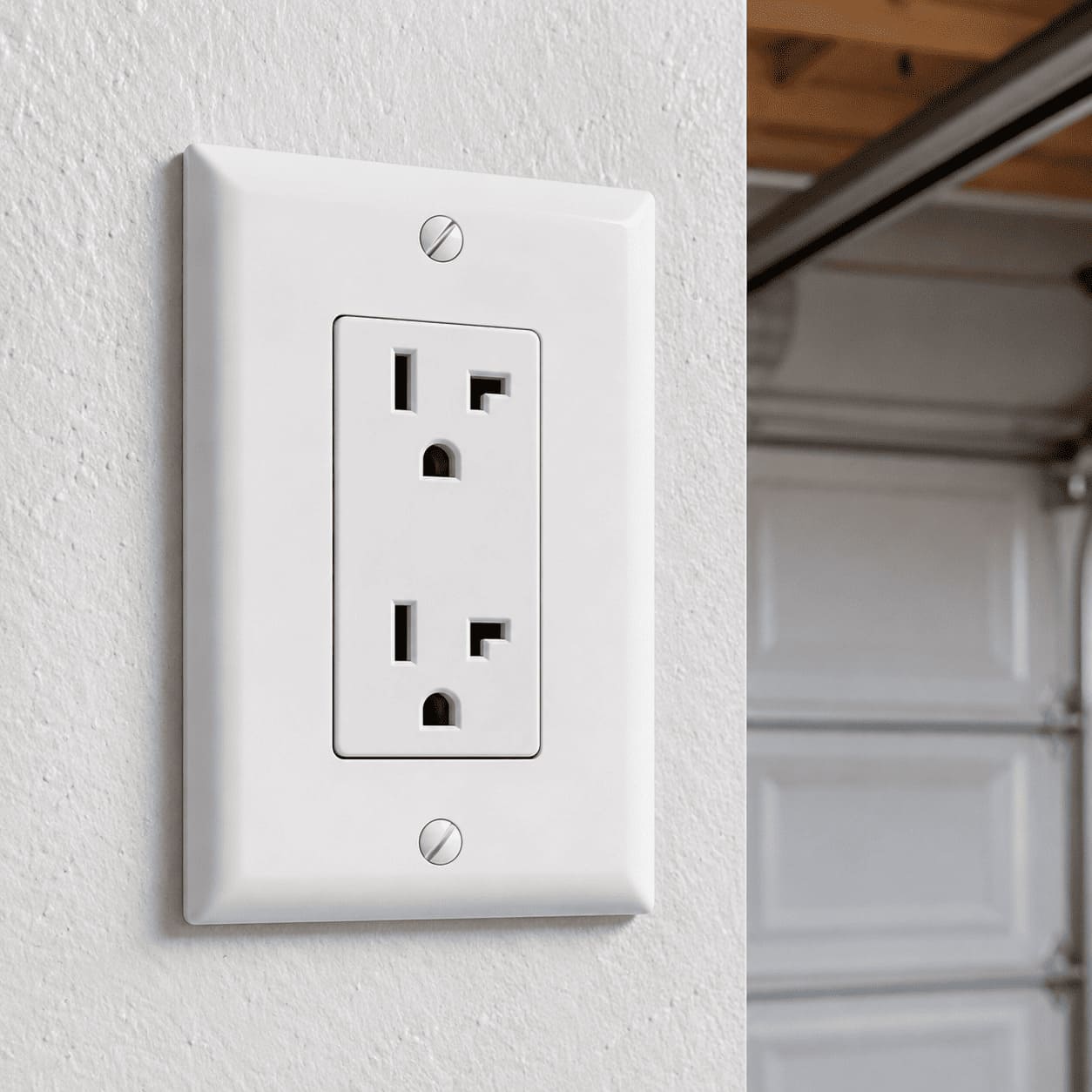
Your opener needs a standard 3-prong grounded outlet — NEMA 5-15R or 5-20R — with GFCI protection, mounted within 6 feet of the motor unit. LiftMaster, Chamberlain, and Genie all specifically prohibit using an extension cord as a permanent installation. It voids the warranty and creates a fire hazard because standard extension cords are not rated for motor startup current.
If your opener is too far from the nearest outlet, the correct fix is running a new circuit — not an extension cord. This is a 2 to 3 hour job for a licensed electrician.
Can You Install the Circuit Yourself?
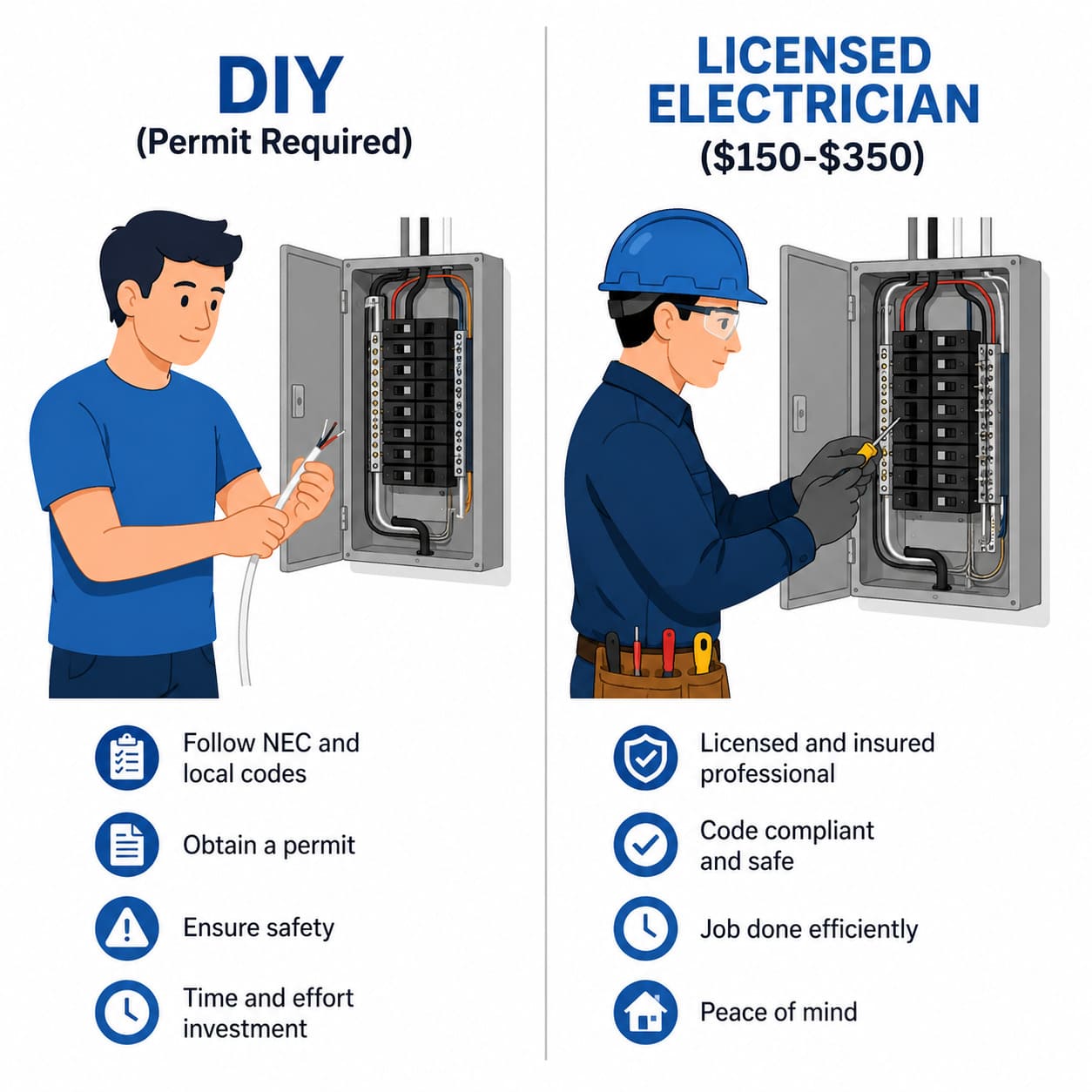
Technically yes — but a permit is required in most US states. An unpermitted circuit causes problems when you sell the home and can void homeowner’s insurance if a fire starts at that outlet. If you are comfortable running 12/2 Romex wire, installing a breaker, and working near a live panel safely, this is a manageable DIY project. If not, hire a licensed electrician. The job typically takes 2 to 3 hours and costs $150 to $350 depending on your area and how far the new circuit runs from the panel.
For the full code requirements, the NFPA 70 National Electrical Code covers garage circuit requirements under Articles 210 and 220. Your local jurisdiction may have additional requirements on top of the base NEC standard. Always check with your local building department before starting electrical work.
If your opener is tripping a GFCI outlet repeatedly, that is a separate issue covered in our guide on why your garage door opener keeps tripping the GFCI. And if you’re using an extension cord temporarily, see our guide on garage door opener extension cord safety for the right cord specs.
Related Guides
For our garage door electrical guides, see Garage Door Transformer Buzzing, Extra Lights Controlled by the Garage Door Opener, How Much Electricity Does a Garage Door Opener Use?, Genie Garage Door Opener Amp Draw, Garage Door Keypad Not Working in Cold Weather and Best Surge Protector for Garage Door Opener.
Frequently Asked Questions
Does NEC require a dedicated circuit for a garage door opener?
No. NEC 210.11(C)(4) requires at least one 20-amp garage circuit, but it does not have to be dedicated to the opener alone. It can serve multiple receptacles in the garage — it just cannot serve the garage lighting or any other non-receptacle outlet.
Can I use a 15-amp circuit for my garage door opener?
Not for new installations. NEC 2017 and later requires a 20-amp circuit for garage receptacles. A 15-amp circuit is no longer code-compliant for new construction or permitted renovations. Existing 15-amp circuits in older homes are grandfathered until you pull a permit.
Can my garage door opener and garage lighting share a circuit?
No. NEC 210.11(C)(4) specifically prohibits the 20-amp garage circuit from supplying lighting outlets. The garage lighting must be on a separate circuit. Mixing them is a code violation that will fail inspection.
How much does it cost to install a dedicated circuit for a garage door opener?
A licensed electrician typically charges $150 to $350 for a new dedicated garage circuit, depending on how far the circuit runs from the panel and local labor rates. The job takes 2 to 3 hours. DIY is possible with a permit but requires working near a live panel.
Is GFCI protection required on a garage door opener outlet?
Yes, always. NEC 210.8(A)(2) requires GFCI protection on all 15 and 20-amp, 125-volt receptacles in garages of dwelling units. This applies whether the circuit is dedicated or shared.
Can I run a garage door opener on an extension cord?
Only as a very short-term temporary measure. LiftMaster, Chamberlain, and Genie all prohibit permanent extension cord use in their installation manuals — it voids the warranty and creates a fire hazard because standard extension cords cannot handle the motor startup surge.