
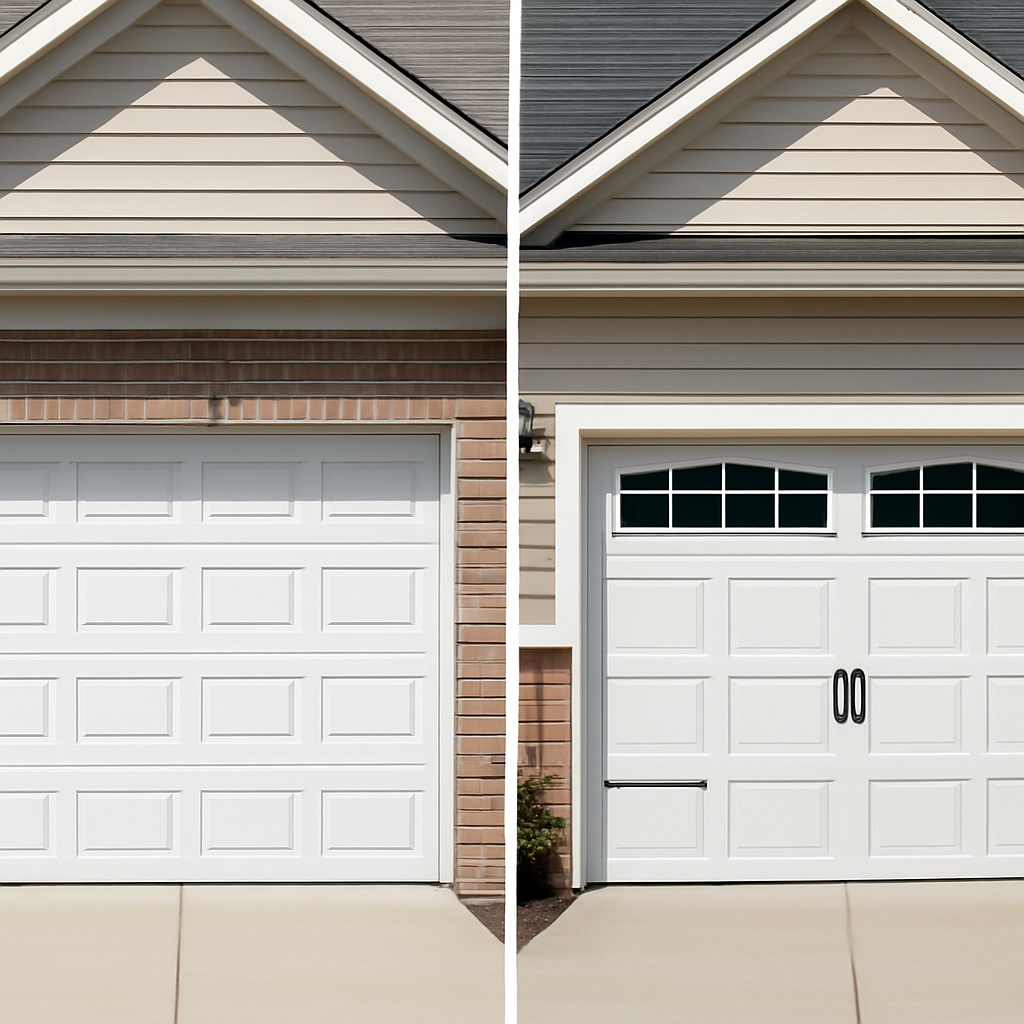
When you’re replacing a garage door, the Haas vs Clopay debate comes up fast. Both are well-known American manufacturers. Both offer steel doors with real insulation options. But they’re not the same brand wearing two different labels — the differences in materials, customization, and how you actually buy one will shape which door fits your home.
This comparison breaks down the real differences between Haas Door and Clopay, section by section, so you can make the right call without spending a weekend reading spec sheets.
This post contains affiliate links. If you buy through our links, we may earn a small commission at no extra cost to you. We only recommend products we’d use ourselves.
Quick Answer: Haas vs Clopay
Short Answer: Clopay is the better choice for most homeowners — it’s widely available through The Home Depot, offers the broadest style and material range, and backs its doors with strong nationwide warranty support. Haas Door builds excellent, heavier-duty doors and offers deeper color customization, but you’ll need a local authorized dealer. Choose Haas if a trusted dealer is nearby; choose Clopay if you want nationwide convenience and more design freedom.
Brand Overview: Who Makes These Doors?
Haas Door is a family-owned American manufacturer based in Wauseon, Ohio. They’ve built garage doors since 1954, and they sell exclusively through a network of local authorized dealers. That model keeps quality control tight, but it also means availability varies a lot depending on where you live.
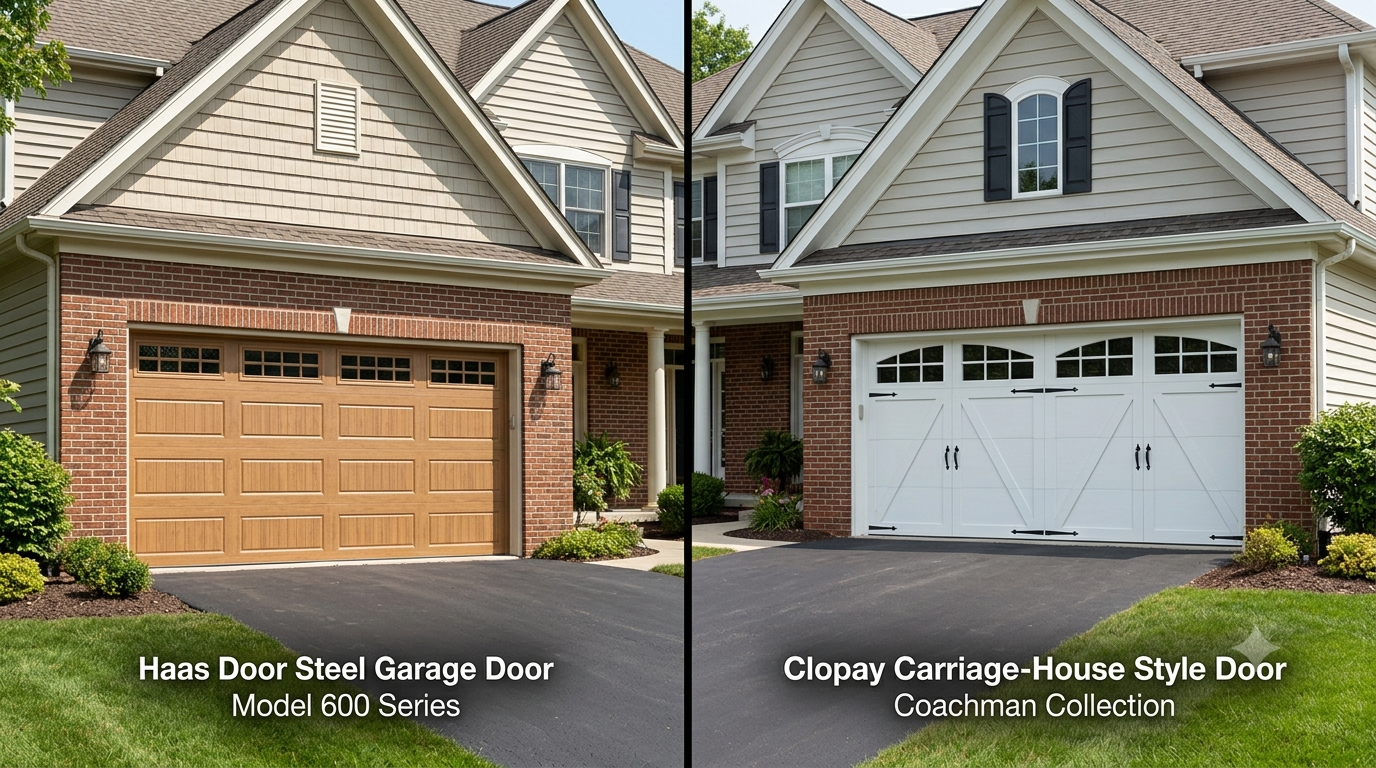
Clopay is the largest residential garage door manufacturer in North America, headquartered in Cincinnati, Ohio. They’re sold through The Home Depot and a nationwide network of certified installers. Clopay also owns Ideal Door and runs several distinct product lines — Classic, Coachman, Canyon Ridge, Gallery, and Avante among them — each aimed at a different look and budget.
| Feature | Haas Door | Clopay |
|---|---|---|
| Founded | 1954 | 1964 |
| HQ | Wauseon, Ohio | Cincinnati, Ohio |
| Distribution | Regional dealer network | National (Home Depot + dealers) |
| Product lines | 200, 300, 400, 500, 800 series | Classic, Coachman, Canyon Ridge, Gallery, Avante |
| Price range | $800–$4,000+ installed | $700–$5,000+ installed |
Materials: Steel, Wood, and Everything Between
This is where the two brands split the most. Haas focuses almost entirely on steel and aluminum construction. That’s a deliberate choice — fewer materials means tighter manufacturing tolerances and a more consistent product across their whole lineup. If you want a steel door built to a high standard, Haas delivers that without a lot of extra decision-making.
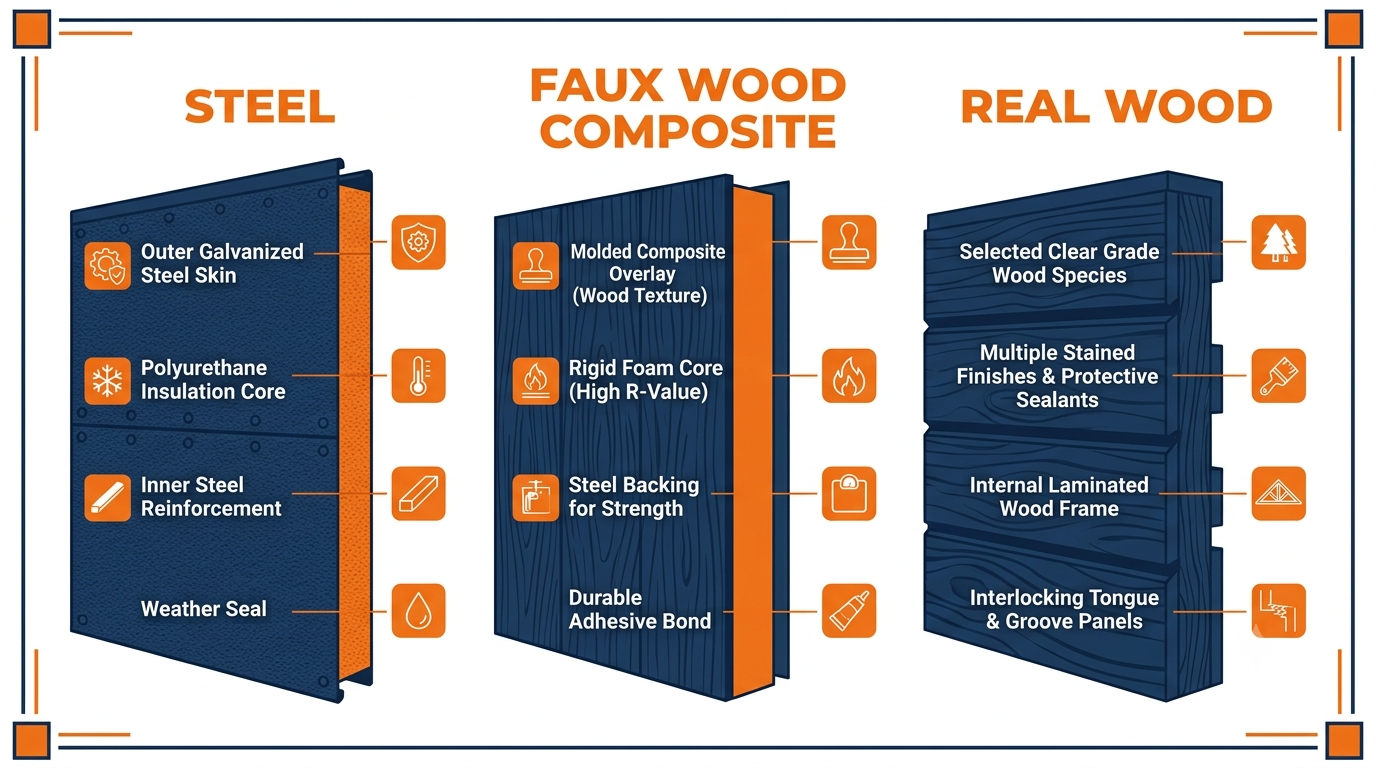
Clopay casts a much wider net. Beyond steel, they offer real wood doors, faux wood composite doors, and their Canyon Ridge Ultra-Grain line, which uses a fiberglass overlay to mimic wood grain without the maintenance headaches real wood brings. If you want a carriage-house look with the texture of stained wood but none of the warping, sanding, or repainting, Clopay’s composite lines are hard to match.
A common mistake homeowners make here: assuming “wood-look” always means real wood. Clopay’s Ultra-Grain and similar composite products are steel or fiberglass underneath — they just look like wood. That matters for weight, insulation value, and long-term maintenance, so always check the actual material spec, not just the marketing name.
Insulation and Energy Efficiency
Both brands build single-layer, double-layer, and triple-layer doors. Triple-layer construction sandwiches injected polyurethane foam between two steel skins, which gives you the best thermal performance and the most rigid panel.
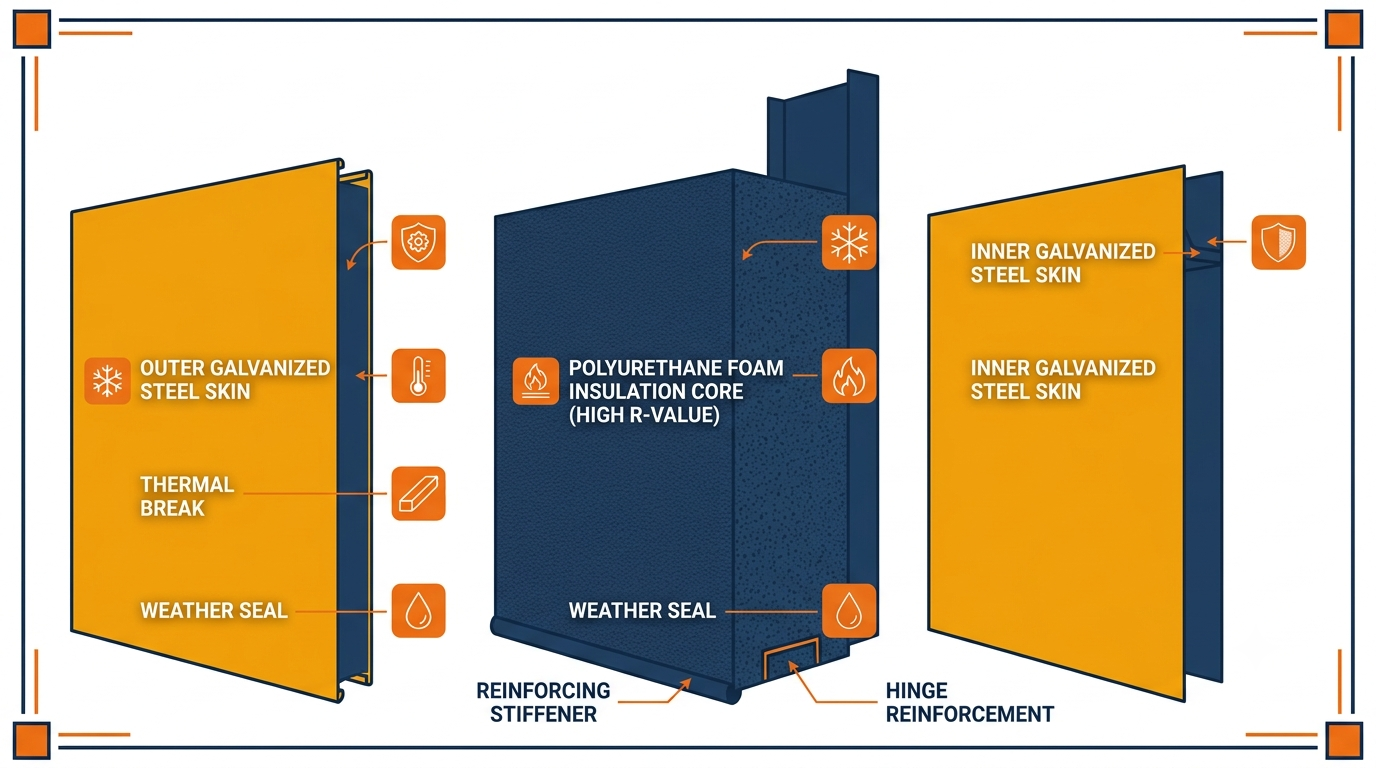
Haas rates their insulated doors by R-value, the standard measure of resistance to heat flow — higher means better insulation. Their 400 Series hits R-14, and the 500 Series reaches R-18, which is excellent for an attached garage in a cold climate. The foam is injected directly into the panel rather than cut and inserted, which keeps it from settling or leaving gaps over time.
Clopay’s range runs even wider. Their entry Classic Steel doors start around R-6, while their top INTELLICORE line — used in the Coachman and Canyon Ridge series — reaches up to R-18 to R-20.4 depending on the exact model. INTELLICORE is Clopay’s name for their injected polyurethane process, and it’s genuinely one of the better insulation systems in the residential market. For most homeowners in a moderate climate, an R-12 to R-16 door covers the job without paying premium prices for R-20 performance you won’t notice.
| Model | Brand | R-Value | Construction |
|---|---|---|---|
| 200 Series | Haas | R-6 | Double-layer |
| 400 Series | Haas | R-14 | Triple-layer |
| 500 Series | Haas | R-18 | Triple-layer |
| Classic Steel | Clopay | R-6 to R-12 | Double or triple |
| Coachman | Clopay | R-18 to R-20.4 | Triple-layer INTELLICORE |
If your garage sits under a bedroom or backs onto a living space, insulation isn’t just about comfort — it affects your energy bill year-round. Our guide to garage door insulation for hot climates goes deeper into matching R-value to your region.
Durability and Build Quality
Haas uses 25-gauge steel on base models and steps up to 24-gauge on premium lines. Lower gauge number means thicker steel, which translates to better dent resistance. Their 800 Series is built to a commercial-grade spec, with heavier hinges and wider door sections — a smart pick if you’re in a region with high wind loads or wind-borne debris requirements.
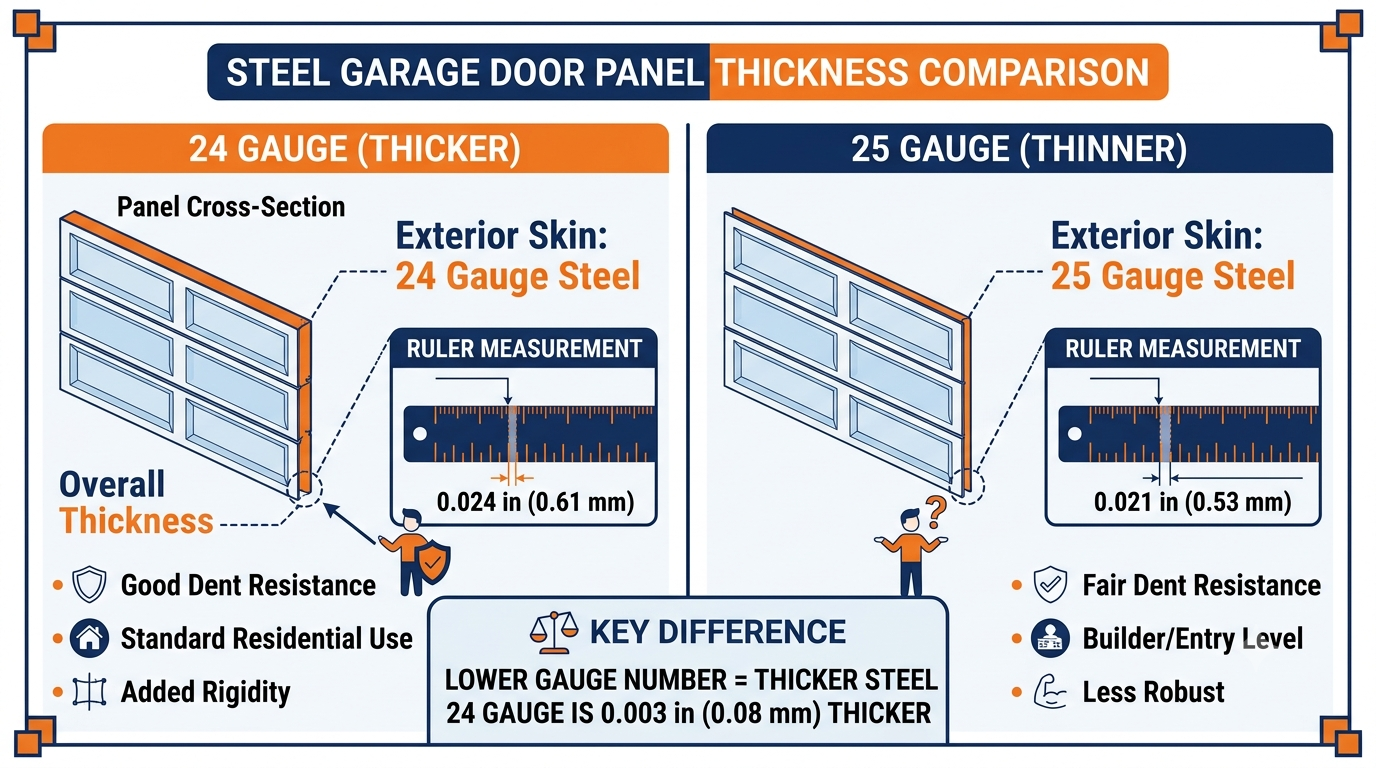
Clopay also starts at 25-gauge steel on entry models, with 24-gauge available higher up the lineup. Every Clopay door goes through impact and cycle testing before it ships, and their engineering data is published for contractors who need to verify wind load ratings for coastal or hurricane-prone areas.
One detail that doesn’t get enough attention: both brands use galvanized steel tracks, but Haas fits a heavier-duty track system on their mid-range and upper models. In regions with big seasonal temperature swings, that extra rigidity can reduce track warping over the years — a small thing that saves you a service call down the line.
Warranty Comparison
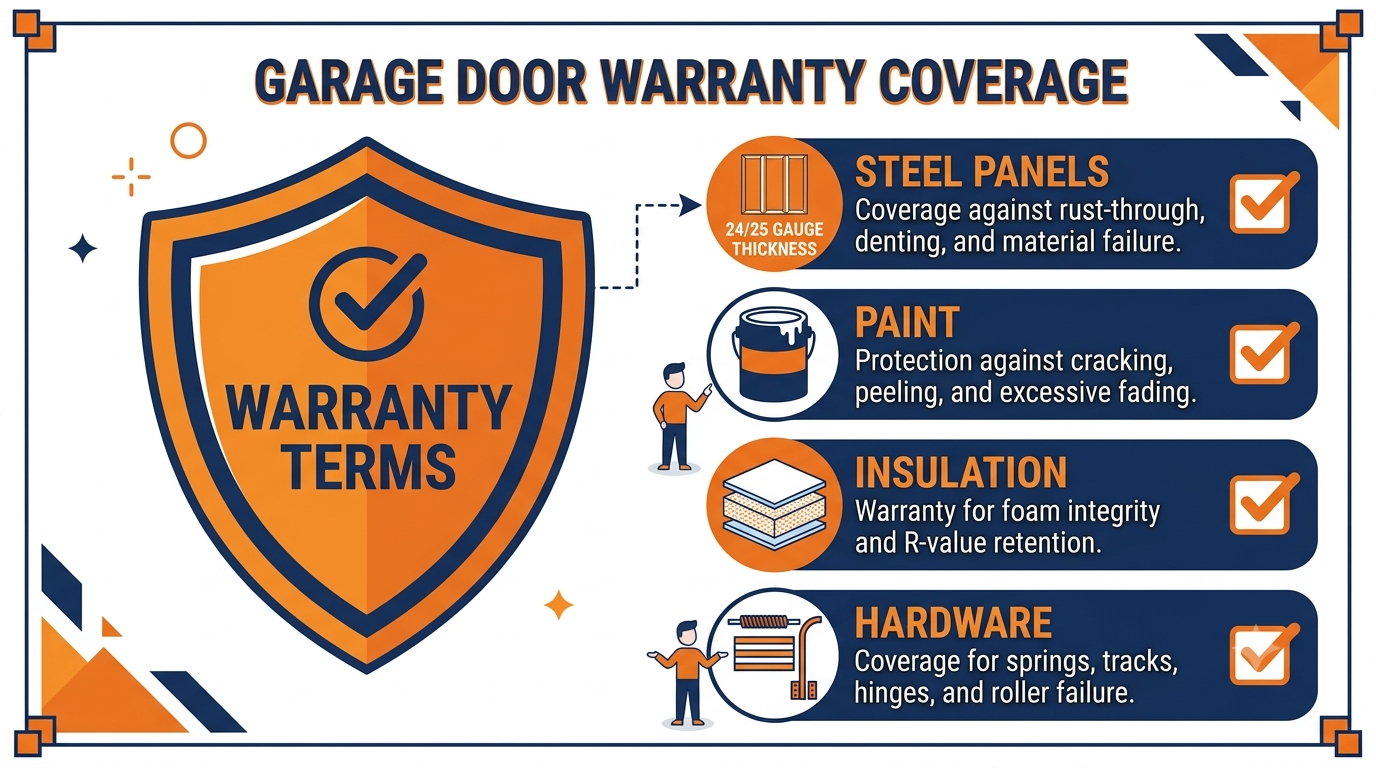
Warranty terms are a direct signal of how much a manufacturer trusts their own product. Here’s how the two stack up: You can review official spec sheets directly from Clopay’s published warranty documentation or Haas Door’s official product line for the exact terms that apply to your model and region.
| Component | Haas | Clopay |
|---|---|---|
| Steel panels | Lifetime limited | Lifetime limited |
| Paint/finish | 10 years | 5–10 years (model dependent) |
| Insulation | Lifetime | Lifetime |
| Hardware | 1–5 years | 1–3 years |
Both brands cover panels and insulation for life, which is standard on any quality steel door — if a warranty doesn’t cover those two things, walk away. Haas edges ahead slightly on paint warranty across most models. That said, a warranty is only as useful as the dealer network standing behind it, and Clopay’s nationwide footprint through Home Depot and certified installers makes filing a claim noticeably easier in most parts of the country.
Style, Design, and Customization
Clopay wins on raw variety. Their catalog spans carriage house styles, flush contemporary designs, glass panel inserts, and wood composite overlays. If curb appeal is the priority, the Canyon Ridge and Coachman lines deliver a high-end look without the upkeep real wood demands.
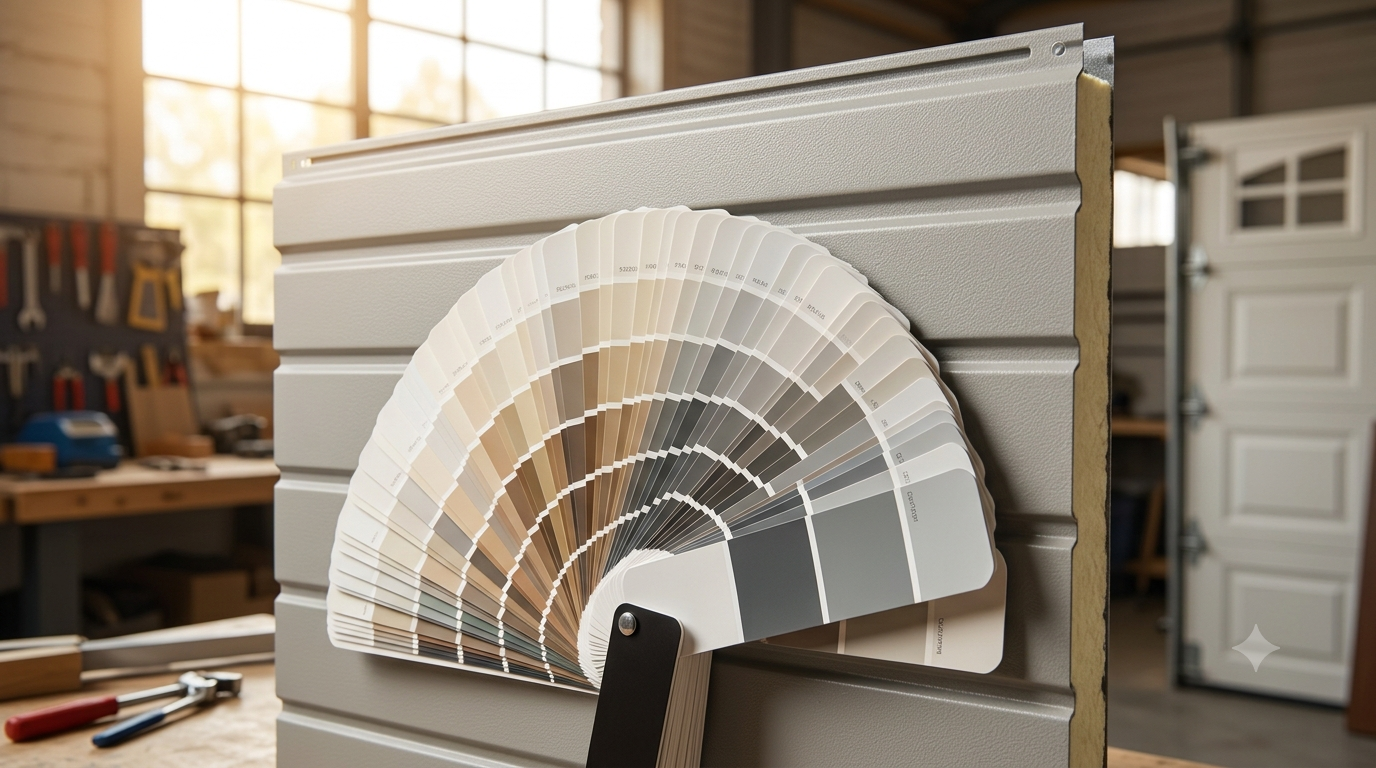
Haas takes a different approach: fewer base styles, but deeper customization within them. Homeowners can choose from over 40 factory paint colors, plus hundreds of RAL color codes for a near-custom match to trim or siding. Their 500 Series adds decorative overlays, window insert options, and a range of hardware accessories — hinges, handles, and strap kits — that let you dial in a specific look. Haas also markets its manufacturing process around environmental responsibility, including recycled steel content and low-VOC coatings, which matters to some buyers but rarely shows up in competitor comparisons.
If you’re matching a craftsman-style home exactly, Clopay’s larger off-the-shelf catalog usually gets you there faster. If you want a specific, less common color or hardware combination, Haas’s dealer-driven customization can go further — it just takes a bit more back-and-forth with your local rep.
Smart Features and Technology
Neither Haas nor Clopay builds smart openers themselves — both are door manufacturers, not opener manufacturers — but compatibility matters when you’re planning a full setup. Clopay doors pair easily with any standard opener, including MyQ-enabled units from Chamberlain and LiftMaster, so remote monitoring and control come from your opener choice, not the door itself.

Haas doors are equally opener-agnostic. The practical difference is availability of pre-drilled reinforcement brackets for heavier commercial-style openers on Haas’s 800 Series, which some installers prefer for garages running a jackshaft or wall-mount opener. If remote monitoring is a priority, pair either door with a dedicated smart garage door monitor rather than expecting the door brand itself to provide it.
Price: What You’ll Actually Pay
Installed prices swing a lot based on region, dealer markup, and installation complexity. Here’s a realistic ballpark for a standard 16×7 double garage door, installed:
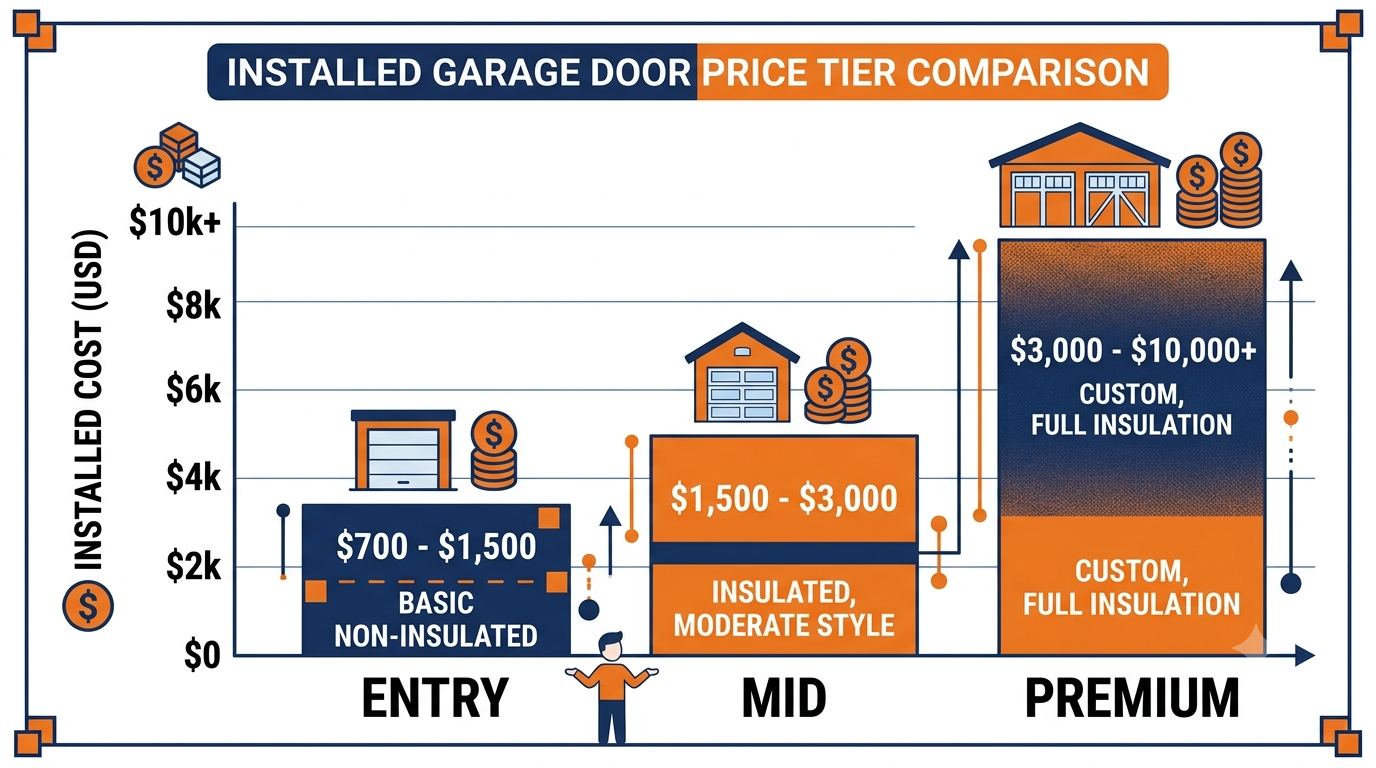
| Tier | Haas Installed | Clopay Installed |
|---|---|---|
| Entry (R-6 to R-8) | $900–$1,400 | $800–$1,300 |
| Mid (R-12 to R-14) | $1,400–$2,200 | $1,300–$2,000 |
| Premium (R-18+) | $2,200–$3,500 | $2,000–$4,000+ |
Clopay tends to run slightly cheaper at the entry and mid tiers, mostly thanks to volume manufacturing and Home Depot’s distribution scale. Haas can match or slightly exceed that pricing depending on your local dealer’s overhead. At the premium end, Clopay’s ceiling is actually higher — a fully loaded wood-composite Canyon Ridge with glass inserts can run past $4,000, well above anything in Haas’s catalog.
Which Brand Should You Choose?
Choose Haas if you have a local authorized dealer with solid reviews, you want a heavier-duty track system, or you’re after deep color customization on a mid-range or premium steel door. Haas builds a quiet, well-engineered product, and their dealer relationships tend to be more personal than a big-box experience.
Choose Clopay if nationwide warranty support matters, you want the widest range of materials and styles, or you’d rather buy through Home Depot for convenience. Their INTELLICORE insulation is top-tier, and the Coachman and Canyon Ridge lines genuinely look the part on traditional and craftsman-style homes.
If Haas isn’t available in your area, don’t go out of your way to source one. The entire value of a dealer-based brand is the local support behind it. A well-installed Clopay door from a good local installer beats a poorly-supported Haas door every time — brand name matters less than who’s standing behind the install.
Helpful Products for Your New Garage Door
Whether you go with Haas or Clopay, these accessories are worth picking up at the same time. They keep your new door running quietly and extend its life significantly.
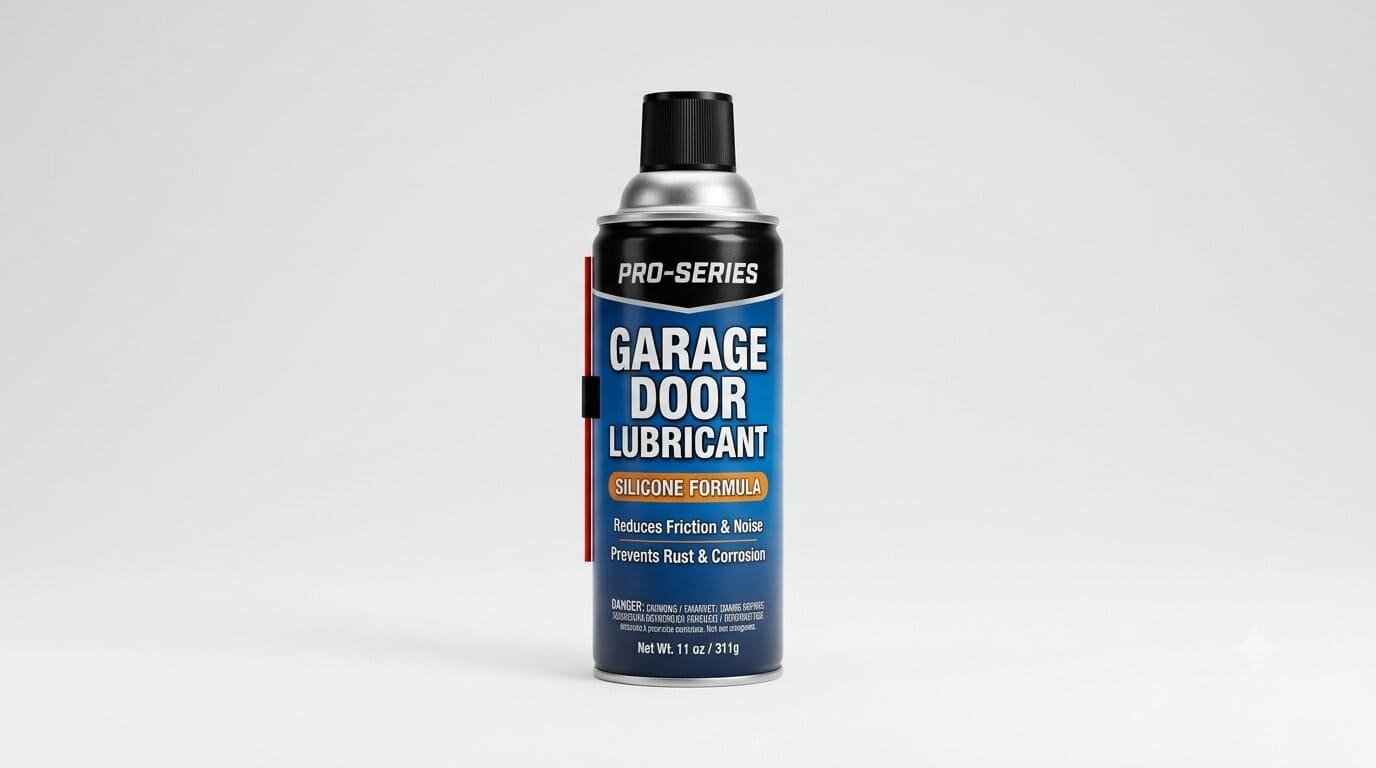
Lubricant: Use a dedicated garage door lubricant — not WD-40 — on springs, hinges, and rollers every 6 months. Check this silicone garage door lubricant on Amazon.
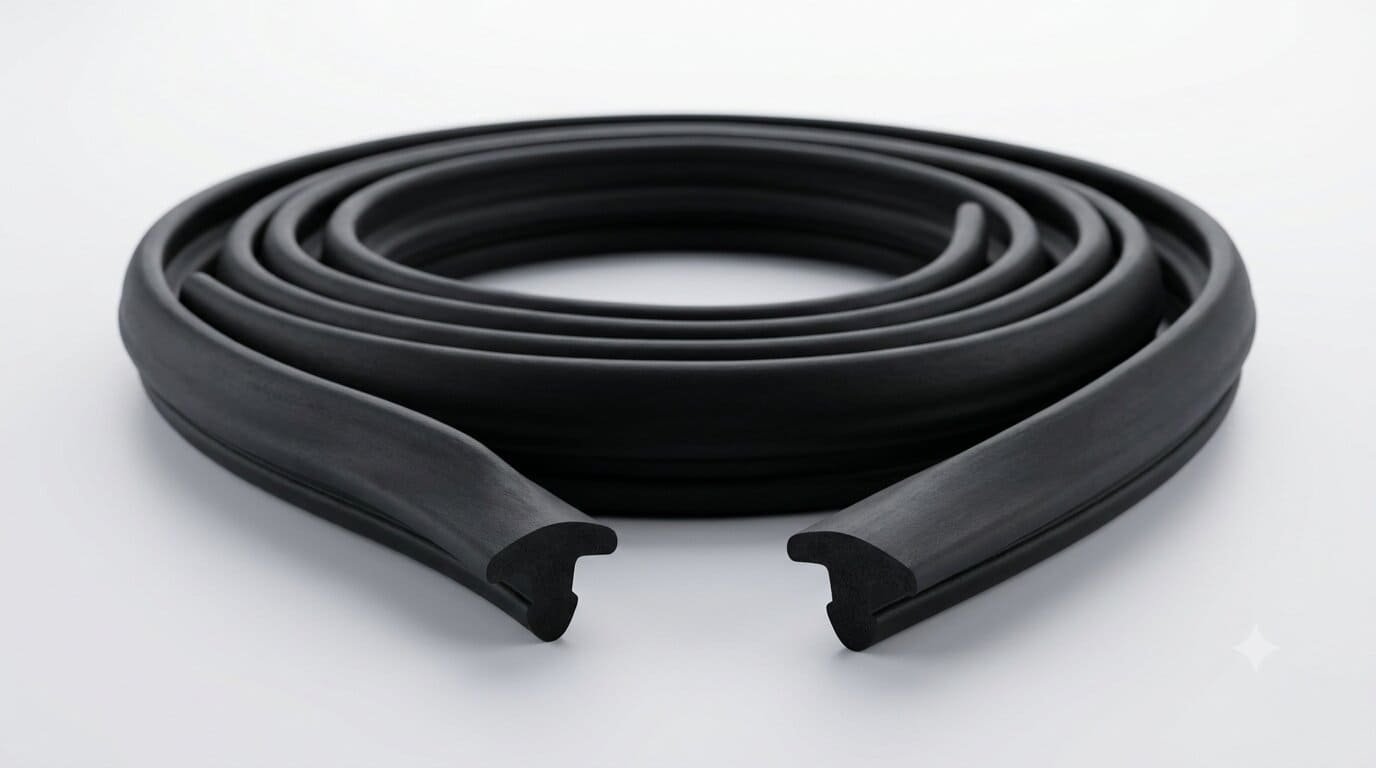
Bottom seal: A worn bottom seal lets in cold air, water, and pests. Replacing it costs under $20 and takes about 15 minutes. See this universal bottom seal on Amazon.
Clopay replacement panels: If you go with Clopay, keep the model number handy in case a section ever gets dented. Full replacement panels are sold through Clopay dealers and Home Depot rather than Amazon — Amazon does carry small parts like window inserts and hardware, but not structural panels.
Before choosing a brand, make sure you have the right door size — our guide on 16 vs 18 foot garage doors explains which width suits your vehicle and home.
Heavier doors need a more powerful opener — read our breakdown of how heavy a double garage door actually is to match your opener horsepower correctly.
Frequently Asked Questions
Is Haas a better garage door than Clopay?
Neither brand is universally better. Haas builds high-quality doors with solid track systems, good insulation, and deep color customization, but their dealer network is regional. Clopay offers wider availability, more materials and styles, and easier nationwide warranty support. For most homeowners, Clopay is the more practical choice unless you have a trusted local Haas dealer.
Are Haas garage doors more expensive than Clopay?
They’re generally similar in price at comparable tiers. A mid-range Haas door installed runs $1,400–$2,200 for a 16×7 double door, while a comparable Clopay is roughly $1,300–$2,000. At the premium end, fully loaded Clopay wood-composite doors can actually cost more than anything Haas offers.
Which brand has better insulation — Haas or Clopay?
Both reach the R-18 range at the top of their lines, which is excellent for residential use. Haas’s 500 Series and Clopay’s Coachman with INTELLICORE both use injected polyurethane foam for long-lasting thermal performance, with Clopay’s best models edging slightly higher. For most attached garages, R-14 to R-16 is more than sufficient.
Can I buy a Haas garage door at Home Depot?
No. Haas Door sells exclusively through authorized local dealers. Clopay is available at The Home Depot locations across the US, which makes it far easier to purchase and schedule installation without hunting down a specific regional contractor.
Does Clopay offer real wood garage doors?
Yes. Clopay’s lineup includes genuine wood doors alongside their more popular faux-wood composite and Ultra-Grain fiberglass options. Real wood needs more upkeep — periodic staining or sealing — while the composite versions give a similar look with steel-level durability. Haas, by contrast, focuses on steel and aluminum only.
How long do Haas and Clopay garage doors last?
Both brands offer lifetime warranties on steel panels and insulation. With proper maintenance — annual lubrication of springs and hinges, and keeping the bottom seal in good condition — a quality steel door from either brand should last 20 to 30 years before needing replacement.
Related Guides
For other brand and buying guides, see Best Garage Door Insulation for Hot Climates, Best Garage Door Monitor, and 16 vs 18 Foot Garage Door.