
A heavy garage door doesn’t just need a “stronger” or heavy-duty opener. It needs the right drive type, a motor that starts and stops gently, and, most of all, springs that are sized correctly. Get those right and a heavy wood or insulated double door can run smoothly for well over a decade.
This guide compares four current openers that suit heavy doors, using manufacturer specs, and explains when an overhead belt drive is enough and when you should step up to a wall-mount jackshaft.
Short Answer: For most heavy residential doors, like insulated steel doubles or lighter wood doors, a 3/4 HP-class DC belt drive such as the Chamberlain B4613T or LiftMaster 87504-267 is enough. The Genie 7155-TKV is rated for doors up to 500 pounds and works natively with Alexa and Google. For solid wood, carriage-style or oversized doors, choose the LiftMaster 98022 wall-mount jackshaft, rated for doors up to 850 pounds, or the heavy-duty 98032 rated up to 1,100 pounds.
In our experience helping homeowners with heavy doors, more openers fail early because of worn or undersized springs than because the motor was too small.
Affiliate disclosure: As an Amazon Associate, we earn from qualifying purchases. This doesn’t change our recommendations or your price.
What Counts as a Heavy Garage Door?
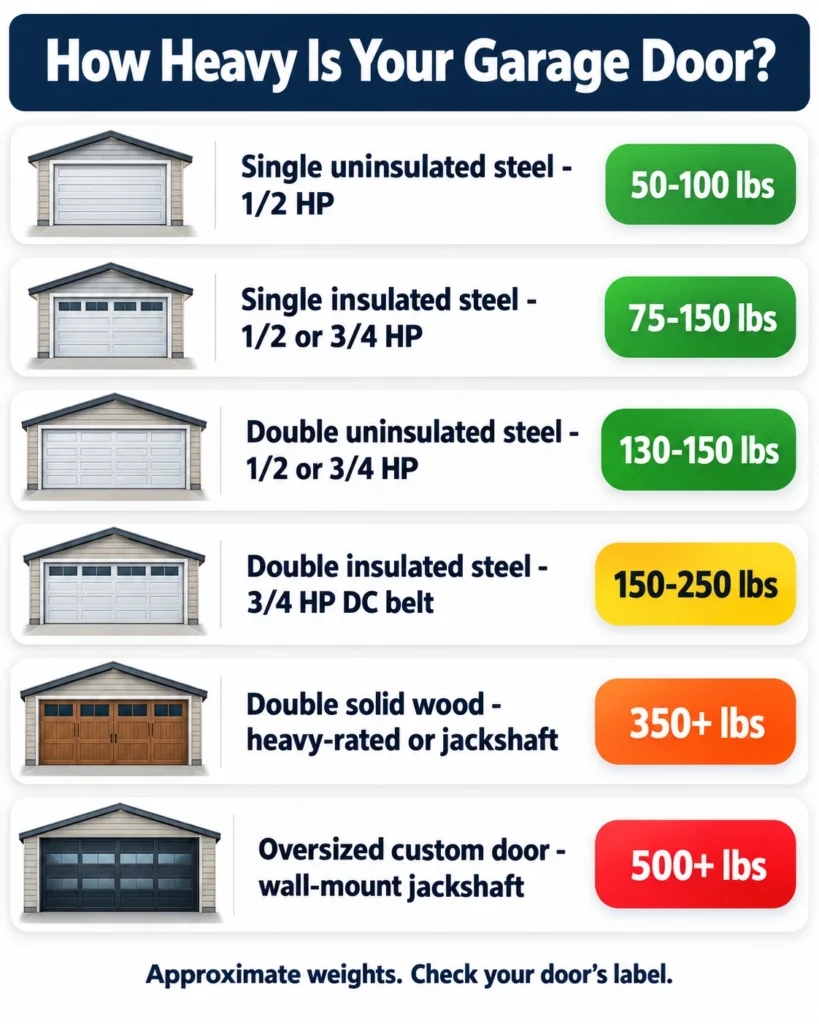
There’s no official cutoff, but in practice a door becomes “heavy” for an opener once it’s a solid wood, carriage-style or oversized door, or an insulated double door with extra glass or decorative hardware. The weights below are typical approximate ranges; your door’s exact weight is usually on a label or in the manufacturer’s documents.
| Door Type | Typical Weight (Approx.) | Suggested Opener Class |
|---|---|---|
| Single (8 to 9 ft) uninsulated steel | About 50 to 100 lbs | 1/2 HP chain or belt |
| Single insulated steel | About 75 to 150 lbs | 1/2 HP or 3/4 HP-class belt |
| Double (16 ft) uninsulated steel | About 130 to 150 lbs | 1/2 HP or 3/4 HP-class belt |
| Double insulated steel | About 150 to 250 lbs | 3/4 HP-class DC belt |
| Double solid wood or carriage-style | 350 lbs and up | Heavy-rated belt drive or jackshaft |
| Oversized, custom wood or glass | 500 lbs and up | Wall-mount jackshaft (98022 or 98032) |
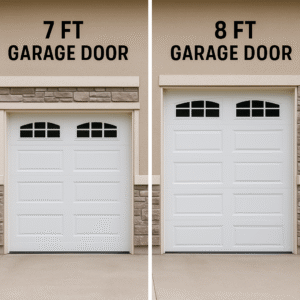
Height matters too: a door taller than 7 feet needs a longer rail kit on overhead openers. Our guide to the best garage door opener for an 8-foot door covers that. If you’re deciding on horsepower alone, see whether 3/4 HP is enough.
Our Top Picks at a Glance
All four picks are current models with battery backup and smartphone control. Specs below come from the manufacturers’ product pages and dealer listings.
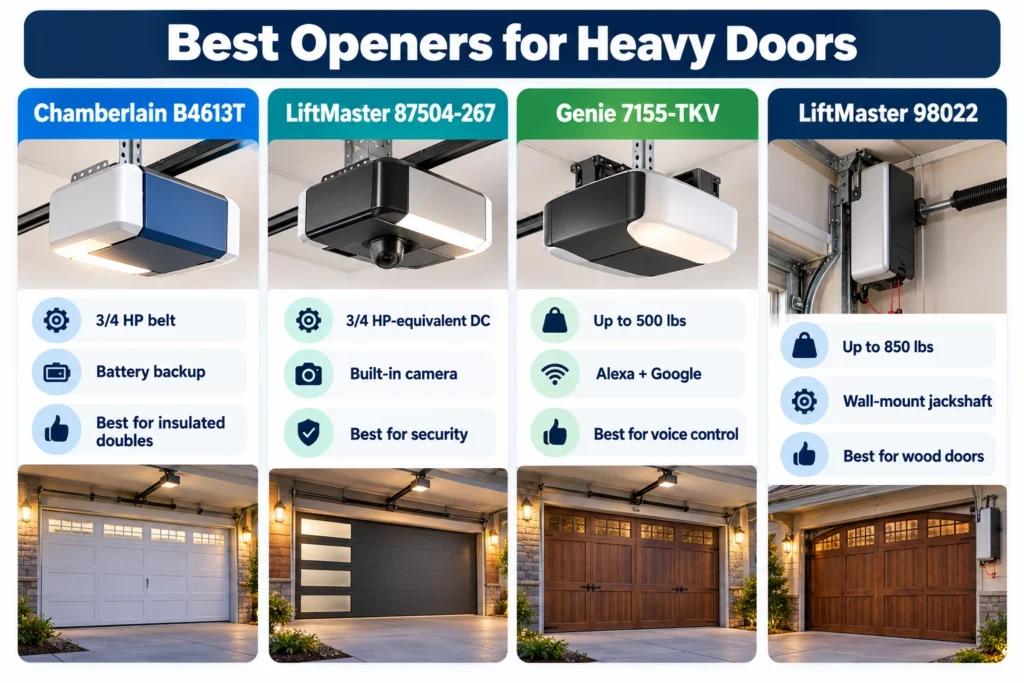
| Opener | Type | Max Door Rating | Smart App | Best For |
|---|---|---|---|---|
| Chamberlain B4613T | 3/4 HP belt drive, overhead | Standard residential doors | myQ | Insulated steel doubles |
| LiftMaster 87504-267 | 3/4 HP-equivalent DC belt, overhead | Standard residential doors | myQ, built-in camera | Heavy doors plus security camera |
| Genie 7155-TKV | 1-1/4 HPc belt drive, overhead | Up to 500 lbs | Aladdin Connect (Alexa, Google) | Heavy doors with voice control |
| LiftMaster 98022 | Wall-mount jackshaft | Up to 850 lbs, 14 ft high, 18 ft wide | myQ | Solid wood and oversized doors |
Best LiftMaster for a Heavy Double Garage Door
If you want to stay with LiftMaster, pick by door type. For a heavy insulated steel double door, the overhead LiftMaster 87504-267 is the best fit: a DC belt drive with soft start and stop, battery backup and a built-in camera. For a solid wood, carriage-style or oversized double door, go straight to the LiftMaster 98022 wall-mount jackshaft, rated for doors up to 850 pounds and 18 feet wide, as long as the door uses torsion springs.
Heavy-Duty Openers for Large or Tall Doors
Size matters as much as weight. Overhead openers ship with a 7-foot rail, so 8-foot doors need an extension kit, and doors taller than that are usually better served by a jackshaft. The LiftMaster 98022 handles doors up to 14 feet high and 18 feet wide, which covers most oversized residential and RV-style garage doors.
Chamberlain B4613T: Best Overall for Insulated Doubles
The Chamberlain B4613T is a 3/4 HP belt drive with soft start and stop, which reduces the jolt on a heavy door every cycle. It’s the current replacement for the discontinued Chamberlain B970 that many older guides still recommend.
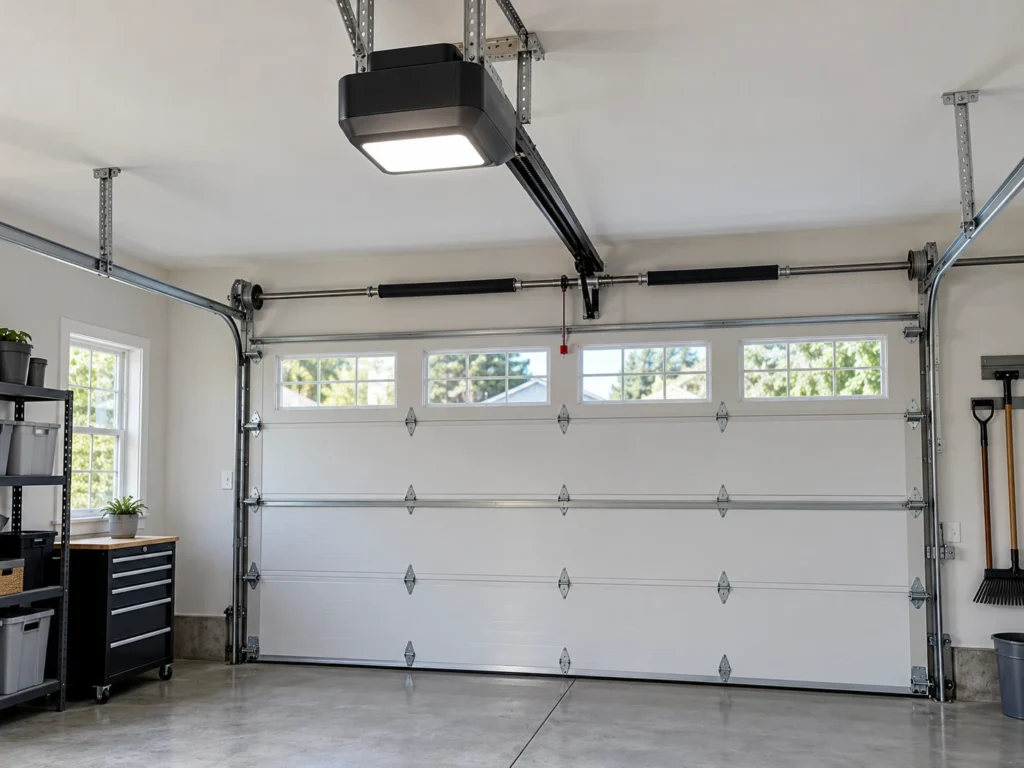
- Power: 3/4 HP DC belt drive with soft start and stop.
- Battery backup: included, which California has required on new installs since 2019.
- Extras: wireless keypad in the box, 1,000-lumen motion-activated LED, Bluetooth-assisted Wi-Fi setup.
- Rail: 7 feet; taller doors need an extension kit.
- Limit: runs through the myQ app, which has no native Alexa skill and no Google Assistant support.
It’s a strong choice for insulated steel double doors and lighter wood doors. For more options at this power level, see our 3/4 HP belt drive roundup and our best Chamberlain garage door opener guide.
LiftMaster 87504-267: Best With a Built-In Camera
The LiftMaster 87504-267 is a dealer-grade DC belt drive with a motor listed as 3/4 HP-equivalent, plus features no other overhead pick here has.
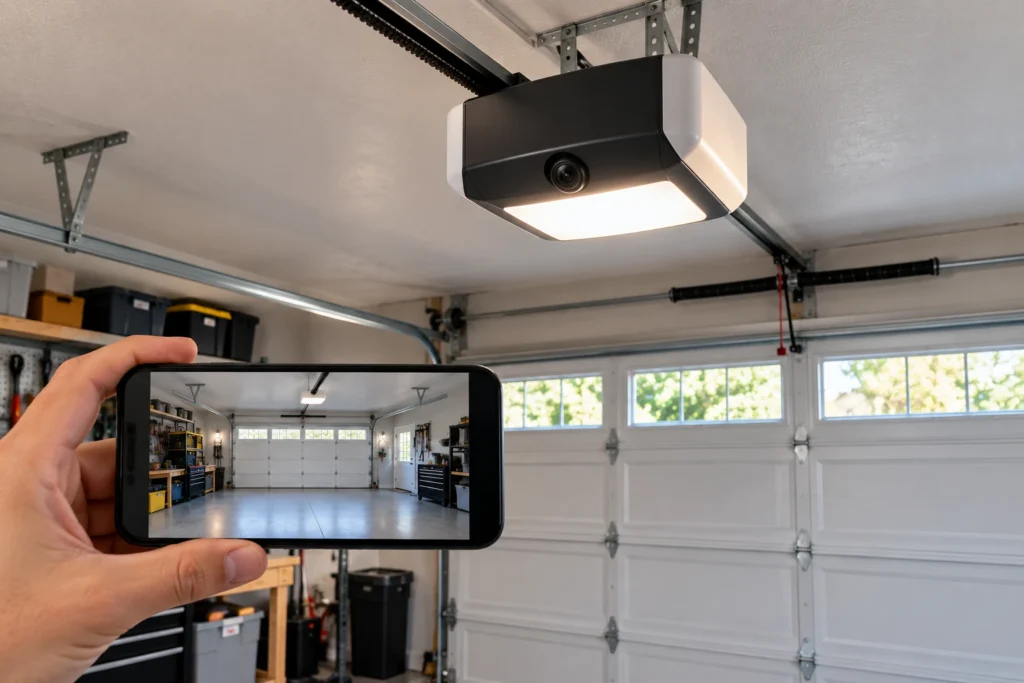
- Camera: built-in 1080p camera for watching the garage in the myQ app. Live view and alerts are free; video recording needs a paid myQ plan.
- Lighting: 2,000-lumen integrated LED.
- Battery backup: included.
- Quiet operation: DC motor with soft start and stop, useful when the garage sits under a bedroom.
It handles the same door range as the B4613T but adds security monitoring. If the camera is the main draw, compare it in our best garage door opener with camera guide.
Genie 7155-TKV: Best for Heavy Doors With Voice Control
The Genie 7155-TKV StealthDrive Connect is the only overhead pick here with a published weight rating: Genie lists it for doors up to 500 pounds.
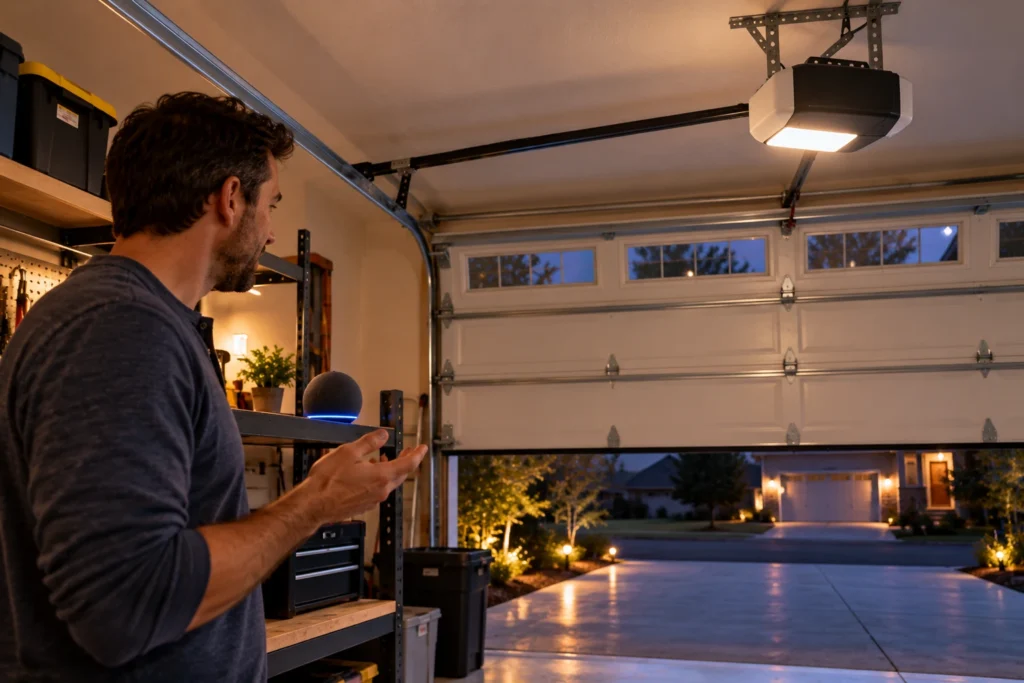
- Power: 1-1/4 HPc DC belt drive (Genie’s own “HPc” rating).
- Smart control: Aladdin Connect app with native Alexa and Google Assistant support.
- Battery backup: included, good for up to 50 cycles during an outage.
- Extras: wireless keypad included.
- Rail: 7 feet standard; an 8-foot door needs Genie’s extension kit.
If voice control matters and your door is heavy but not oversized, this is the pick. See our best Genie garage door opener guide for the rest of the lineup.
LiftMaster 98022: Best for Extra-Heavy and Wood Doors
For solid wood, carriage-style, or oversized doors, the LiftMaster 98022 wall-mount jackshaft opener is the one to look at. LiftMaster’s product guide rates it for doors up to 850 pounds, 14 feet high and 18 feet wide.
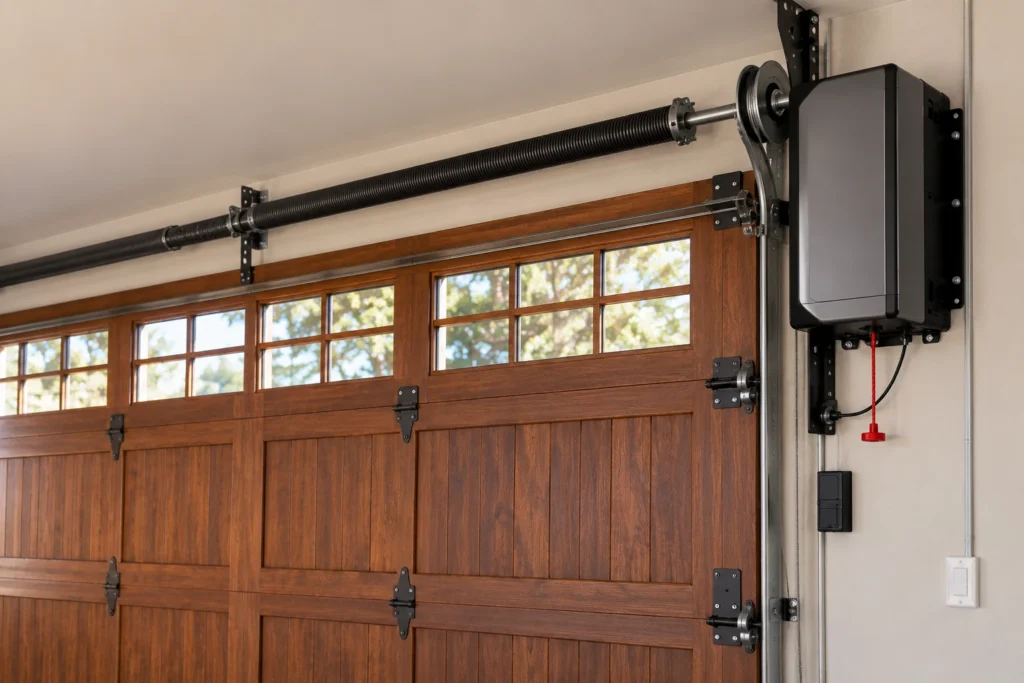
- How it works: it mounts on the wall beside the door and turns the torsion bar directly, so there’s no ceiling rail.
- Included: battery backup and an automatic garage door lock that deadbolts the door each time it closes.
- Smart control: myQ app.
- Replaces: the older LiftMaster 8500 and 8500W that many guides still list.
Two requirements before you buy: your door must use torsion springs (jackshaft openers don’t work with extension springs), and you need wall space and an outlet beside the door. For doors heavier than 850 pounds, LiftMaster’s heavy-duty 98032 is listed by dealers for doors up to 1,100 pounds.
Belt Drive vs Jackshaft for Heavy Doors
Both types handle heavy doors well when matched correctly. The choice mostly comes down to door weight, your spring type, and your ceiling.
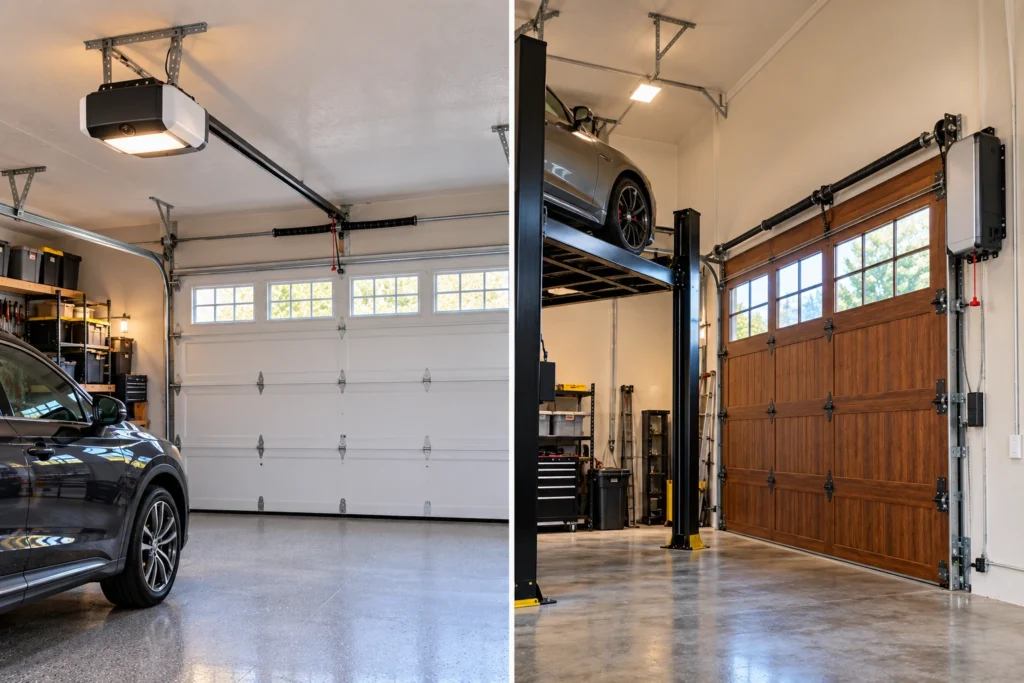
| Factor | Overhead Belt Drive | Wall-Mount Jackshaft |
|---|---|---|
| Door weight | Most insulated steel and lighter wood doors | Heavy wood, carriage and oversized doors |
| Spring type | Torsion or extension springs | Torsion springs only |
| Ceiling space | Needs a rail down the center | Frees the ceiling for storage or a lift |
| Noise | Quiet with DC motors | Very quiet, motor sits on the wall |
| Cost | Lower | Higher, plus more installation work |
If you have high ceilings, a car lift, or overhead storage, a jackshaft is worth it even for a moderately heavy door. Our screw drive guide explains why screw drives, once common for wood doors, have mostly given way to these two types.
Springs Matter More Than Horsepower
A garage door opener is not designed to lift the full weight of the door. The springs do that. When the springs are correctly sized and adjusted, even a heavy door feels light by hand, and the opener only guides it.
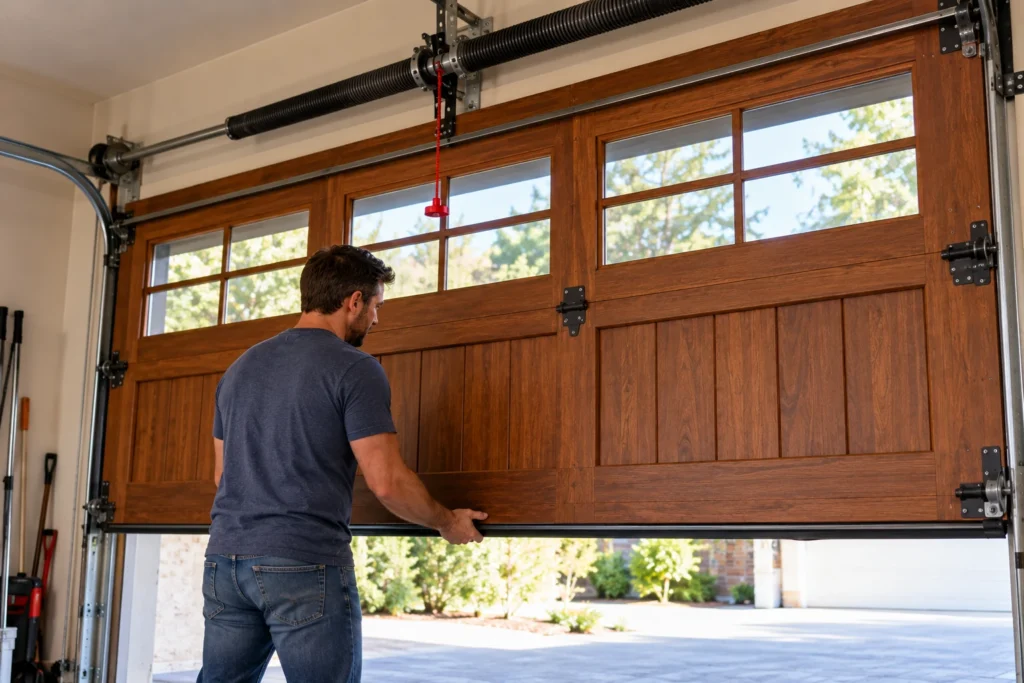
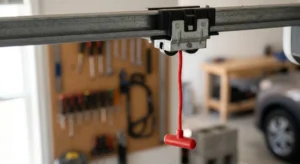
- Close the door and pull the red emergency release cord.
- Lift the door by hand to about waist height and let go.
- A balanced door stays roughly in place. If it drops or shoots up, the springs need adjustment.
- If the door feels very heavy to lift, stop and call a garage door technician. Never adjust torsion springs yourself; they’re under extreme tension.
Putting a powerful opener on a door with tired springs just moves the strain to the motor, gears and the door’s top panel. If you’re adding an opener to a heavy door, read our guide on reinforcing a garage door for an opener as well.
Installation and Cost
Heavy doors raise the stakes on installation, so plan the job before buying.
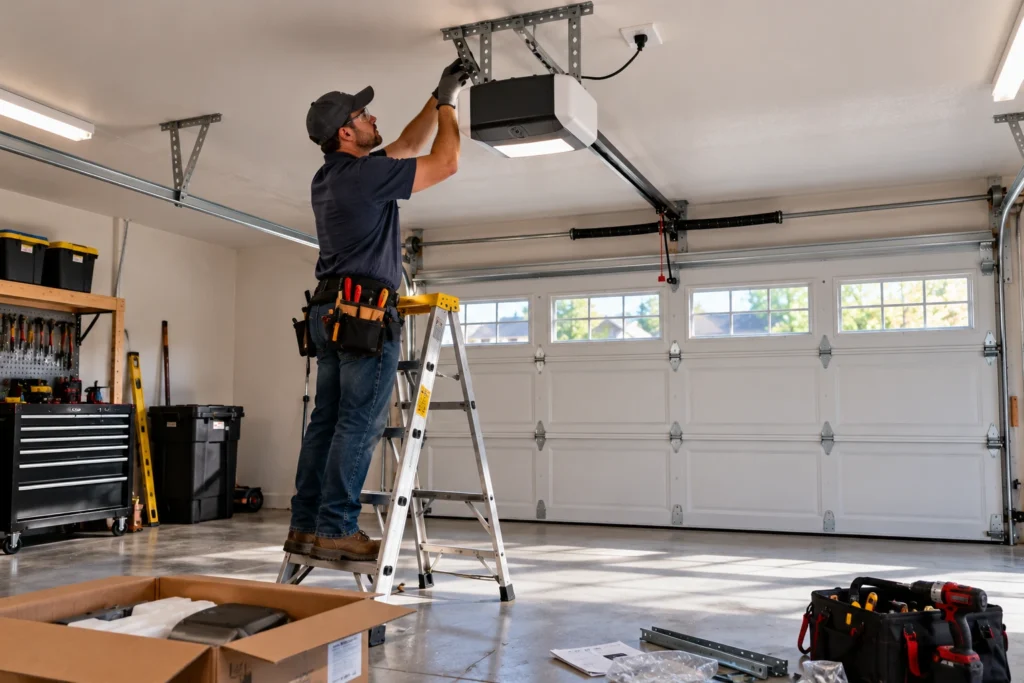
- Professional installation is recommended for jackshaft openers and for any door with spring or track problems. Typical installation labor runs about $150 to $300, more if springs need replacing.
- Power: plan for a ceiling outlet for overhead openers or a wall outlet beside the door for a jackshaft. See does a garage door opener need a dedicated circuit.
- Rail length: check door height before buying an overhead opener; 7-foot rails are standard.
- Battery backup: on a heavy door, it’s especially useful, since lifting a heavy door by hand during an outage is hard. Compare models in our best garage door opener with battery backup guide.
Running costs barely change with a stronger opener, because the motor only works for a few seconds per cycle. Our garage door opener electricity usage guide has the numbers.
Common Mistakes and Maintenance
These are the habits that shorten an opener’s life on a heavy door.
- Buying by horsepower alone. Match the opener to the door’s weight, height and spring type.
- Ignoring springs. Have them inspected yearly; heavy doors wear springs faster.
- Cranking up the force setting. If the door reverses, fix the cause instead of overriding the safety reverse.
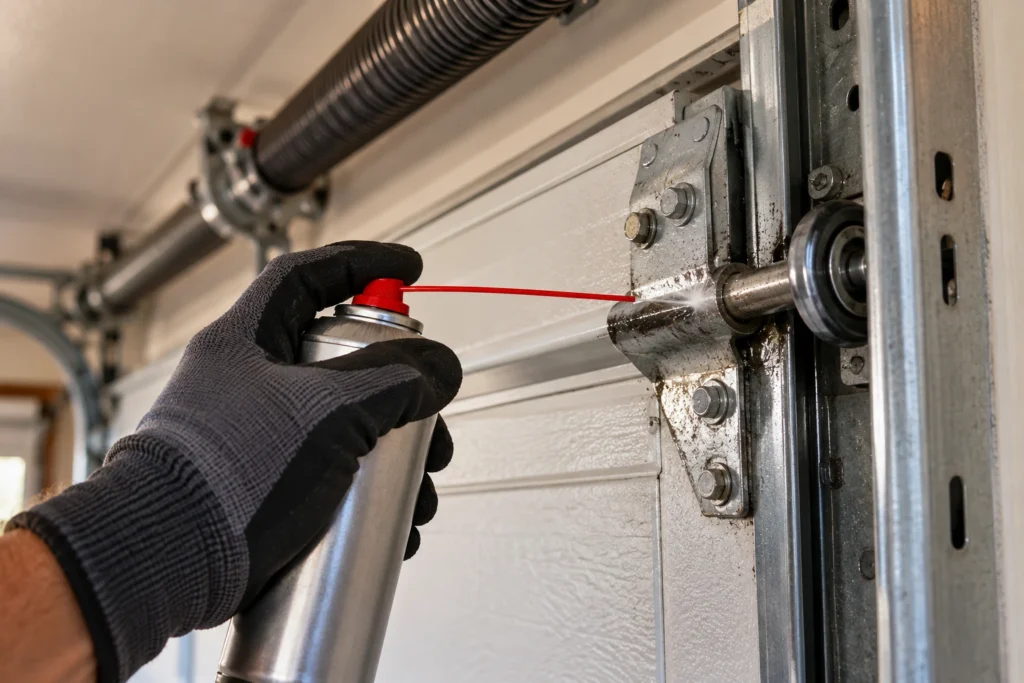
- Skipping lubrication. Lubricate rollers, hinges and springs every six months, and check belt tension twice a year.
- Ignoring new sounds. Increasing strain near the top of travel is an early warning sign. Our LiftMaster 1/3 HP troubleshooting guide shows what an overloaded opener looks like.
Frequently Asked Questions
How do I know if my garage door is too heavy for my opener?
Warning signs include the opener slowing near the top, a motor that feels hot after a couple of cycles, stripped gears, and unexpected reversing. First check the door’s balance with the opener disconnected; most of these symptoms come from springs, not the motor.
What is the heaviest door a residential opener can lift?
Overhead residential openers are usually listed for standard single and double doors, and Genie rates the 7155-TKV for doors up to 500 pounds. For heavier doors, wall-mount jackshafts go much higher: the LiftMaster 98022 is rated to 850 pounds and the 98032 to 1,100 pounds.
Is 3/4 HP enough for a heavy door?
For most insulated steel double doors, yes, if the springs are properly balanced. Solid wood and oversized doors are better served by a higher-rated opener or a jackshaft.
Can I use a jackshaft opener with extension springs?
No. Jackshaft openers turn the torsion bar, so the door must have a torsion spring system.
Do heavy doors need stronger springs?
Yes. Springs are sized to the door’s weight. If you add insulation, glass or a heavier door, the springs must be resized by a technician.
Can a garage door opener be too powerful?
Not in itself. A stronger motor simply works with less strain. What matters is the force setting: openers are adjusted so the door reverses if it meets resistance. Set the force too high and the door could fail to reverse on an obstruction, so always run the safety reverse test after installation.
Will a stronger opener use more electricity?
Barely. Openers run for only a few seconds per cycle, so the difference is a few cents a month for most homes.
How long do openers last on heavy doors?
A correctly sized opener on a balanced door typically lasts 10 to 15 years. An undersized opener on an unbalanced door can fail in a few years.
Related Guides
For more opener buying guides, see Best 3/4 HP Belt Drive Garage Door Opener, Best 1/2 HP Chain Drive Garage Door Opener, Best Garage Door Openers With Wi-Fi, Best Alexa-Enabled Garage Door Opener, Best Genie Garage Door Opener and Best Garage Door Hinges.
For manufacturer specs, see Chamberlain’s B4613T page and the LiftMaster 98022 product guide.