A single lightning strike near your house can fry your garage door opener’s logic board in an instant. The best surge protector for a garage door opener costs less than a large pizza but can save you a $150 to $400 repair bill. We compared the specs that actually matter — joule rating, UL listing, and clamping voltage — so you don’t have to guess. In our experience, most homeowners only think about this after they’ve already replaced a fried logic board once.
Modern openers pack a lot of sensitive electronics: control boards, WiFi chips, DC motors, and LED lights. None of that hardware handles a voltage spike well. A basic power strip won’t cut it here.
This post contains affiliate links. If you buy through our links, we may earn a small commission at no extra cost to you. We only recommend products we’d use ourselves.
Short Answer: The best surge protector for most garage door openers is a UL-listed, single-outlet plug-in model rated at 900 joules or higher. Look for an LED status indicator so you know it’s working. Universal models fit any brand, including LiftMaster, Genie, and Chamberlain openers, without special wiring.
Why Your Garage Door Opener Needs Surge Protection
Garage door openers sit on an exposed circuit, often on their own outlet near the ceiling. That makes them a common target for power surges from lightning, grid switching, or major appliances cycling on and off elsewhere in your house.
The logic board is the expensive part to replace. It controls your remote signals, safety sensors, and motor timing. A fried board usually means a $150 to $250 replacement part, plus labor if you’re not doing it yourself.
Newer smart openers add WiFi radios and app connectivity, which are even more surge-sensitive than older mechanical models. If your opener connects to MyQ, Aladdin Connect, or a similar app, surge protection matters more than it did on a 1990s chain-drive unit.
What to Look for in a Garage Door Opener Surge Protector
| Feature | Why It Matters |
|---|---|
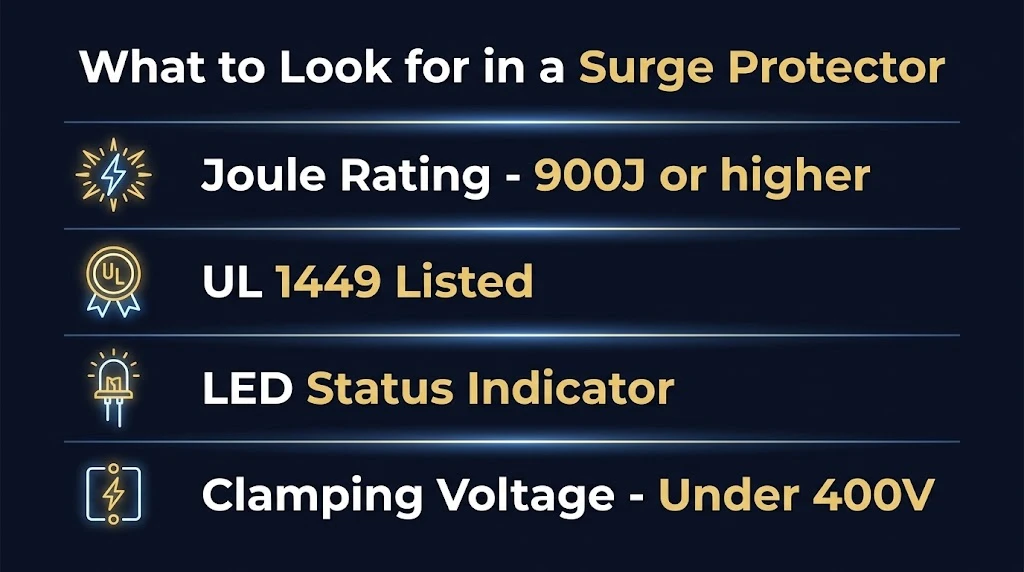
| Joule rating | Higher joules absorb bigger surges before failing; 600-900+ is solid for a single opener |
| UL 1449 listing | Confirms the device meets recognized safety and performance standards |
| LED status indicator | Shows at a glance whether the unit is still providing protection |
| Outlet count | Most openers only need one outlet; extra outlets add cost you don’t need |
| Clamping voltage | Lower voltage (under 400V) reacts faster to a spike |
The UL 1449 safety standard is the benchmark surge protective devices are tested against in North America, so a UL-listed unit has been verified for clamping performance and safe failure behavior. Joule rating measures how much surge energy the device can absorb over its lifetime before it needs replacing. A 900-joule unit handles more cumulative surge activity than a 300-joule one, which matters if you live somewhere with frequent storms or an older power grid.
Best Overall: Purpose-Built Garage Door Opener Surge Protector
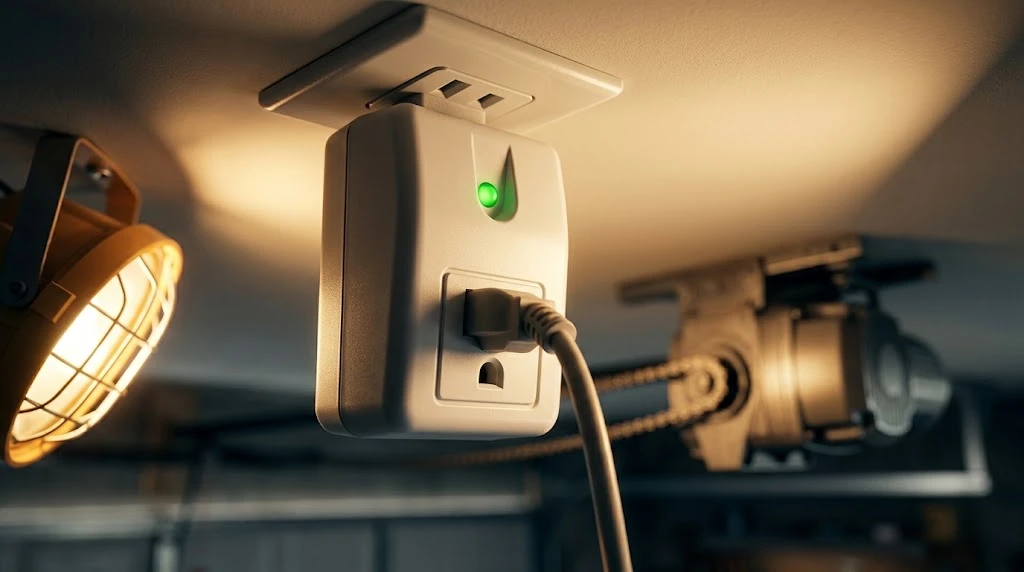
A dedicated garage door opener surge protector, rated around 900 joules, is the simplest choice for most homeowners. These plug directly into your ceiling outlet and accept the opener’s power cord on the front.
| Field | Detail |
|---|---|
| DIY Suitability | Safe for DIY — no wiring required |
| Safety Risk Level | Low |
| Cost Range | $15–$25 for the surge protector itself |
| Install Time | Under 5 minutes |
| Tools Needed | None |
Look for one rated at 900 joules with a 15A/125V rating and UL listing. This size handles the load of a typical opener circuit and works regardless of brand, so it fits LiftMaster, Genie, Chamberlain, or Craftsman openers the same way.
Check current prices on Amazon
Best Heavy-Duty Option: High-Joule Isolated Filter Design
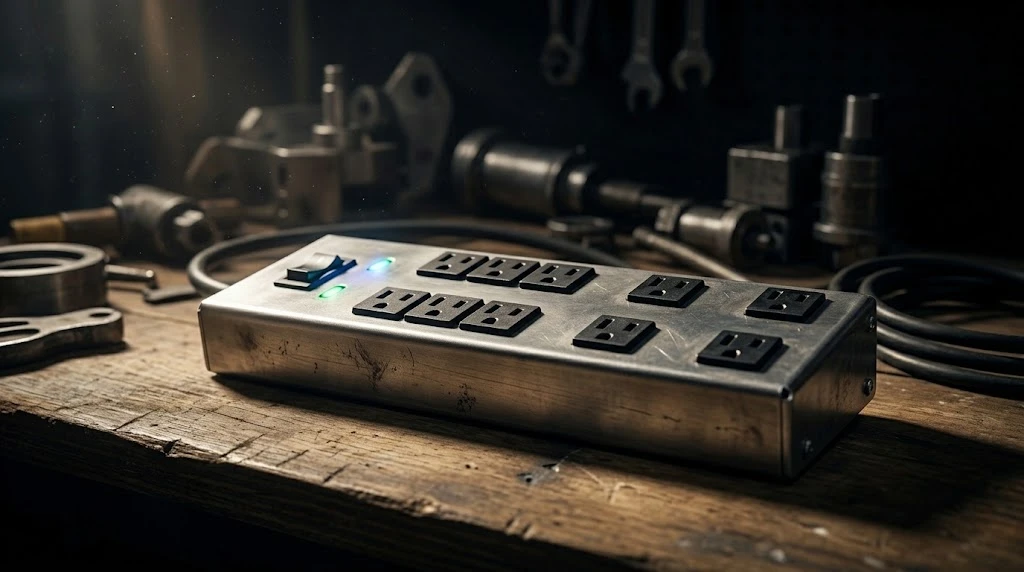
If you live in a lightning-prone region or you’ve already lost an opener to a surge, step up to a heavier-duty model. Isobar-style surge protectors rated around 1410 joules use isolated filter banks that block electrical noise between outlets, not just spikes.
These units cost more, usually $25 to $40, but the metal housing and higher clamping performance make sense if you’ve had storm damage before. A low clamping voltage, ideally under 150V, means the protector reacts faster once a surge hits.
Check current prices on Amazon
Best for Whole-System Protection: LiftMaster-Compatible Models
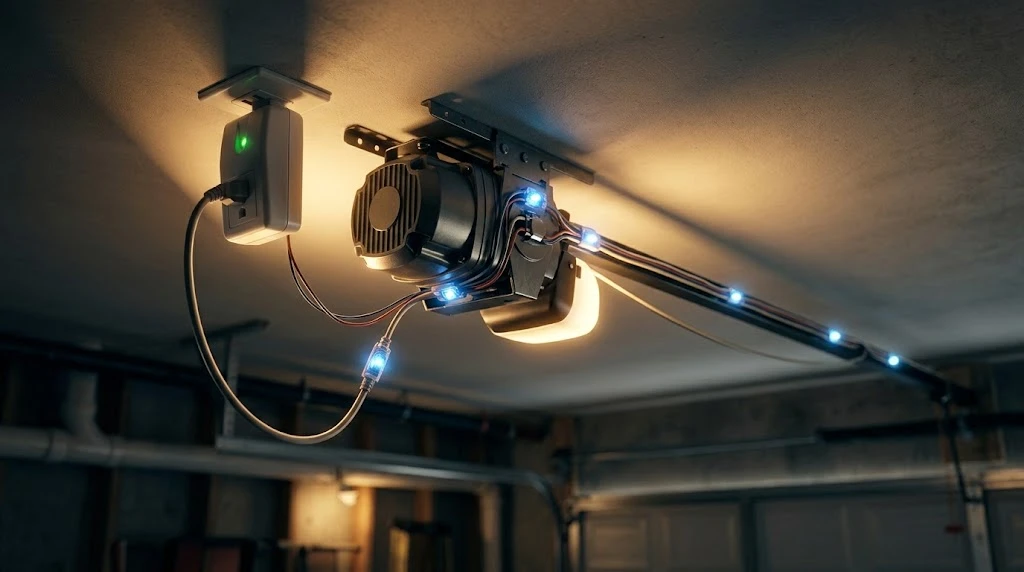
LiftMaster used to sell exactly this: the 990LM, a protector that guarded the AC power line, the control panel and the safety sensor wiring together. LiftMaster has discontinued it and has not named a replacement, so there is currently no opener-brand whole-system protector to buy.
That gap still matters, because a surge doesn’t only hit the motor — it can travel through sensor wiring and fry the photo eye circuit even if the main logic board survives. Until an opener brand ships a successor, the closest equivalent coverage is a two-part approach: a good plug-in protector on the opener outlet (the isolated-filter model in the section above), plus a whole-house surge protective device installed at your electrical panel by an electrician, typically $200 to $400 fitted. The panel device catches what comes in on the service line; the plug-in unit catches what the panel lets through.
Be careful with listings that still show the 990LM. Most are old stock or third-party sellers, and some are relabelled generic strips.
Best Budget Pick: Compact Single-Outlet Models
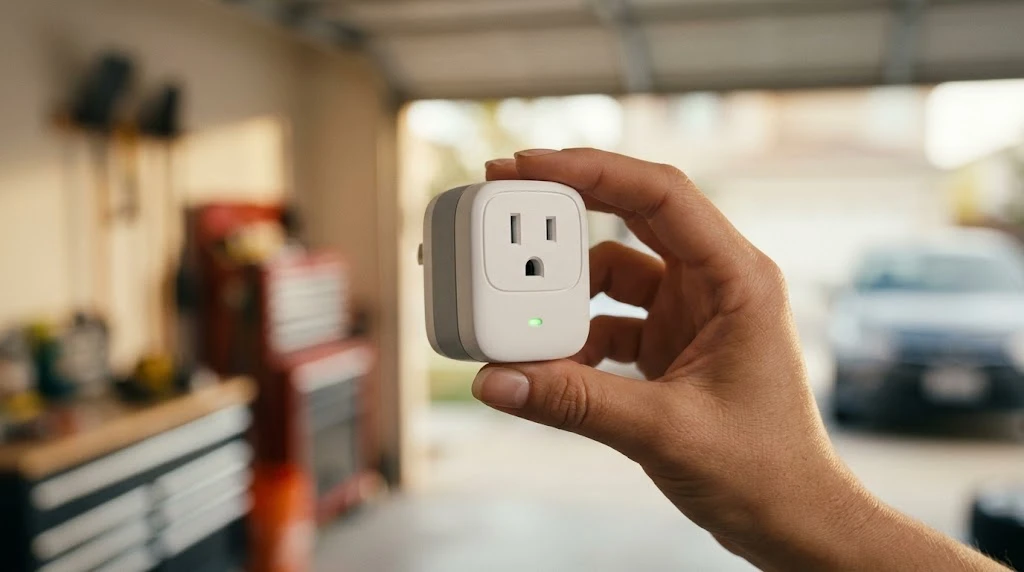
If you just want basic protection without spending much, compact single-outlet surge protectors rated around 350 to 600 joules do the job for most residential setups. They’re smaller, cheaper, and still UL-listed.
| Model Type | Joule Rating | Typical Price |
|---|---|---|
| Budget compact single-outlet | 350-600J | $10-$18 |
| Standard universal opener protector | 900J | $15-$25 |
| Heavy-duty isolated filter model | 1200-1410J | $25-$40 |
The tradeoff with budget models is a shorter lifespan under repeated surge activity. If your area rarely sees storms, this is a reasonable place to save a few dollars. If you’ve had lightning damage before, spend the extra $10 to $15 for a higher joule rating.
Check current prices on Amazon
Installing Your Surge Protector Correctly
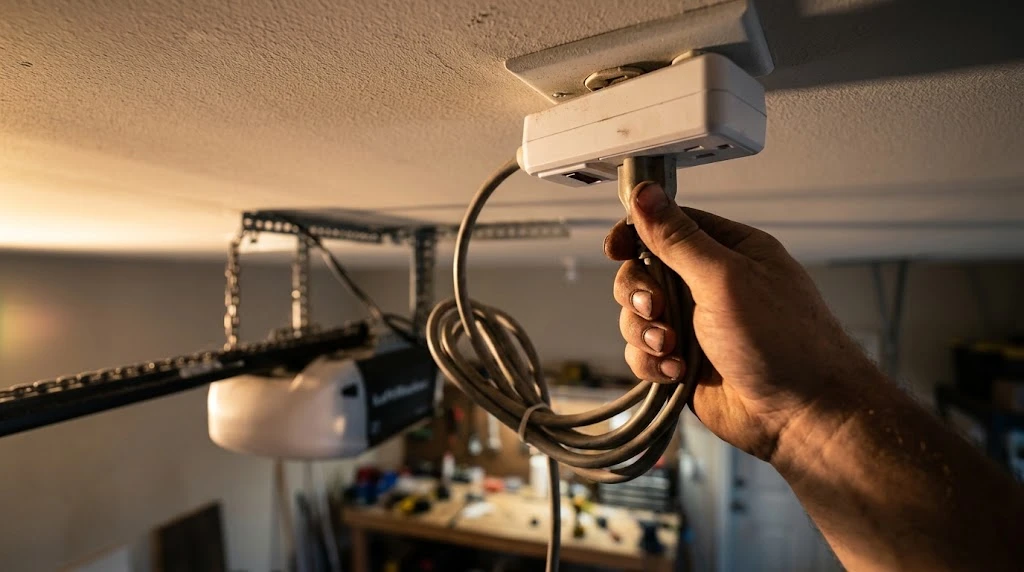
Installation takes less than five minutes on nearly every model. Plug the surge protector into your existing grounded outlet, then plug the garage door opener’s power cord into the protector instead of directly into the wall.
Check that the outlet itself is grounded first. A surge protector plugged into an ungrounded outlet won’t work properly, regardless of its joule rating. If your garage was built before the 1960s, have an electrician verify the outlet grounding before relying on any surge protector.
Most units include an LED indicator that stays lit when protection is active. If that light goes out, the protector has likely absorbed a major surge and needs replacing. Check it every few months, especially after a storm.
One mistake we see often: homeowners mount the protector loosely on a ceiling outlet and it works its way free over time. A small zip tie around the cord secures it without needing tools or drilling.
Frequently Asked Questions
Do garage door openers already have surge protection built in?
Some newer smart openers include basic surge protection on the circuit board, but it’s usually minimal. A dedicated external surge protector adds a meaningful extra layer, especially for WiFi-enabled models with more sensitive electronics.
Will a surge protector stop damage from a direct lightning strike?
No. A surge protector reduces risk from normal power spikes and nearby surge events, but a direct or very close lightning strike can still cause damage. For homes in high-lightning areas, pairing a plug-in protector with whole-house surge protection at the electrical panel offers better coverage.
How many joules do I need for a garage door opener?
A rating of 600 to 900 joules covers most residential garage door openers well. If you live somewhere with frequent electrical storms, choosing a model rated 1200 joules or higher extends the protector’s working lifespan.
Can I use a regular power strip instead of a surge protector?
Not recommended. A standard power strip only adds extra outlets and doesn’t absorb voltage spikes. Look specifically for “surge protector” or “surge suppressor” labeling and a joule rating on the packaging.
How do I know if my surge protector still works?
Check the LED status indicator. If it’s lit, the unit is actively protecting your equipment. If it goes dark, especially after a storm, the protector has likely used up its surge capacity and should be replaced.
Related Guides
For our other buying guides, see Best Garage Door Insulation for Hot Climates, Best Retractable Garage Screen Doors, Best Garage Door Opener With Battery Backup, Best Magnetic Garage Door Screen, Best Garage Door Hinges, Best Screw Drive Garage Door Opener, Best Lubricant for Garage Door Hinges, Best 1/2 HP Chain Drive Garage Door Opener, Best 3/4 HP Belt Drive Garage Door Opener and Best Garage Door Opener for Heavy Doors.