
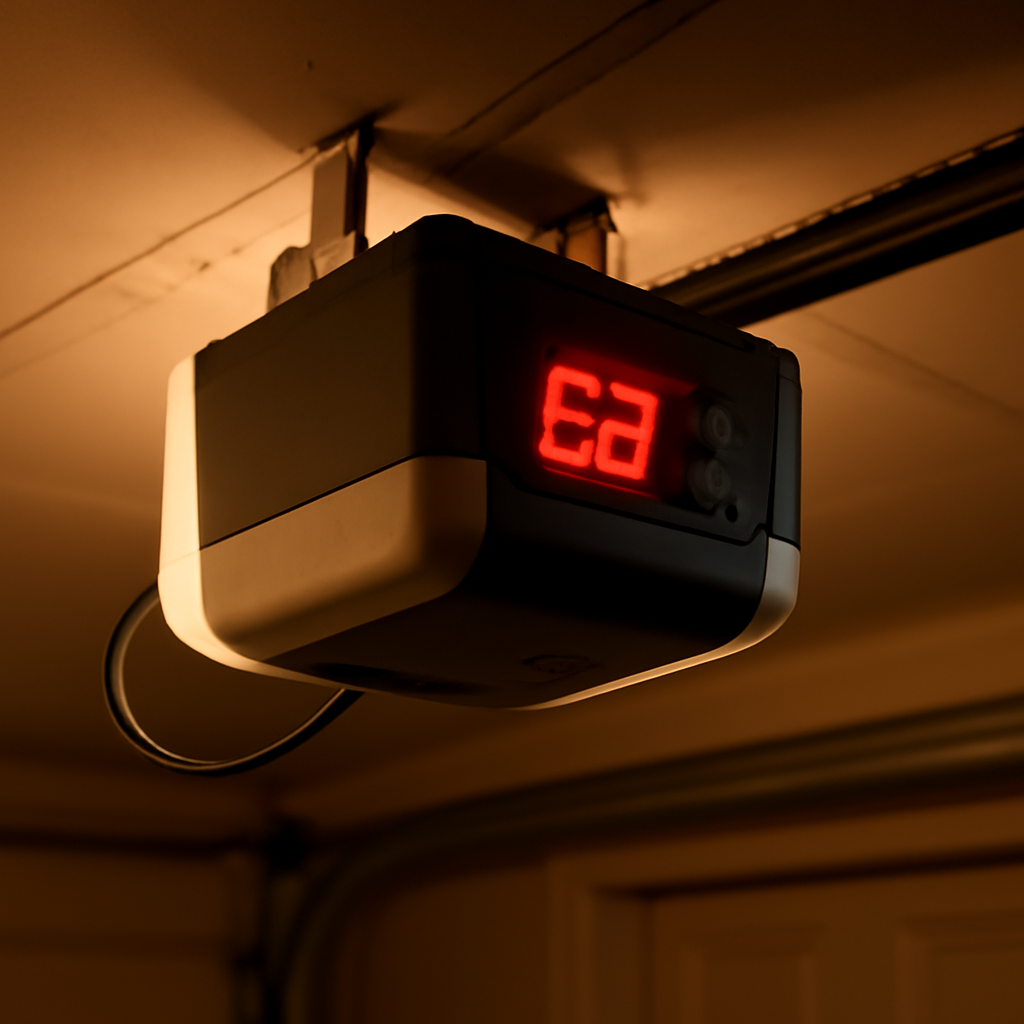
Your LiftMaster shows error code 42 and the door either won’t open or reverses partway up. “42” is how most people write LiftMaster code 4-2: four flashes of the UP arrow, then two flashes of the DOWN arrow. LiftMaster calls it Resistance While Opening: the opener detected an unexpected change in motor speed and stopped the door before it was fully open.
Most of the time it’s not a broken opener. It’s dry rollers, an off-balance door, or something in the door’s path. A handful of causes are more serious and involve the springs, which is where DIY should stop.
Here’s every cause in order, starting with the fastest fix, plus how to tell when it’s time to call a pro. One rule up front: don’t try to clear this code by turning up the force. LiftMaster’s fix steps are an obstruction check and a door balance test, not a force change.
Short Answer: LiftMaster error code 42 is code 4-2 (4 UP flashes, 2 DOWN flashes), which LiftMaster calls “Resistance While Opening”: something made the door harder to open than the opener expected, so it stopped before fully open. First remove anything in the door’s path and check the tracks. If it happens again, disconnect the door and do a balance test. If the door is hard to lift or won’t stay put, the springs or balance need a professional; never adjust springs yourself.
This post contains affiliate links. If you buy through our links, we may earn a small commission at no extra cost to you. We only recommend products we would use ourselves.
What LiftMaster Error Code 42 Actually Means
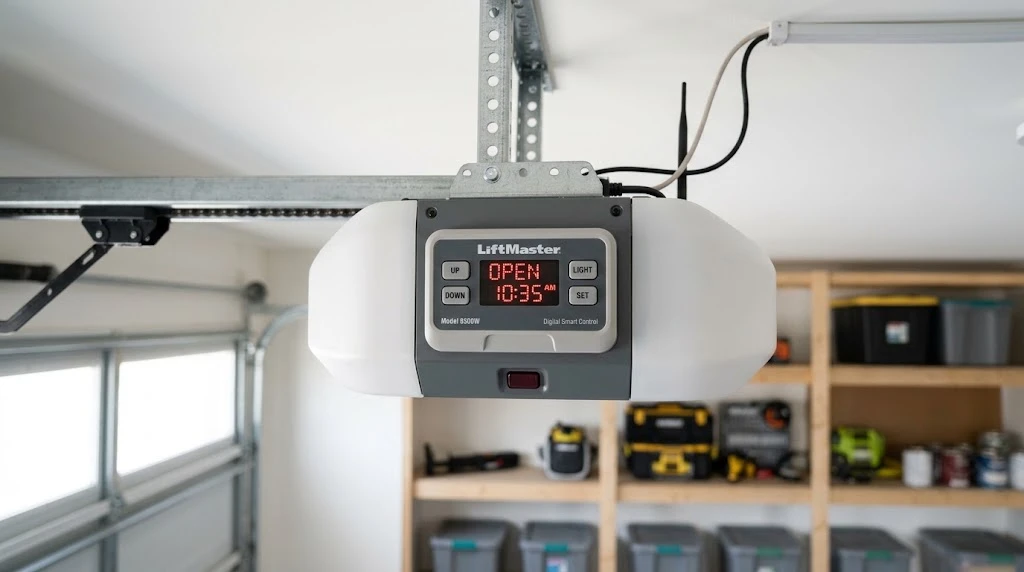
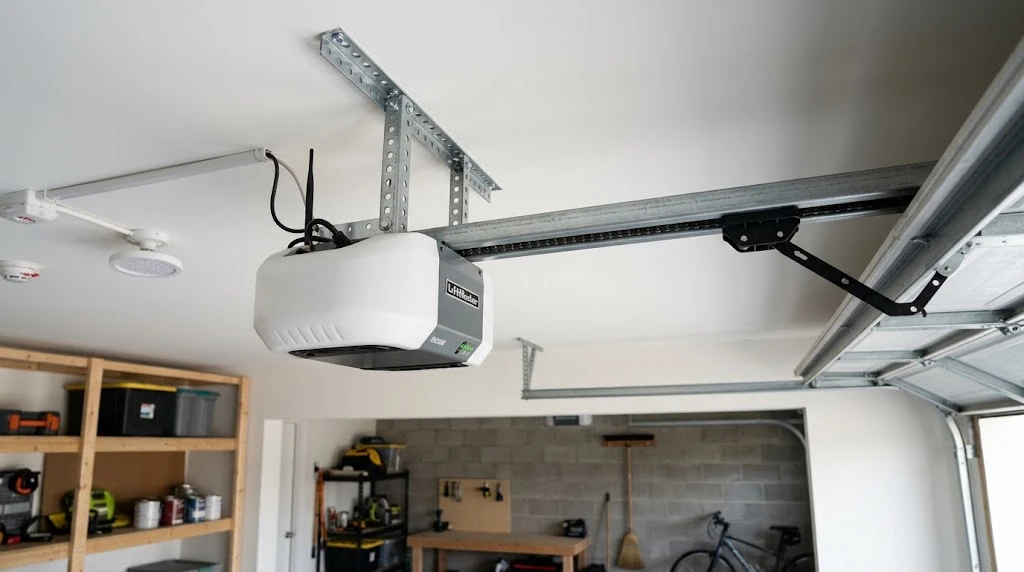
LiftMaster openers track motor RPM during every open cycle. When the door meets resistance — real or perceived — the RPM drops. If it drops past a set threshold before the door reaches full open, the logic board logs code 42 and stops the motor rather than forcing it through.
This is a safety feature, not a malfunction. LiftMaster designed it to stop the motor before it strains itself — or worse, before a struggling door drops on someone. The code doesn’t tell you which part is causing the resistance. That part takes some checking.
On the opener, the code shows as 4 UP flashes followed by 2 DOWN flashes, so “error 42” and “error 4-2” are the same thing. A related code, 4-4 (“RPM Lost While Opening”), also stops the door before it is fully open; LiftMaster’s checks for it are the same obstruction and balance tests, plus a look at the rollers and hinges for wear. If you’ve already dealt with the companion code, our guide to LiftMaster error code 4-1 covers the closing version (resistance while closing).
Most Common Causes of Code 42
| Cause | How Common | DIY Suitability | Safety Risk Level |
|---|---|---|---|
| Dry or worn rollers | Very common | Safe for DIY | Low |
| Misaligned or bent track | Common | Safe for DIY (minor adjustments) | Low |
| Obstruction in the door path (trash can, tool, broom handle) | Very common | Safe for DIY | Low |
| Weak or unbalanced springs | Common on older doors | Professional required | High |
| Worn opener drive gear | Less common | Professional required | Medium |
Notice that the most frequent causes, an obstruction and dry or worn rollers, are also the safest and cheapest to fix. Start there before assuming the worst.
How to Fix It, Step by Step
- Disconnect the opener and lift the door by hand. Pull the red release cord, then lift the door manually. It should move smoothly and stay put at any height. If it slams down or feels heavy, skip to the springs section below — don’t keep testing the opener yet.
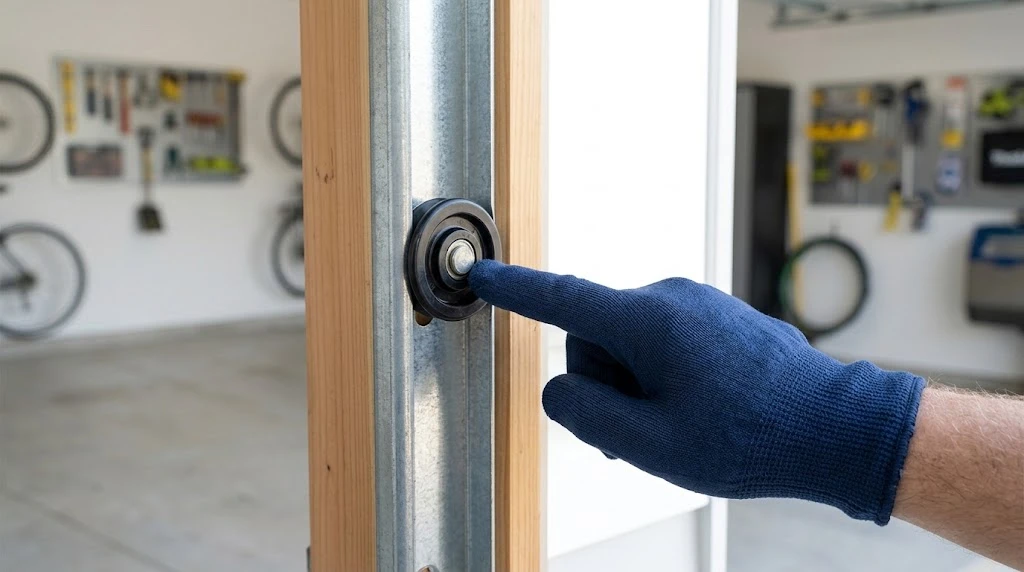
- Lubricate the rollers, hinges, and track. Use a silicone-based garage door lubricant, not WD-40, which attracts dust instead of repelling it. A dry rail is one of the most common reasons an opener suddenly starts logging excessive force.
- Check the track for bends or gaps. Stand back and sight down the vertical track on each side. A section pushed out of alignment makes rollers bind, which reads to the opener as resistance.
- Reconnect the opener and run one cycle. If the door opens fully without the code returning, you’re done. If it still trips, do the balance test in the next section.
- Check for obstructions. This is LiftMaster’s first step for 4-2: close the door with the wall control, inspect the door path and both tracks, and remove trash cans, tools, broom handles or anything else in the way. Then test again.
When It’s the Springs, Not the Opener
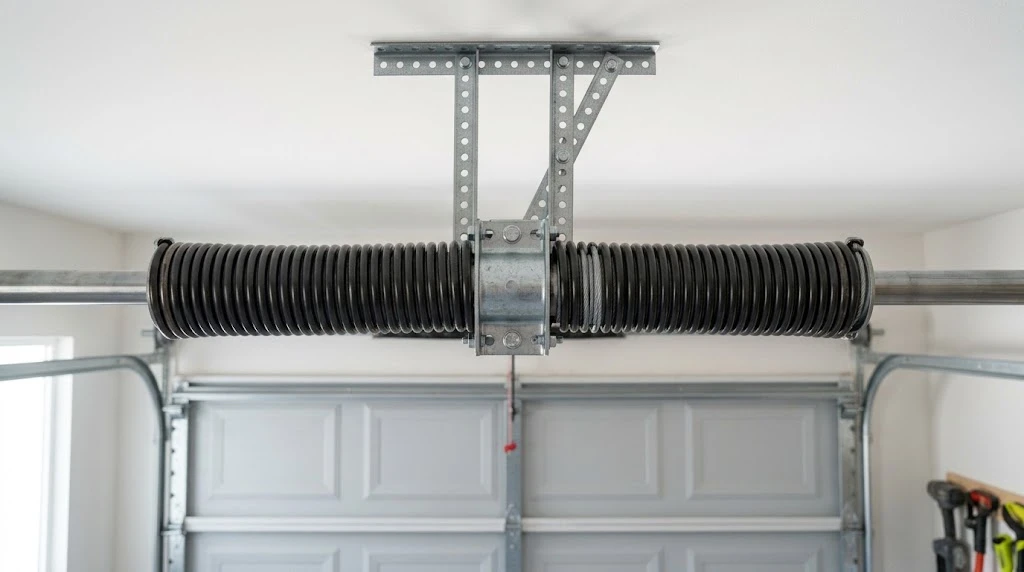
The opener isn’t built to lift the door’s full weight — the springs do that job. The motor just guides the door along the track. When springs weaken with age, the opener starts doing work it was never designed for, and that shows up as excessive force errors.
Here’s the test: with the door disconnected from the opener, lift it about halfway by hand and let go. A properly balanced door stays roughly in place. If it drops on its own or shoots upward, the springs are off and need adjustment.
Do not attempt this yourself. Torsion springs are wound under enough tension to cause severe injury or death if they release suddenly. This is one of the few repairs on a garage door where hiring a professional isn’t optional — it’s the only safe option. Expect to pay $150 to $300 for a spring adjustment or replacement, and a technician can usually finish it same-day.
Don’t Fix Code 4-2 by Raising the Force
LiftMaster’s official steps for 4-2 don’t include changing the force setting. On Security+ 2.0 (yellow Learn button) and Security+ 3.0 (white Learn button) openers, force is learned automatically when you program the travel limits, so if a part was replaced or the limits were reset, reprogram travel as your manual describes instead of hunting for a force dial. On older dial-type openers, raising the force to push past a binding or unbalanced door only hides the real problem and makes the safety reversal less sensitive.
If your door has also started making noise along with the force errors, it’s worth reading about what LiftMaster’s blink codes mean — a related but separate diagnostic system on the same opener.
When to Call a Professional
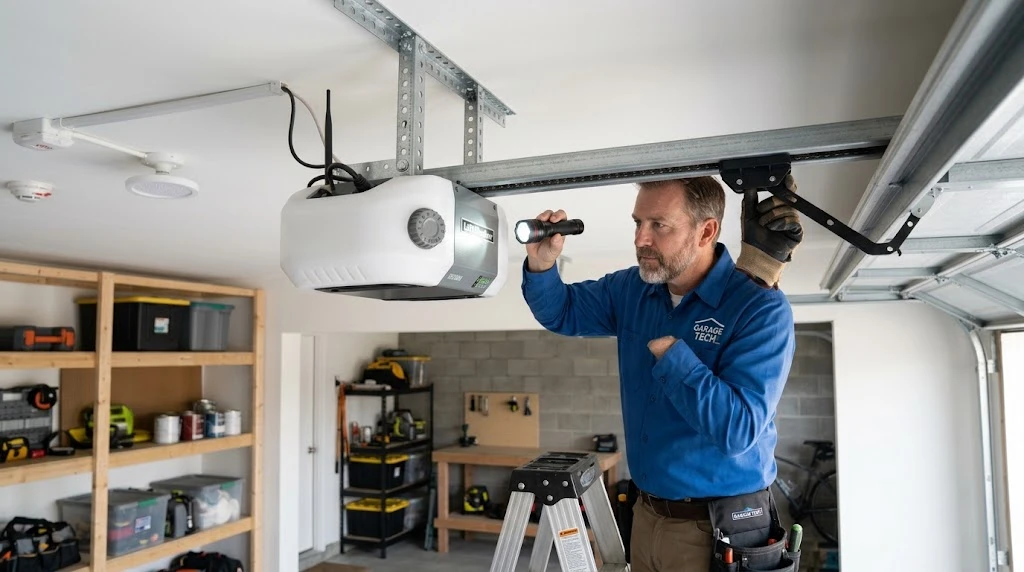
Call a professional if any of these apply: the door doesn’t move smoothly by hand, springs look stretched, rusted, or have a visible gap when at rest, the opener grinds or strains even after lubrication, or the code keeps returning after you’ve adjusted force and cleaned the track.
A service call for a diagnosis alone usually runs $75 to $150, and most companies apply that toward the repair if you move forward. Given that a wrong DIY move on a torsion spring can cause serious injury, that’s money well spent when springs are involved.
Regular maintenance also helps prevent code 42 from coming back. Our guide on the best lubricant for garage door hinges covers what actually works long-term versus products that wash out after a few rain cycles.
Last verified: November 2, 2026, against LiftMaster Partner Support: Diagnostic Codes and UP/DOWN Flashing Lights.
Frequently Asked Questions
What does LiftMaster error code 42 mean?
It’s LiftMaster code 4-2, “Resistance While Opening.” The opener detected an unexpected change in motor speed (RPM) while opening and stopped the door before it reached the fully open position.
Can I fix LiftMaster error code 42 myself?
Often yes, if the cause is an obstruction, dry rollers or a slightly misaligned track. LiftMaster’s own steps are to clear the door path, then test the door’s balance. If the door feels heavy or unbalanced by hand, stop and call a professional — that points to a spring problem.
Is it safe to keep opening the door manually if I get this error?
Yes, using the manual release is safe short-term. But if the door feels heavy, uneven, or drops on its own when disconnected from the opener, don’t keep forcing it open and closed by hand either — that’s a sign the springs need professional attention soon.
Why does my LiftMaster keep showing code 42 after I adjusted the force?
If the error returns after a force adjustment, the underlying resistance hasn’t actually been fixed — you’ve just told the motor to push harder against it. This usually means the real issue is mechanical: worn springs, a bent track, or a roller that needs replacing, not the setting itself.
How much does it cost to fix LiftMaster error code 42?
If the cause is dry rollers or track alignment, a $10 tube of lubricant may be all you need. If it’s a spring issue, expect to pay $150 to $300 for a professional repair. A full opener replacement, in rare cases of a failed drive system, runs higher.