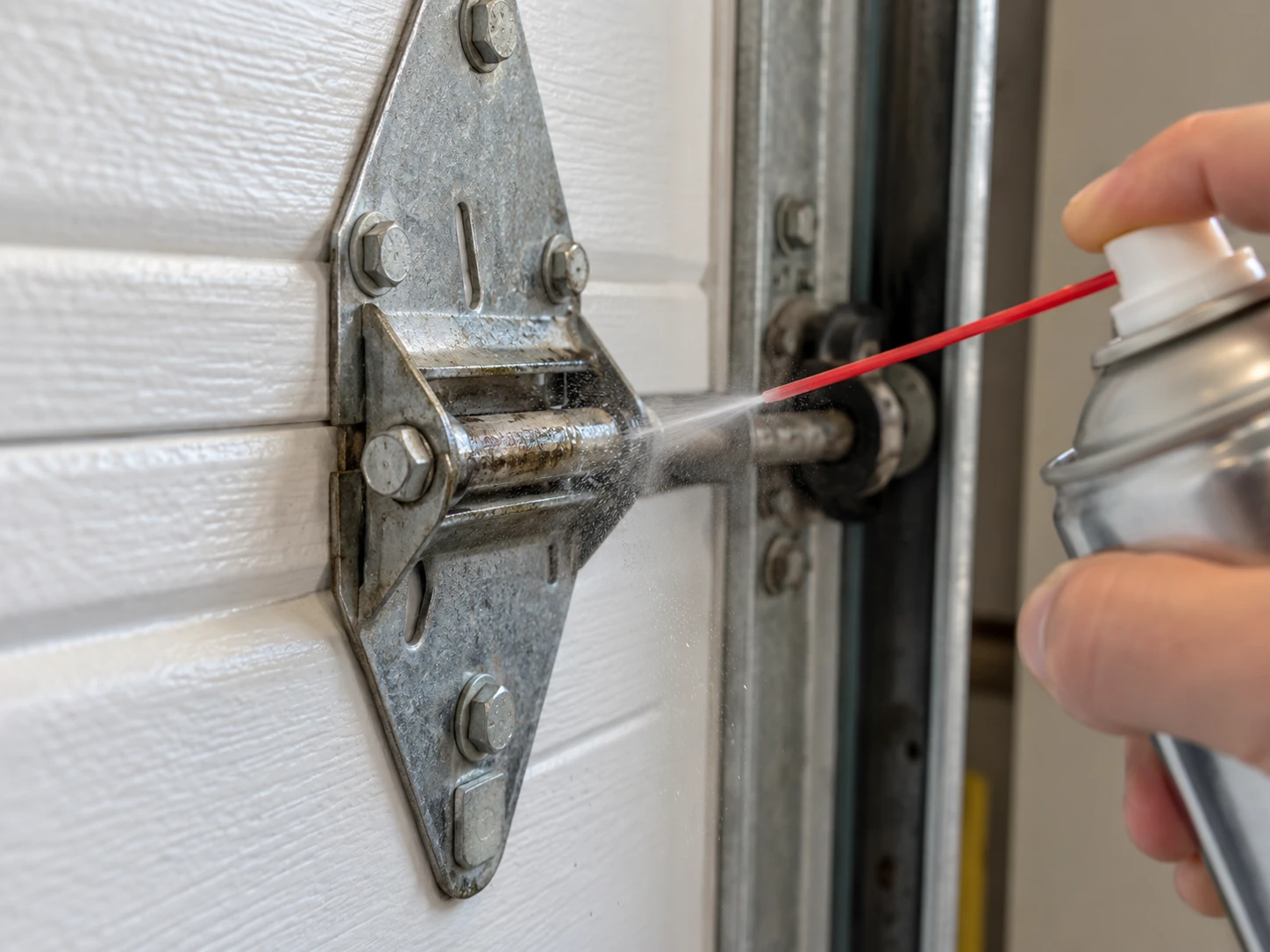
Squeaky, stiff garage door hinges are usually a five-minute fix, as long as you use the right product in the right places. The wrong choice, like regular WD-40 or a thick axle grease, can leave hinges dry within days or turn into a sticky dirt magnet.
This guide compares the two lubricant types garage door makers actually recommend, picks specific products, and shows exactly where to spray (and where not to) on the rest of the door.
Short Answer: For garage door hinges, use a silicone-based garage door lubricant or a white lithium grease spray. Clopay, one of the largest garage door manufacturers, recommends silicone because it doesn’t attract dirt, and suggests white lithium grease used sparingly. Good picks are Blaster Silicone Garage Door Lubricant, WD-40 Specialist White Lithium Grease and 3-IN-ONE Professional Garage Door Lubricant. Don’t use regular WD-40 or household oil, never lubricate the tracks, and skip nylon rollers.
In our experience helping homeowners quiet noisy doors, most squeaks disappear after one careful pass on the hinges and rollers, and most “lubricant failures” come from spraying the tracks instead.
Affiliate disclosure: As an Amazon Associate, we earn from qualifying purchases. This doesn’t change our recommendations or your price.
Silicone vs White Lithium Grease for Hinges
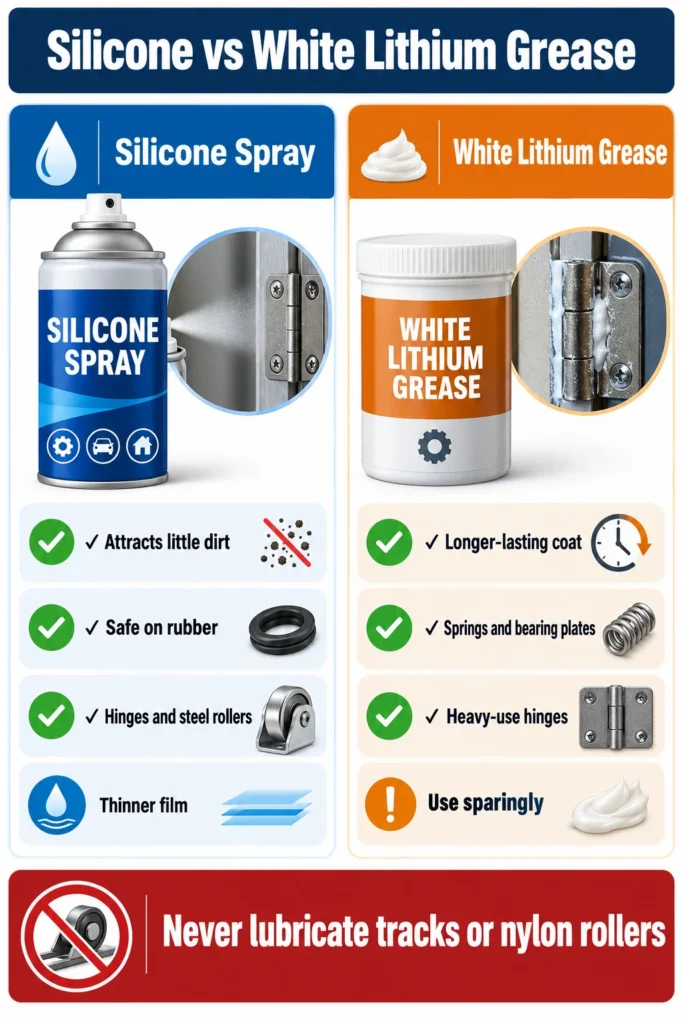
Both work on hinges. The difference is how they handle dirt and how long they last between applications.
| Factor | Silicone Garage Door Lube | White Lithium Grease Spray |
|---|---|---|
| Dirt and dust | Attracts very little | Can collect dirt if overapplied |
| Film | Thin, light film | Thicker, longer-lasting coating |
| Best on | Hinges, steel rollers, weatherstripping | Hinges, springs, bearing plates, metal pivots |
| Rubber and plastic | Generally safe | Keep off rubber seals |
| Who recommends it | Clopay’s first choice | Clopay suggests it sparingly; Bob Vila’s top tested pick |
For most homeowners, a silicone garage door lube is the easiest all-round choice. If your garage is dusty, silicone is the better option; if hinges are heavily loaded or older, white lithium grease lasts longer.
Our Picks at a Glance
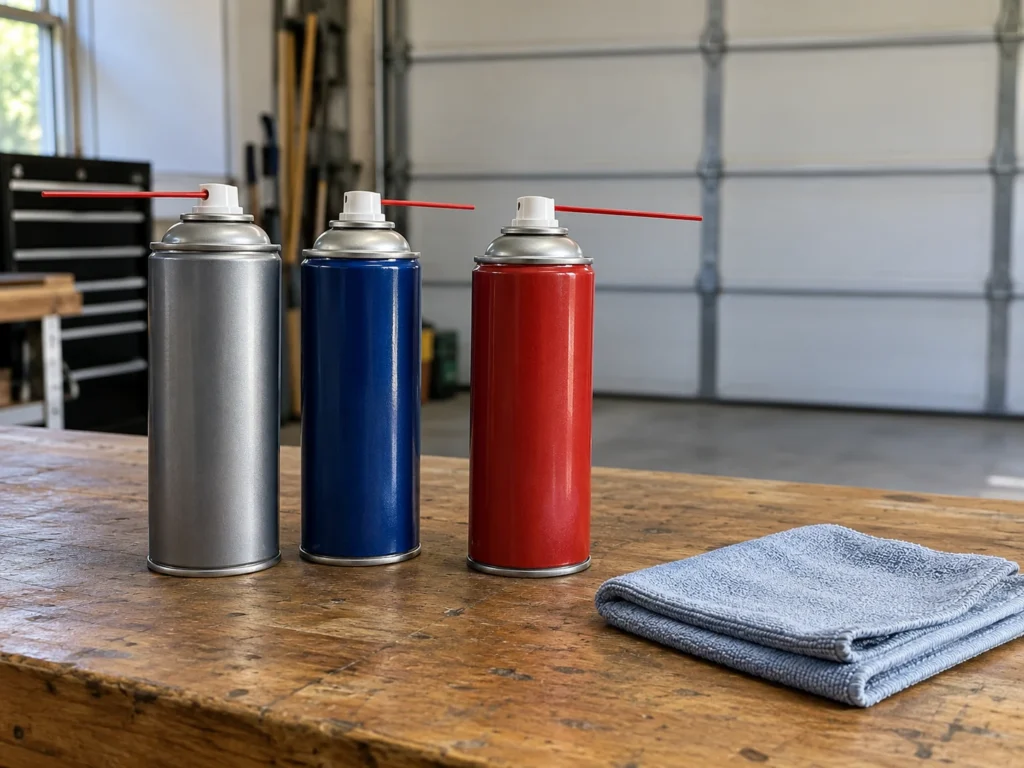
These three cover almost every situation. Each comes with a straw applicator for reaching hinge pivot points.
| Product | Type | Best For |
|---|---|---|
| Blaster Silicone Garage Door Lubricant (16-GDL) | Silicone spray | Clean, low-dirt lubrication on hinges and steel rollers |
| WD-40 Specialist White Lithium Grease | White lithium grease spray | Long-lasting coating on hinges, springs and bearing plates |
| 3-IN-ONE Professional Garage Door Lubricant | Garage door-specific spray | One can for the whole door |
Blaster Silicone Garage Door Lubricant: Best Overall
The Blaster 16-GDL Silicone Garage Door Lubricant is a silicone spray made specifically for garage doors, which matches what Clopay recommends for hinges.
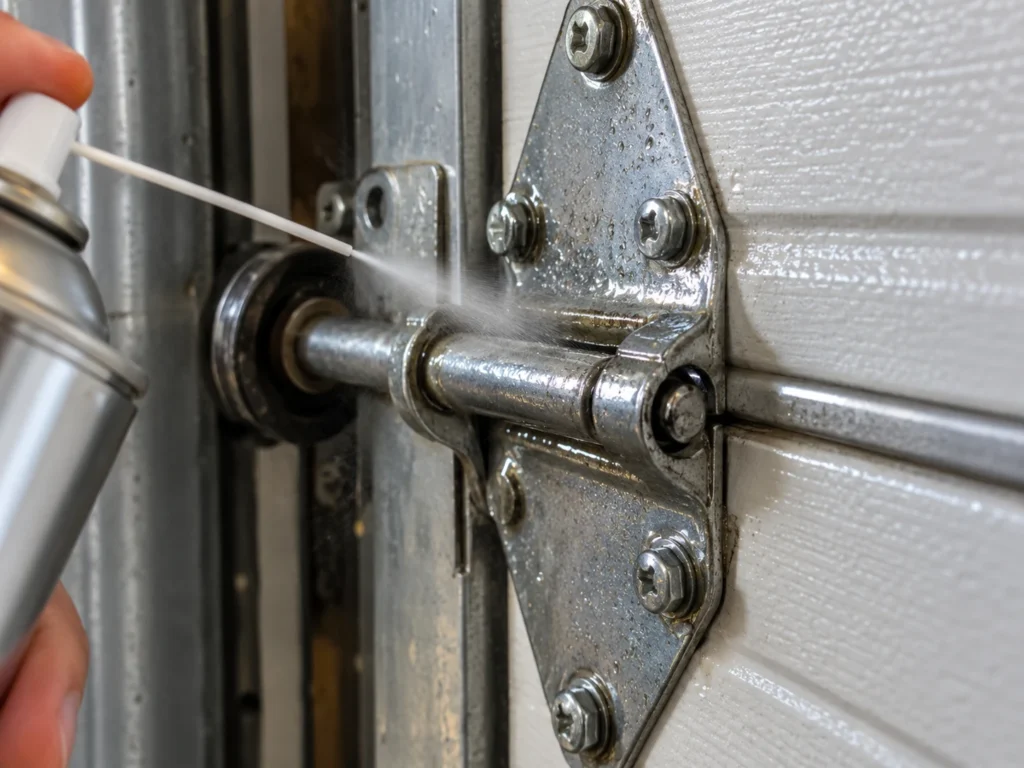
- Type: silicone-based spray.
- Why it works: leaves a thin film that doesn’t collect much dust, so hinges stay clean longer.
- Also good for: steel rollers, springs and rubber weatherstripping.
- Limit: a thinner film means you may reapply a little more often than with lithium grease.
WD-40 Specialist White Lithium Grease: Best for Heavy Use
Don’t confuse it with regular WD-40. The WD-40 Specialist White Lithium Grease lays down a real grease coating, and it was Bob Vila’s best overall pick in hands-on garage door lubricant testing.
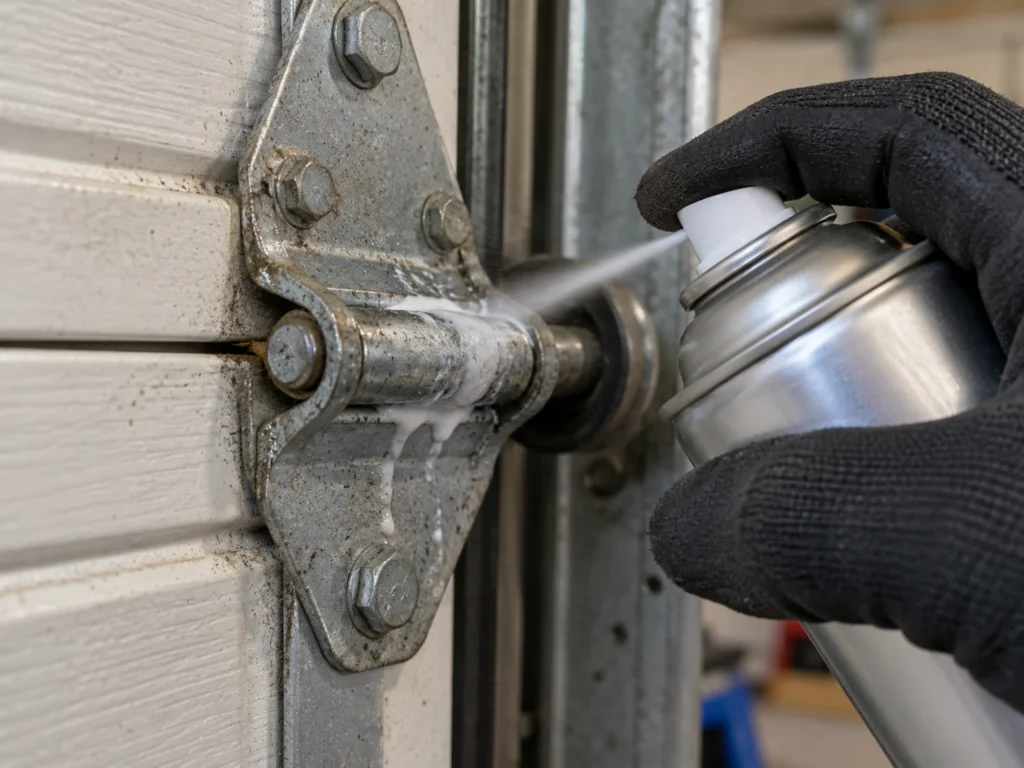
- Type: white lithium grease spray with a 2-way straw.
- Why it works: clings to metal-on-metal pivots and resists washing off.
- Best for: older or heavily used hinges, torsion springs and bearing plates.
- Limit: use a light coat; excess grease attracts dirt.
The CRC White Lithium Grease is a similar alternative if it’s easier to find locally.
3-IN-ONE Professional Garage Door Lubricant: Best All-in-One
The 3-IN-ONE Professional Garage Door Lubricant is formulated for garage doors and comes with a Smart Straw that sprays in a wide pattern or a precise stream.
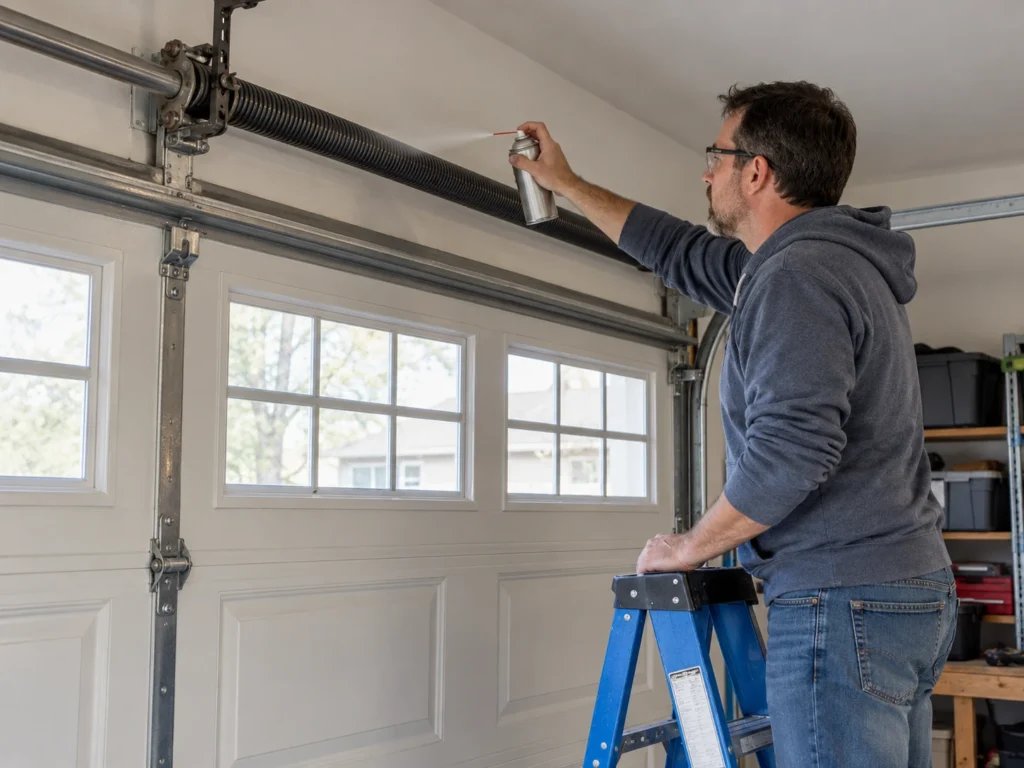
- Type: garage door-specific lubricant spray.
- Why it works: one can handles hinges, steel rollers and springs.
- Good to know: 3-IN-ONE also sells a separate silicone garage door lubricant, so check the label if you specifically want silicone.
Bob Vila’s testing named it the best value pick in its garage door lubricant roundup.
What Not to Use, and Where Not to Spray
Some of the most common “fixes” make the problem worse.
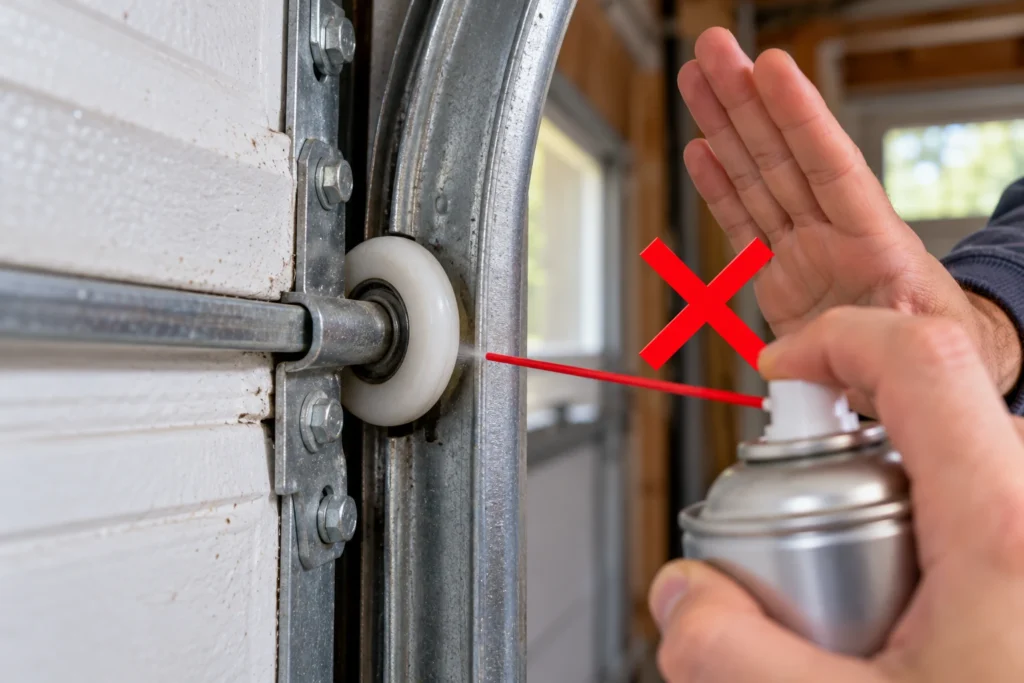
- Regular WD-40: it’s a water displacer and cleaner, not a lasting lubricant. It’s useful to free a rusted hinge, but follow it with a real lubricant.
- Household and motor oils: they run, drip and attract dirt. Clopay specifically advises against oil-based lubricants.
- Thick axle or bearing grease: too heavy for hinges and turns gritty.
- Petroleum jelly: can soften rubber seals.
- The tracks: don’t lubricate inside the tracks. Clopay notes it makes it harder for rollers to move. Clean them with a dry cloth instead.
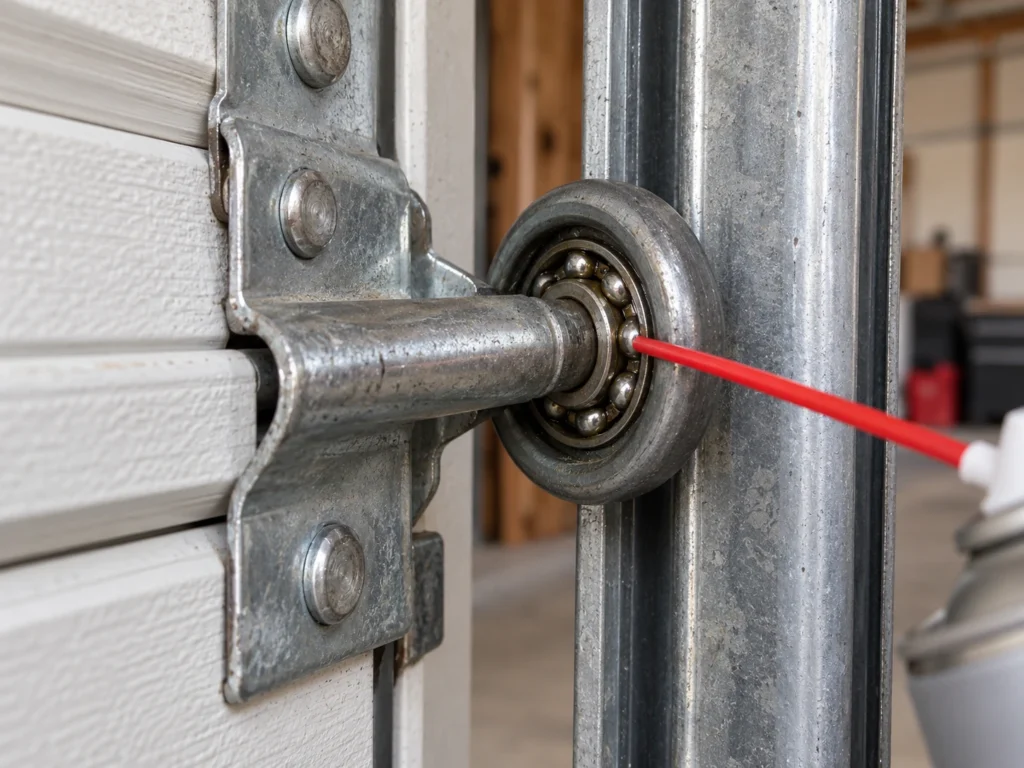
- Nylon rollers: Clopay says not to lubricate nylon rollers. Only steel rollers with exposed bearings need it.
How to Lubricate Garage Door Hinges
The whole door takes about 10 to 15 minutes.
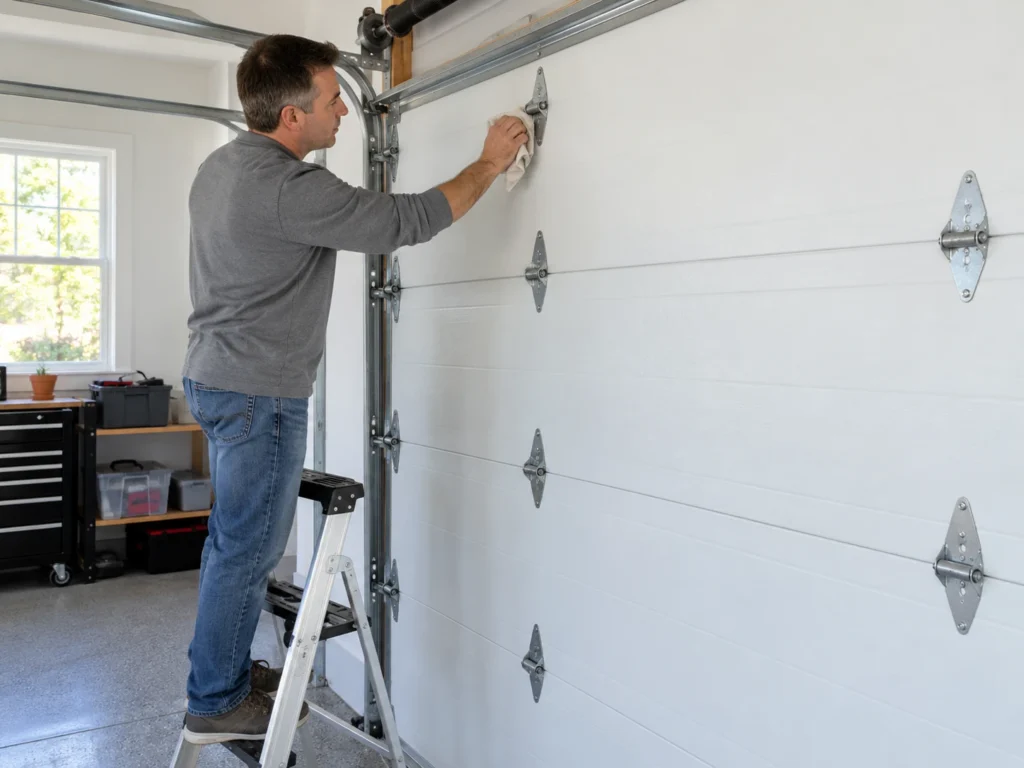
- Close the door and unplug the opener so it can’t move while you work.
- Wipe each hinge with a dry rag to remove old grease and grit.
- Spray a short burst directly onto the hinge pin and pivot points, where the hinge plates rotate.
- Work through every hinge from the top section down. Use a step ladder for the top row, never stand on the door.
- Plug the opener back in and run the door up and down two or three times to spread the lubricant.
- Wipe off drips and excess so they don’t collect dirt or drip on the car.
If a hinge still squeaks after lubrication, check for a cracked hinge, a worn-out pin hole, or a bad roller. See our best garage door hinges guide for replacements.
What Else to Lubricate While You’re There
Hinges are only part of the noise. Here’s what to treat, and with what.
| Part | Lubricate? | What to Use |
|---|---|---|
| Hinges | Yes | Silicone or white lithium grease |
| Steel rollers (bearings) | Yes | Silicone or white lithium grease |
| Nylon rollers | No | Leave dry |
| Torsion spring and bearing plates | Yes, light coat | White lithium grease or silicone |
| Tracks | No | Wipe clean only |
| Weatherstripping | Optional | Silicone only |
| Opener rail or screw | Check the manual | Current Genie screw drives need none; older screw drives may need screw drive grease |
Never adjust or try to remove springs while lubricating; a light spray is all they need. If the door is still noisy after this, the opener may be the source. Our quiet belt drive opener guide covers the quietest options, and our screw drive opener guide explains screw drive maintenance.
Best Lubricant for Garage Door Rollers
Steel rollers with exposed ball bearings take the same products as hinges: a silicone garage door lube or a light shot of white lithium grease aimed at the bearing, not the outer wheel. Nylon rollers with sealed bearings should be left dry, per Clopay. If a roller still squeaks or wobbles after lubrication, the bearing is worn and the roller should be replaced.
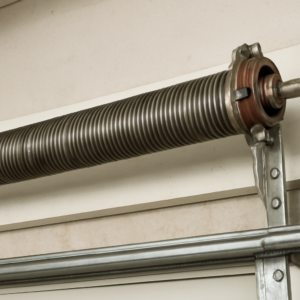
Lubricating the Torsion Spring
A light coat on the torsion spring cuts the creaking and squeaking it makes as it winds and unwinds, and helps slow rust. Spray a thin line along the top of the coils with silicone or white lithium grease, run the door a few times, and wipe off drips. Only lubricate; never loosen, adjust or touch the winding cones, because the spring is under extreme tension.
What About the Opener Chain or Screw?
Opener rails are different from door hardware, so follow the opener manual rather than reaching for the same can. Genie says its current screw drives are maintenance-free, while older screw drives may need a specific screw drive grease, and many modern chain and belt drives need little or no lubrication on the rail. A noisy chain is more often a tension problem than a dry one.
How Often to Lubricate, and When to Replace
Clopay recommends lubricating every 6 months for average use, and every 3 months for doors used heavily every day. Very hot, cold or dusty garages may need the shorter interval.
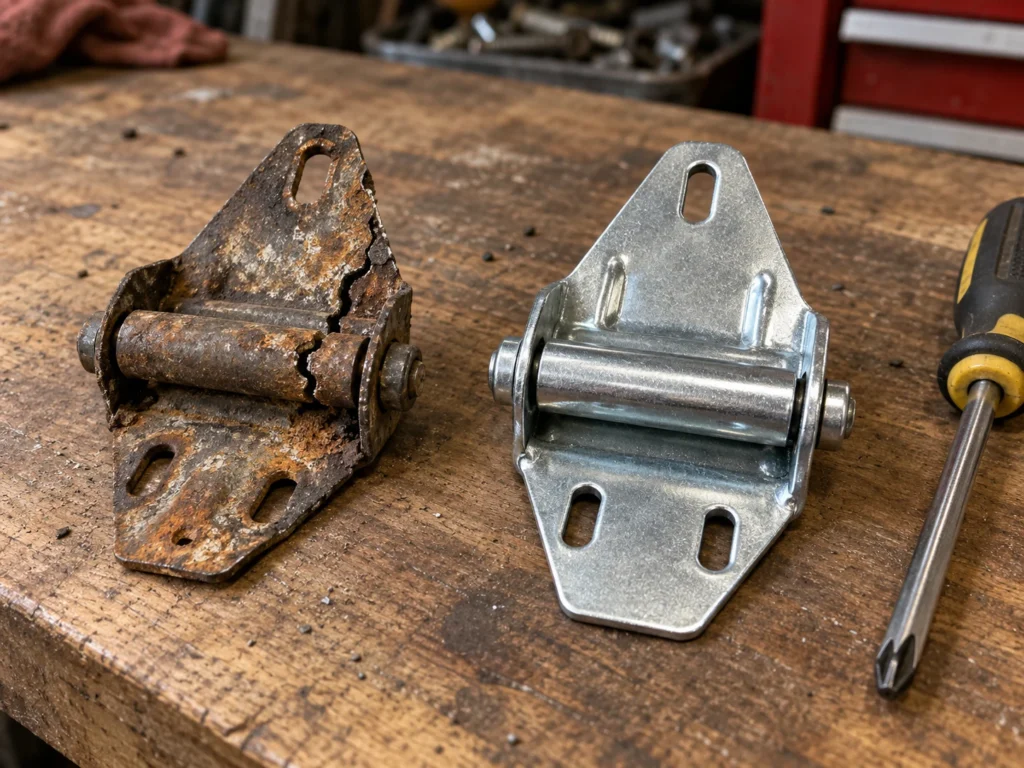
- Lubricate now if: hinges squeak or grind, the door moves jerkily, or you see dry, rusty pivot points.
- Replace the hinge if: it’s cracked, the pin hole is worn oval, or the pin wobbles. Lubricant can’t fix worn metal.
- Call a technician if: a hinge on the top section or near the bottom bracket is damaged, since those areas carry spring and cable tension.
If your door jerks or shudders even after lubricating, see our guide on why a garage door jerks when opening.
Frequently Asked Questions
Can I use WD-40 on garage door hinges?
Regular WD-40 isn’t a long-term lubricant. Use it to loosen a rusty hinge, then apply silicone or white lithium grease. WD-40 Specialist White Lithium Grease is a different product and works well on hinges.
Is silicone or white lithium grease better for garage door hinges?
Both work. Silicone stays cleaner and is Clopay’s first recommendation; white lithium grease lasts longer under heavy load but should be applied sparingly.
Should I lubricate garage door tracks?
No. Lubricant in the tracks makes rollers slide instead of roll and collects dirt. Wipe the tracks clean instead.
Do nylon rollers need lubrication?
No. Clopay advises against lubricating nylon rollers. Only steel rollers with exposed bearings need it.
How often should I lubricate garage door hinges?
Every 6 months for average use, or every 3 months for heavy daily use, per Clopay’s guidance.
What is the best lubricant for regular door hinges?
For interior and exterior house door hinges, a silicone spray or a PTFE (Teflon) dry lubricant works well and won’t stain trim. White lithium grease also works but is messier. As with garage doors, regular WD-40 only gives short-term relief.
Is a PTFE (Teflon) lubricant good for garage doors?
Yes. PTFE sprays leave a slick, low-dust film and work well on hinges and steel rollers. Bob Vila named a DuPont Teflon silicone lubricant its best silicone pick in garage door lubricant testing.
Can I over-lubricate garage door hinges?
Yes. Excess lubricant attracts dirt that wears the pivot. A short burst per hinge and a quick wipe is enough.
Will lubrication stop my garage door from squeaking?
Usually. If it doesn’t, the noise may come from worn rollers, a damaged hinge, springs or the opener itself.
Related Guides
For more garage door maintenance, see Best Garage Door Hinges, Garage Door Jerks When Opening, Garage Door Shifted to One Side, Best 3/4 HP Belt Drive Garage Door Opener, Best Screw Drive Garage Door Opener and Garage Door Leaking at the Corners.
For manufacturer guidance, see Clopay’s guide to lubricating garage door components.