
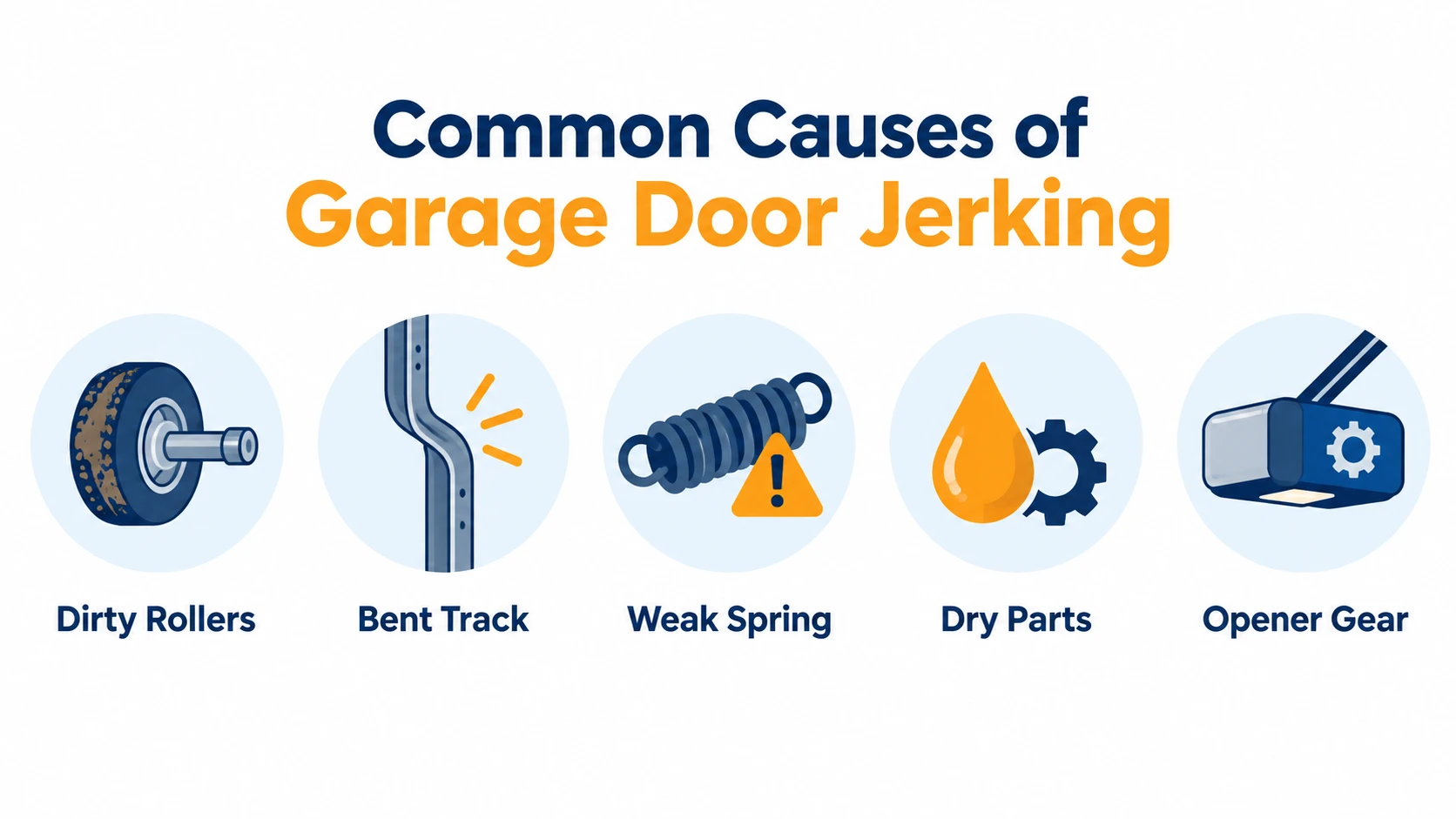
A garage door that jerks when opening is telling you something in the system — rollers, tracks, springs, or the opener itself — isn’t moving smoothly. Ignore it long enough and a minor jerk turns into a stuck door or a snapped cable.
Most causes are simple and safe to check yourself. A few, mainly anything involving the springs, are not a DIY job. Here’s how to tell the difference and fix what you safely can.
Short Answer: A garage door usually jerks when opening because of worn or dirty rollers, a bent track, or unbalanced springs. Start by inspecting and lubricating the rollers and tracks — that fixes most cases. If the door still jerks or feels heavy to lift by hand, the springs are likely unbalanced and need a professional.
Quick Diagnosis: What the Jerk Feels Like
Where and how the door jerks narrows down the cause fast. Use this table to match your symptom to the likely source before you start troubleshooting.
| Symptom | Probable Cause | DIY Suitability | Safety Risk Level |
|---|---|---|---|
| Door shakes or vibrates the whole way up | Worn or dirty rollers | Safe for DIY | Low |
| Jerks at the same spot every time | Bent or misaligned track | Safe for DIY (minor), Professional for major bends | Low to Medium |
| Door feels heavy, jerks mid-way, or won’t stay open | Weak or unbalanced spring | Professional required | High |
| Grinding or squealing during travel | Dry rollers, hinges, or track | Safe for DIY | Low |
| Opener strains or stalls before the door moves | Opener force setting or gear wear | Safe for DIY (settings), Professional (gear) | Low to Medium |
Fix 1: Clean and Lubricate the Rollers and Tracks
This solves the majority of jerking doors and takes about 15 minutes. Dirt, old grease, and rust on the rollers or inside the tracks create friction that makes the door hesitate and jump instead of gliding.
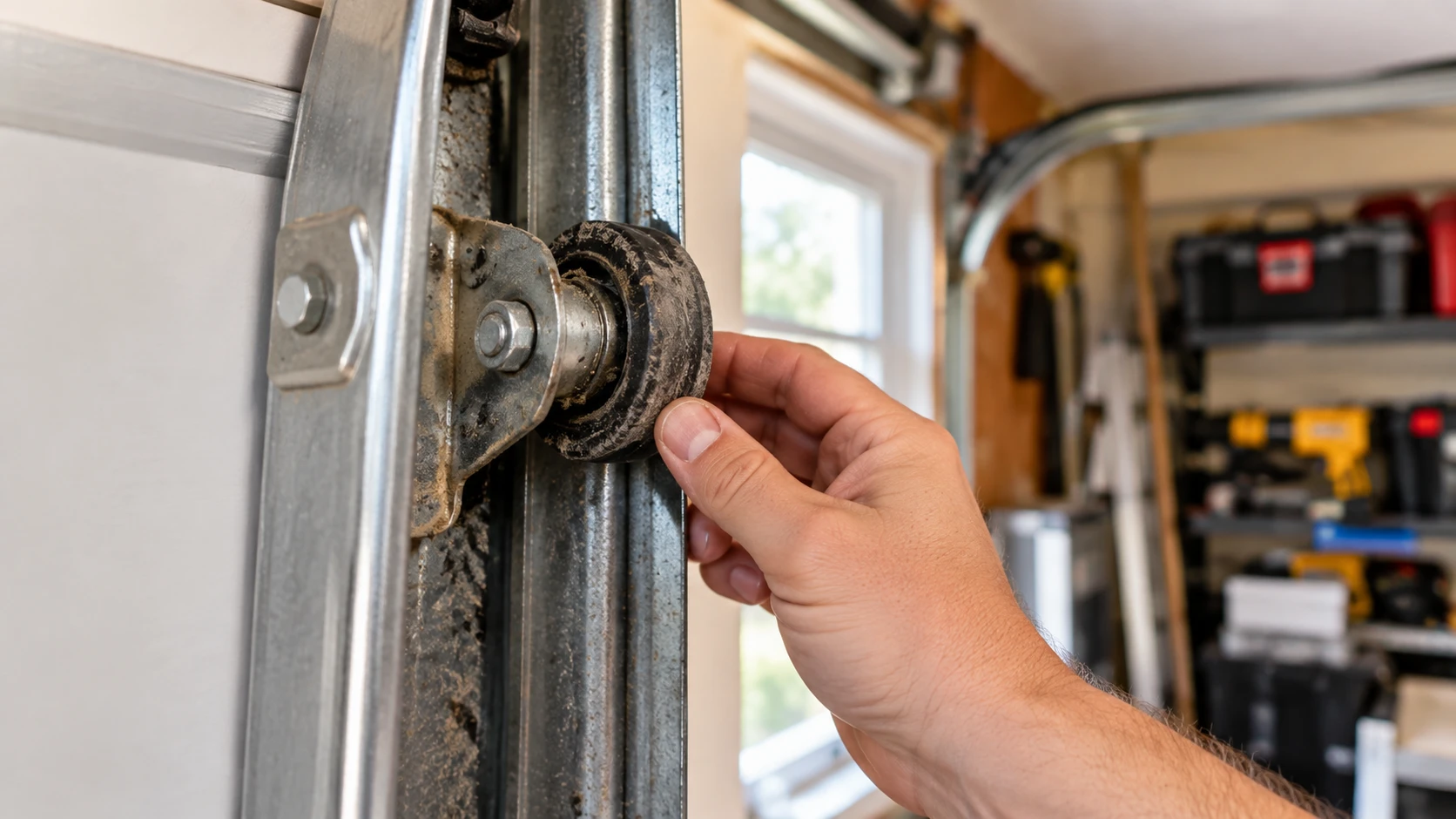
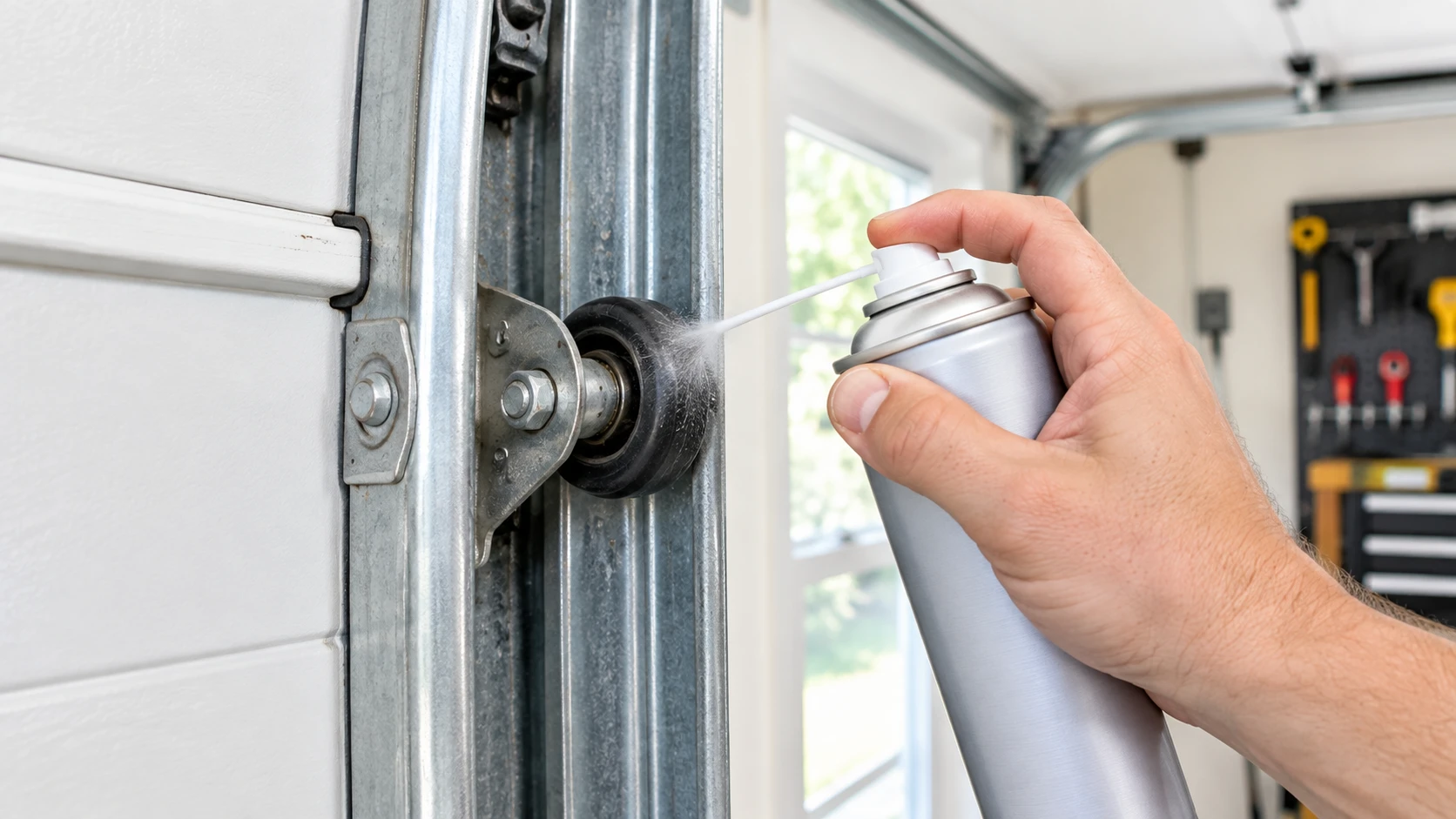
Wipe down the tracks with a rag to remove built-up dirt and old lubricant. Check each roller for wear — if the wheel part is cracked, flat-spotted, or visibly worn down, plan to replace it rather than just lubricating it. Apply a silicone-based garage door lubricant to the rollers, hinges, and the track’s roller path. Avoid WD-40 or general household oil; they attract dust and gum up over time instead of protecting the parts.
Fix 2: Check and Replace Worn Rollers
Rollers wear down after years of use, developing flat spots or cracks that make them jump instead of roll smoothly. This is one of the most common causes of a door that shakes or vibrates through its whole travel path.
With the door closed, inspect each roller by hand. Nylon rollers should look round and smooth; steel rollers should turn freely without grinding. Replacing a full set of nylon rollers is a straightforward DIY job on most doors and meaningfully quieter and smoother than the steel rollers many builders install by default.
Fix 3: Inspect the Tracks for Bends or Misalignment
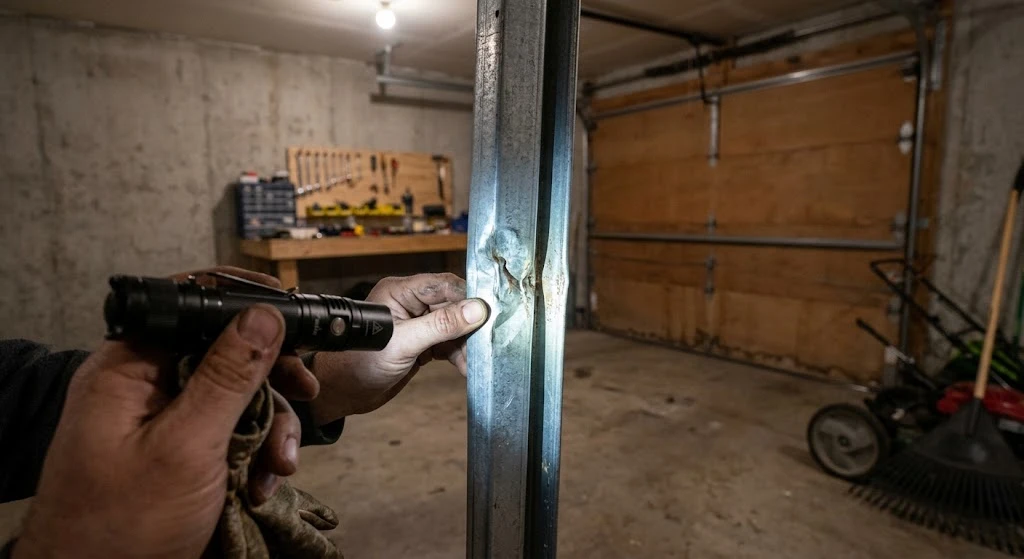
If the jerk happens at the same point in the door’s travel every time, check the track at that exact spot. A dented or bent section forces the rollers to fight through a narrower or crooked path, which shows up as a jerk or shudder.
Minor bends can sometimes be tapped back into shape with a rubber mallet and a block of wood for leverage. Significant bends, or a track that’s pulled away from the wall bracket, need a professional — forcing a badly bent track can crack it or throw the door off its rails entirely.
Fix 4: Check the Opener’s Force Setting
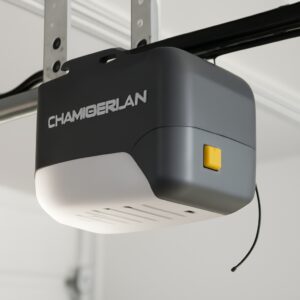
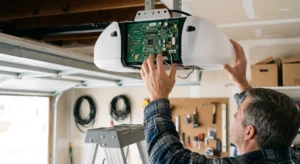
If the door jerks specifically when starting to open, particularly right after the opener engages, the force setting may be too low for the door’s actual weight, or the opener’s drive gear may be worn. Most openers have a force adjustment inside the motor unit cover.
Increase the force setting slightly and test a full cycle. If jerking continues at the same setting that used to work fine, the issue is more likely mechanical — worn gears, a stretched chain or belt, or the spring balance discussed below — rather than something you fix with the force dial.
Why Springs Are the One Fix to Leave Alone
Garage door springs counterbalance most of the door’s weight. When a spring weakens, breaks, or loses tension unevenly, the opener has to fight the door’s full weight on one side, which shows up as a jerk, a stall, or the door refusing to stay open partway.
Torsion springs in particular store enough tension to cause serious injury if handled without the right tools and training. Do not attempt to adjust, tighten, or replace a garage door spring yourself. If your rollers and tracks check out fine and the door still jerks or feels unusually heavy when lifted by hand with the opener disconnected, call a garage door technician for spring service.
| Repair | Repair Cost Range | Repair Time Estimate |
|---|---|---|
| Roller lubrication | $10–$20 (lubricant only) | 15 minutes |
| Roller replacement (DIY, full set) | $30–$60 in parts | 1–2 hours |
| Track realignment (professional) | $100–$250 | 1–2 hours |
| Spring replacement (professional only) | $150–$350 | 1–2 hours |
How to Test the Door’s Balance Safely
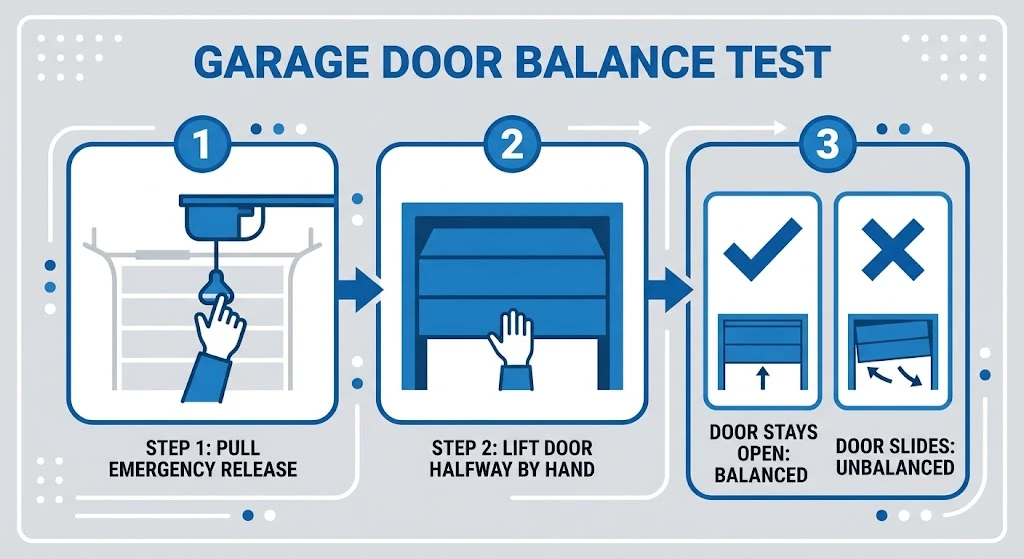
A quick balance test tells you whether springs are the likely culprit, without touching the springs themselves. Close the door, then pull the emergency release cord to disconnect the opener. Lift the door by hand about halfway.
A properly balanced door stays where you leave it and lifts with light, even effort. If it feels heavy, drops on its own, or the effort changes noticeably at different points in the lift, the springs are unbalanced. Reconnect the opener afterward and schedule a professional spring inspection rather than adjusting anything yourself.
When to Call a Professional
Call a technician if the balance test feels heavy or uneven, if you hear a loud bang before the jerking started (a likely sign of a broken spring), if a track is significantly bent or pulled loose from its brackets, or if the jerking continues after you’ve cleaned, lubricated, and inspected the rollers and tracks yourself.
Frequently Asked Questions
Why does my garage door jerk when opening?
The most common causes are worn or dirty rollers, a bent or misaligned track, or unbalanced springs. Cleaning and lubricating the rollers and tracks fixes most cases. If the door still jerks or feels heavy, the springs likely need professional attention.
Is it safe to fix a jerking garage door myself?
Cleaning, lubricating, and replacing rollers are safe DIY tasks. Anything involving the torsion or extension springs should be handled by a professional, since these parts store dangerous tension and can cause serious injury if mishandled.
How do I know if the problem is the springs or the rollers?
Disconnect the opener and lift the door by hand about halfway. If it feels light and stays in place, the springs are fine and the issue is likely rollers or tracks. If it feels heavy or drops, the springs are unbalanced and need a professional.
What lubricant should I use on garage door rollers and tracks?
Use a silicone-based garage door lubricant, not WD-40 or general household oil. Silicone lubricant does not attract dust and dirt the way petroleum-based oils do, so it keeps working smoothly for longer between applications.
Related Guides
For more garage door troubleshooting, see our guides on garage door opener rail bending, garage door opener screws pulled out of door, and a garage door shifted to one side.
For official manufacturer guidance, see the Door and Access Systems Manufacturers Association (DASMA).