
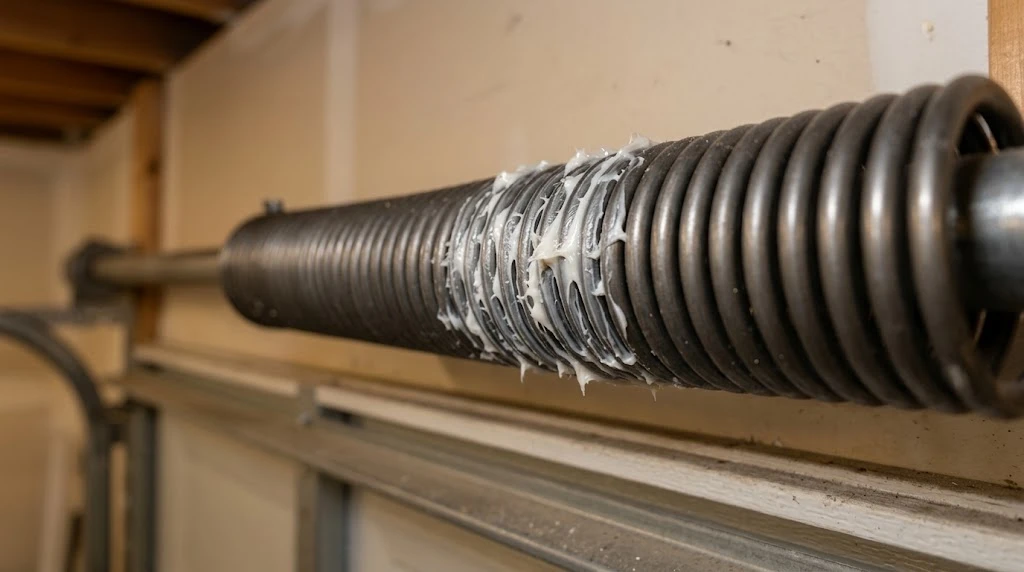
The best lubricant for garage door springs is usually white lithium grease, not the silicone spray or WD-40 many homeowners reach for first. Springs carry the full weight of your door under constant tension, and that’s a different job than lubricating a hinge pin or roller bearing.
Get the wrong lubricant on your springs and you’ll deal with squeaking that comes back within weeks, or worse, a buildup of dust and grit that accelerates wear on the exact part that’s under the most stress in your entire door system.
Here’s what actually works, why springs need different treatment than the rest of the door, and how to apply it without making a mess. In our experience answering homeowner questions about squeaky doors, most people assume the roller or opener is the culprit long before they check the springs. If you’re also dealing with squeaky hinges, that’s a related but separate job — check our guide to the best lubricant for garage door hinges for that side of the maintenance routine.
Short Answer: White lithium grease is the best lubricant for garage door springs on standard residential doors, since it clings to metal under heavy, sustained tension and holds up across temperature swings. Silicone spray is the better pick for lighter doors or very humid, cold climates. Avoid plain WD-40 — it’s a solvent, not a long-term lubricant, and it evaporates too fast to protect a spring under constant load.
This post contains affiliate links. If you buy through our links, we may earn a small commission at no extra cost to you. We only recommend products we’d use ourselves.
Why Springs Need Different Lubrication Than Hinges or Rollers
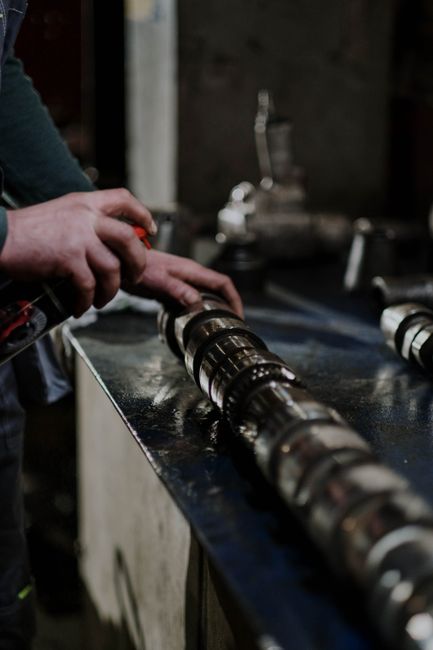
Your torsion springs are under load every second the door is closed, not just during the brief moment they’re moving like a hinge or roller. That constant tension means the lubricant has to stay put and keep protecting the coils, not just reduce friction during a quick pivot.
Springs are also more exposed to dust and debris than sealed roller bearings, since the coils sit out in the open on the shaft above your door. A lubricant that’s too thick traps grit against the metal; one that’s too thin burns off before it’s done any good.
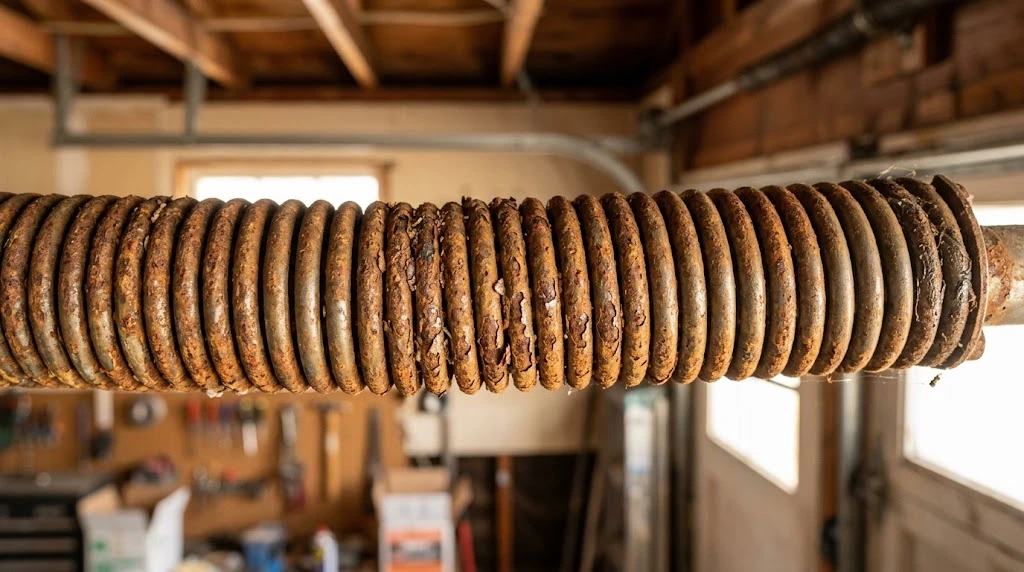
Here’s something most guides skip: springs rarely fail from friction alone. Rust is usually the real enemy — it eats into the coil surface, that pitting causes binding as the coils rub against each other, and the binding creates fatigue that shortens the spring’s working life. A good lubricant is doing double duty here, cutting friction and blocking moisture from reaching bare metal.
| Component | Load Type | Best General Lubricant |
|---|---|---|
| Torsion springs | Constant, heavy tension | White lithium grease |
| Hinges | Brief, repeated pivoting | Silicone or lithium grease |
| Rollers | Rolling contact, sealed bearings | Silicone spray |
Silicone vs. White Lithium Grease for Springs
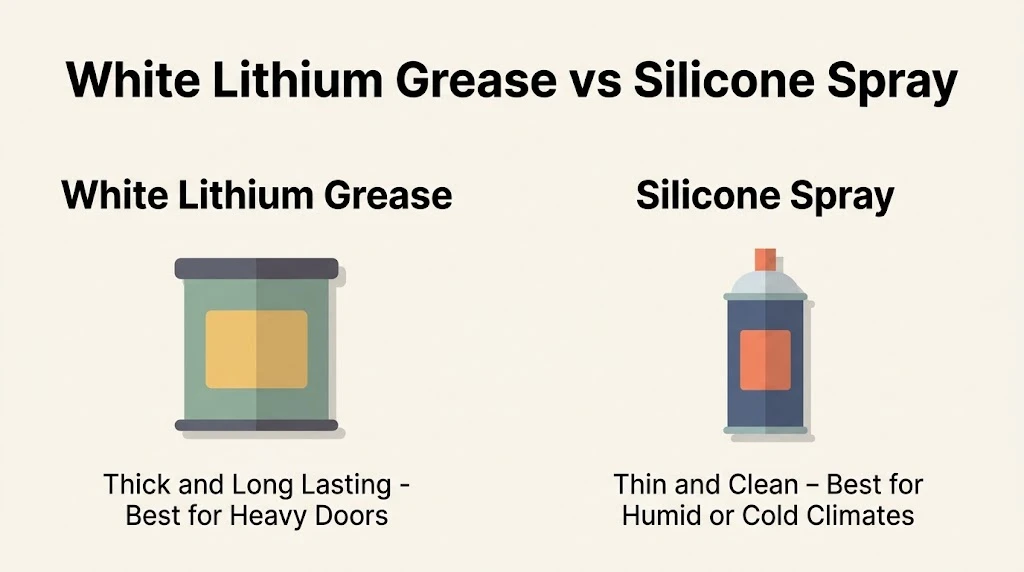
Both lubricants show up constantly in garage door maintenance guides, but they’re not interchangeable for spring duty. The right one depends mostly on your door’s weight and your climate.
- White lithium grease: Thicker, clings longer, and handles heavy metal-to-metal contact better. This is the standard pick for most residential doors, especially insulated or heavier models.
- Silicone spray: Thinner and dries cleaner, so it won’t fling grease onto a parked car. It performs well in humid or freezing climates and on lighter doors, but needs reapplication more often on heavy-duty springs.
- Plain WD-40: Fine as a one-time rust remover, but it’s a solvent that evaporates fast. It won’t provide lasting lubrication on a spring under constant tension.
Best White Lithium Grease for Garage Door Springs
WD-40 Specialist White Lithium Grease Spray is the most widely available option built specifically for this kind of heavy, sustained metal contact. It coats the spring coils in a thick film that holds up through temperature swings without washing off in the first rain.
Check WD-40 Specialist White Lithium Grease pricing on Amazon
This is the safer default if you’re not sure which lubricant to buy, especially on a standard steel or insulated residential door.
Best Silicone Spray for Garage Door Springs

DuPont Teflon Silicone Lubricant works well if your garage sees real humidity or freezing winters, since silicone keeps its consistency across a wider temperature range than grease.
Check DuPont Teflon Silicone Lubricant pricing on Amazon
It’s also the cleaner choice if your garage doubles as a workspace or storage area where grease drips would be a real problem.
Best All-in-One Lubricant for Springs, Hinges, and Rollers

If you’d rather buy one product for the whole door rather than juggling two lubricants, 3-IN-ONE Garage Door Lubricant is formulated to cover springs, hinges, rollers, and tracks in a single pass with a non-greasy finish.
Check 3-IN-ONE Garage Door Lubricant pricing on Amazon
It won’t outperform a dedicated white lithium grease on a heavy commercial-weight spring, but for typical residential use it’s a reasonable one-can solution.
How to Lubricate Garage Door Springs Safely
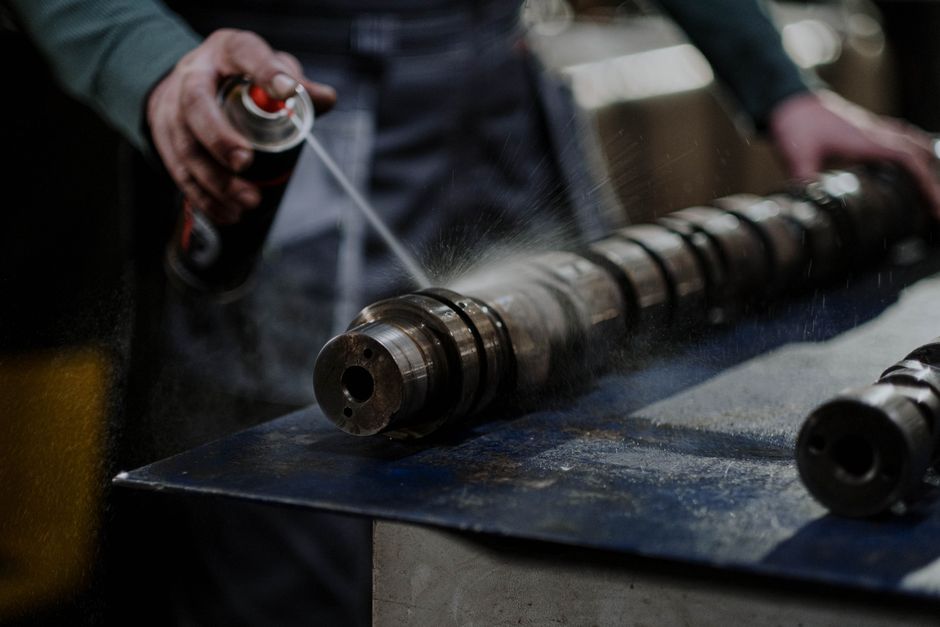
Lubricating the outside of a spring’s coils is safe, simple DIY work. Adjusting spring tension is a completely different job — never confuse the two.
Before you spray anything, do a quick once-over: check that the door is balanced, tighten any loose hardware you notice, and wipe off surface dust. Wear gloves and safety glasses while you work — grease splatter in the eyes is a minor but completely avoidable annoyance.
| Task | DIY Suitability | Safety Risk Level | Time Estimate |
|---|---|---|---|
| Wiping down spring coils before lubricating | Safe for DIY | Low | 5 minutes |
| Applying lubricant to spring coils | Safe for DIY | Low | 5–10 minutes |
| Cycling the door to work in the lubricant | Safe for DIY | Low | 5 minutes |
| Adjusting spring tension or winding | Professional required | High | 30–60 minutes (pro) |
Wipe down the coils with a dry rag first to remove built-up dust, then hold the spray about six inches away and coat the coils evenly along their length. Use a light, even coat rather than soaking the coils — too much grease just attracts more dust and grit, which defeats the purpose. Open and close the door a few times afterward so the lubricant works into every coil, not just the section you sprayed directly.
According to garage door manufacturer Clopay’s maintenance guidance, silicone-based lubricants and white lithium grease are both suitable for springs, while WD-40 and plain oil-based products should be avoided since they attract dirt and lead to premature wear.
If your door still jerks or hesitates after a fresh lubrication, that’s usually a sign the problem isn’t friction at all — it may point to a spring that’s losing tension rather than one that just needs oil.
How Often to Reapply
Most homeowners get away with lubricating springs every 6 months. If your garage sees heavy daily use, more humidity than average, or a lot of dust and debris, cut that down to every 3–4 months instead.
A quick visual check works well between full lubrication sessions: if you spot dry, dull-looking coils, any early rust spots, or hear new squeaking, that’s your cue it’s time again, regardless of the calendar.
Frequently Asked Questions
What’s the best lubricant for garage door springs?
White lithium grease is generally the best choice for garage door springs, since it clings well to metal under heavy, constant tension and holds up across temperature swings. Silicone spray is a solid alternative for lighter doors or humid, cold climates.
Can I use WD-40 on garage door springs?
Plain WD-40 can be used occasionally to remove rust, but it’s a solvent, not a long-term lubricant, and it evaporates too quickly to protect a spring under constant tension. A dedicated white lithium grease or silicone product works better for ongoing maintenance.
How often should I lubricate my garage door springs?
Every 6 months is typical for average use. Doors that run several times a day, or garages in humid or dusty environments, often need lubrication every 3–4 months instead.
Can I lubricate my garage door tracks too?
No — tracks should stay clean and dry. Lubricant on the tracks attracts dust and debris and can actually make the rollers slip rather than grip properly.
Is it safe to lubricate garage door springs myself?
Yes, applying lubricant to the outside of the coils is safe DIY work. Just don’t confuse this with winding or adjusting spring tension, which should always be left to a trained technician.
Related Guides
For our other buying guides, see Best Garage Door Insulation for Hot Climates, Best Retractable Garage Screen Doors, Best Garage Door Opener With Battery Backup, Best Magnetic Garage Door Screen, Best Garage Door Hinges, Best Screw Drive Garage Door Opener, Best 1/2 HP Chain Drive Garage Door Opener, Best 3/4 HP Belt Drive Garage Door Opener, Best Garage Door Opener for Heavy Doors and Best Alexa-Enabled Garage Door Opener.