
The best nylon garage door rollers come down to two specs most homeowners skip past: bearing type and stem length. Get those right and a $30 set of rollers can quiet a screeching door for a decade. Get them wrong and you’re back to grinding noise within a year.
Nylon rollers exist to solve one problem — steel-on-steel contact that gets louder and rougher every season. Swapping worn steel rollers for sealed-bearing nylon ones is one of the highest-value, lowest-effort upgrades you can make to a garage door.
Here’s what actually separates a good set from a mediocre one, plus the picks worth buying. In our experience helping homeowners troubleshoot noisy doors, the roller is the most overlooked fix — people jump straight to blaming the opener or the springs first.
Short Answer: For most residential doors, nylon rollers with a 6200ZZ or 6200-2RS sealed bearing and a 4-inch stem are the best choice — they cut noise by roughly 75% compared to steel and typically last 100,000+ cycles. Choose 2RS (dual rubber seals) over ZZ (metal shields) if your garage is humid or exposed to dust. Match stem length to your existing brackets before ordering; a 7-inch stem won’t fit where a 4-inch one is needed.
This post contains affiliate links. If you buy through our links, we may earn a small commission at no extra cost to you. We only recommend products we’d use ourselves.
Nylon vs. Steel Rollers: Why It Matters
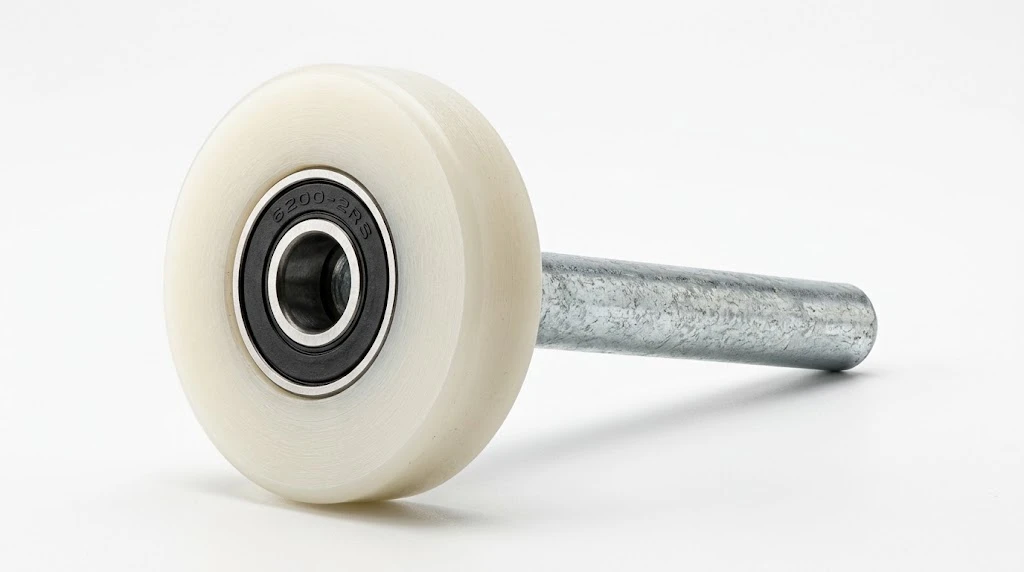
Steel rollers are cheaper but transmit every bit of vibration straight into the track, which is why older doors sound like a freight train. Nylon wheels absorb that vibration instead of amplifying it, and they don’t rust the way steel wheels eventually do.
The tradeoff is a slightly higher price and, in rare cases, faster wheel wear if your track has a rough transition where the curved and vertical sections meet. Checking that your track is properly aligned before installing new rollers protects your investment either way. While you’re upgrading hardware, it’s also worth checking your garage door hinges for wear, since worn hinges and worn rollers often show up around the same time.
| Roller Type | Noise Level | Rust Resistance | Typical Cost (10-pack) |
|---|---|---|---|
| Steel | Loud, gets worse over time | Poor | $15–$25 |
| Nylon (sealed bearing) | Quiet, stays consistent | Good (wheel), stem varies | $25–$45 |
| Composite (steel core, nylon shell) | Quiet-moderate | Good | $20–$35 |
Composite rollers are worth a mention too. They pair a steel core with a nylon outer shell, so you get most of nylon’s noise reduction with steel’s load capacity. They’re a reasonable middle ground for heavier doors where pure nylon feels undersized, though for a standard residential door, sealed-bearing nylon is still the better default.
What to Check Before You Buy
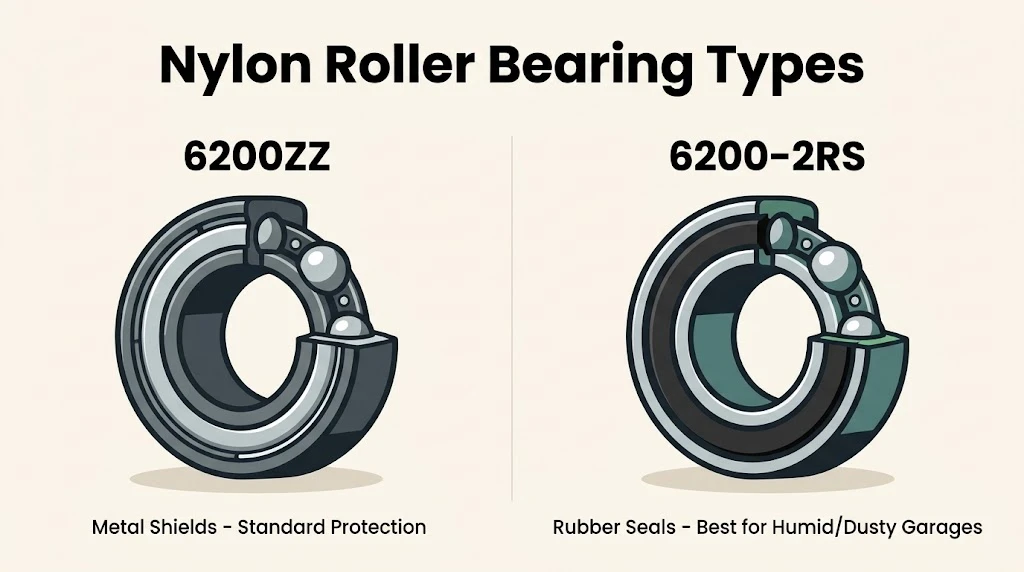
Nylon rollers aren’t one-size-fits-all. A few specs make the difference between a smooth upgrade and a return trip to the hardware store.
- Bearing type: 6200ZZ uses metal shields on each side; 6200-2RS adds dual rubber seals for better protection against moisture and grit. Choose 2RS for humid or dusty garages.
- Stem length: Most residential doors use a 4-inch stem. Longer 7-inch stems are for larger commercial doors or brackets where a roller keeps slipping out of track.
- Wheel diameter: 2 inches is standard for most tracks. Heavier or commercial-grade doors sometimes use a 3-inch wheel with a larger 6201ZZ bearing for extra load capacity. Measure your existing rollers before ordering to confirm.
- Cycle rating: Budget sets often hit 50,000–100,000 cycles; premium sealed-bearing sets can reach 200,000–250,000, translating to well over a decade of daily use.
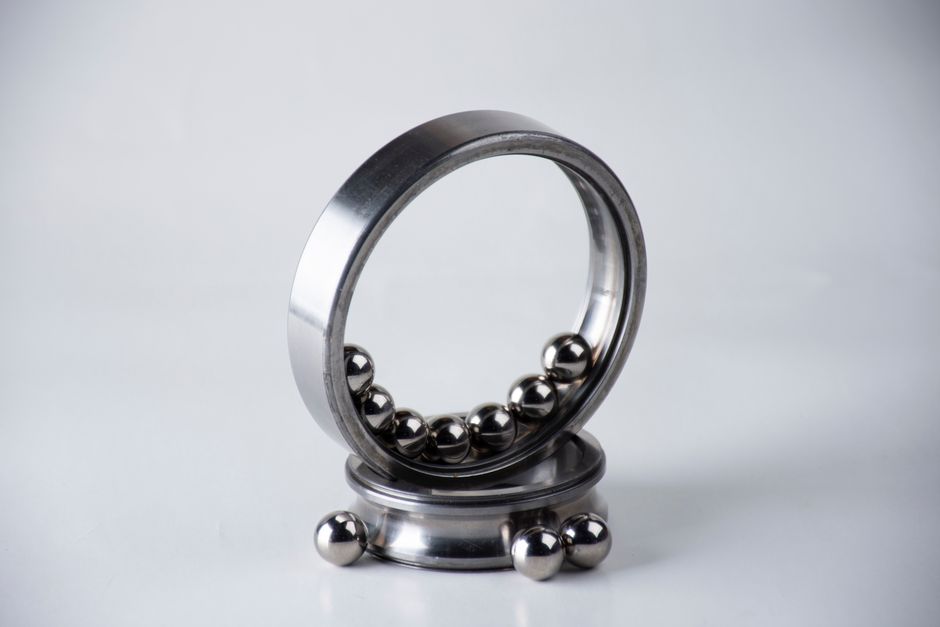
- Older 13-ball rollers: Some older or budget doors still use unsealed 13-ball nylon rollers with no bearing housing at all. They’re cheaper and can outlast expectations, but they lack the sealed protection of a 6200-series bearing, so they wear faster in dusty garages.
If your door still sounds rough after a full roller swap, the issue may not be the rollers at all — check whether the door is jerking or hesitating for a different underlying cause.
Best Overall Nylon Roller
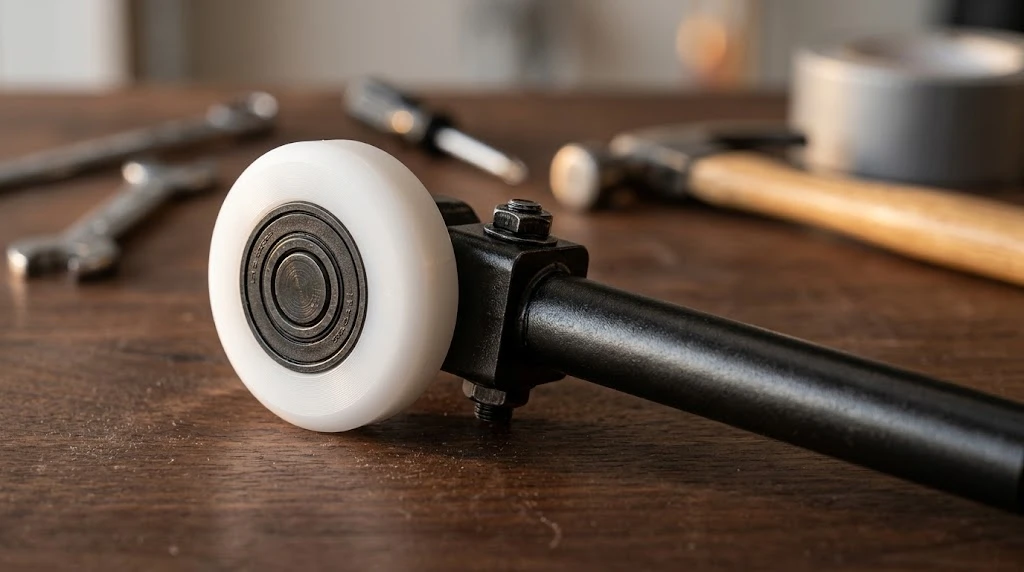
DURA-LIFT Titan Premium rollers use a 6200ZZ sealed bearing rated for roughly 250,000 cycles at a 110-lb load, backed by a lifetime guarantee from the manufacturer. The triple-coated stem resists corrosion even in humid or coastal garages. Expect to pay somewhere in the $24–$44 range depending on pack size, which lines up with what major retailers charge for this tier of sealed-bearing roller.
Check DURA-LIFT Titan Premium pricing on Amazon
This is the set to buy if you want a single, permanent upgrade rather than a budget fix you’ll revisit in a few years.
Best Budget-Friendly Nylon Roller
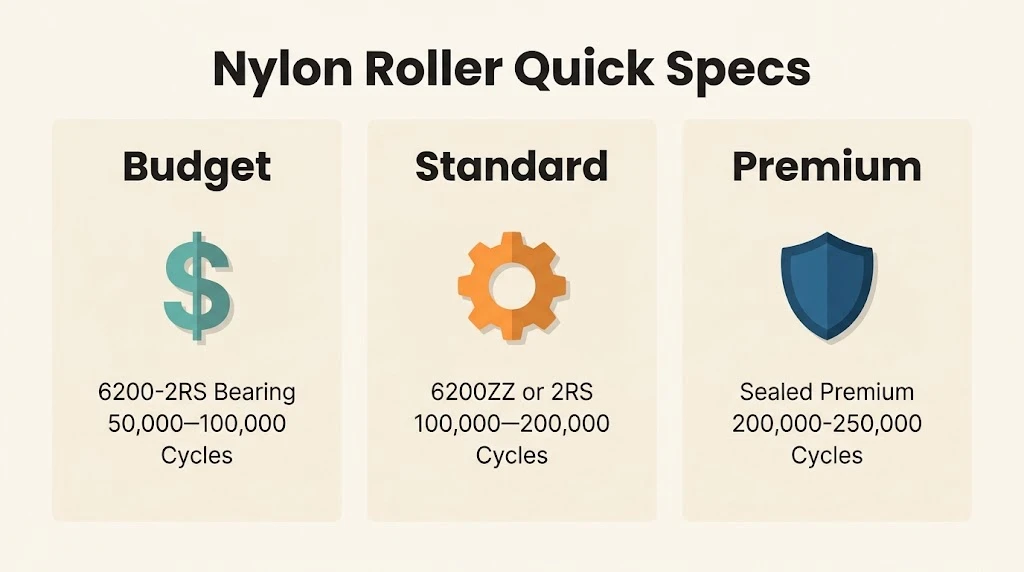
PGN Nylon Garage Door Rollers use a 6200-2RS dual-sealed bearing and a reinforced steel stem at a lower price point than premium options, while still delivering a meaningful noise reduction over steel.
Check PGN nylon garage door roller pricing on Amazon
A solid pick if you want the dust and moisture protection of a 2RS bearing without paying premium-tier prices for a residential door that sees average daily use.
Best Roller for Track Alignment Issues
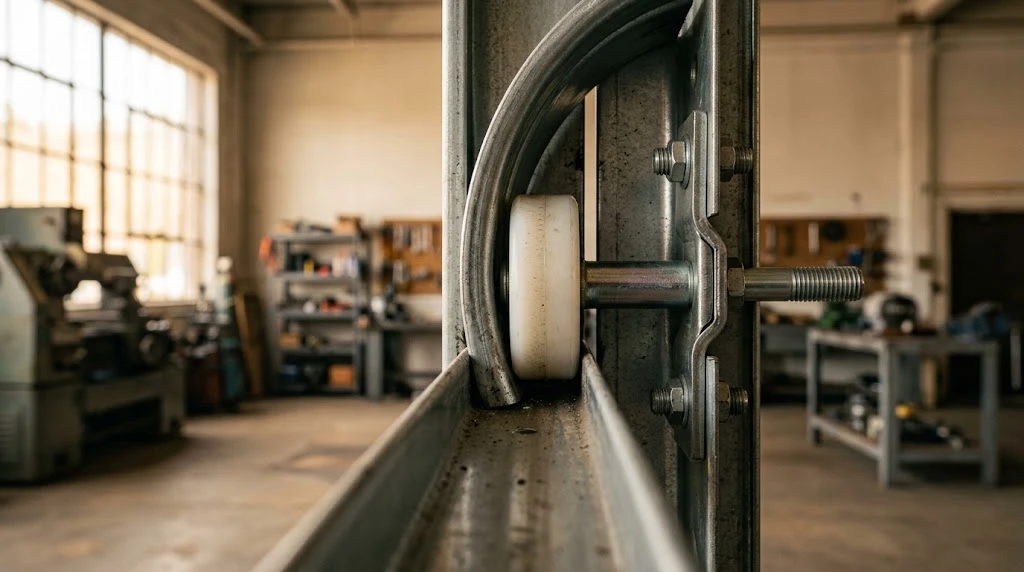
If your rollers keep popping out of the track, the problem is sometimes bracket spacing rather than the roller itself. A 7-inch stem nylon roller gives more working length inside the bracket, reducing how easily it slips free.
Check 7-inch stem nylon roller pricing on Amazon
Standard 4-inch stems work fine for most homes, but if you’ve had repeated roller pop-out problems, this is worth trying before assuming the track itself needs replacing.
Installing New Rollers Safely
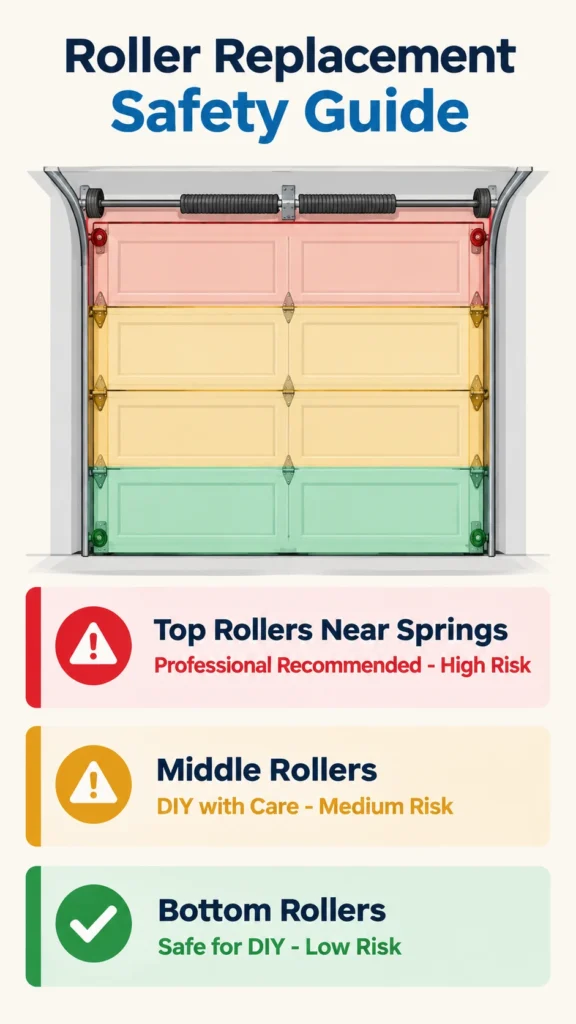
Before touching a single bracket, disconnect the garage door opener and switch the door to manual mode. This stops the opener from firing accidentally while your hands are near the track, and it’s a step homeowners skip more often than they should.
Replacing rollers on the lower sections of the door is straightforward. The top rollers, closest to the springs and cables under tension, need more caution.
| Task | DIY Suitability | Safety Risk Level | Time Estimate |
|---|---|---|---|
| Replacing bottom-section rollers | Safe for DIY | Low | 30–45 minutes |
| Replacing middle-section rollers | Safe for DIY (with care) | Medium | 45–60 minutes |
| Replacing top rollers near the spring/cable system | Professional recommended | Medium–High | 1–2 hours (pro) |
Replace one roller at a time rather than pulling several at once, so the door stays supported throughout. Wipe down the tracks with a soft cloth before you finish — leftover dirt and grit inside the track will chew through new rollers just as fast as the old ones. New rollers move more smoothly with a proper coat of lubricant on the hinges too, since fresh rollers paired with dry, squeaky hinges will only fix half the noise problem. According to DURA-LIFT’s own hardware guidance, matching bearing type, stem length, and wheel diameter to your existing setup matters more than brand loyalty — rollers are largely interchangeable across brands as long as those three specs line up.
Frequently Asked Questions
Are nylon garage door rollers really quieter than steel?
Yes. Nylon wheels absorb vibration instead of transmitting it directly into the track, cutting noise by roughly 75% compared to standard steel rollers in most manufacturer testing.
What’s the difference between 6200ZZ and 6200-2RS bearings?
6200ZZ uses metal shields on each side of the bearing, while 6200-2RS adds dual rubber seals for stronger protection against moisture and dust. 2RS bearings typically last longer in humid or dusty garages.
How many rollers does a standard garage door need?
Most residential doors use 10 rollers total, though this varies with the number of panels and door height. Replacing them in a full 10-pack set is usually more efficient than buying individually.
Can I install new rollers myself?
Replacing bottom and middle rollers is a manageable DIY task. Rollers near the top of the door, close to the spring and cable system, carry more risk and are safer left to a professional.
Why do my new rollers keep popping out of the track?
This is often a stem length or bracket alignment issue rather than a bad roller. A longer 7-inch stem gives more working length inside the bracket and can solve repeated pop-out problems.
Related Guides
For our other buying guides, see Best Garage Door Insulation for Hot Climates, Best Retractable Garage Screen Doors, Best Garage Door Opener With Battery Backup, Best Magnetic Garage Door Screen, Best Screw Drive Garage Door Opener, Best 1/2 HP Chain Drive Garage Door Opener, Best 3/4 HP Belt Drive Garage Door Opener, Best Garage Door Opener for Heavy Doors, Best Alexa-Enabled Garage Door Opener and Best Garage Door Openers With WiFi.