
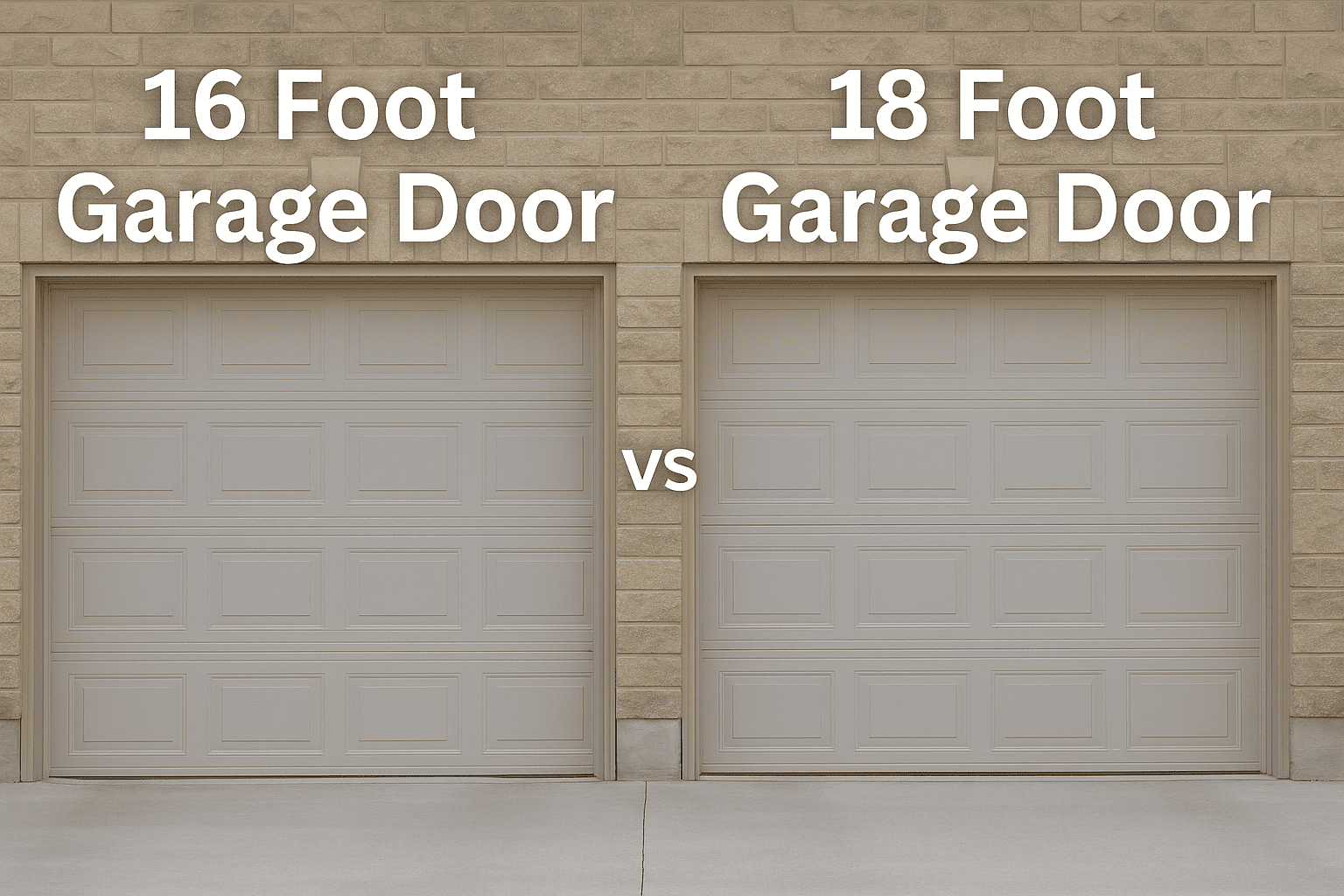
Choosing between a 16 vs 18 foot garage door comes down to your vehicles and your opening width. The extra 2 feet makes a real difference for large trucks and side-by-side parking — but it also costs more and requires a wider rough opening. Here is the full comparison.
Short Answer: A 16-foot garage door fits most two-car garages and comfortably parks two sedans or midsize SUVs, while an 18-foot door gives extra clearance for trucks, large SUVs, or side-by-side parking without scraping mirrors. The 18-foot option costs roughly $200-400 more installed and needs a wider rough opening plus a stronger header. Choose 16 feet for standard vehicles and budget, 18 feet for trucks, dual vehicles, or extra workspace.
This post contains affiliate links. If you buy through our links, we may earn a small commission at no extra cost to you. We only recommend products we would use ourselves.
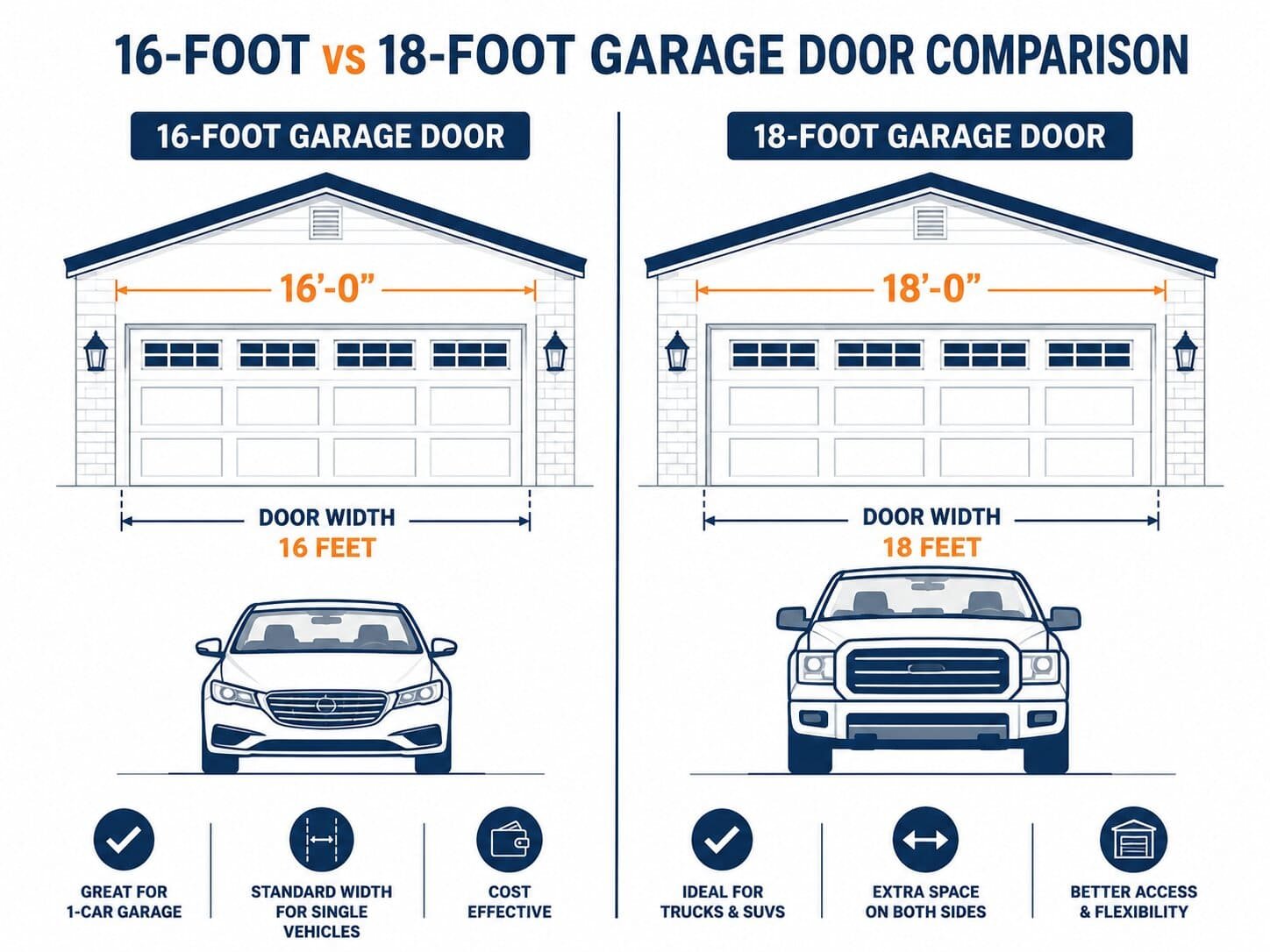
16 vs 18 Foot Garage Door: Key Differences
Choosing the right garage door size can be confusing, especially when comparing 16 vs 18 foot garage door options. Both sizes are popular, but they serve different needs depending on your home, vehicles, and lifestyle.
In this guide, you’ll learn exactly how to choose the best width — without guesswork or costly mistakes.

Understanding Garage Door Sizes
Garage doors come in a variety of widths, but 16-foot and 18-foot doors are the most common for two-car garages. While the difference might seem small, those two extra feet can make a big difference in comfort and functionality.
16 vs 18 Foot Garage Door: A Quick Comparison
| Feature | 16-Foot Door | 18-Foot Door |
|---|---|---|
| Width | 16 feet | 18 feet |
| Typical Use | Standard two-car garages | Oversized garages or large vehicles |
| Space Between Cars | Tight fit for SUVs or trucks | Extra room for wider vehicles |
| Cost | More affordable | Slightly more expensive |
| Aesthetic | Balanced look | More expansive appearance |
| Energy Efficiency | Easier to insulate | Slightly more air leakage potential |
Which Is Better: 16 or 18 Foot Garage Door?
When to Choose a 16-Foot Garage Door
A 16-foot garage door is ideal for:
- Standard two-car garages.
- Compact or mid-size vehicles.
- Homeowners wanting a classic look at a lower price.
Pros:
- More affordable than 18-foot options.
- Easier to find replacement parts.
- Fits most homes without major structural changes.
Cons:
- Can feel tight if you own large SUVs or trucks.
- Less room to walk between parked cars.
When to Choose an 18-Foot Garage Door
An 18-foot garage door is perfect for:
- Wide garages or homeowners with large vehicles.
- Families who need extra storage or workspace.
- Those who prefer a modern, open look.
Pros:
- More clearance and flexibility.
- Easier to park multiple large vehicles.
- Adds a premium appearance to the home exterior.
Cons:
- Costs more for materials and installation.
- May require stronger openers or reinforced panels.
Design and Curb Appeal
Style Matters
Both sizes come in multiple styles, including:
- Traditional raised panels
- Modern glass designs
- Carriage-house styles
However, an 18-foot door creates a grander, more symmetrical look on wider homes. A 16-foot door looks balanced on medium-sized garages.
Insulation and Energy Efficiency
A larger door (like 18-foot) allows more air exchange, meaning potential energy loss.
If you live in an area with extreme temperatures, consider:
- R-Value insulation (R-13 or higher)
- Weatherstripping
- Double-layer or triple-layer construction
These upgrades improve efficiency, regardless of door size.
Suggested YouTube Video
Watch: 16 ft vs 18 ft Garage Door Comparison – Which Is Right for You?
Channel: Home RenoVision DIY
This video visually compares both sizes, showing how each looks and functions in real garages.
Related Guides
For our garage door sizing and dimension guides, see Ceiling Height for 10 Ft Garage Door, How Heavy Is a Double Garage Door?, How Much Does a 16×7 Garage Door Weigh?, Garage Door 45 Degree Corners, What Size Header Do I Need for a 16 Foot Garage Door? and What Size Garage Door Opener Do You Need for 18 Foot Door?.
FAQs About 16 vs 18 Foot Garage Door
Space, budget, and how you actually use your garage decide this one. Compact cars and a tighter budget point to a 16-foot door. Trucks, SUVs, or wanting real breathing room between two parked vehicles point to an 18-foot door.
Ready to make your choice? Talk to a garage door installer today and see which size fits your lifestyle best. A small measurement change could make a big difference in daily comfort and curb appeal.
Which Vehicles Actually Need an 18-Foot Door?
The extra 2 feet of a wider door matters most for large vehicles. Here is a practical breakdown:
| Vehicle | Width | 16-ft Door | 18-ft Door |
|---|---|---|---|
| Standard sedan (Toyota Camry) | ~6 ft | Comfortable | Easy |
| Full-size truck (F-150) | ~6.7 ft | Workable | Comfortable |
| Dually truck (F-350 SRW) | ~7 ft | Tight | Workable |
| Large SUV (Suburban) | ~6.8 ft | Workable | Comfortable |
| Full-size van (Transit) | ~7 ft | Very tight | Workable |
If you drive a standard car or pickup, a 16-foot door gives you roughly 4.5 feet of combined clearance on both sides — plenty for comfortable entry. If you drive a dually, a full-size work van, or you want to park two cars side by side without anxiety, the 18-foot door is worth the extra cost.
Cost Difference: 16 vs 18 Foot Garage Door
| Cost Item | 16-ft Door | 18-ft Door |
|---|---|---|
| Door (steel, standard) | $700-1,200 | $900-1,500 |
| Installation labor | $200-400 | $250-450 |
| Opener (if needed) | $200-500 | $200-500 |
| Total installed | $1,100-2,100 | $1,350-2,450 |
The 18-foot door typically costs $200-400 more all-in. For most homeowners, that is a reasonable premium for the convenience of easier parking. The bigger cost consideration is whether your garage opening is actually wide enough — widening an existing opening adds $500-1,500 in structural work.
Does Door Width Affect the Opener You Need?
An 18-foot door is heavier than a 16-foot door, which means the opener needs more power to lift it reliably. A 1/2 HP opener can handle most standard 16-foot doors, but for an 18-foot door — especially insulated steel — a 3/4 HP or 1 HP model is recommended. See our guide on whether 1/2 HP is enough for your garage door opener to check your specific situation.
Structural Requirements: Can Your Garage Handle 18 Feet?
Before ordering an 18-foot door for an existing 16-foot opening, check your header. The header beam above the garage door carries the load of the wall above it. Widening the opening from 16 to 18 feet requires a longer, stronger header — typically a doubled 2×12 or an LVL beam, depending on the load above. Our garage door header size guide covers the exact specifications.
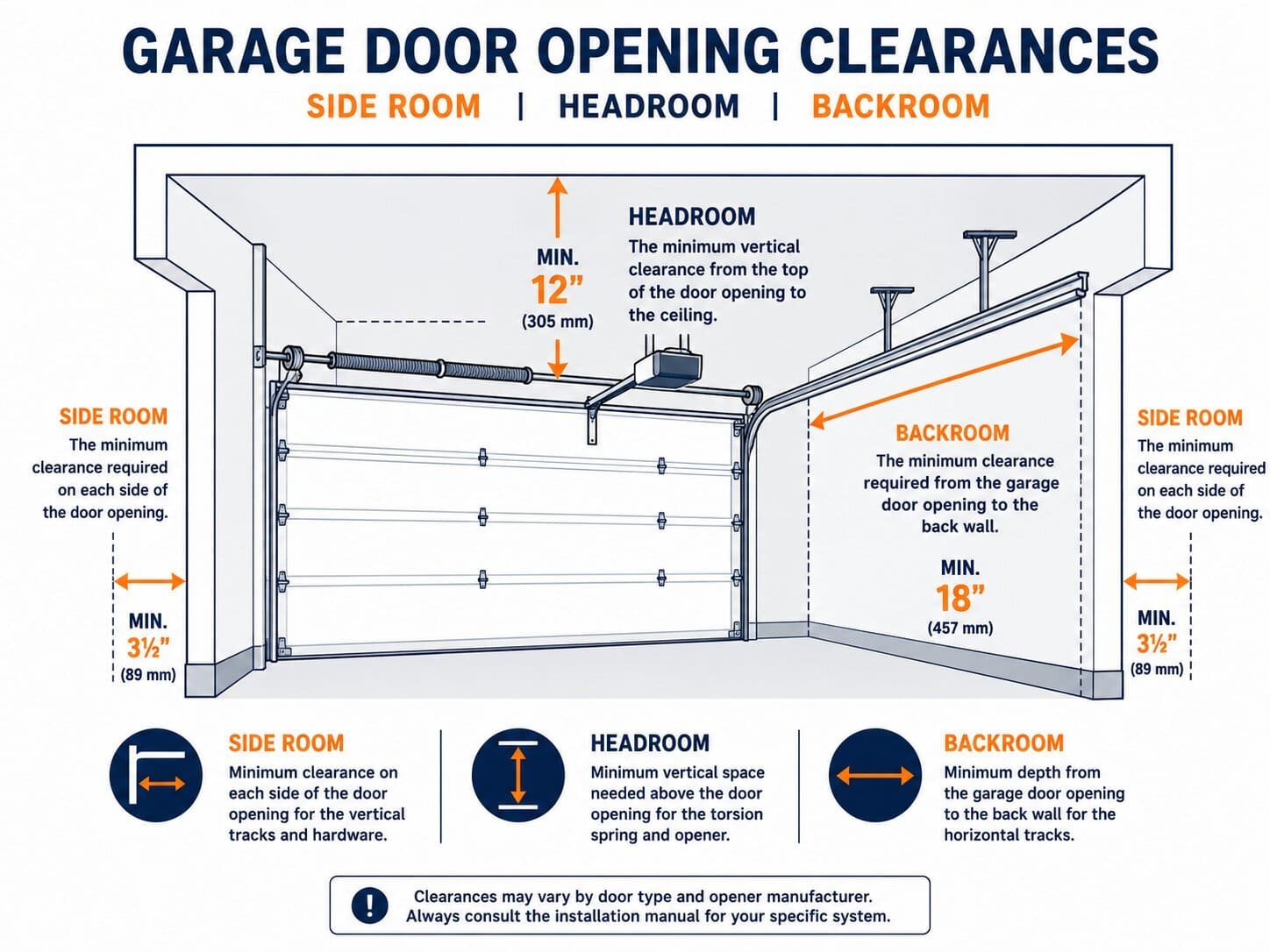
Exact Clearance You Need: Side Room, Headroom, and Backroom
The rough opening width is only part of the picture. Three other measurements decide whether a 16-foot or 18-foot door will actually install cleanly in your garage.
| Clearance | What It Is | Minimum Needed |
|---|---|---|
| Side Room | Space on each side of the opening for the vertical track | 3-3/4″ per side (standard springs) |
| Headroom | Space above the opening for the track and springs | 10″ (extension springs) or 12″ (torsion springs) |
| Backroom | Depth from the opening to the back wall | Door height plus 18″ |
An 18-foot door needs the same side room and headroom as a 16-foot door, but the extra span means torsion springs are almost always required over extension springs. That pushes your headroom minimum to 12 inches instead of 10. If your garage has low headroom, ask your installer about low-headroom torsion kits before ordering.
One Wide Door or Two Single Doors?
Before locking in a 16 or 18-foot single door, consider the alternative: two separate single doors side by side. It changes more than the look of your garage.
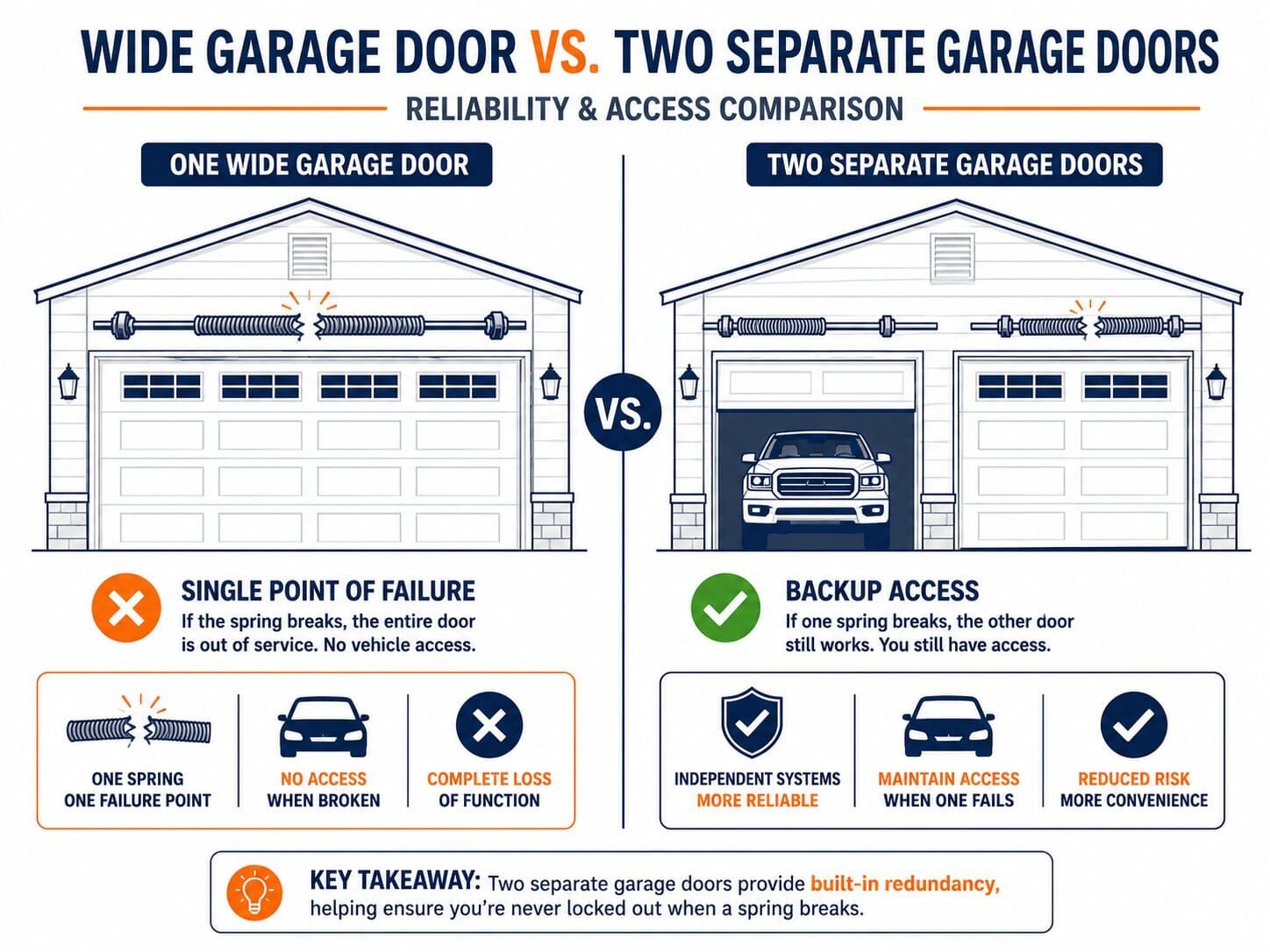
A single wide door has one weak point. If a torsion spring snaps or the opener fails on a 16 or 18-foot door, both cars are stuck inside until it’s fixed. With two single doors, one failure still leaves you a working door to get a car out.
Two single doors also seal better against drafts, since there’s less total gap area than one continuous wide seal. The tradeoff is losing the open, unified look a single wide door gives a two-car garage, and you’ll need two openers instead of one.
Most homeowners still choose one wide door for the cleaner look and lower total hardware cost. But if your garage floods, sits in a high-wind zone, or you simply want a backup if something breaks, two single doors are worth pricing out.
Why Cheap 18-Foot Doors Sag Over Time
A common mistake homeowners make: buying an 18-foot door built the same way as a 16-foot one. The extra 2 feet of span puts real stress on the panels, and a door without enough internal bracing will sag in the middle within a few years.
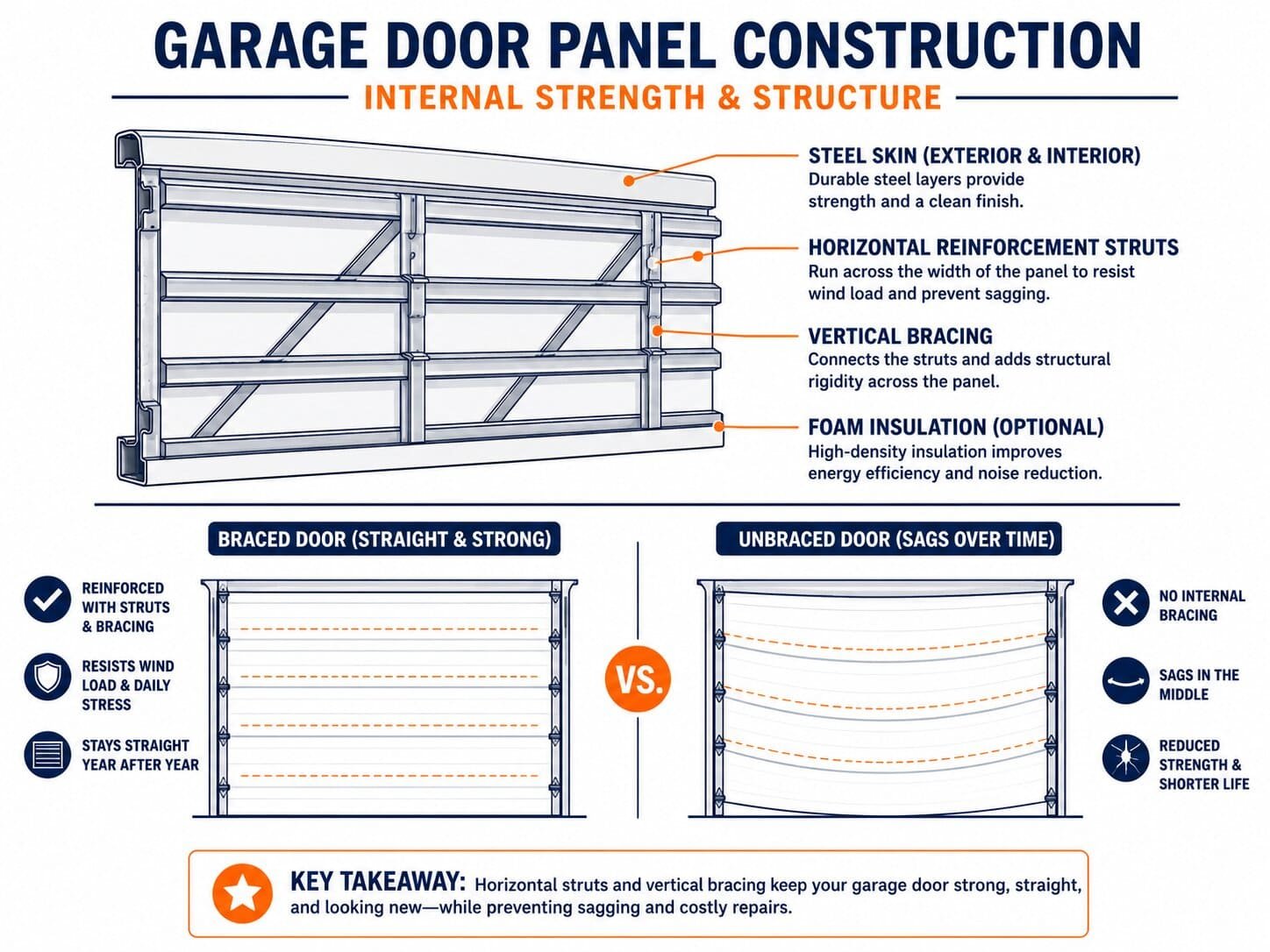
Look for these specs before you buy an 18-foot door: 24-gauge steel or heavier, and enough horizontal struts to support the wider span, since most quality 18-foot doors use one more strut than the equivalent 16-foot model. A trolley-style opener also adds center-pull force, which makes bracing even more important on wider doors.
Before ordering, also check your local building department or HOA guidelines. Some historic districts restrict garage door width or style, and flood zones may have their own structural requirements. A five-minute call can save you from a door that doesn’t pass inspection.
Recommended Garage Doors by Size
Whether you go with 16 or 18 feet, these are respected steel doors worth asking your local dealer about — Clopay, Amarr, and Wayne Dalton all sell exclusively through dealer networks rather than direct online retailers, so a dealer quote and installation are part of buying any of these.
- Clopay 4050 Series — best-selling insulated steel door, available in both 16 and 18-foot widths. R-13 polyurethane, 24-gauge steel, 10-year warranty.
- Amarr Classica — top-rated for two-car garages with large vehicles, offered in 16 and 18-foot widths. Heavy-gauge steel, R-9 insulation.
- Wayne Dalton 9100 Series — budget-friendly option with decent insulation and clean curb appeal, available up to 18 feet wide.
Note: Full garage doors are sold through local dealers, not Amazon or other online retailers — use these model names to research specs, then get a quote from a dealer in your area.
Insulating an 18-Foot Door Yourself
If your existing door lacks insulation, or you want to boost an older non-insulated 18-foot door before deciding whether to replace it, a reflective foam insulation kit is a same-day DIY fix. A reflective foam insulation kit sized for 18-foot doors installs with double-sided tape in about an hour and adds meaningful R-value without replacing the whole door.