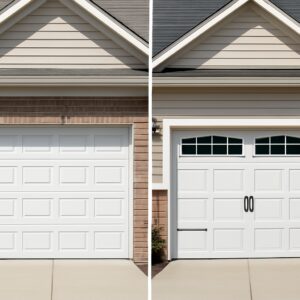

The right 8 foot garage door header size depends on the span and load above the opening. Get it undersized and you risk structural problems. This guide covers standard specifications, LVL vs dimensional lumber options, and what local codes typically require.

8 Foot Garage Door Header Size: Standard Requirements
Planning to install or replace your garage door? One of the most overlooked yet crucial parts of the project is choosing the right 8′ garage door header size.
The header supports the weight above your garage opening — and using the wrong size can lead to structural issues or sagging.
Let’s go over everything you need to know to get it right the first time.

What Is a Garage Door Header?
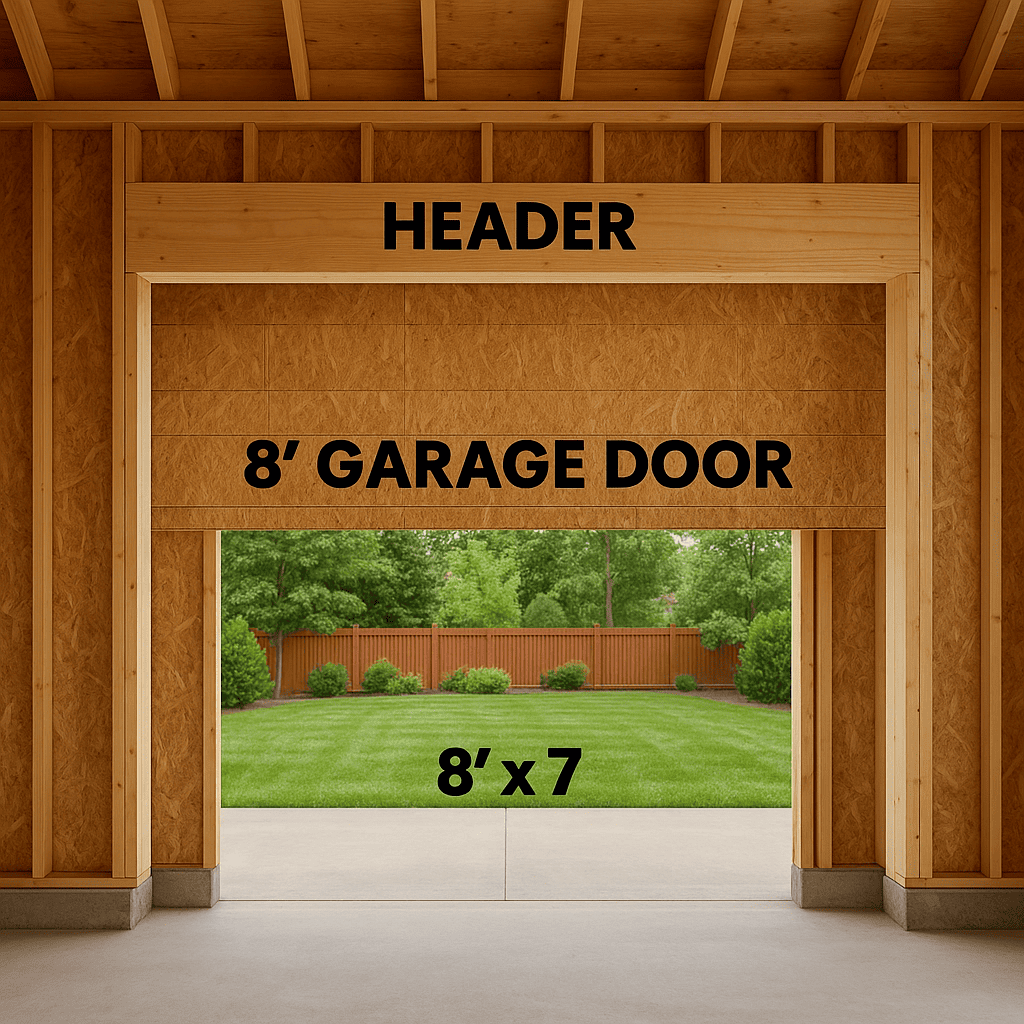
A garage door header is the horizontal beam that sits above the garage door opening.
Its main job is to:
- Support the wall and roof load above the door
- Distribute weight evenly across the opening
- Keep the frame stable over time
In short, your header is the backbone of your garage door’s structure.
Standard 8′ Garage Door Header Size
When framing for an 8-foot-wide garage door, the header size depends on:

- The load type (single-story or two-story structure)
- The span width (door opening)
- The material used (wood, LVL, or steel)
Here are general guidelines most builders follow:
| Structure Type | Recommended Header Size | Material |
|---|---|---|
| Single-story garage | 2×10 or 2×12 wood header | Wood |
| Two-story garage | (2) 2x12s with ½” plywood spacer | Wood |
| Heavy load or long span | 1¾” x 11⅞” LVL or steel beam | Engineered lumber or steel |
Pro Tip: Always confirm your final size with a structural engineer or local building codes, since load requirements vary by region.
Factors That Affect Header Size
1. Load-Bearing Weight
If your garage supports a second story, you’ll need a thicker and stronger header to handle the added weight.
2. Material Choice
- Wood headers are affordable but bulkier.
- LVL (Laminated Veneer Lumber) beams offer high strength with less depth.
- Steel headers are ideal for heavy-duty or commercial garages.
3. Door Width
Even within 8-foot openings, small design variations can impact header requirements. Always measure the rough opening accurately before cutting or framing.
Step-by-Step Guide: Framing for an 8′ Garage Door
Step 1: Measure and Mark
- Mark the width of the door opening (8 feet).
- Add 1½ inches on each side for trimmers or jack studs.
Step 2: Cut the Header
- Cut two pieces of 2×12 lumber and a piece of ½” plywood.
- Sandwich the plywood between the two boards and nail them together.
Step 3: Install the Frame
- Place the assembled header on top of the jack studs.
- Check for level alignment before securing it.
- Add cripple studs above the header for stability.
Step 4: Double-Check Measurements
Make sure the rough opening matches your door manufacturer’s specifications — usually 8′ wide x 7′ high.
Example: LVL Header for an 8′ Door
For a modern garage with a heavier roof load, you might use:
- (1) LVL beam – 1¾” x 9½” or 1¾” x 11⅞”
These beams are lightweight, stronger than standard lumber, and minimize deflection over time.
Safety and Building Code Tips
- Always follow local building codes for load-bearing walls.
- Use approved fasteners and brackets.
- Hire a licensed contractor for installations involving second-story loads.
Improper header sizing can cause serious structural damage or failure — don’t take shortcuts here.
Suggested YouTube Video
Watch: How to Frame a Garage Door Opening Correctly
Channel: Home RenoVision DIY
This video shows step-by-step framing techniques for garage door headers, including LVL beam installation.
Related Guides
For our garage door sizing and dimension guides, see 16 vs 18 Foot Garage Door: Which Size Is Best, 7 Foot vs 8 Foot Garage Door Comparison, How Heavy Is a Double Garage Door?, How Much Does a 16×7 Garage Door Weigh?, Garage Door 45 Degree Corners, What Size Header Do I Need for a 16 Foot Garage Door? and What Size Garage Door Opener Do You Need for 18 Foot Door?.
FAQs About 8′ Garage Door Header Size
1. What size header do I need for an 8-foot garage door?
For most single-story garages, a double 2×10 or 2×12 header is sufficient. If the wall carries extra weight (like a second floor), use an LVL or steel header.
2. Can I use a 4×12 header for an 8′ garage door?
Yes, in light-load situations, a 4×12 solid wood beam can work. However, always check local code requirements before using a single board header.
3. Do LVL beams need support posts?
Usually not for 8-foot spans. LVLs are engineered to handle heavy loads across shorter openings without additional supports.
Conclusion
Choosing the right 8′ garage door header size isn’t just about measurements — it’s about safety, longevity, and stability.
A properly sized and installed header prevents sagging, cracking, and costly repairs later on.
If you’re unsure, consult a structural engineer or professional installer before cutting or framing. It’s a small step that ensures a strong, durable garage structure for years to come.
Ready to start your project? Get accurate measurements, choose the right header, and enjoy peace of mind knowing your garage is built to last.
Header Size Requirements by Span and Load
The correct header size depends on two things: the span (width of the opening) and the load above it. Here are the standard specifications for 8-foot garage doors:
| Opening Width | Load Above | Minimum Header |
|---|---|---|
| Up to 8 ft | Roof only (no floor above) | Doubled 2×8 |
| Up to 8 ft | One floor above | Doubled 2×10 |
| Up to 8 ft | Two floors above | Doubled 2×12 or LVL |
| 9-10 ft wide | Roof only | Doubled 2×10 |
| 9-10 ft wide | One floor above | Doubled 2×12 or LVL |
These are general guidelines. Local building codes and snow loads in your area may require larger headers. Always confirm with your local building department before framing.
LVL Beams vs Dimensional Lumber for Garage Door Headers
Laminated veneer lumber (LVL) beams are engineered for higher strength than standard dimensional lumber at the same size. For spans over 8 feet or heavy loads, an LVL beam is often the smarter choice:
- Dimensional lumber (doubled 2×12) — adequate for most residential garage doors up to 10 feet wide with typical roof loads. Costs $40-80 for an 8-foot span.
- LVL beam (3.5″ x 9.5″ or 3.5″ x 11.25″) — required for wider spans, heavy snow loads, or when a floor sits above the garage. Costs $150-300 for an 8-foot span but provides significantly more strength and less sag over time.
Headroom Requirements Above the Header
The header size is only part of the equation. You also need adequate headroom above the door for the tracks and opener. Standard track systems require a minimum of 10-12 inches from the top of the door to the ceiling. If headroom is tight, low-headroom track hardware is available but costs more.
For a full breakdown of how ceiling height affects your door and opener options, see our garage door ceiling height guide.
Do You Need a Permit to Replace a Garage Door Header?
Yes, in most jurisdictions. Replacing or modifying a structural header is a structural alteration that requires a building permit. The inspector will check that the header is adequately sized for the span and load. Skipping the permit can cause problems when you sell the home or make an insurance claim.
Frequently Asked Questions
What size header do I need for an 8-foot garage door opening?
For a standard 8-foot wide opening with only roof load above, a doubled 2×8 meets most code requirements. If there is a floor above the garage, upgrade to a doubled 2×10 or an LVL beam. Always verify with local building codes.
Can I use a single 2×12 instead of a doubled 2×8?
A single 2×12 has similar bending strength to a doubled 2×8 for short spans, but most codes require a minimum header width that matches the wall framing (3.5 inches for a 2×4 wall). A doubled 2×8 with a spacer meets this requirement. A single 2×12 does not unless you add spacers to reach full wall thickness.
How much does it cost to install a new garage door header?
Materials for a standard doubled 2×10 header run $60-120. Labor for a structural header installation typically costs $300-600 depending on complexity. If temporary shoring is needed to support the load during installation, add another $150-300. Total cost: $400-1,000 installed.