
A standard double garage door weighs between 150 and 500 pounds, depending on the material, insulation, and whether it has windows. That is a wide range — and the difference matters when you are choosing springs, an opener, or wondering if your door is safe to lift manually. This guide gives you the exact numbers by material and explains why door weight affects everything from your opener’s motor size to how often your springs need replacing.
How Heavy Is a Double Garage Door? Weight by Material
The material is the biggest factor in how heavy a double garage door is. Here are the real-world weights for a standard 16×7 foot double door — the most common size in US homes:
| Material | Non-Insulated | Insulated | With Windows |
|---|---|---|---|
| Steel (standard) | 150–175 lbs | 175–225 lbs | +20–40 lbs |
| Steel (heavy gauge) | 175–225 lbs | 200–250 lbs | +20–40 lbs |
| Aluminum | 100–150 lbs | 130–180 lbs | +30–60 lbs |
| Wood | 400–500 lbs | N/A | +30–60 lbs |
| Wood composite | 300–400 lbs | 350–450 lbs | +20–40 lbs |
| Vinyl | 150–200 lbs | 175–225 lbs | +20–30 lbs |
| Full glass | 400–550 lbs | 450–600 lbs | N/A (all glass) |
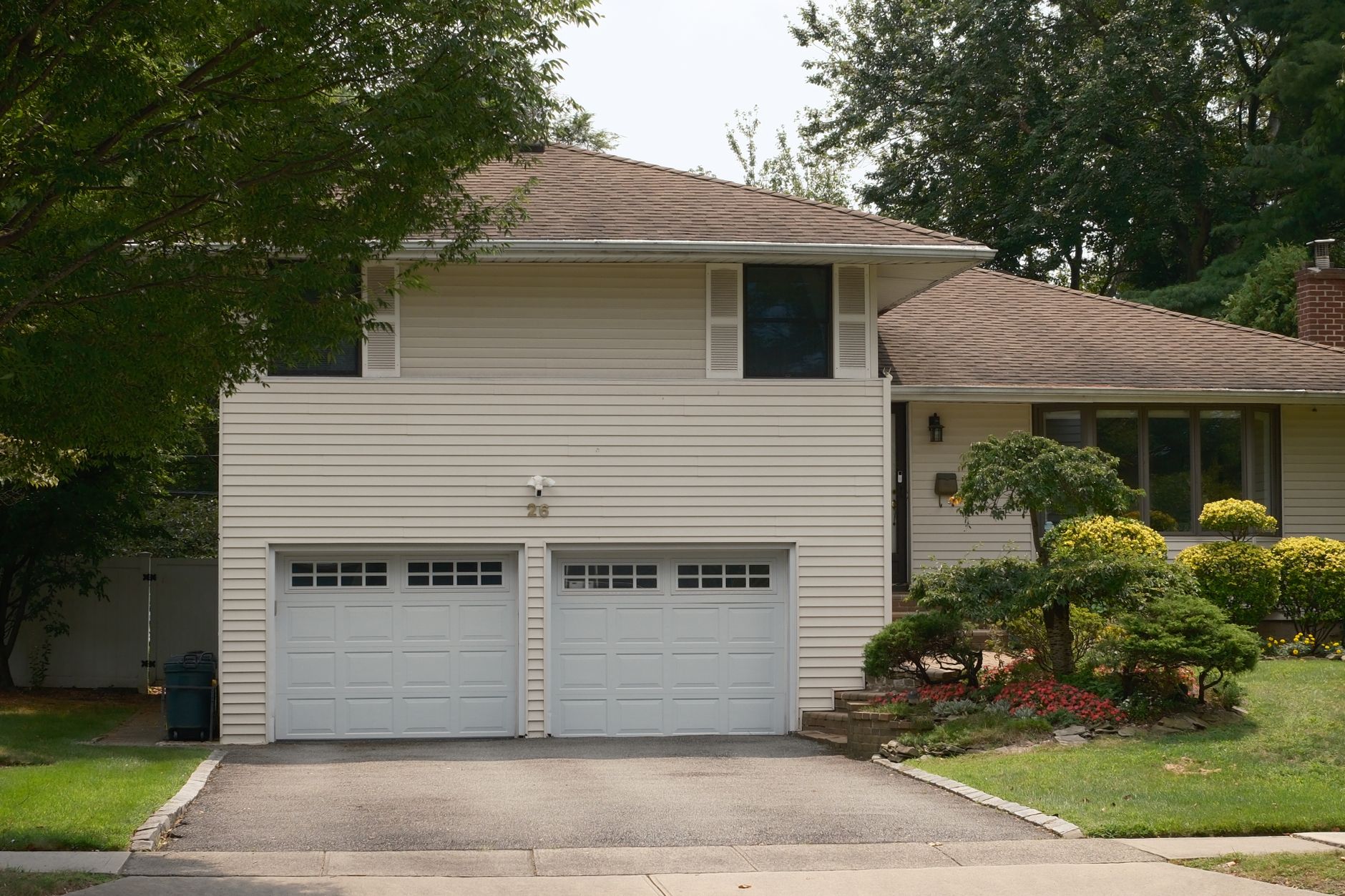
The most common double garage door in American homes is a 16×7 steel door with polystyrene insulation. That door typically weighs 175 to 200 pounds. If you have an older wood door, you could be looking at 400 pounds or more — which is why wood doors almost always need two torsion springs and a higher-rated opener.
What Makes a Double Garage Door Heavier or Lighter?
1. Steel Gauge
Steel garage doors come in different thicknesses measured in gauge. Counterintuitively, a lower gauge number means thicker steel. Most residential doors use 24 or 25 gauge steel. Commercial-grade doors use 18 or 20 gauge. The difference in weight between a 25-gauge and 24-gauge door is roughly 20-30 pounds for a double door — noticeable but not dramatic.

2. Insulation Type and Thickness
Insulation adds weight, but the amount depends on the type:
- Polystyrene (foam board) — adds 10-15 lbs to a double door. This is the white foam you see on the inside of basic insulated doors.
- Polyurethane (injected foam) — adds 20-30 lbs but bonds to the steel panels, making the door stiffer and more durable. This is the insulation on higher-end insulated doors.
Polyurethane-insulated doors are heavier but significantly stronger. The foam acts as a structural layer, which is why polyurethane doors resist denting better than polystyrene doors of the same gauge. If you are buying a new door and live in an extreme climate, polyurethane is worth the extra weight and cost.
3. Windows
Each window adds weight depending on the glass type:
- Single-pane decorative windows: about 3-5 lbs each
- Insulated (double-pane) windows: about 6-10 lbs each
- A full top panel of windows (4 windows): adds 20-40 lbs total
If you are adding a row of windows to an existing door, you will almost certainly need to adjust or replace the springs afterward. The extra weight shifts the balance point of the door, and springs tuned for the original weight will either leave the door too heavy to open easily or let it slam down too fast.
4. Door Size
Standard double doors are 16 feet wide. But double doors also come in 14-foot and 18-foot widths. An 18-foot door is roughly 12% heavier than a 16-foot door of the same material. If you are comparing a 16 vs 18 foot garage door, factor in the weight difference when sizing your opener and springs.
Why Double Garage Door Weight Matters
Choosing the Right Opener
Garage door openers are rated by horsepower, and the door weight determines the minimum HP you need:

| Door Weight | Recommended Opener | Common Door Type |
|---|---|---|
| Up to 200 lbs | 1/2 HP | Standard steel double door |
| 200–300 lbs | 3/4 HP | Heavy steel or insulated double door |
| 300–400 lbs | 1 HP | Wood composite double door |
| 400+ lbs | 1.25 HP or commercial | Solid wood or full glass double door |
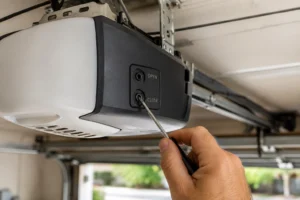
Using an underpowered opener on a heavy door causes the motor to strain on every cycle, shortening its life significantly. If your opener struggles to lift the door or reverses before fully opening, the motor may be undersized for your door weight. Our guide on whether 1/2 HP is enough for your garage door opener explains how to check if your current opener is matched correctly.
Spring Selection and Replacement
Torsion springs are wound to a specific tension based on door weight. A spring wound for a 175-pound door will not properly balance a 250-pound door — the door will feel heavy to open manually and put extra load on the opener motor.
When springs need replacement, give your technician the door weight (or at minimum the material and size) so they can order the correct spring. Guessing on spring size is one of the most common causes of premature opener motor failure. If you notice your door is not balanced — it does not stay in place when you manually lift it to waist height and release — the springs are either worn out or incorrectly sized for the current door weight.
Manual Operation Safety
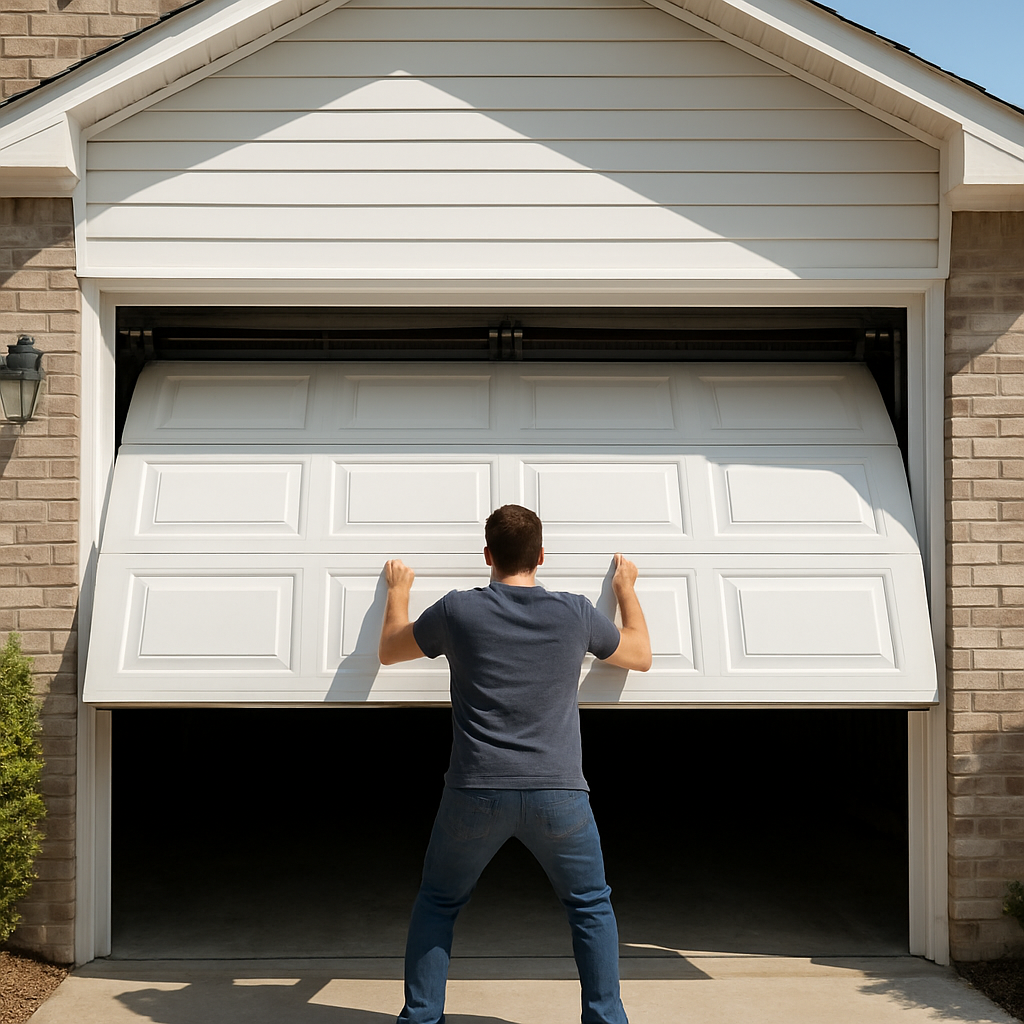
A properly balanced double garage door should feel like it weighs 8-10 pounds when you lift it by hand. The springs counterbalance almost all of the door’s actual weight. If your door feels significantly heavier than that when you lift it manually — pull the red emergency release cord and try — the springs are failing or broken. Do not operate a door with broken torsion springs manually. A 200-pound door dropping freely can cause serious injury.
How to Find Out How Heavy Your Specific Double Garage Door Is
The most accurate way to find your door’s weight is to look it up by model number. Here is how:
- Find the manufacturer label on one of the door sections — usually on the top panel, inside face. It lists the brand, model number, and sometimes the weight directly.
- Search the model number on the manufacturer’s website. Clopay, Wayne Dalton, Amarr, and most major brands publish weight specifications in their product data sheets.
- Weigh it yourself. Disconnect the opener, lift the door to waist height, and use a luggage scale or fish scale hooked under the bottom panel. The reading is the counterbalanced weight — not the actual door weight. To get actual weight, you would need to release spring tension first, which is not a DIY job.
- Ask your installer. If you had the door installed professionally, the technician’s paperwork should list the door weight used to size the springs.
Related Guides
For our garage door sizing and dimension guides, see 7 Foot vs 8 Foot Garage Door Comparison, 8′ Garage Door Header Size Guide, Ceiling Height for 10 Ft Garage Door, How Much Does a 16×7 Garage Door Weigh?, Garage Door 45 Degree Corners, What Size Header Do I Need for a 16 Foot Garage Door? and What Size Garage Door Opener Do You Need for 18 Foot Door?.
For official manufacturer guidance, see the Door and Access Systems Manufacturers Association (DASMA).
Frequently Asked Questions
How heavy is a standard 16×7 double garage door?
A standard 16×7 steel double garage door weighs 150 to 175 pounds without insulation, and 175 to 225 pounds with insulation. Wood doors of the same size weigh 400 to 500 pounds. Glass double doors can exceed 500 pounds.
Can one person lift a double garage door manually?
With properly functioning torsion springs, yes. The springs counterbalance the door weight so the door feels like 8 to 10 pounds when lifting. Without working springs, a 200-pound door is impossible to safely lift alone and dangerous to try.
Does a heavier garage door require a stronger opener?
Yes. A 1/2 HP opener handles most standard steel double doors up to 200 pounds. Doors over 200 pounds — especially wood or insulated steel — need a 3/4 HP or 1 HP motor to avoid premature wear.
How does door weight affect torsion springs?
Torsion springs are sized specifically for door weight. A spring wound for 175 pounds will not properly counterbalance a 250-pound door. Always tell your technician the door material and size when ordering replacement springs so they can calculate the correct spring rating.
Is an insulated double garage door significantly heavier?
Insulation adds 10 to 30 pounds to a double door depending on the type. Polystyrene adds 10 to 15 pounds. Polyurethane adds 20 to 30 pounds. In both cases, the opener and springs need to be rated for the insulated weight, not the bare door weight.
A heavier door puts more strain on the opener motor — our comparison of the best garage door openers with battery backup highlights models built for heavier doors.
The Bottom Line
A standard steel double garage door weighs 150 to 225 pounds depending on insulation. Wood doors run 400 to 500 pounds. Full glass doors exceed 500 pounds. The weight determines the opener HP you need, the spring rating required, and whether your current setup is correctly matched to the door. If your door feels heavy when you lift it manually with the opener disconnected, the springs need attention before you damage the motor.