
The best garage door torsion springs aren’t picked by brand — they’re picked by four exact measurements: wire size, inside diameter, length, and wind direction. Get any one of those wrong and the spring won’t balance your door correctly, even if it’s a “premium” model.
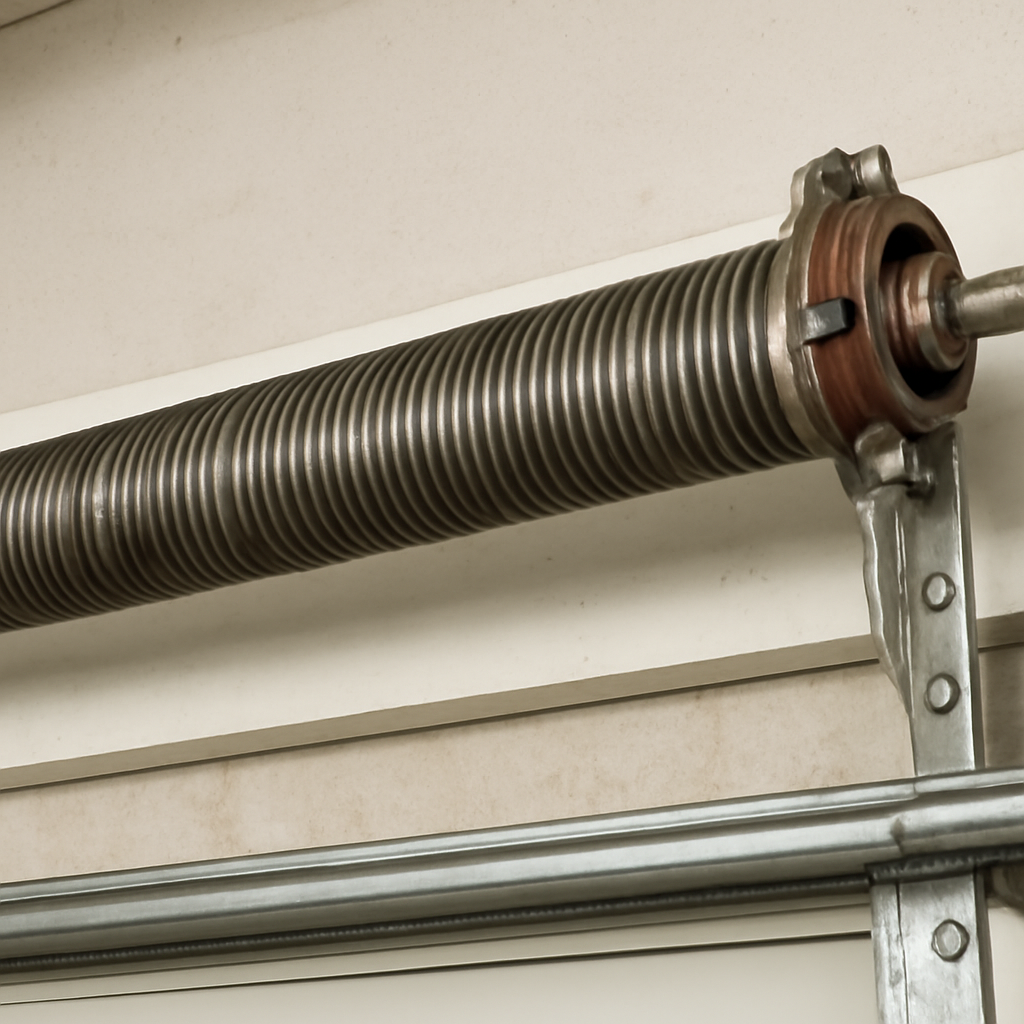
Torsion springs are the coiled springs mounted on a shaft above the door, and they do the real work of counterbalancing the door’s weight. A failing one shows up fast: a door that feels heavier, hangs crooked, or won’t stay open on its own.
Below are the picks worth buying once you’ve measured correctly, plus the safety reality of replacing them — because this is one job where “DIY-friendly” comes with a serious asterisk. In our experience fielding questions from homeowners, this is the single most common area where people order the wrong part, because two springs that look identical can have completely different wire gauges.
Short Answer: DURA-LIFT and Prime-Line torsion springs are the most widely available, correctly-sized standard options, rated around 10,000 cycles. If your door opens more than a few times a day, step up to a high-cycle spring rated 25,000+ cycles instead. Match springs by wire diameter, inside diameter, and length — never by brand or door weight alone — and always replace both springs on a two-spring door at the same time.
This post contains affiliate links. If you buy through our links, we may earn a small commission at no extra cost to you. We only recommend products we’d use ourselves.
Torsion Spring vs. Extension Spring: Why the Distinction Matters
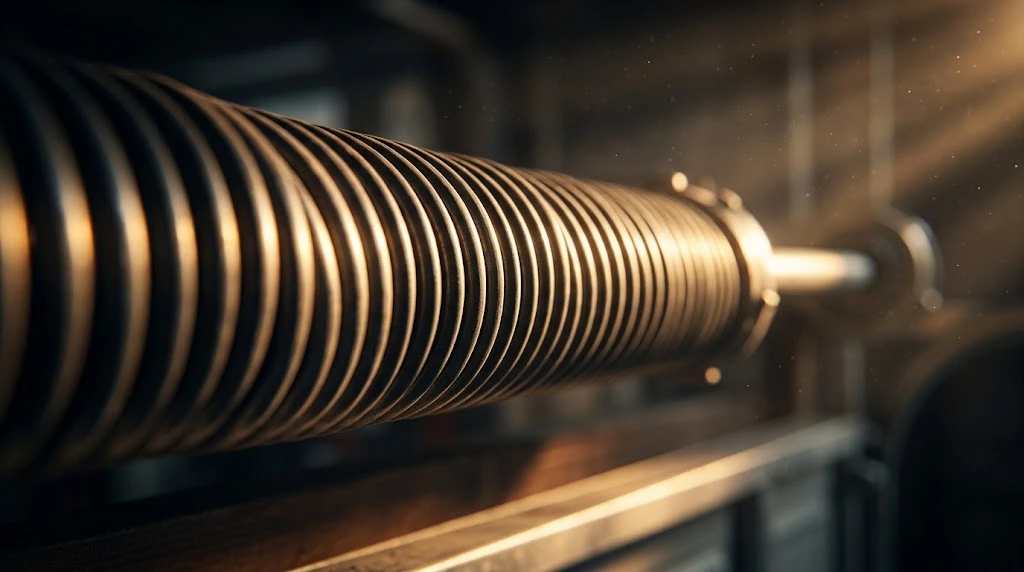
Torsion springs sit on a metal shaft directly above the door opening and wind up to store energy. Extension springs run along the horizontal tracks instead, stretching and contracting as the door moves.
If your springs are mounted horizontally above the door, on a shaft with cones at each end, you have torsion springs. If they run alongside the tracks near the ceiling, you have extension springs, and this guide’s picks won’t fit your door.
| Spring Type | Typical Cycle Life | Feel If It’s Failing |
|---|---|---|
| Standard torsion spring | 10,000 cycles | Door heavier, slower, uneven lift |
| High-cycle torsion spring | 25,000+ cycles | Same symptoms, much later onset |
| TorqueMaster (enclosed) spring | 3,000–5,000 cycles | Shorter life, enclosed for safety |
| EZ-Set spring | 10,000 cycles | Same symptoms, cone-adjustable design |
Not every door uses the open-coil torsion spring this guide covers. Wayne Dalton’s TorqueMaster system encloses the springs inside the shaft itself, and EZ-Set springs use an adjustable cone system that some installers prefer for tensioning. If your spring is hidden inside a tube above the door rather than sitting exposed, you likely have one of these alternate systems and need a matched replacement, not a standard open spring.
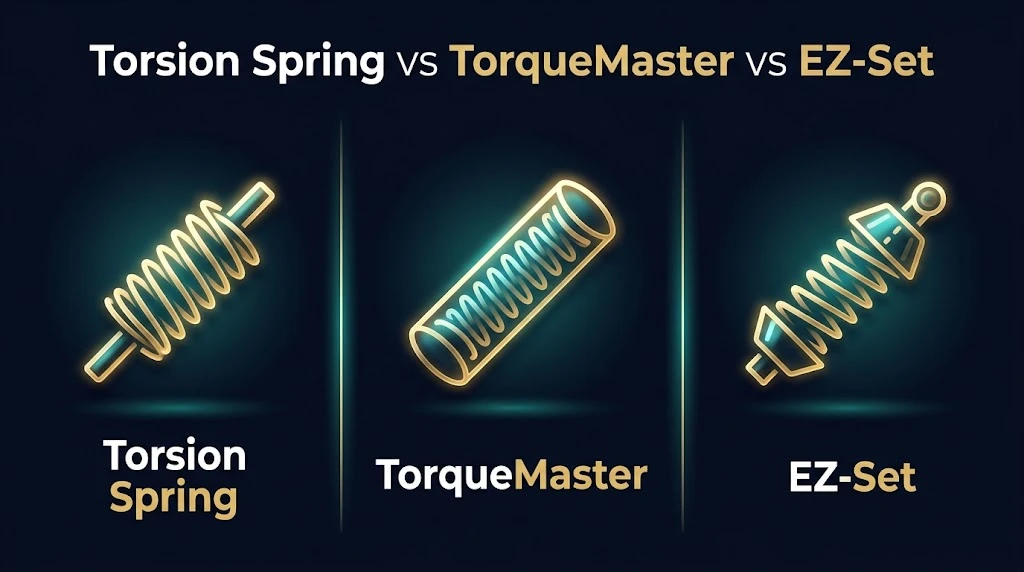
Whichever system you have, matching the replacement exactly to the original is what keeps the door balanced and safe to operate.
What to Measure Before You Buy
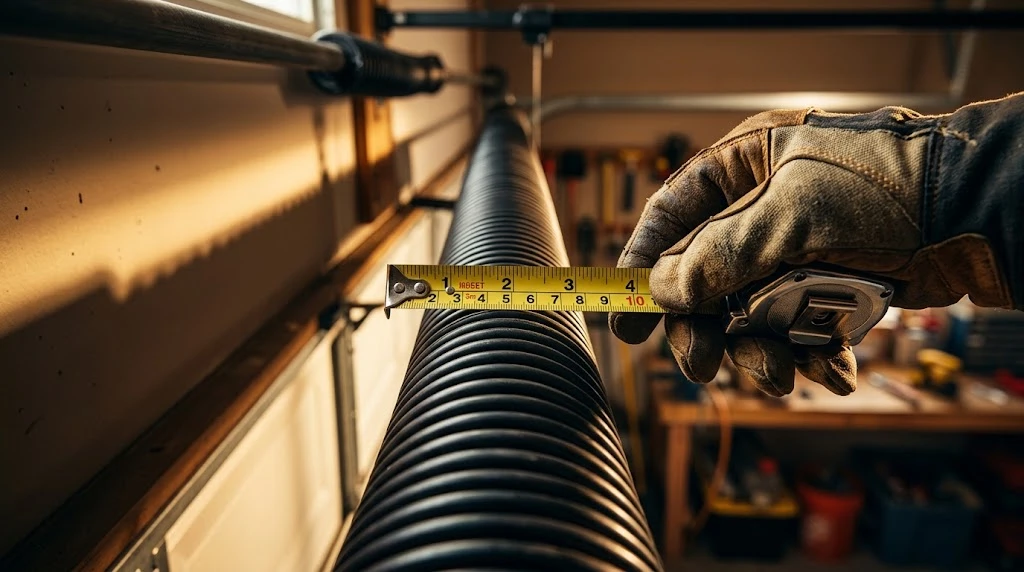
Springs are matched to your door by dimensions, not by the door’s brand name. A DURA-LIFT spring and a Wayne Dalton spring can be interchangeable if the numbers match, and completely wrong if they don’t.
- Wire size: Measure 10 coils, then compare that length to a wire gauge chart. This is the single most important number. Many manufacturers color-code the winding cone by wire size, which can help confirm your measurement once you know the brand’s chart.
- Inside diameter (ID): Measure the inside of the coil, not the outside of the spring.
- Length: Measure the spring’s body length, not including the wind cones at each end.
- Wind direction: Look at which way the wire winds — left or right — since torsion springs are sold as handed pairs, not interchangeable left-to-right.
If your door feels shifted to one side or hangs unevenly, that’s often the first visible sign that a spring has weakened or lost tension, even before it fully breaks.
Best Standard-Cycle Torsion Spring
DURA-LIFT springs, widely sold through Lowe’s and other retailers, are made from oil-tempered spring wire and come in precut lengths for common residential doors. Oil-tempering the wire during manufacturing improves corrosion resistance and helps the spring hold its tension over more cycles than untreated steel. They’re rated around 10,000 cycles, which covers roughly 7–10 years of typical use.
Check DURA-LIFT torsion spring pricing on Amazon
Prime-Line is the other major name in this category, with a published sizing guide that walks through matching wire gauge, ID, and length before ordering. Both brands make sense if your door sees average daily use — a couple of cycles a day, mostly weekday mornings and evenings. Some listings bundle in winding bars and gloves, which is worth checking for if you don’t already own a set.
Best High-Cycle Torsion Spring
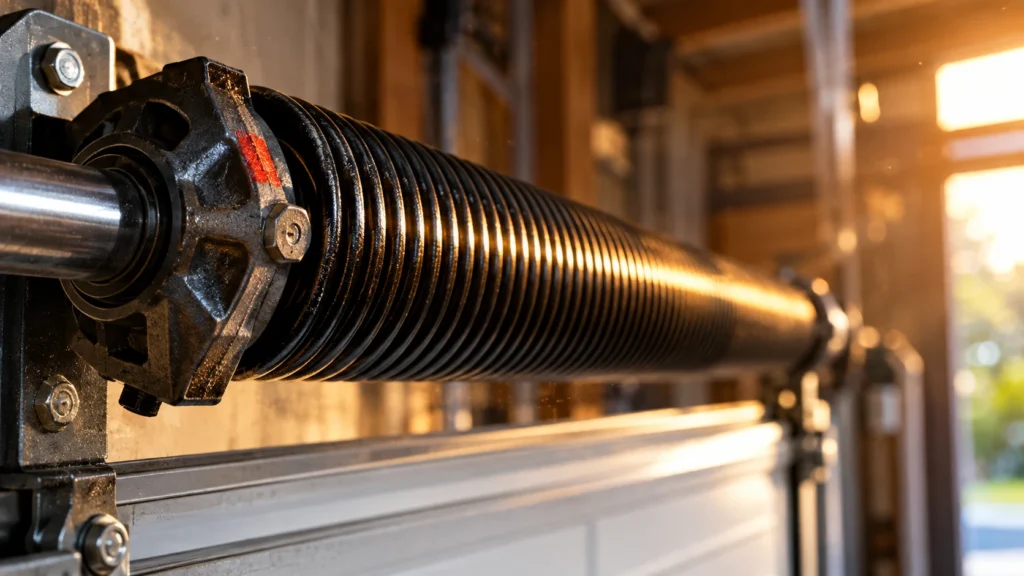
If your garage door is your main entry point, or you run a home business with frequent deliveries, cycle count adds up faster than most homeowners expect. A high-cycle spring, rated 18,000 cycles or more, is built with a slightly larger wire size or longer body to spread the load over more steel.
Check high-cycle torsion spring pricing on Amazon
The upgrade costs more upfront, usually $15–$40 more per spring, but it can more than double the years between replacements on a door that opens 8–10+ times a day.
How Much Weight Your Springs Need to Handle
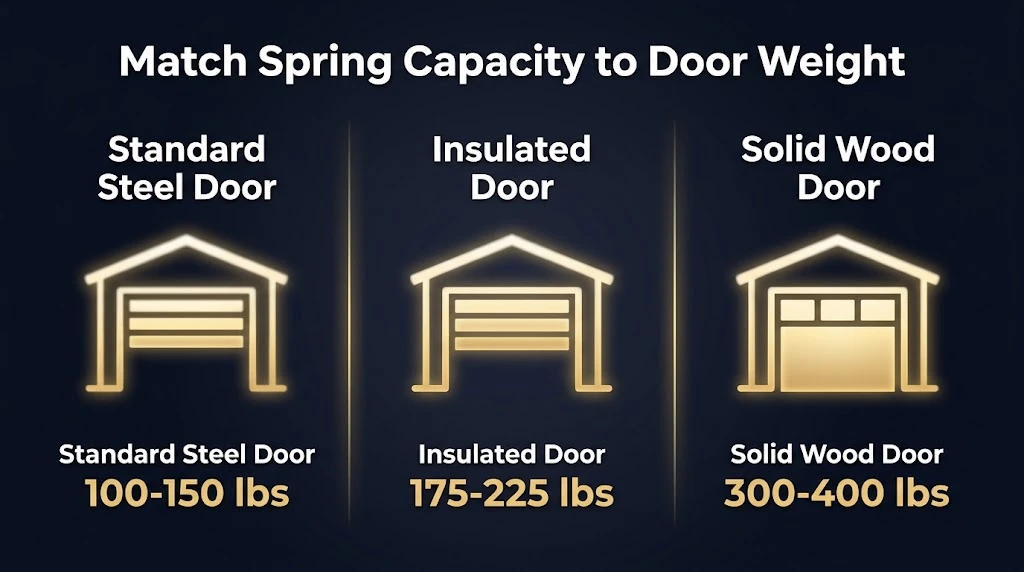
Spring sizing ultimately comes down to how much weight the pair needs to counterbalance. A standard steel door and a heavy insulated or wood door need noticeably different spring specs, even at the same width.
If you’re not sure where your door falls, check how heavy your specific door type actually is before ordering — guessing low on spring capacity leads to a door that won’t stay open, and guessing high strains the opener and hardware.
| Door Type | Typical Weight Range | Spring Consideration |
|---|---|---|
| Standard steel, non-insulated | 100–130 lbs | Standard wire size usually sufficient |
| Insulated steel or wood composite | 150–250 lbs | May need larger wire or dual springs |
| Solid wood, carriage-style | 250–400+ lbs | Almost always dual springs, professional sizing |
Installation Safety: Why This Isn’t a Solo DIY Job
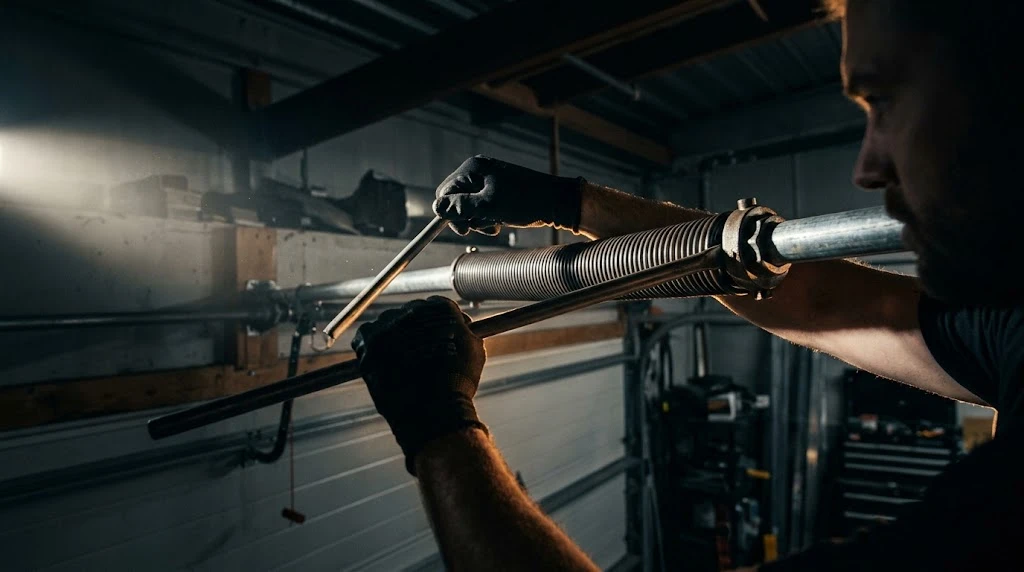
Buying the correct spring is safe, straightforward DIY work. Installing it is a different story. Torsion springs are wound under extremely high tension, and releasing or winding that tension with the wrong tools has caused serious injuries, including broken bones and worse.
| Task | DIY Suitability | Safety Risk Level | Time Estimate |
|---|---|---|---|
| Measuring and ordering the correct spring | Safe for DIY | Low | 20–30 minutes |
| Releasing tension from an old spring | Professional required | High | 15–30 minutes (pro) |
| Winding a new spring to correct tension | Professional required | High | 30–60 minutes (pro) |
| Lubricating springs after install | Safe for DIY | Low | 5–10 minutes |
Industry safety guidance from the Door & Access Systems Manufacturers Association is blunt about this: springs are the most dangerous part of a garage door system, and a trained technician should handle the winding and installation, even for experienced homeowners.
Once the new spring is installed, keeping it and the rest of the hardware properly lubricated is something you can absolutely do yourself, and it noticeably extends the life of the whole system.
Frequently Asked Questions
Can I install a garage door torsion spring myself?
Choosing and buying the right spring is fine to do yourself. Actually winding the spring to the correct tension is a job for a trained technician, since the tension involved can cause serious injury if the wrong tools or technique are used.
How do I know if I need a standard or high-cycle spring?
If your garage door is your main household entrance or opens more than 6-8 times a day, a high-cycle spring rated 25,000+ cycles is worth the extra cost. For occasional use, a standard 10,000-cycle spring is usually enough.
Do I need to replace both springs at once?
Yes. On a two-spring door, both springs wear at close to the same rate. Replacing only the broken one puts extra strain on the older spring and often leads to a second failure within months.
How long do garage door torsion springs typically last?
Standard torsion springs are rated for about 10,000 cycles, which works out to roughly 7-10 years of typical daily use. High-cycle springs can last 20,000-50,000+ cycles depending on the specific product.
What’s the difference between torsion springs and TorqueMaster springs?
TorqueMaster systems enclose two springs inside a shaft, which reduces injury risk during a break but typically only lasts 3,000-5,000 cycles, noticeably shorter than a standard open torsion spring.
Related Guides
For our other buying guides, see Best Garage Door Insulation for Hot Climates, Best Retractable Garage Screen Doors, Best Garage Door Opener With Battery Backup, Best Magnetic Garage Door Screen, Best Garage Door Hinges, Best Screw Drive Garage Door Opener, Best 1/2 HP Chain Drive Garage Door Opener, Best 3/4 HP Belt Drive Garage Door Opener, Best Garage Door Opener for Heavy Doors and Best Alexa-Enabled Garage Door Opener.