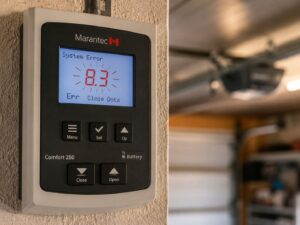
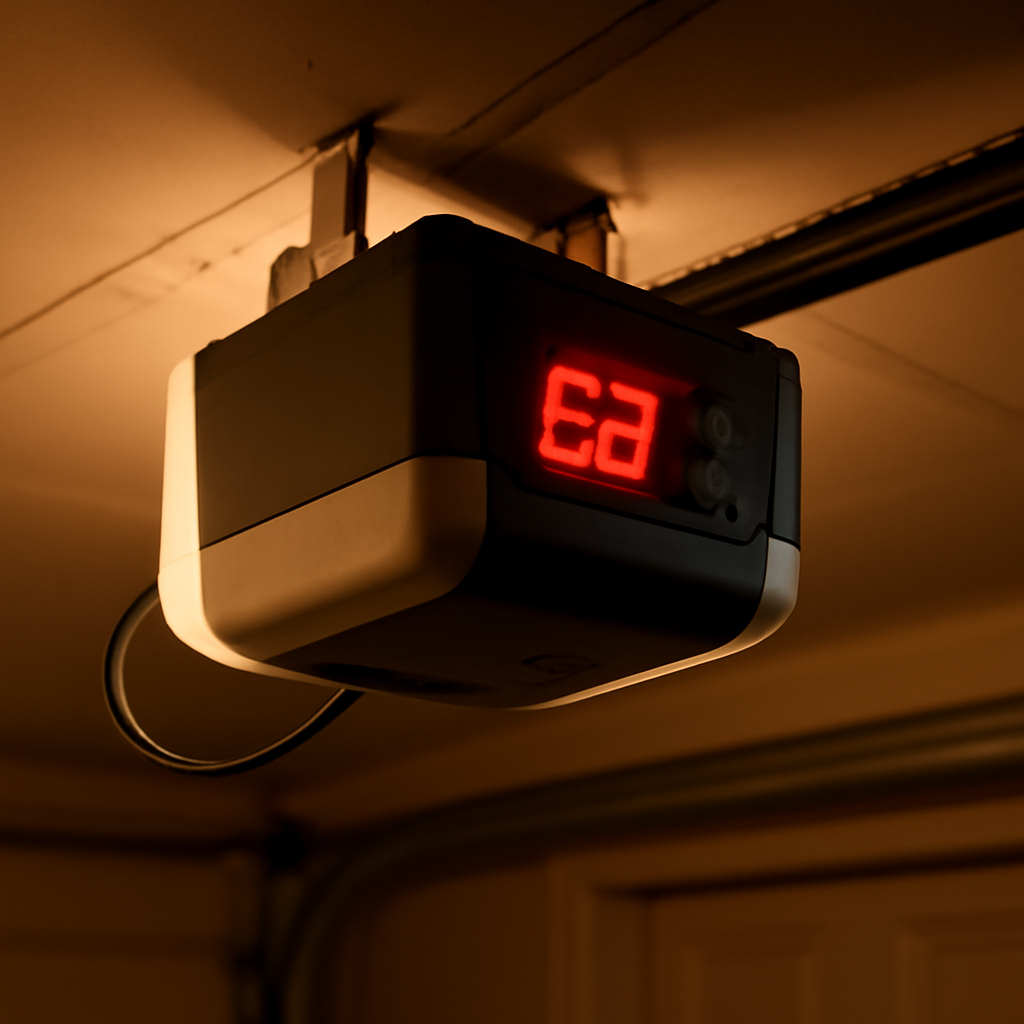
Your LiftMaster shows error code 42 and the door either won’t open or reverses partway up. Code 42 means the opener’s logic board detected excessive opening force — the motor thinks something is fighting it on the way up.
Most of the time it’s not a broken opener. It’s dry rollers, an off-balance door, or a force setting that’s been too sensitive since the day it was installed. A handful of causes are more serious and involve the springs, which is where DIY should stop.
Here’s every cause in order, starting with the fastest fix, plus how to tell when it’s time to call a pro instead of adjusting another dial. In our experience, most people jump straight to cranking up the force setting, which almost always makes the underlying problem worse instead of fixing it.
Short Answer: LiftMaster error code 42 means “Excessive Opening Force Detected.” The opener’s motor sensed too much resistance while lifting the door and stopped or reversed for safety. Common causes are dry rollers, a misaligned track, or worn springs. Try lubricating the moving parts and rebalancing the force setting first — if the door doesn’t move freely by hand, call a professional before touching the springs.
What LiftMaster Error Code 42 Actually Means
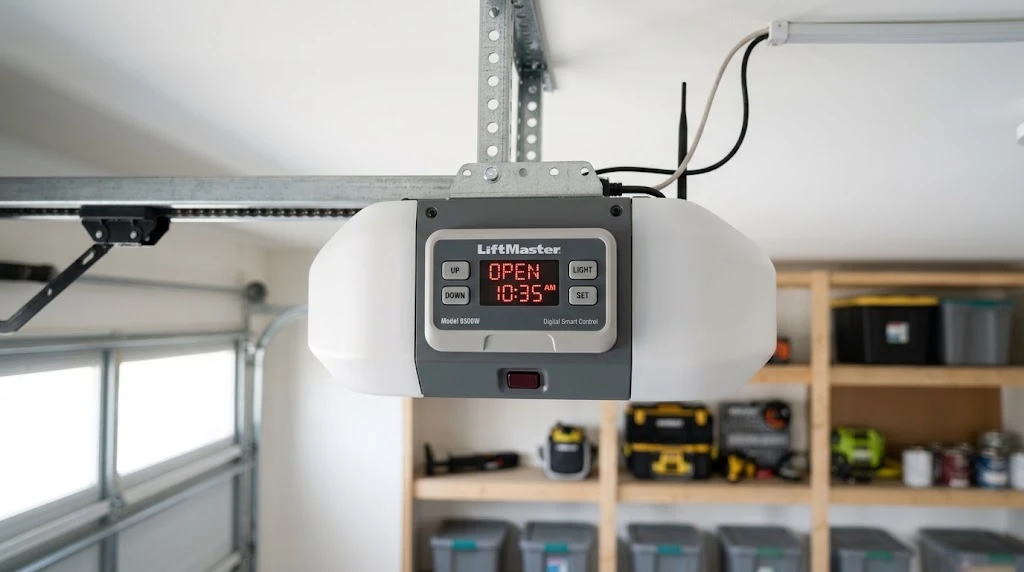
LiftMaster openers track motor RPM during every open cycle. When the door meets resistance — real or perceived — the RPM drops. If it drops past a set threshold before the door reaches full open, the logic board logs code 42 and stops the motor rather than forcing it through.
This is a safety feature, not a malfunction. LiftMaster designed it to stop the motor before it strains itself — or worse, before a struggling door drops on someone. The code doesn’t tell you which part is causing the resistance. That part takes some checking.
Some panels display it as “42,” while the MyQ app shows the same event as code “4-2.” Same trigger, different display format. If you’ve already dealt with the companion code, our guide to LiftMaster error code 4-1 covers the closing-force version of this same problem.
Most Common Causes of Code 42
| Cause | How Common | DIY Suitability | Safety Risk Level |
|---|---|---|---|
| Dry or worn rollers | Very common | Safe for DIY | Low |
| Misaligned or bent track | Common | Safe for DIY (minor adjustments) | Low |
| Force setting too sensitive | Common | Safe for DIY | Low |
| Weak or unbalanced springs | Common on older doors | Professional required | High |
| Worn opener drive gear | Less common | Professional required | Medium |
Notice that the two most frequent causes — dry rollers and an over-sensitive force setting — are also the safest and cheapest to fix. Start there before assuming the worst.
How to Fix It, Step by Step
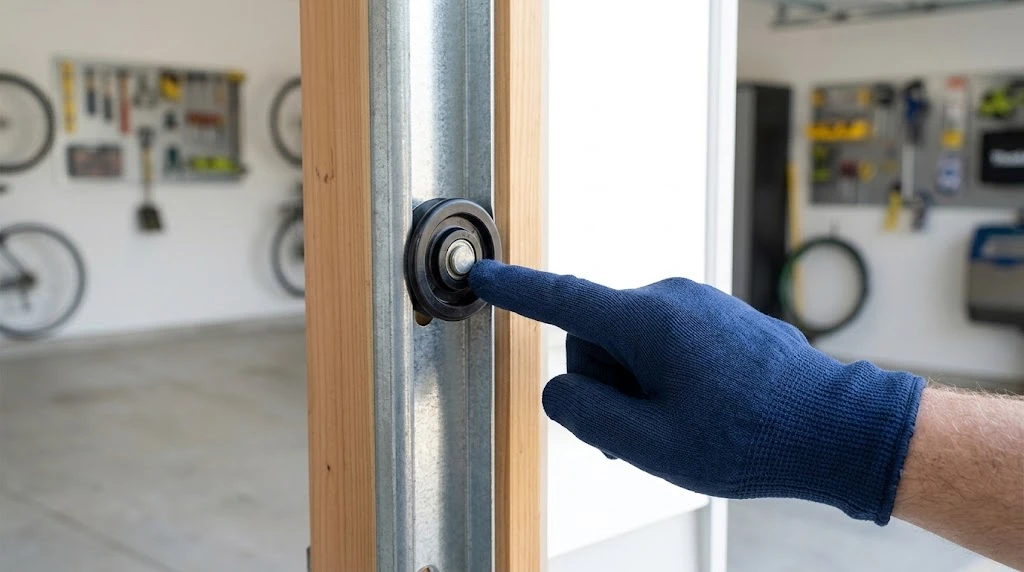
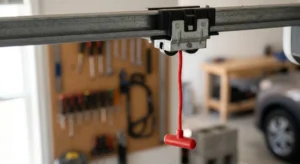
- Disconnect the opener and lift the door by hand. Pull the red release cord, then lift the door manually. It should move smoothly and stay put at any height. If it slams down or feels heavy, skip to the springs section below — don’t keep testing the opener yet.
- Lubricate the rollers, hinges, and track. Use a silicone-based garage door lubricant, not WD-40, which attracts dust instead of repelling it. A dry rail is one of the most common reasons an opener suddenly starts logging excessive force.
- Check the track for bends or gaps. Stand back and sight down the vertical track on each side. A section pushed out of alignment makes rollers bind, which reads to the opener as resistance.
- Reconnect the opener and run one cycle. If the door opens fully without the code returning, you’re done. If it still trips, move to the force adjustment step.
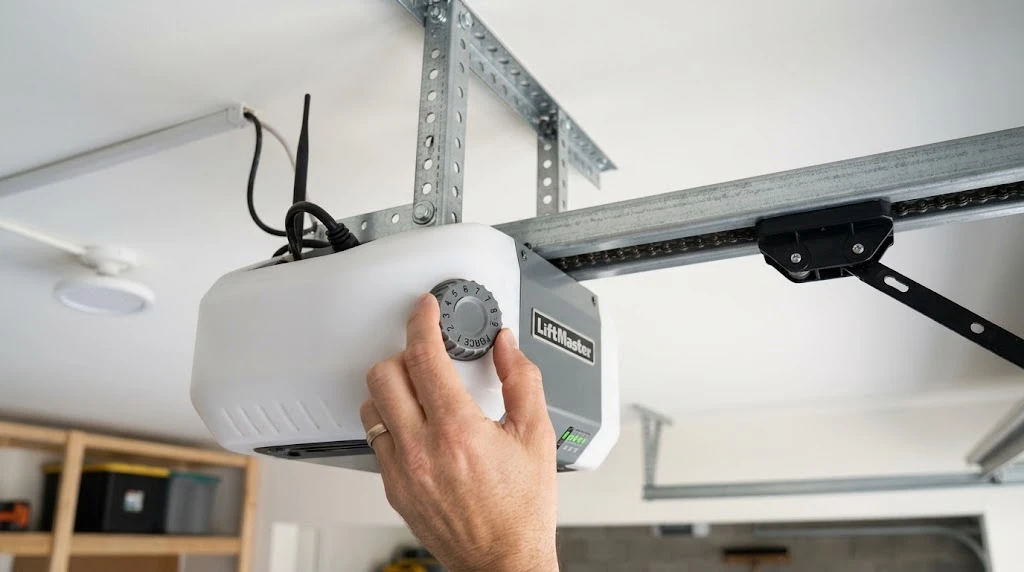
- Adjust the up-force setting in small increments. Most LiftMaster models have a force adjustment dial or menu setting near the logic board. Increase it slightly — a quarter turn or one menu step — and test again. Never max it out just to stop the error; that defeats the safety feature.
When It’s the Springs, Not the Opener
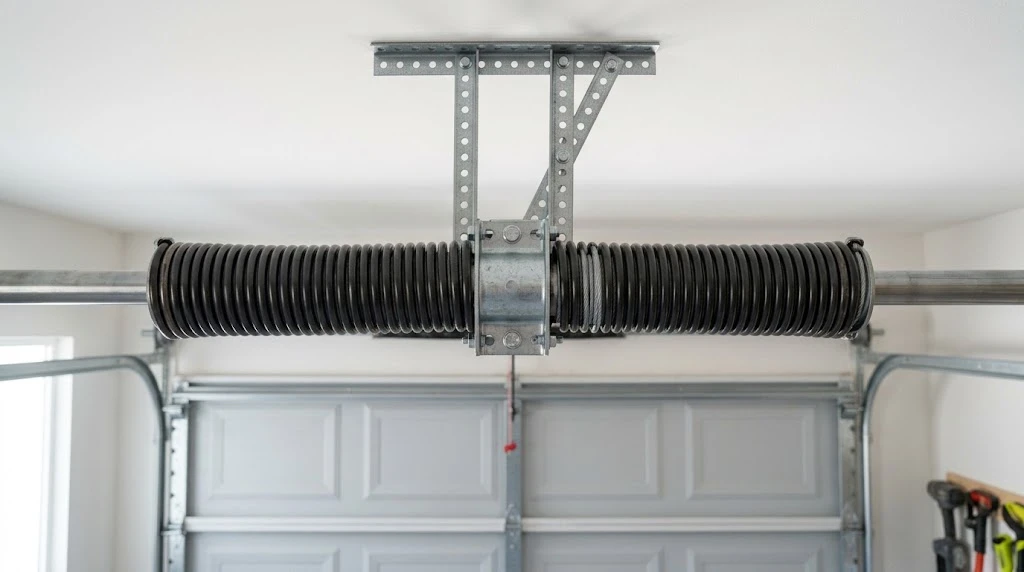
The opener isn’t built to lift the door’s full weight — the springs do that job. The motor just guides the door along the track. When springs weaken with age, the opener starts doing work it was never designed for, and that shows up as excessive force errors.
Here’s the test: with the door disconnected from the opener, lift it about halfway by hand and let go. A properly balanced door stays roughly in place. If it drops on its own or shoots upward, the springs are off and need adjustment.
Do not attempt this yourself. Torsion springs are wound under enough tension to cause severe injury or death if they release suddenly. This is one of the few repairs on a garage door where hiring a professional isn’t optional — it’s the only safe option. Expect to pay $150 to $300 for a spring adjustment or replacement, and a technician can usually finish it same-day.
Resetting the Force Settings the Right Way
| Field | Detail |
|---|---|
| Symptoms | Door stops or reverses partway up, code 42 on display |
| Probable Causes | Force threshold set too low for current door weight |
| DIY Suitability | Safe for DIY |
| Safety Risk Level | Low, if adjusted in small steps |
| Repair Time Estimate | 10–15 minutes |
Adjust force in small steps, testing after each one. Jumping straight to maximum force just masks a real problem — a spring or roller issue that will keep getting worse while the opener quietly compensates for it. If you need to raise the force setting more than a notch or two to stop the error, that’s a sign something mechanical needs attention, not just a setting.
If your door has also started making noise along with the force errors, it’s worth reading about what LiftMaster’s blink codes mean — a related but separate diagnostic system on the same opener.
When to Call a Professional
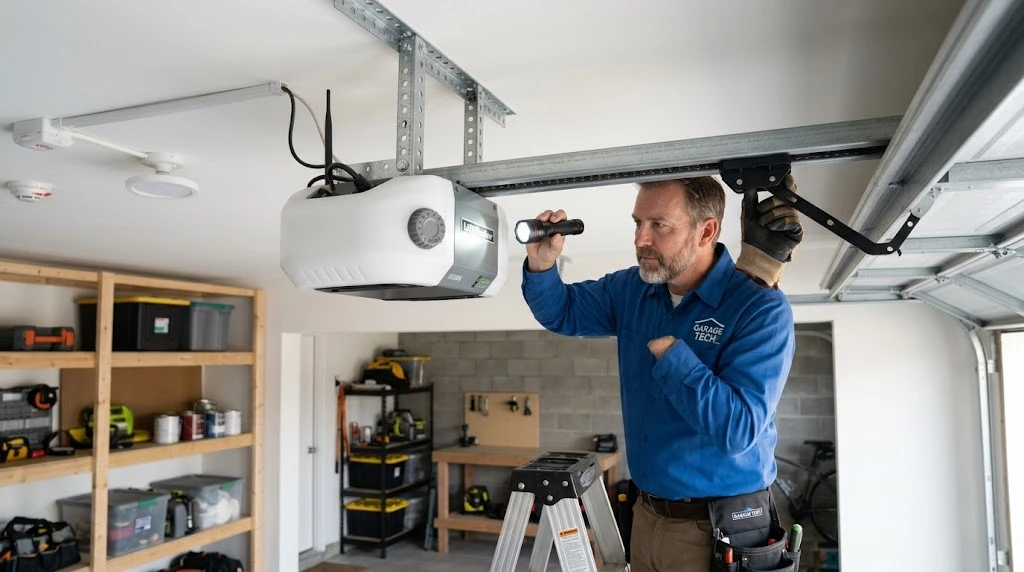
Call a professional if any of these apply: the door doesn’t move smoothly by hand, springs look stretched, rusted, or have a visible gap when at rest, the opener grinds or strains even after lubrication, or the code keeps returning after you’ve adjusted force and cleaned the track.
A service call for a diagnosis alone usually runs $75 to $150, and most companies apply that toward the repair if you move forward. Given that a wrong DIY move on a torsion spring can cause serious injury, that’s money well spent when springs are involved.
Regular maintenance also helps prevent code 42 from coming back. Our guide on the best lubricant for garage door hinges covers what actually works long-term versus products that wash out after a few rain cycles.
Frequently Asked Questions
What does LiftMaster error code 42 mean?
Error code 42 means “Excessive Opening Force Detected.” The opener’s motor sensed too much resistance while raising the door and stopped the cycle as a safety precaution, rather than continuing to push against whatever is causing the resistance.
Can I fix LiftMaster error code 42 myself?
Often yes, if the cause is dry rollers, a misaligned track, or an overly sensitive force setting. Lubricating moving parts and adjusting the force dial in small steps resolves most cases. If the door feels heavy or unbalanced by hand, stop and call a professional — that points to a spring problem.
Is it safe to keep opening the door manually if I get this error?
Yes, using the manual release is safe short-term. But if the door feels heavy, uneven, or drops on its own when disconnected from the opener, don’t keep forcing it open and closed by hand either — that’s a sign the springs need professional attention soon.
Why does my LiftMaster keep showing code 42 after I adjusted the force?
If the error returns after a force adjustment, the underlying resistance hasn’t actually been fixed — you’ve just told the motor to push harder against it. This usually means the real issue is mechanical: worn springs, a bent track, or a roller that needs replacing, not the setting itself.
How much does it cost to fix LiftMaster error code 42?
If the cause is dry rollers or track alignment, a $10 tube of lubricant may be all you need. If it’s a spring issue, expect to pay $150 to $300 for a professional repair. A full opener replacement, in rare cases of a failed drive system, runs higher.
Related Guides
For other LiftMaster opener guides, see How Many Openers Can You Program to a LiftMaster?, LiftMaster Garage Door Won’t Close Without Holding Button, LiftMaster Keypad Programming With No Enter Button, LiftMaster Garage Door Remote Not Working, LiftMaster Garage Light Won’t Turn On, LiftMaster 1/2 HP Troubleshooting, LiftMaster 1/3 HP Troubleshooting, How to Fix LiftMaster Error Code 1-5, LiftMaster 375UT Not Working and LiftMaster Garage Door Chain Not Moving.
For official manufacturer guidance, see LiftMaster’s official support center.