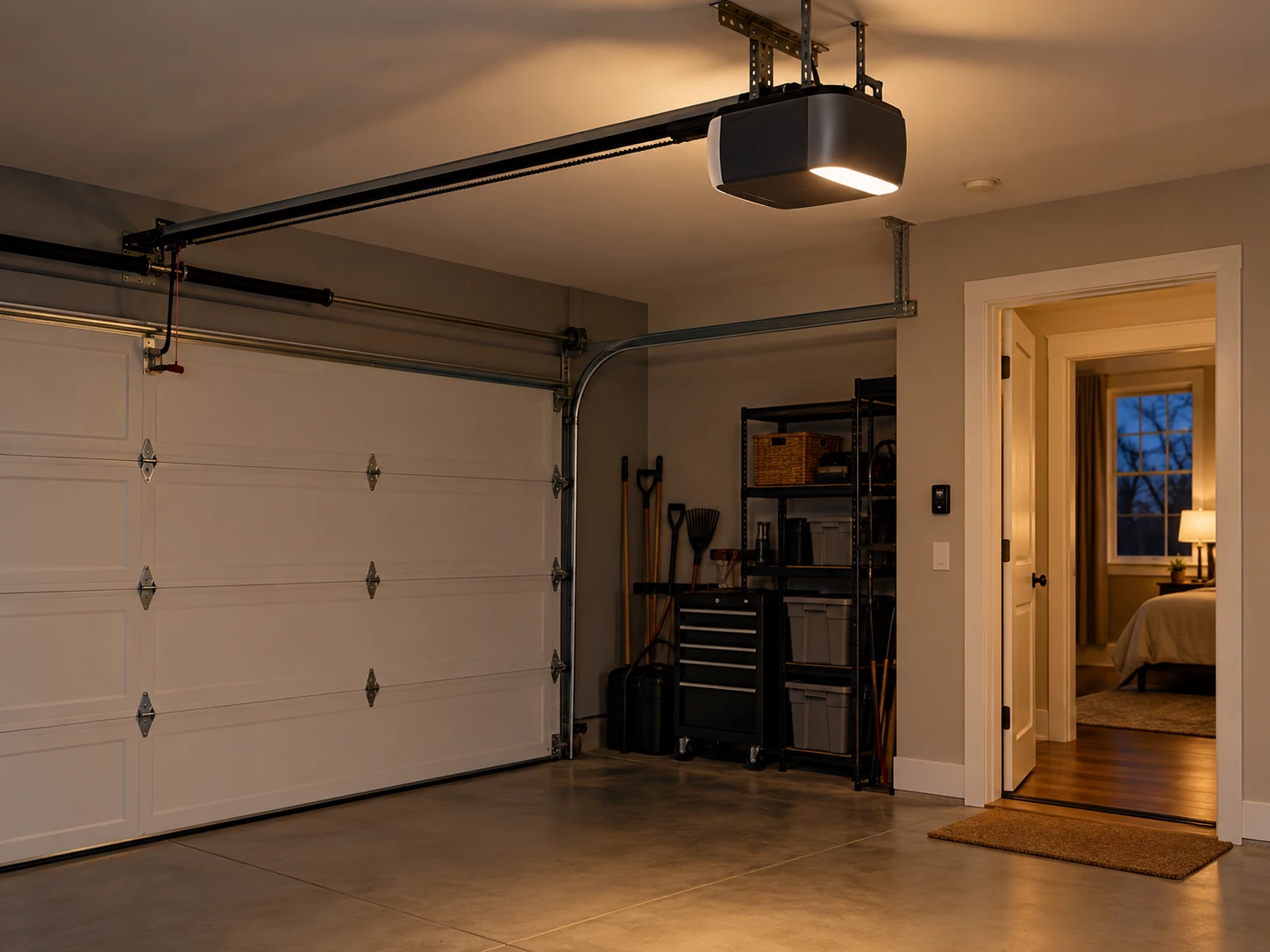
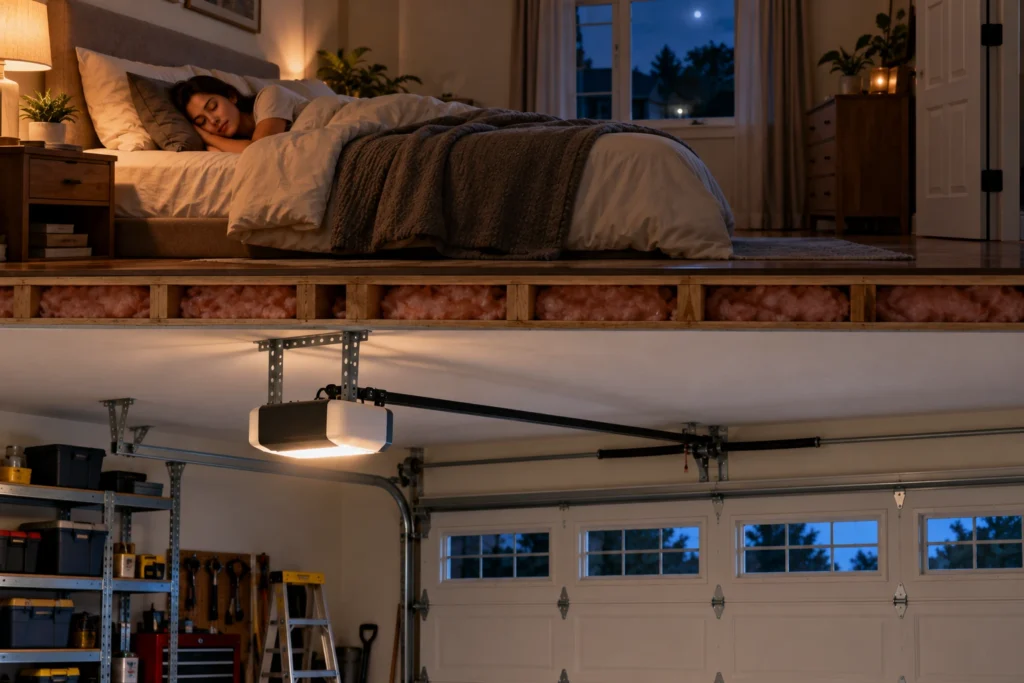
A 3/4 HP belt drive is the sweet spot for most attached garages: quiet enough for a garage under a bedroom, and strong enough for insulated double doors. Today’s models also bring DC motors with soft start and stop, built-in Wi-Fi and, on the better ones, battery backup.
This guide compares current 3/4 HP belt drives using manufacturer specs, flags which ones lack battery backup or voice-assistant support, and explains when you’d be better off with a different opener.
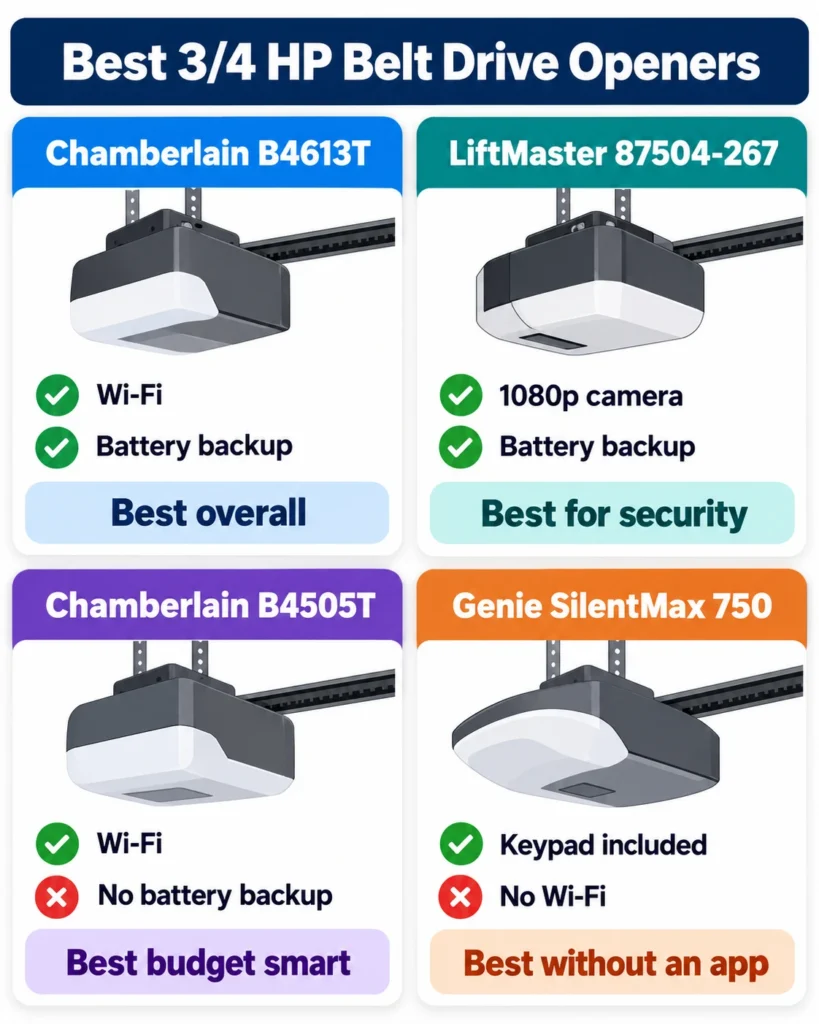
Short Answer: The best 3/4 HP belt drive for most homes is the Chamberlain B4613T: quiet DC belt drive, built-in Wi-Fi, battery backup and a wireless keypad in the box. Choose the LiftMaster 87504-267 if you want a built-in 1080p camera with two-way audio and a 2,000-lumen light. The Chamberlain B4505T is the budget smart pick without battery backup, and the Genie SilentMax 750 suits buyers who want a quiet opener with a keypad and no app at all.
In our experience helping homeowners choose openers, the garage-under-a-bedroom situation is where switching from a chain to a belt drive makes the biggest day-to-day difference.
Affiliate disclosure: As an Amazon Associate, we earn from qualifying purchases. This doesn’t change our recommendations or your price.
Is a 3/4 HP Belt Drive Right for You?
A belt drive pulls the trolley with a steel-reinforced rubber belt instead of a metal chain, so it runs smoother and quieter. The 3/4 HP class gives you more lifting margin than 1/2 HP, which helps on insulated and double doors.
| Your Situation | 3/4 HP Belt Drive? | Notes |
|---|---|---|
| Garage under or beside a bedroom | Yes, ideal | Quietest common option |
| Insulated steel double door | Yes | Good lifting margin with balanced springs |
| Lightweight single door, detached garage | Optional | A 1/2 HP chain drive saves money |
| Solid wood or oversized door | Maybe not | Consider a heavier-rated opener or jackshaft |
| No room for a ceiling rail | No | A wall-mount jackshaft fits instead |
For a deeper sizing answer, see is a 3/4 HP garage door opener enough. For lighter doors on a budget, our best 1/2 HP chain drive guide is the better starting point.
Our Picks at a Glance
All four are current 3/4 HP-class belt drives with DC motors and rolling-code security. Specs come from the manufacturers’ product pages.
| Opener | Wi-Fi | Battery Backup | Camera | Included Extras | Best For |
|---|---|---|---|---|---|
| Chamberlain B4613T | Yes (myQ) | Yes | No | Wireless keypad, 1,000-lumen LED | Best overall |
| LiftMaster 87504-267 | Yes (myQ) | Yes | 1080p, two-way audio | Keypad, 3-button remote, smart wall panel, 2,000-lumen LED | Security and lighting |
| Chamberlain B4505T | Yes (myQ) | No | No | Wireless keypad | Budget smart opener |
| Genie SilentMax 750 | No (add-on kit) | No | No | Two 3-button remotes, keypad | Quiet without an app |
Models without battery backup can’t be sold for new installs in California, which has required it since 2019.
Chamberlain B4613T: Best Overall
The Chamberlain B4613T covers everything most homeowners need in one box, and it replaced the discontinued Chamberlain B970 that many older guides still recommend.
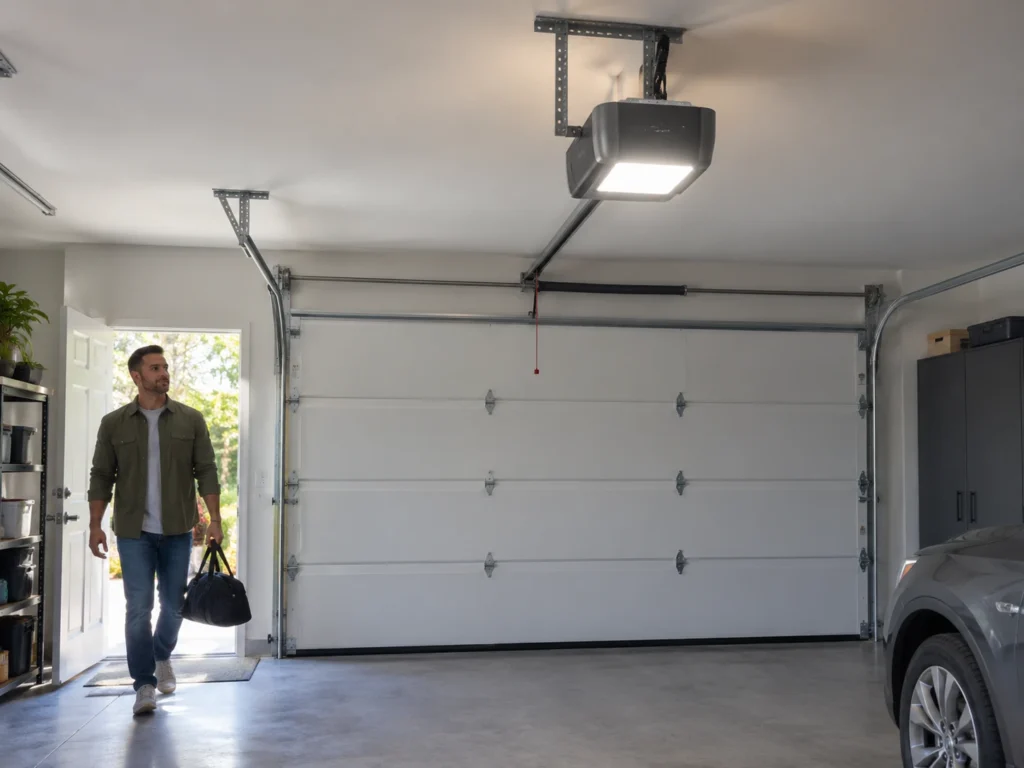
- Motor: 3/4 HP DC belt drive with soft start and stop.
- Smart control: built-in Wi-Fi with Bluetooth-assisted setup, myQ app, Security+ 2.0 and Amazon Key support.
- Battery backup: included, meeting California SB 969.
- Light: 1,000-lumen integrated LED that turns on when it detects motion.
- In the box: wireless keypad.
- Rail: 7 feet; taller doors need an extension kit.
One limit: myQ has no native Alexa skill and no Google Assistant support. If voice control matters, see our best Alexa-enabled garage door opener guide.
LiftMaster 87504-267: Best With a Camera
The LiftMaster 87504-267 Secure View is a dealer-grade belt drive that adds features no other pick here has.
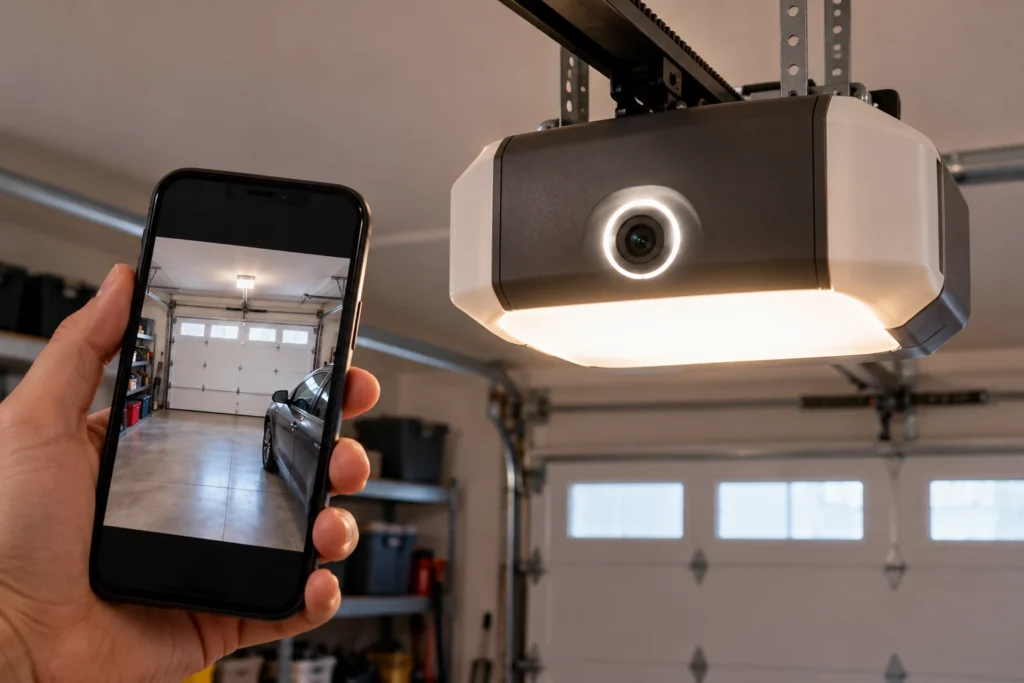
- Camera: 1080p HD with night vision and two-way audio in the myQ app. Live view and alerts are free; recorded video needs a paid myQ plan.
- Light: 2,000-lumen 360-degree LED light ring with motion activation.
- Battery backup: included (485LM battery), meeting California SB 969.
- In the box: smart wall control panel, 893MAX 3-button remote and a wireless keypad.
- Motor: ultra-quiet DC belt drive, listed by dealers as 3/4 HP-equivalent.
It costs more than the B4613T, so it makes most sense if you’d otherwise buy a separate garage camera. Compare it with other camera models in our best garage door opener with camera guide.
Chamberlain B4505T: Best Budget Smart Opener
The Chamberlain B4505T gives you the quiet belt drive and myQ Wi-Fi of the B4613T for less money, minus the battery backup.
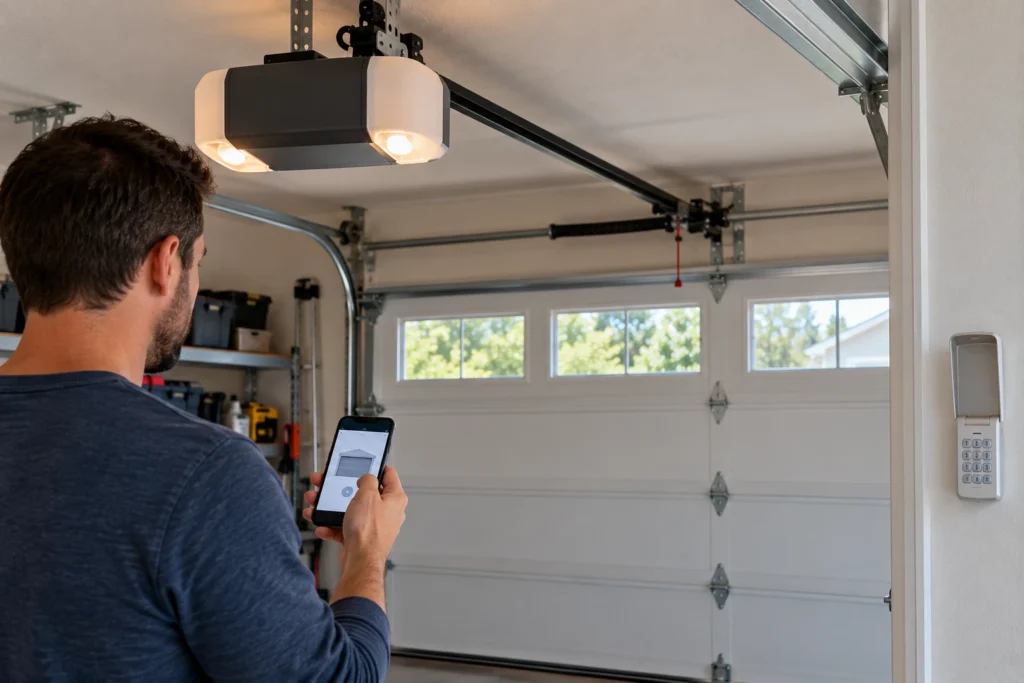
- Motor: 3/4 HP DC belt drive with soft start and stop.
- Smart control: built-in Wi-Fi, myQ app, Security+ 2.0, Amazon Key.
- Battery backup: not included.
- Light: takes standard bulbs (sold separately), with motion-activated lighting.
- In the box: wireless keypad and safety sensors; 7-foot rail.
Pick it if you live outside California, rarely lose power, and want the quiet belt and app control at a lower price. Otherwise, the B4613T is worth the step up.
Genie SilentMax 750: Best Without an App
The Genie SilentMax 750 (model 3055-TKSV) is a quiet belt drive for people who just want a reliable opener and a keypad, without Wi-Fi setup.
- Motor: 3/4 HPc DC belt drive.
- Door rating: sectional doors up to 500 pounds and 7 feet high, with an 8-foot extension kit available.
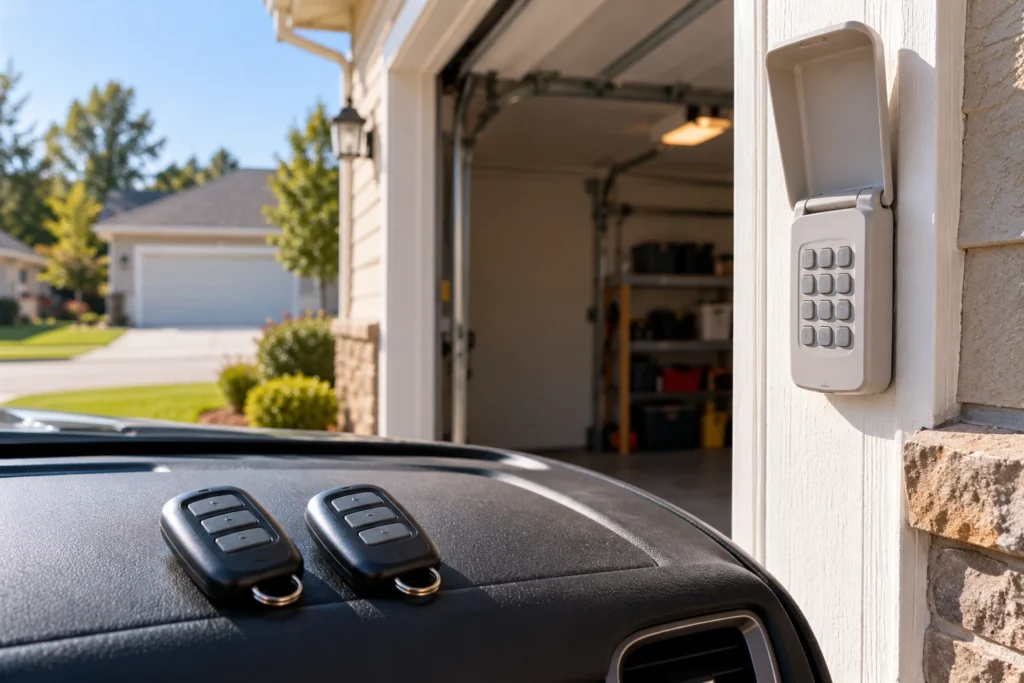
- In the box: two 3-button remotes, a wireless keypad, and a wall console with vacation lock.
- Warranty: limited lifetime motor and 15-year belt warranty, according to Genie.
- Limits: no built-in Wi-Fi (an Aladdin Connect retrofit kit is sold separately) and no battery backup, which Genie says can’t be added later.
For Genie’s smart models, see our best Genie garage door opener guide.
Other Options Worth Knowing
Two more openers come up often when people shop in this class.
- Craftsman CMXB4230: a 3/4 HP DC belt drive with built-in Wi-Fi (Craftsman myQ app), battery backup, two remotes and a 5-year motor and belt warranty. It’s a solid alternative if you prefer the Craftsman brand.
- Genie 7155-TKV StealthDrive Connect: technically a step up at 1-1/4 HPc, but it’s the go-to quiet belt drive if you want native Alexa and Google Assistant support. Genie rates it for doors up to 500 pounds, and it includes battery backup. See the Genie 7155-TKV.
If your door is solid wood or oversized, skip to our best garage door opener for heavy doors guide.
Belt vs Chain: How Much Quieter Is It?
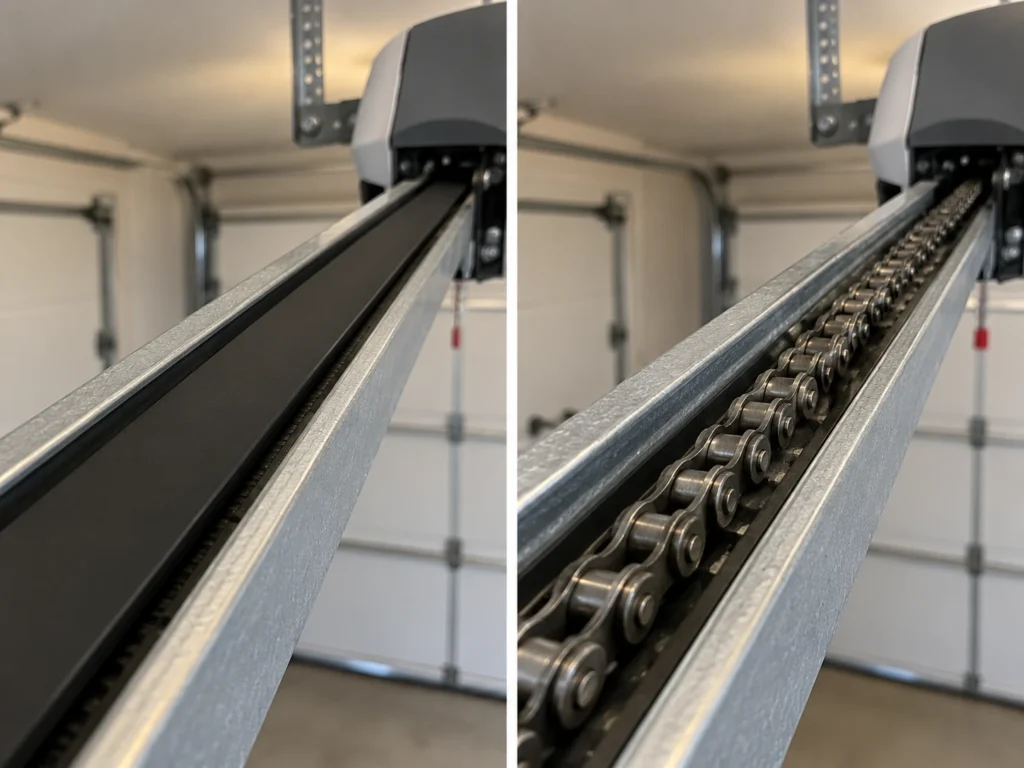
Belt drives are the quietest common opener type because the rubber belt absorbs vibration that a metal chain passes into the rail and ceiling.
| Factor | Belt Drive | Chain Drive |
|---|---|---|
| Noise | Quiet, smooth | Louder, metallic rattle |
| Price | Higher for the same features | Lower |
| Maintenance | No lubrication, periodic tension check | Occasional lubrication and tension check |
| Cold and dusty garages | Fine for most climates | Very tolerant |
| Best for | Attached garages near living space | Detached or budget installs |
Much of an opener’s noise also comes from the door itself. Worn rollers and dry hinges can be louder than the motor, so lubricating the door when you install a new opener completes the job. See our best lubricant for garage door hinges guide.
Installing a Belt Drive Opener
Belt drives install the same way as chain drives. Most homeowners finish in 3 to 4 hours with a helper.
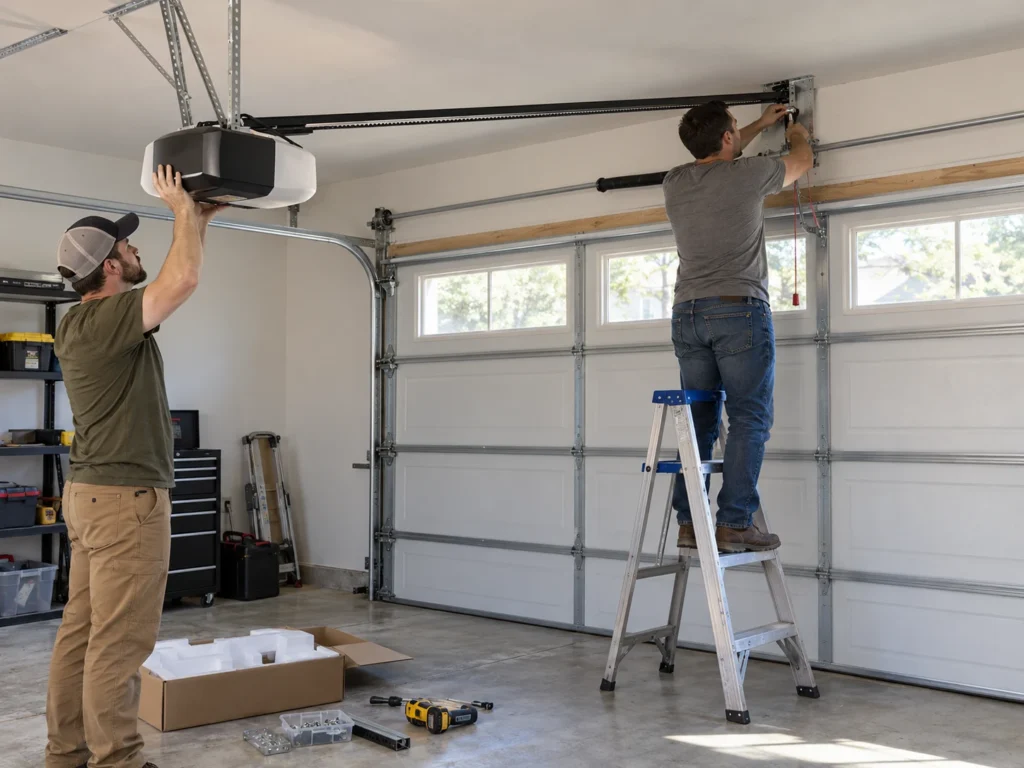
- Check the door first: pull the emergency release and make sure it’s balanced and moves freely.
- Assemble the rail without twisting or kinking the belt.
- Attach the rail to the header bracket and hang the motor unit from the ceiling joists.
- Install the safety sensors no more than 6 inches above the floor.
- Mount the wall control at least 5 feet high, out of children’s reach.
- Set the travel limits and force, pair remotes, and connect Wi-Fi.
- Run the safety reverse test with a 2×4 laid flat under the door.
Check your outlet before you start; see does a garage door opener need a dedicated circuit. Professional installation typically adds about $100 to $250 in labor.
Belt Care and Common Mistakes
A belt drive needs very little maintenance, but a few habits keep it quiet for years.
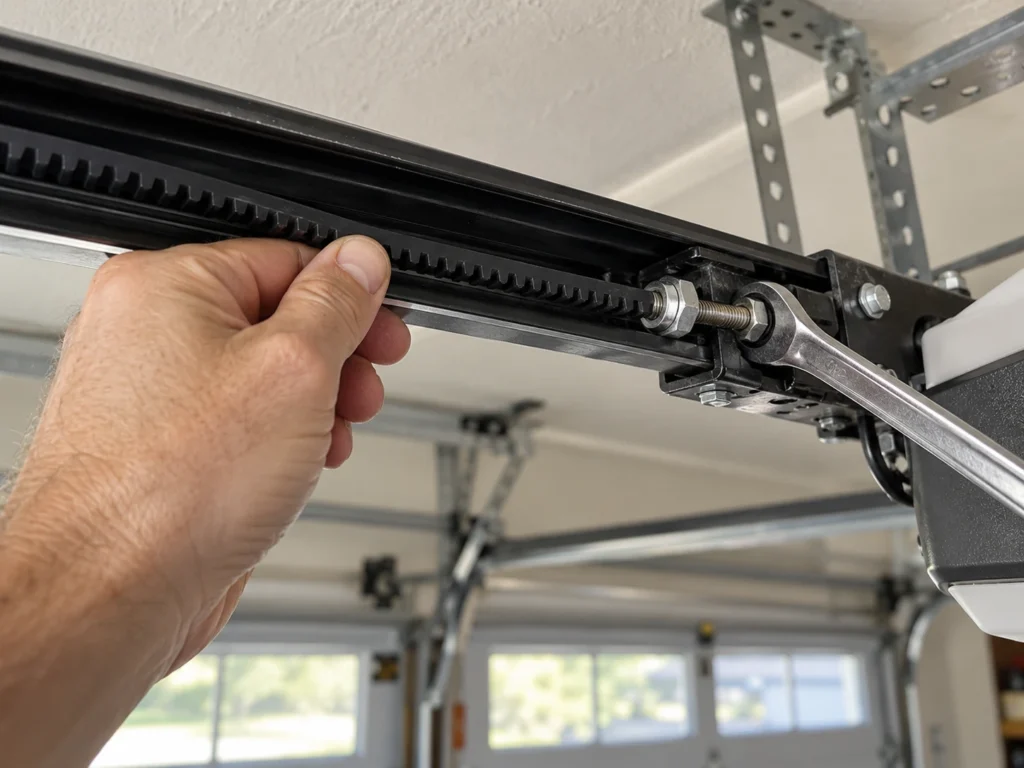
- Check belt tension once a year. A loose belt slaps and can slip; an over-tight one loads the motor.
- Inspect the belt for cracks or fraying, especially in very hot garages.
- Tighten rail brackets. A loose bracket rattles no matter how quiet the motor is.
- Don’t raise the force setting to push a sticking door. Fix the rollers or springs instead.
- Test the safety reverse monthly and keep the sensors clean and aligned.
- Keep battery backup healthy. Backup batteries wear out over a few years; replace them when the opener warns you.
If an opener starts struggling, our LiftMaster 1/2 HP troubleshooting guide covers most of the symptoms belt drives share.
Frequently Asked Questions
Is 3/4 HP overkill for a single garage door?
For a lightweight single steel door, usually yes. For insulated, wood or carriage-style single doors, 3/4 HP gives extra margin and a smoother lift.
Which 3/4 HP belt drive has battery backup?
The Chamberlain B4613T, LiftMaster 87504-267 and Craftsman CMXB4230 include battery backup. The Chamberlain B4505T and Genie SilentMax 750 do not.
Which 3/4 HP belt drive works with Alexa?
None of the myQ-based models have a native Alexa skill. For native Alexa and Google support in a quiet belt drive, look at the Genie 7155-TKV with Aladdin Connect.
Do belt drives need more maintenance than chain drives?
Less. Belts don’t need lubrication. Check tension once a year and look for cracks or fraying.
How long does a belt drive opener last?
Typically 10 to 15 years with balanced springs and basic care. Genie backs the SilentMax 750 belt with a 15-year warranty.
Can I replace a 1/2 HP opener with a 3/4 HP one?
Yes. Upgrading horsepower is safe and helps on heavier doors, as long as you set the force correctly and the springs are balanced.
Does a 3/4 HP opener use much more electricity?
No. The motor only runs for a few seconds per cycle. See our garage door opener electricity usage guide.
Related Guides
For more opener buying guides, see Best 1/2 HP Chain Drive Garage Door Opener, Best Garage Door Opener for Heavy Doors, Best Garage Door Opener With Battery Backup, Best Garage Door Openers With Wi-Fi, Best Chamberlain Garage Door Opener and Best Screw Drive Garage Door Opener.
For manufacturer specs, see Chamberlain’s B4613T page and LiftMaster’s 87504-267 page.