

Choosing between a 1/2 HP and a 3/4 HP garage door opener comes down to your door, not your garage. A light single steel door doesn’t need more than 1/2 HP. An insulated double door, a solid wood door, or a door that opens a dozen times a day is where 3/4 HP earns its price. And before either, your springs decide how hard the motor has to work at all.
Short Answer: Yes, 3/4 HP is enough for almost every home garage door, including insulated double doors and most wood doors. Genie, for example, rates its 3/4 HPc belt drive for doors up to 500 lb, against 350 lb for its 1/2 HPc model. Go above 3/4 HP only for oversized or very heavy doors, or for heavy daily use.
Last verified: November 16, 2026, against Genie’s and Chamberlain’s own product specifications on Amazon listings and the safety section of Chamberlain’s opener installation manual. How we research.
This post contains affiliate links. If you buy through our links, we may earn a small commission at no extra cost to you. We only recommend products that fit the job.
1/2 HP vs 3/4 HP: The Quick Answer by Door
Most reviews compare the two sizes by garage size, which is the wrong measure. A one-car garage can have a heavy wood door, and a two-car garage can have a light uninsulated one. Start with what the door is made of and how often it moves.
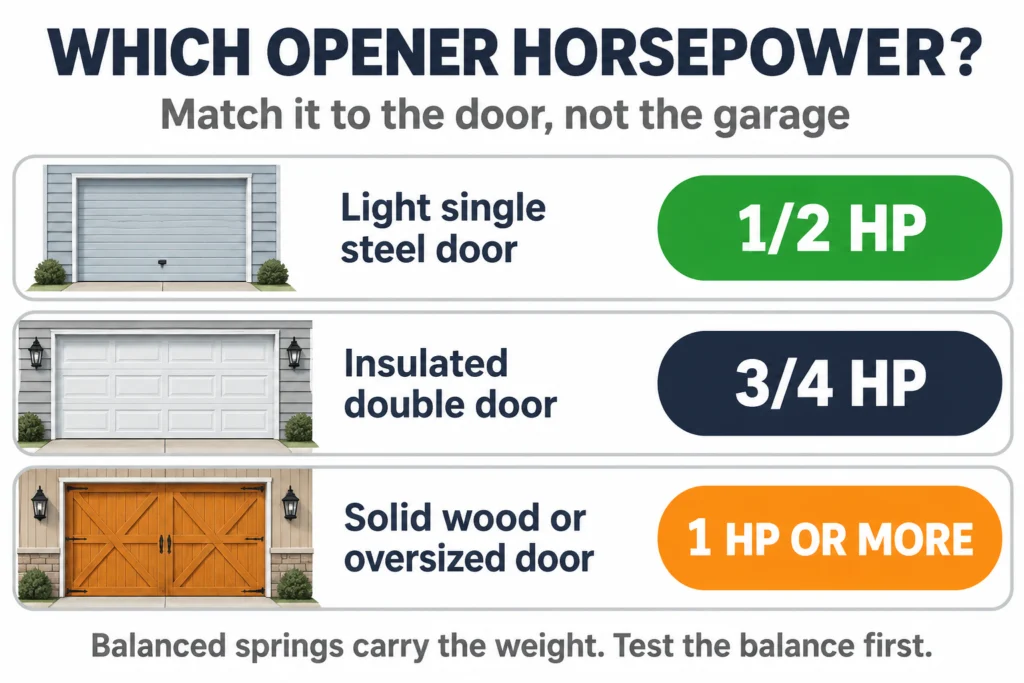
| Your door | Horsepower | Why |
|---|---|---|
| Single door, uninsulated or lightly insulated steel, aluminum | 1/2 HP | Well inside a 1/2 HP opener’s rating; extra power buys nothing |
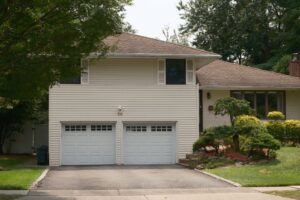
| Double (16 ft) insulated steel door | 3/4 HP | Heavier panels and more cycles; within a 3/4 HP opener’s rating with room to spare |
| Solid wood, carriage-house, glass panels | 3/4 HP or more | Weight climbs fast; check the door maker’s weight against the opener’s rating |
| Oversized door, or opened many times a day | 1 HP or more, or a wall-mount opener | Higher duty cycle and more headroom |
| Door feels heavy when lifted by hand | Fix the springs first | No opener size makes up for an unbalanced door |
If you know your door’s width, height and material, our garage door opener size calculator turns that into a horsepower suggestion. For actual door weights by size and material, see how much a 16×7 garage door weighs and how heavy a double garage door is.
What the Manufacturers’ Own Ratings Say
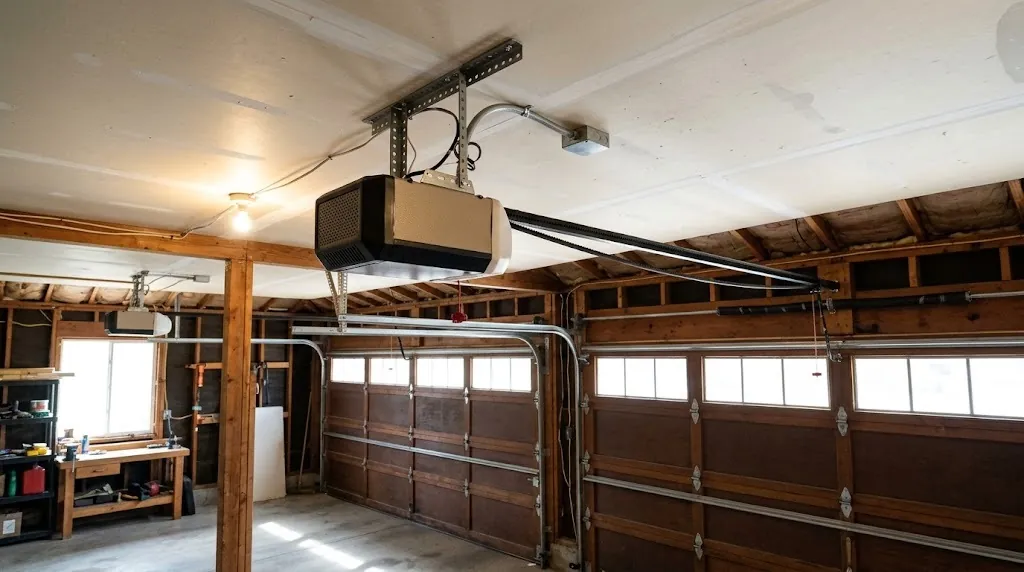
Horsepower on a modern DC opener is a class label more than a measurement: Genie writes it as “HPc” and Chamberlain’s listings put an asterisk next to it. The more useful number is the door limit the maker publishes, and only some makers publish one.
| Opener | Rated power | Maker’s stated door limit | Amazon price |
|---|---|---|---|
| Genie Chain Drive 500 (1135-VM) | 1/2 HPc | Sectional doors up to 7 ft high and 350 lb | see listing |
| Genie QuietLift Connect (3053-TKV) | 3/4 HPc | Up to 7 ft high and 500 lb | see listing |
| Genie StealthDrive Connect (7155-TKV) | 1-1/4 HPc | Up to 7 ft high and 500 lb | see listing |
| Chamberlain B3000 | 1/2 HP | No weight given; listed for “standard garage doors” and everyday use | see listing |
| Chamberlain B4310 | 3/4 HP | No weight given; listed for frequent use | see listing |
| Chamberlain RJO101 wall mount | Not rated in HP | 850 lb of lift | see listing |
Amazon prices as of Nov 27, 2026 (details).
Two things stand out. First, the jump that matters is from 1/2 to 3/4 HP: Genie’s limit rises from 350 lb to 500 lb. Second, Genie rates its 1-1/4 HPc opener for the same 500 lb as its 3/4 HPc model. Above 3/4 HP you are paying for smoother, quieter running and heavy daily use, not for a heavier door limit, at least on Genie’s ceiling openers. A truly heavy door is better served by a wall-mount opener like the RJO101, which is rated by lift weight rather than horsepower.
Your Springs Matter More Than the Motor
Here’s the part most comparisons skip. An opener doesn’t lift the full weight of your door; the torsion or extension springs do. On a properly balanced door, the opener only has to start and guide a door that already weighs very little in its hands. That’s why a 1/2 HP opener can run a two-car door for years, and why a bigger motor on a door with tired springs only hides the problem.
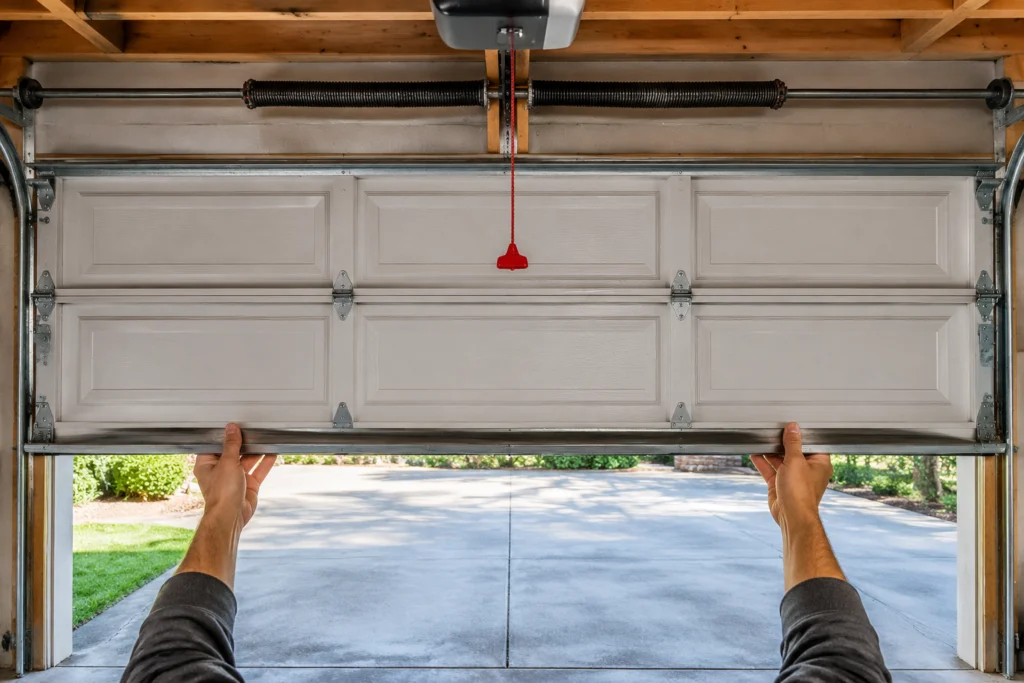
Check before you buy. With the door fully closed, pull the opener’s emergency release, then lift the door by hand to about halfway and let go. Chamberlain’s installation manual describes the same test: a balanced door stays in place, supported by its springs. If it drifts down or shoots up, the springs need adjusting by a garage door technician, and the manual warns that an unbalanced door may not reverse when it should. Spring work is not a DIY job; our guide to torsion springs explains what a technician will replace.
Can a garage door opener be too powerful?
Not in a way that hurts a sound door. Current openers set their closing force automatically when you program the travel limits, and they still have to pass the reversal test: the door must stop and reverse when it hits a 2×4 laid flat on the floor. Chamberlain’s manuals warn never to raise the force to make up for a door that binds or sticks. The real cost of oversizing is simply paying for power you won’t use.
When 3/4 HP Is Worth Paying For
On Amazon the price gap between Chamberlain’s 1/2 HP B3000 and 3/4 HP B4310 is small compared with the cost of replacing an opener early, so if you’re anywhere near the line, 3/4 HP is the safer buy. It’s clearly the right call when:
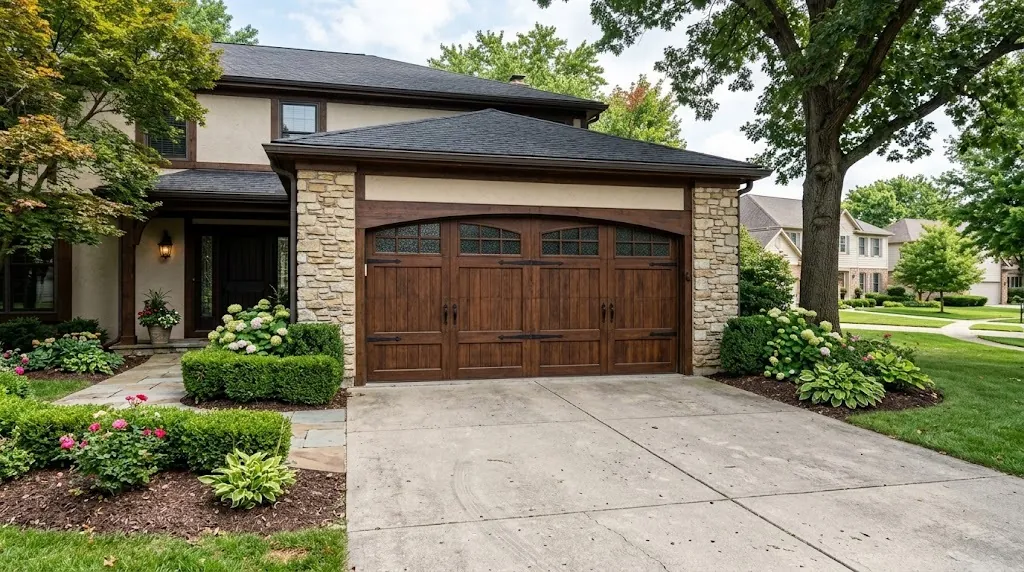
- The door is a 16-foot double with insulation. Insulated panels add weight, and doubles cycle more because two cars share them.
- The door is wood, has glass panels or is custom-built. Ask the door maker for its weight and compare it with the opener’s rating.
- The garage is the main way in and out. A door that runs many times a day works the motor and gears harder over the years.
- The door is 8 feet tall. A taller door is heavier, and most openers need a rail extension kit for it; our 8-foot door opener guide covers both.
Stick with 1/2 HP for a light single door that opens a few times a day, especially in a detached garage where you’d rather spend the difference on something else. Our guide on whether 1/2 HP is enough covers that side, and for specific 3/4 HP models see our best 3/4 HP belt drive openers. For very heavy doors, our heavy door opener guide goes further.
Frequently Asked Questions
Is a 3/4 HP garage door opener enough for a double door?
Yes, for a standard 16 by 7 foot double door in steel, insulated or not, as long as the springs are balanced. Genie rates its 3/4 HPc QuietLift for doors up to 500 lb and 7 feet high. Heavy wood or oversized doubles may need more, so compare the door maker’s stated weight with the opener’s rating.
How much weight can a 3/4 HP garage door opener lift?
It depends on the model, and many makers don’t publish a figure. Genie’s 3/4 HPc QuietLift Connect is rated for sectional doors up to 500 lb. Keep in mind that the springs, not the opener, carry most of that weight; the rating assumes a properly balanced door.
Does a 3/4 HP opener use more electricity than a 1/2 HP?
A little more while the motor runs, but each open or close lasts only seconds, so the motor’s share of a yearly bill stays small either way. Our guide to garage door opener electricity use breaks it down.
Should I replace a working 1/2 HP opener with a 3/4 HP one?
Not just for the horsepower. If the old opener struggles, test the door’s balance first; a heavy door usually means worn springs, and a stronger motor won’t fix that. Upgrade when the opener is failing anyway, or when you’ve added weight to the door, such as insulation or a new heavier door.