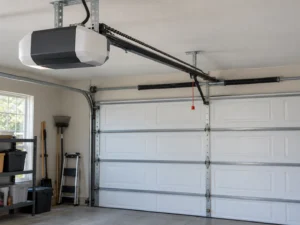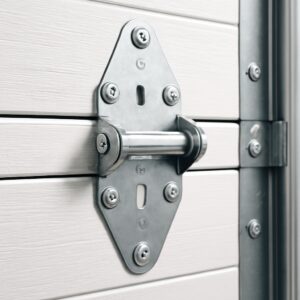

A garage door off track is one of those problems that looks simple and isn’t. One roller pops out of its channel, the door tilts, and suddenly a 150 to 300 pound panel is hanging at an angle over your driveway. The first thing to do is stop pressing the remote.
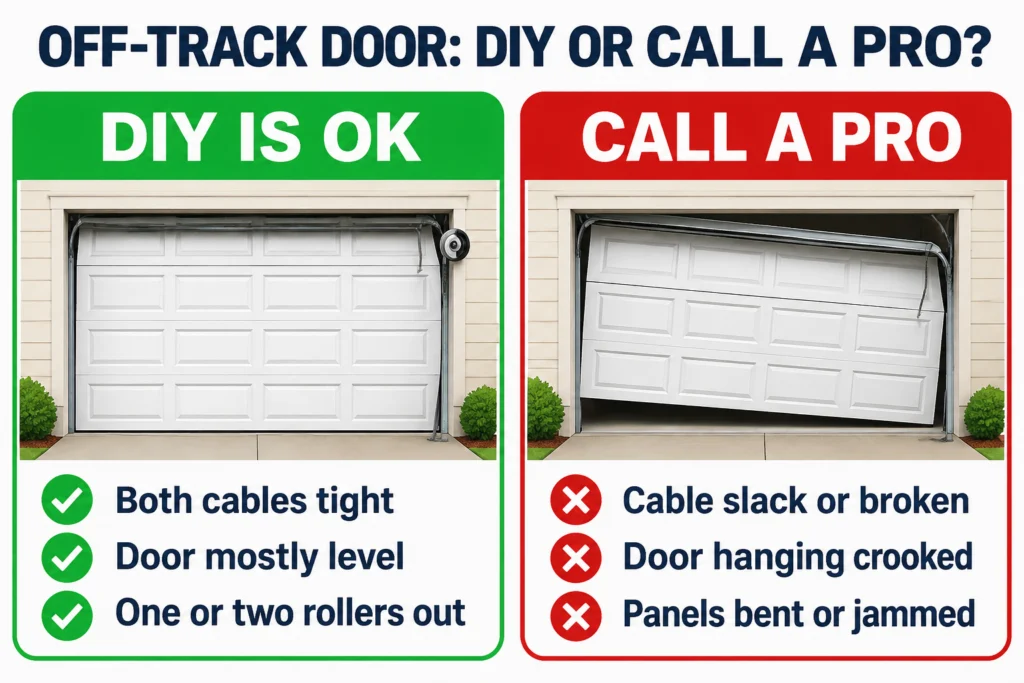
Whether you can fix it yourself depends on one question: is the door still held evenly by both lift cables? If yes, a single roller that slipped out after a bumper tap is usually a 30 minute DIY job. If a cable is slack, snapped, or off its drum, the door is being held by stored spring tension and you need a pro.
This guide shows you how to tell which situation you’re in, how to safely put rollers back on track, and how to find the real cause so it doesn’t happen again next month.
Short Answer: To fix a garage door off track, pull the opener’s red emergency release, clamp the door so it can’t move, open the track lip with pliers where the roller escaped, guide the roller back in, and close the lip with a rubber mallet. Only do this if both cables are tight. A loose or broken cable means call a professional.
Last verified: November 16, 2026, against HomeGuide’s 2026 garage door repair cost data and DASMA safety guidance. How we research.
Stop First: Is Your Off-Track Door Safe to Touch?
Before you grab any tools, spend two minutes looking. The answer decides whether this is a DIY job or a phone call.
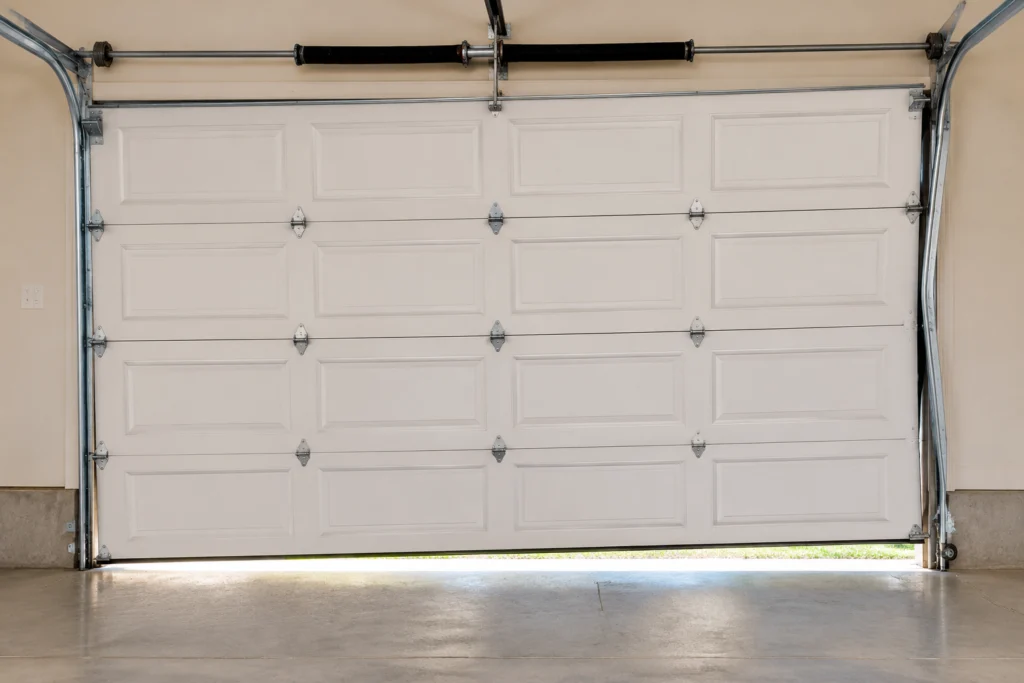
Your garage door is counterbalanced by springs. Torsion springs sit on a bar above the door. Extension springs run along the horizontal tracks on each side. Thin steel lift cables connect those springs to the bottom corners of the door. When everything is working, the springs carry most of the door’s weight and the rollers simply guide it.
When a door comes off track, that balance can break. If one cable has gone slack, all the load shifts to the other side. The door can drop or swing without warning.
| What You See | What It Usually Means | Safety Risk | DIY? |
|---|---|---|---|
| One or two rollers just outside the track, door mostly level | Bumper tap, obstruction, or loose track bolt | Low to Medium | Yes, with care |
| Track lip visibly bent outward at one spot | Impact damage or a worn roller forced its way out | Medium | Yes, if bend is minor |
| Door hanging crooked, one bottom corner much lower | Slack or broken lift cable | High | No, call a pro |
| Cable unwound from the drum or hanging loose | Cable failure, often from a broken spring | High | No, call a pro |
| Several panels buckled or door jammed halfway | Opener kept driving a derailed door | High | No, call a pro |
If you’re in either of the first two rows, keep reading. If you’re in the bottom three, unplug the opener, keep people and pets away from the door, and don’t try to raise or lower it by hand. A technician will release spring tension before touching anything else.
Why Garage Doors Come Off Track
Putting a roller back is the easy part. Figuring out why it came out is what keeps it from happening again. Most repeat derailments trace back to a root cause nobody fixed the first time.
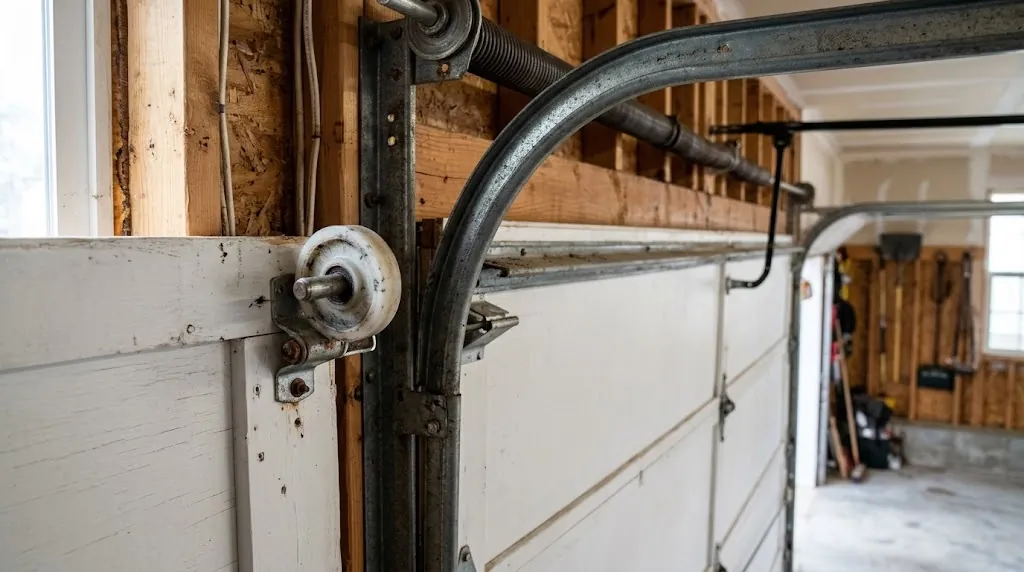
Vehicle or object impact
This is the most common cause by far. A light bumper tap on the bottom panel, a trash can, a bike leaning against the door. The impact pushes the door sideways and pops a roller over the track lip. It often bends that lip at the same time.
Worn or broken rollers
Cheap steel rollers with no bearings wear flat, wobble, and eventually crack. A wobbling wheel can climb out of the track channel under load. If one roller looks chewed up, check all of them. You can read more about choosing replacements in our guide to the best nylon garage door rollers.
Loose track brackets
Vertical tracks are bolted to the jamb with brackets every couple of feet. Thousands of open and close cycles slowly loosen those lag bolts. The track drifts away from the door, the gap widens, and one day a roller falls out of it.
Slack or broken lift cable
When one cable frays or comes off its drum, that side of the door stops being lifted evenly. The door racks sideways and the rollers on the high side get yanked out. A broken cable is often the result of a broken spring, not the cause.
Opener force set too high
Openers have a force setting that controls how hard the motor pushes. If it’s cranked up, the opener will keep driving a door that’s binding instead of reversing. That turns a small snag into a full derailment. Modern openers meet UL 325, the safety standard that requires an auto-reverse when the door meets resistance, but only if the force and limits are adjusted correctly.
Debris in the track
Small rocks, ice buildup, or a chunk of weatherstrip in the lower track can stop a roller cold. The door keeps moving and the roller pops out instead of rolling over the obstruction.
How to Put a Garage Door Back on Track (Step by Step)
This method applies only when both cables are tight and the door is still mostly level. Plan on 30 to 60 minutes. Work with a second person if your door is a double width, since a 16×7 steel door can weigh well over 150 pounds. Check our breakdown of how much a 16×7 garage door weighs if you’re unsure.
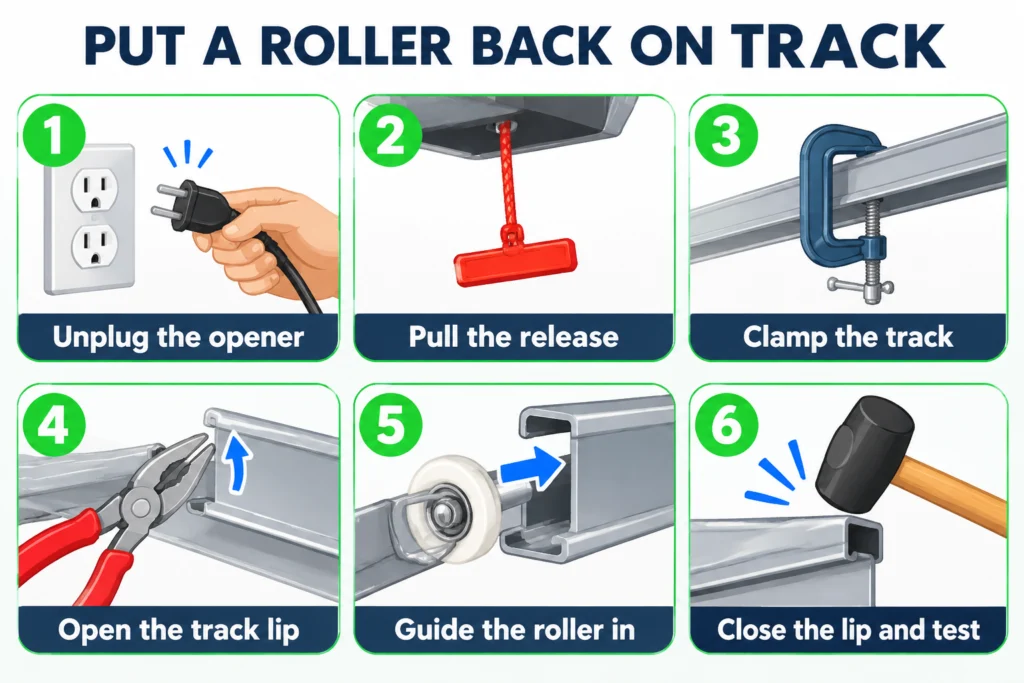
Tools you’ll need:
- Two C-clamps or locking pliers (Vise-Grips)
- Regular pliers or track pliers
- Rubber mallet
- Socket set for track bracket bolts (usually 7/16 or 1/2 inch)
- Stepladder
- 4-foot level
- Work gloves and safety glasses
- Unplug the opener. Pull the plug from the ceiling outlet, not just the wall button. You don’t want anyone hitting a remote while your hands are in the track.
- Pull the emergency release. The red cord hanging from the trolley disconnects the door from the opener so you can move it by hand. If the door is under tension or stuck, don’t yank it while standing under the door.
- Lock the door in place. Clamp a C-clamp or locking pliers onto the track just below a roller on each side. This stops the door from sliding while you work.
- Find where the roller escaped. Look for the spot where the track lip is pushed open or where the roller sits outside the channel.
- Open the track lip. Use pliers to gently bend the edge of the track outward just enough to make a gap for the roller. Go slow. You want a small opening, not a new bend.
- Guide the roller back in. Lift or lower the door slightly (with your helper) until the roller lines up with the opening, then push it into the channel.
- Close the lip. Tap the track edge back into shape with the rubber mallet. Hold a straight edge against it to confirm the lip is even with the rest of the track.
- Repeat for other rollers. Work one roller at a time.
- Test by hand. Remove the clamps and lift the door slowly to full open, then lower it. It should move smoothly with no grinding or catching. A balanced door will stay put about halfway up.
- Reconnect the opener. Pull the release cord toward the motor (or run the opener once) to re-engage the trolley. Plug the opener back in and run three full cycles while watching both tracks.
A common mistake is hammering the whole track instead of just the lip. That creates new kinks that catch rollers later. Only reshape the small section that was bent.
Check the Track Alignment Before You Call It Done
If the rollers came out once, they’ll come out again unless the track geometry is right. This is the step almost every quick fix guide skips.
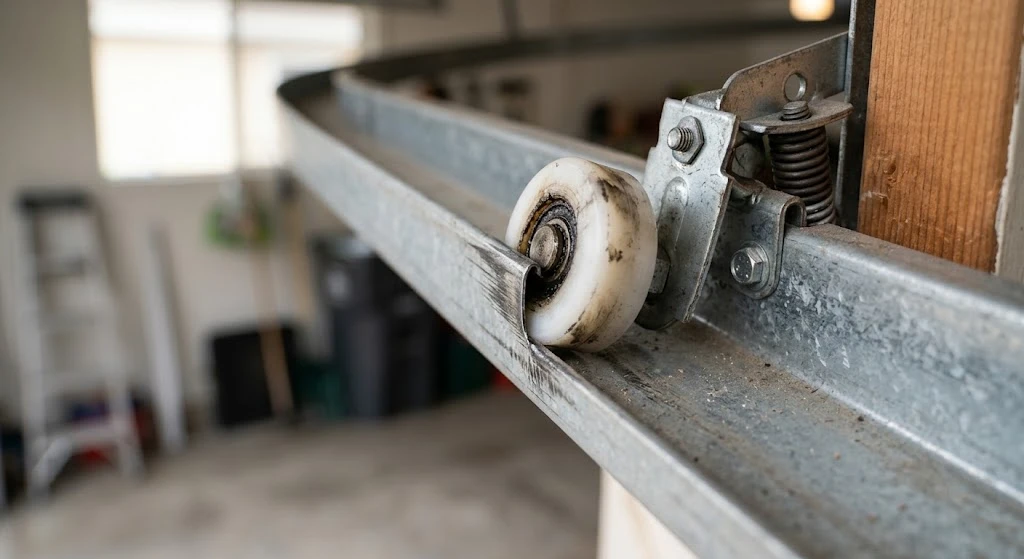
- Vertical tracks must be plumb. Hold a 4-foot level against each vertical track. It should read plumb within about a quarter inch from top to bottom.
- Both tracks should be the same distance from the door. Measure the gap between the door edge and the track at the top, middle, and bottom on each side. Uneven gaps mean a bracket has shifted.
- Tighten every bracket bolt. Snug, not stripped. If a lag bolt spins freely in the jamb, move it to fresh wood or use a slightly larger lag screw.
- Horizontal tracks should be level side to side. If one side sits lower, the door will lean as it rolls back.
To adjust a vertical track, loosen the bracket bolts (don’t remove them), tap the track into position with the mallet, and retighten. Never loosen the bottom bracket on the door itself. That bracket holds the lift cable and is under spring tension.
When Is a Bent Track Too Far Gone?
Minor lip bends straighten fine. A track that is creased, kinked, or twisted is a different story. Steel that has folded sharply becomes weak at that spot. Even after you straighten it, the crease tends to catch rollers again.
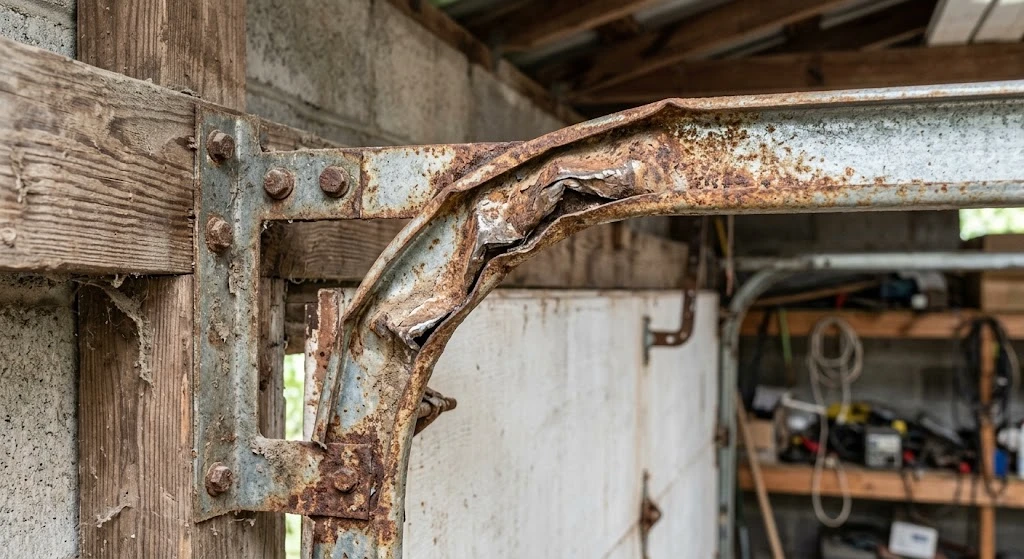
Replace the track section when you see any of these:
- A sharp crease rather than a gentle curve
- Cracked or torn metal near a bolt hole
- A twist where the track no longer sits flat against its brackets
- Rollers still catching at the same spot after you straightened it
Vertical track sections are inexpensive parts, but they need to match your door’s track size (usually 2-inch track on residential doors) and radius. Replacing a vertical section is a reasonable DIY job for a handy homeowner as long as the door is fully secured and you don’t touch the bottom bracket or cables. Curved and horizontal sections are harder to align and are usually better left to a technician.
Garage Door Off Track Repair Cost
Cost follows the cause. A clean reset with no damage is one of the cheapest garage door repairs. A derailment caused by a cable failure can involve several parts at once.
| Repair | Typical professional cost |
|---|---|
| Door off track: realignment and repair | 0 to 0 |
| Track replacement | 5 to 0 |
| Cable repair or replacement | 0 to 0 |
| Torsion spring replacement | 0 to 0 |
| Panel replacement | 0 to 0 per panel |
Source: HomeGuide 2026 garage door repair costs; minimum service fees may apply. Resetting a roller yourself costs nothing but time, and replacement rollers are an inexpensive part (see our best nylon garage door rollers). If several panels buckled and the door is old, ask the technician whether a new door makes more sense than a rebuild.
Off-Track Garage Door: DIY or Professional?
| Field | Detail |
|---|---|
| Symptoms | Door tilted or crooked, roller outside the track, scraping or grinding, door stuck partway |
| Probable Causes | Vehicle impact, worn rollers, loose track brackets, slack or broken cable, high opener force, debris |
| DIY Suitability | Safe for DIY only if both cables are tight and the door is mostly level. Professional required for any cable, spring, or panel damage |
| Safety Risk Level | Medium for a simple roller reset. High if cables are slack or the door is hanging |
| Repair Cost Range | $0 for a DIY reset, plus any parts. About $200 to $350 for a professional realignment and repair, more if cables, springs or panels are involved |
| Repair Time Estimate | 30 to 60 minutes for a simple reset. 2 to 4 hours for cable and track repairs |
Here’s the honest rule. You can handle rollers and track lips. You should never handle springs, lift cables, or the bottom brackets that hold them. Those parts store enough energy to break bones, and they’re the reason the door feels light when it’s working.
How to Keep Your Garage Door on Track
Most derailments are preventable with ten minutes of attention a few times a year.
- Tighten track bracket bolts twice a year. Spring and fall are good reminders.
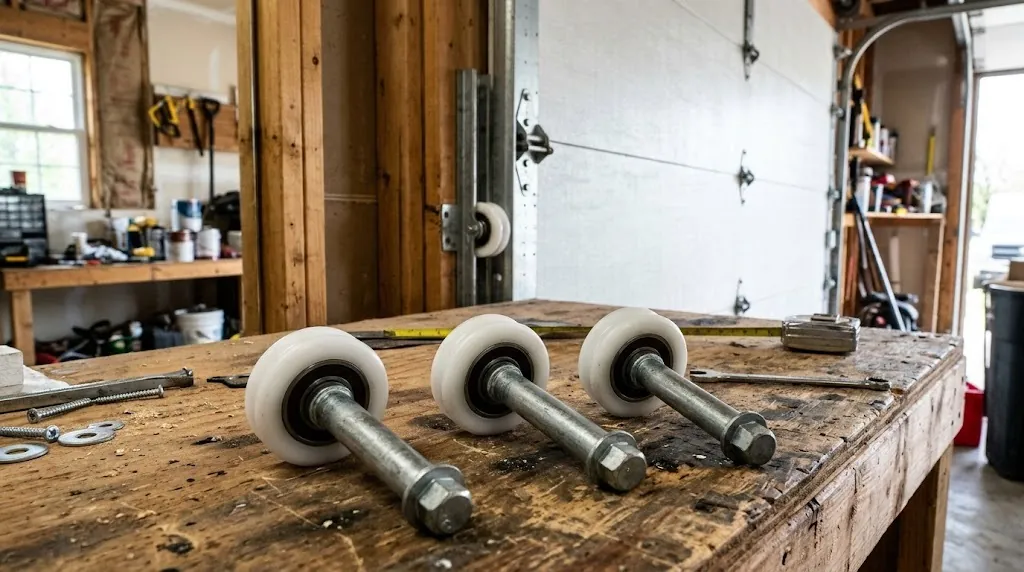
- Swap old steel rollers for sealed-bearing nylon rollers. They run quieter, wobble less, and last longer.
- Lubricate rollers and hinges, not the track. Grease in the track collects dirt and makes rollers skid. Our guide to the best lubricant for garage door hinges covers what to use.
- Keep the lower track clear. Sweep out leaves, gravel, and ice before they jam a roller.
- Check the auto-reverse monthly. Lay a 2×4 flat on the floor under the door and close it. The door should reverse on contact. If it doesn’t, adjust the force setting per your opener’s manual.
- Watch the door move. Jerky motion is an early warning. See our guide on fixing a garage door that jerks when opening.
- Leave room when parking. A few extra inches between your bumper and the door prevents the most common cause of all.
If your door leans to one side even while it’s on track, that’s a balance or cable issue worth checking before it derails. Our article on a garage door shifted to one side explains what to look for. For general safety guidance on residential doors, the Door and Access Systems Manufacturers Association (DASMA) publishes technical data sheets on door and opener safety.
Frequently Asked Questions
Can I use my garage door if it’s off track?
No. Running the opener on a derailed door can bend panels, strip the opener’s drive gear, or pull the door completely out of the tracks. Unplug the opener and pull the emergency release right away. Leave the door where it is until you’ve confirmed both cables are tight, then reset it by hand or call a technician.
How much does it cost to fix a garage door off track?
HomeGuide puts a professional off-track realignment and repair at about 0 to 0, and a DIY reset costs nothing. If a failed cable or spring caused the derailment, add a cable repair (0 to 0) or spring replacement (0 to 0).
Why does my garage door keep coming off track?
A door that derails repeatedly almost always has an unfixed root cause. The usual suspects are loose track brackets, a creased track section that keeps catching the same roller, worn-out rollers, or an opener force setting that’s too high. Check track plumb with a level, tighten every bracket bolt, and inspect the rollers before resetting it again.
Is it dangerous to fix an off-track garage door yourself?
It can be. Putting a roller back in the track is manageable when the door is level and both lift cables are tight. It becomes dangerous when a cable is slack or broken, because the door is then held unevenly by spring tension and can drop. Never loosen the bottom brackets, cables, or springs yourself.
Can an off-track garage door damage the opener?
Yes. If the opener keeps pushing or pulling a door that’s jammed, it can burn out the motor, strip the gear and sprocket, or bend the rail. That’s why the first step is always to unplug the opener and disconnect the door with the emergency release cord before doing anything else.
Does homeowners insurance cover an off-track garage door?
Sometimes. Damage from a sudden event like a vehicle impact or storm may be covered under your dwelling policy, minus your deductible. Wear and tear, like worn rollers or loose brackets, usually isn’t. Since most off-track repairs cost less than a typical deductible, many homeowners just pay out of pocket. Check your policy to be sure.
What to do next: Start by checking the cables. If they’re both tight and only a roller or two slipped out, you can likely have the door working again within the hour using the steps above. Then take ten extra minutes to check track plumb and tighten the brackets, because that’s what keeps it from happening again.
If a cable is loose, the door is hanging, or panels are buckled, unplug the opener and call a garage door technician. Ask them to explain what caused the derailment, not just to put the door back. That one question saves most homeowners a second service call.