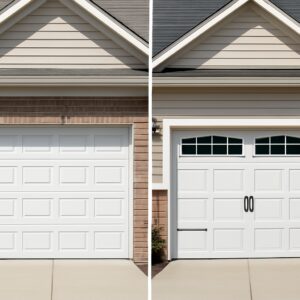

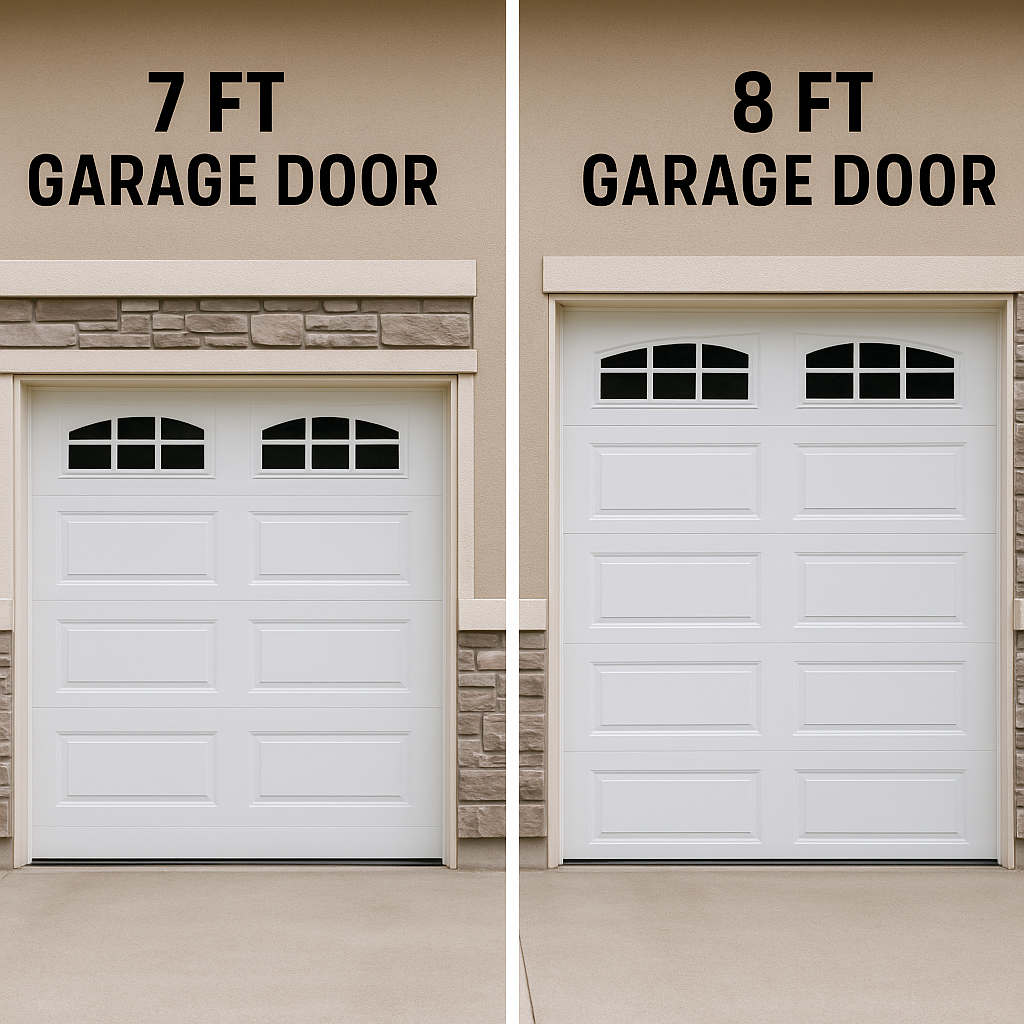
Choosing between a 7 foot vs 8 foot garage door comes down to one thing: will your vehicles fit comfortably? Most SUVs and trucks clear a 7-foot door with inches to spare, but some full-size trucks and vans need the extra headroom of an 8-foot door. This guide gives you the exact numbers to make the right call.

When I first moved into my house back in 2019, I didn’t think twice about the garage door. It was there, it opened, it closed — job done. That attitude lasted about three weeks, right up until the day I borrowed my neighbor’s Ford F-150 to haul some lumber and realized the antenna scraped the door frame on the way in. That one moment turned me into someone who actually pays attention to garage door heights.
If you’re here, you’re probably facing a similar decision — or trying to avoid making the mistake I almost made. The choice between a 7 foot and 8 foot garage door is deceptively simple on the surface, but get it wrong and you’ll either be folding in your mirrors every single day or spending money on a framing job you didn’t budget for.
Let me walk you through everything I’ve figured out, including the specific numbers that most guides skip.
7 Foot vs 8 Foot Garage Door: Key Differences Explained
Choose a 7-foot door if you drive a standard sedan, compact car, or smaller crossover — and you don’t plan to add roof racks or switch to a larger vehicle anytime soon.

Choose an 8-foot door if you own or plan to own a full-size truck, large SUV, minivan, or any vehicle taller than 70 inches. Also go 8 feet if your garage serves as a workshop — the extra headroom is genuinely useful when moving ladders, shelving, and equipment in and out.
Still unsure? Keep reading. The vehicle clearance table below should clear things up fast.
Understanding the Actual Height Difference
Seven feet sounds like plenty of space. And in most cases, it is — a 7-foot door measures exactly 84 inches from the floor to the top of the opening. An 8-foot door gives you 96 inches, or an extra full foot of clearance.
That 12-inch difference might not sound like much when you’re standing in your driveway, but it’s the difference between a vehicle fitting easily, fitting barely, or not fitting at all — especially once you factor in roof racks, cargo carriers, antennas, or a simple 2-inch lift kit on a truck.
Here’s something most articles don’t tell you: the actual usable clearance is always slightly less than the door height. Most residential garage door installations leave a small lip at the top of the frame — usually an inch or so — which means your real-world clearance on a “7-foot” door is closer to 82–83 inches in practice. Keep that in mind when you’re comparing vehicle heights below.
Does Your Vehicle Actually Fit? Real Height Numbers
This is the section I wish existed when I was doing my own research. Rather than vague advice like “large SUVs may need 8 feet,” here are actual height numbers for the most popular vehicles on American roads today:
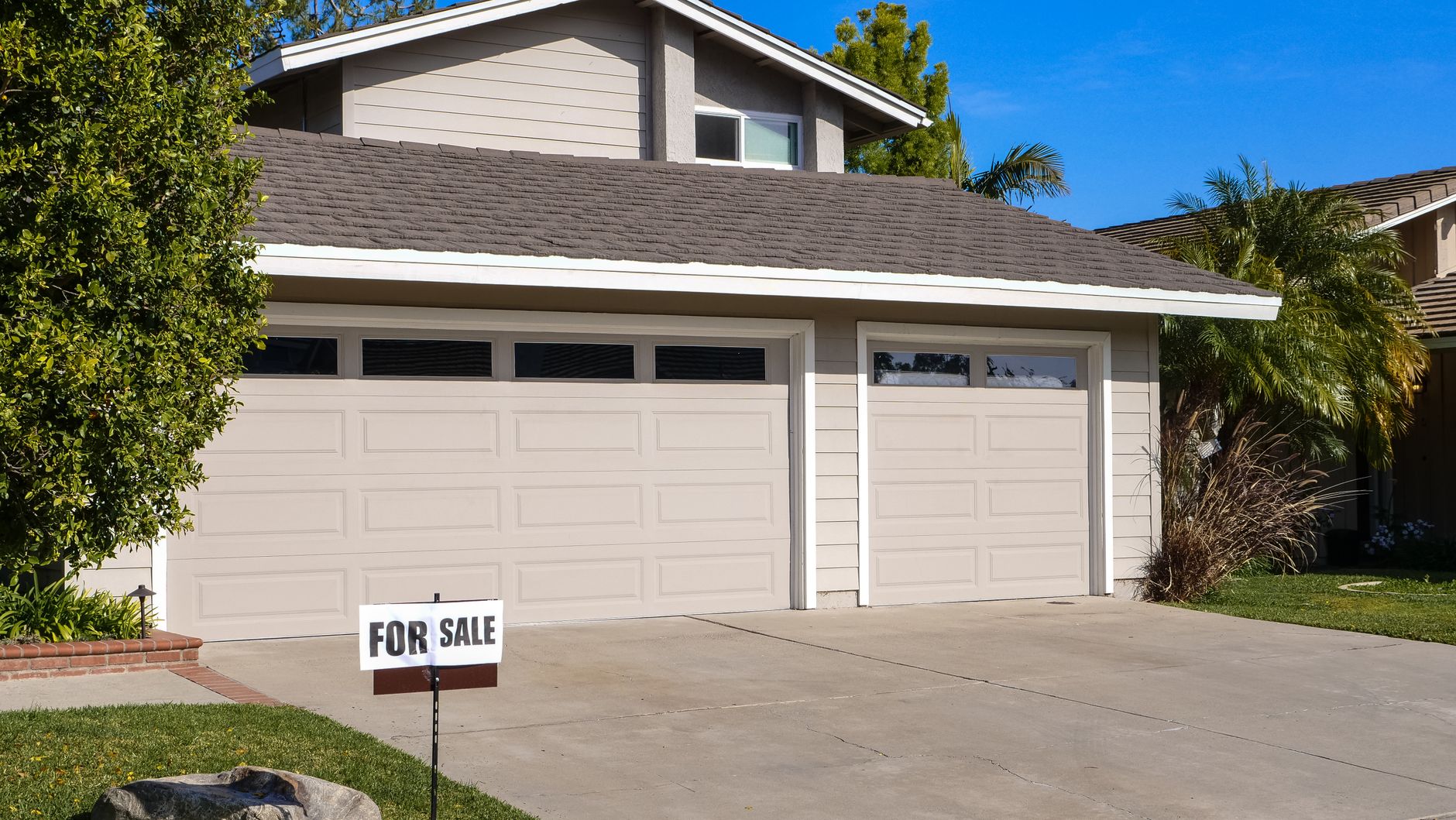
| Vehicle | Height (inches) | 7-Foot Door | 8-Foot Door |
|---|---|---|---|
| Honda Civic (sedan) | 55.7 in | ✅ Fits easily | ✅ Fits easily |
| Toyota Camry | 56.9 in | ✅ Fits easily | ✅ Fits easily |
| Honda CR-V | 65.0 in | ✅ Fits fine | ✅ Fits fine |
| Toyota RAV4 | 67.1 in | ✅ Fits fine | ✅ Fits fine |
| Tesla Model Y | 63.9 in | ✅ Fits fine | ✅ Fits fine |
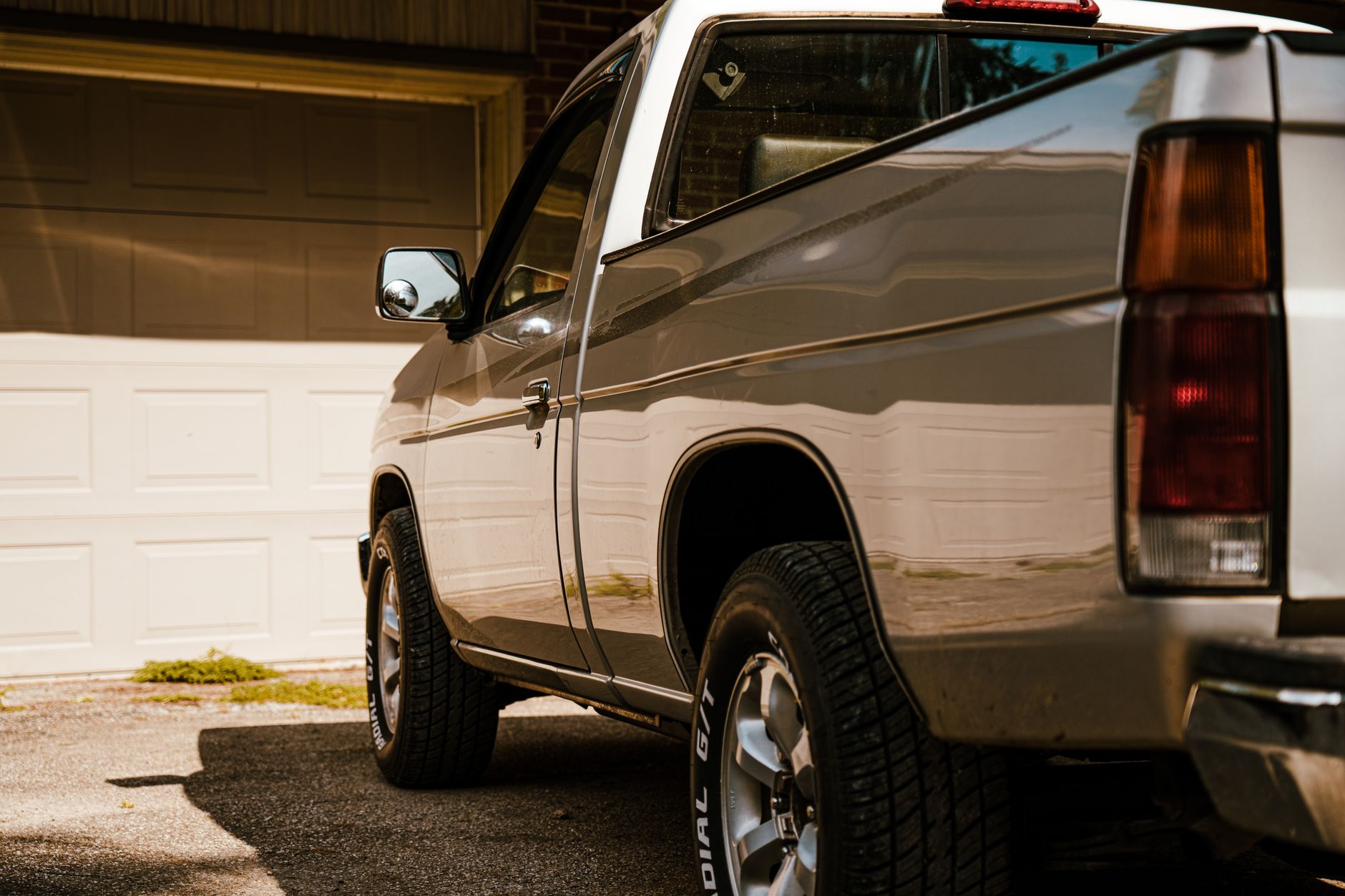
| Ford F-150 (stock) | 76.0 in | ⚠️ Tight — antenna may scrape | ✅ Comfortable |
| Chevy Silverado 1500 | 75.0 in | ⚠️ Tight | ✅ Comfortable |
| Toyota Tacoma | 70.9 in | ⚠️ Barely fits | ✅ Comfortable |
| Ford F-150 (2″ lift) | ~78 in | ❌ Won’t fit safely | ✅ Fits |
| Honda Odyssey (minivan) | 68.3 in | ✅ Fits | ✅ Fits |
| RAM 1500 (stock) | 77.7 in | ❌ Too tight | ✅ Fits |
| Jeep Wrangler (stock) | 73.0 in | ⚠️ Marginal | ✅ Comfortable |
Important note: These are factory stock heights. If your vehicle has a roof rack, cargo box, ski carrier, bike rack, or a lift kit, add those inches to the height before deciding. A roof cargo box alone can add 6 to 12 inches.
The Real Cost Difference — All In
Most articles throw out a price range like “$1,000–$2,500” and leave it there. That’s not very helpful when you’re actually planning a project. Here’s a more realistic breakdown:
7-foot door (complete installed cost):
- Door itself: $800–$1,800 depending on material and insulation
- Professional installation: $200–$400
- Standard opener (compatible out of the box): $150–$350
- Total range: $1,150–$2,550
8-foot door (complete installed cost):
- Door itself: $1,000–$2,200
- Professional installation: $250–$450
- Opener + extension kit (most standard openers need an extension for 8-foot doors): $200–$450
- Total range: $1,450–$3,100
The real kicker is the opener situation. Most standard ceiling-mounted garage door openers are designed for 7-foot doors out of the box. When you go to 8 feet, you need either a compatible extension kit (usually $20–$50) or a new opener — and not all openers accept extension kits. Check your existing opener’s manual before buying the door.
If you’re also dealing with an older garage structure built for 7-foot doors and want to upgrade to 8 feet, you may need a header modification — reframing the rough opening. That job runs $200–$600 in labor depending on your area and whether your current structure needs significant changes.
Can You Convert a 7-Foot Opening to 8 Feet?
Yes — but it’s not just a “swap the door” situation. Here’s what’s actually involved:
Step 1: Assess your rough opening. The rough opening (the framed gap before trim and finishing) needs to be tall enough. For an 8-foot door, your rough opening should be at least 97 inches (8 feet 1 inch) to give proper clearance and allow the door to seal correctly at the bottom.
Step 2: Check your headroom. An 8-foot door needs more space above it for the track, spring system, and opener. Standard systems require at least 12–15 inches of headroom above the door — read our ceiling height guide for a full breakdown. If your garage ceiling doesn’t allow for this, you’ll need low-headroom hardware — which costs more and limits your opener choices.
Step 3: The framing work. If your current opening is only 84 inches (standard 7-foot), a contractor needs to raise the header. This involves temporary support while the header is moved, potentially sistering the existing studs, and getting a permit in most jurisdictions.
Step 4: New door + hardware. You’ll need a full 8-foot door assembly — panels, tracks, springs, and opener with extension kit (or a new wall-mounted opener like the LiftMaster 8500, which avoids ceiling space issues entirely).
Realistically, converting from a 7-foot to an 8-foot opening in an existing structure costs $800–$2,000 for the framing and installation work, on top of the door cost. For many homeowners, this math makes the decision easier: if you’re already replacing a door, it’s worth asking your contractor whether going to 8 feet is feasible and what it would add to the total.
Design and Curb Appeal — Does Height Actually Matter
Honestly, yes — but maybe not in the way you’d expect.
An 8-foot door makes a stronger visual statement. It looks more proportional on newer homes with higher rooflines, and the taller opening gives your garage a slightly grander appearance. If your neighbors have 8-foot doors and yours is 7 feet, the difference is noticeable.
That said, on a traditional ranch-style home or any house with a low-pitched roofline, an 8-foot door can look oversized and awkward. The door’s height should feel proportional to the wall section around it. A poorly fitted door can also lead to issues like a garage door that shifts to one side. When in doubt, look at comparable homes in your neighborhood and note what looks right visually.
One thing worth knowing: home appraisers and buyers do notice garage door upgrades. A newer, taller door in good condition signals that the garage is functional for modern vehicles — which matters when you’re selling. In truck and SUV-heavy markets like Texas, the Midwest, and much of the South, an 8-foot door is increasingly expected rather than optional.
Insulation and Energy Efficiency
This one’s straightforward: insulation quality has nothing to do with door height. Both 7-foot and 8-foot doors are available in the same insulation options — single-layer, double-layer, and triple-layer steel, plus wood and fiberglass options.
What matters here is the R-value, not the height:
- R-6 to R-9: Basic insulation, suitable for mild climates or detached garages
- R-13 to R-16: Good for attached garages in most of the US
- R-18 and above: Recommended for extreme climates or if your garage shares a wall with a living space
Regardless of which height you choose, add weatherstripping around all four sides of the door — the perimeter seal does more for temperature control than the door’s core insulation in many cases.
Which Height Is Right for You? A Simple Decision Guide
Answer these three questions:
1. What’s your tallest vehicle’s roof height? Measure it (don’t guess). Include any permanent accessories. If it’s over 72 inches, go 8 feet.
2. Do you plan to change vehicles in the next 5–10 years? If there’s any chance you’ll move toward a truck or larger SUV, build in the clearance now. Replacing a door twice is expensive.
3. Is your garage also your workshop? If you regularly move tall equipment — ladders, shop vac, lumber — in and out of the garage, the extra headroom of an 8-foot door is a daily quality-of-life improvement.
If you answered 7-foot to all three — your vehicles are small, you’re not changing them anytime soon, and the garage is just parking — then the standard 7-foot door is perfectly fine and will save you some money.
If any of those tipped toward 8 feet, the extra cost is almost always worth it over a 10–15 year door lifespan.
Rough Opening Measurements at a Glance
Here’s what your framed opening needs to measure for each standard door size:
| Door Size | Minimum Rough Opening Width | Minimum Rough Opening Height |
|---|---|---|
| 8 ft wide × 7 ft tall | 8 ft 3 in (99 in) | 7 ft 1 in (85 in) |
| 9 ft wide × 7 ft tall | 9 ft 3 in (111 in) | 7 ft 1 in (85 in) |
| 8 ft wide × 8 ft tall | 8 ft 3 in (99 in) | 8 ft 1 in (97 in) |
| 16 ft wide × 7 ft tall | 16 ft 3 in (195 in) | 7 ft 1 in (85 in) |
| 16 ft wide × 8 ft tall | 16 ft 3 in (195 in) | 8 ft 1 in (97 in) |
Always measure your actual opening before ordering a door — don’t assume your current rough opening matches the old door’s nominal size.
Metric Conversions (For Reference)
If you’re working with a contractor who uses metric, or you’re comparing specifications:
- 7 feet = 2.13 meters (213 cm)
- 8 feet = 2.44 meters (244 cm)
- 84 inches = 213.4 cm
- 96 inches = 243.8 cm
Frequently Asked Questions
Can I replace a 7-foot door with an 8-foot door without changing the frame?
Only if your existing rough opening is already 97 inches or taller. Most homes built before 2000 have 7-foot rough openings — you’d need framing work to go taller. A u003ca href=u0022https://mygarageblog.com/garage-door-opener-app-without-hardware/u0022 data-type=u0022linku0022 data-id=u0022https://mygarageblog.com/garage-door-opener-app-without-hardware/u0022u003egarage dooru003c/au003e professional can measure your opening and tell you in about five minutes whether it’s feasible without structural changes.
Will my existing garage door opener work with an 8-foot door?
Maybe. Most standard openers need an extension kit to handle the longer travel distance on an 8-foot door. These kits typically cost $20–$50. Check your opener’s manual — if it was made after 2010 by a major brand (LiftMaster, Chamberlain, Genie), an extension kit is almost certainly available. If your opener is older or a budget brand, you may need to replace it.
Is an 8-foot garage door worth the extra cost?
Over a 15-year door lifespan, the cost difference between 7 and 8 feet usually works out to pennies per day. What’s not cheap is retrofitting later — framing work, new door, new opener. If there’s any reasonable chance you’ll want the extra clearance in the next few years, do it now.
What’s the standard door height for new homes today?
It’s shifting. According to several garage door contractors, 8-foot doors are now the default request in new home construction — particularly in markets where trucks and large SUVs dominate. In older neighborhoods, 7-foot is still the norm for replacement work.
Does a taller door affect my home’s resale value?
It can. In markets where buyers expect garage space to accommodate full-size trucks, a 7-foot door on a newer home can actually be a negative. In urban areas with mostly compact cars, it makes less difference. Talk to a local real estate agent if you’re planning to sell within 5 years — they’ll know what buyers in your specific market are looking for.
What if my garage ceiling isn’t high enough for an 8-foot door?
Standard track systems need 12–15 inches of headroom above the door. If your ceiling is too low, you have two options: low-headroom hardware (which reduces required headroom to about 10 inches), or a wall-mounted jackshaft opener like the LiftMaster 8500, which mounts on the wall beside the door and doesn’t use ceiling space at all. A professional installer can tell you which option works for your specific situation.
If you are also deciding on door width alongside height, our 16 vs 18 foot garage door comparison covers the width decision in the same level of detail.
The Bottom Line
A 7-foot garage door is still the right call for millions of American homes — if your vehicles fit and your garage is just a parking space, there’s no reason to spend extra. But given how many households now own at least one truck or large SUV, the 8-foot door has quietly become the smarter long-term choice for anyone who isn’t certain about their future vehicle situation.
The one thing I’d tell you from experience: don’t base this decision on what you drive today. Think about what you might be driving in five years, and whether you’d regret having to squeeze it through a 7-foot opening — or worse, having to retrofit the whole frame because you didn’t upgrade when you had the chance.
If you’re replacing an existing door, get at least two quotes from local installers and ask each one whether your rough opening allows for 8 feet without major framing work. You might be surprised how affordable the upgrade is when you’re already paying for installation anyway.
Have a question about your specific garage door situation? Leave a comment below — I try to answer every one.