

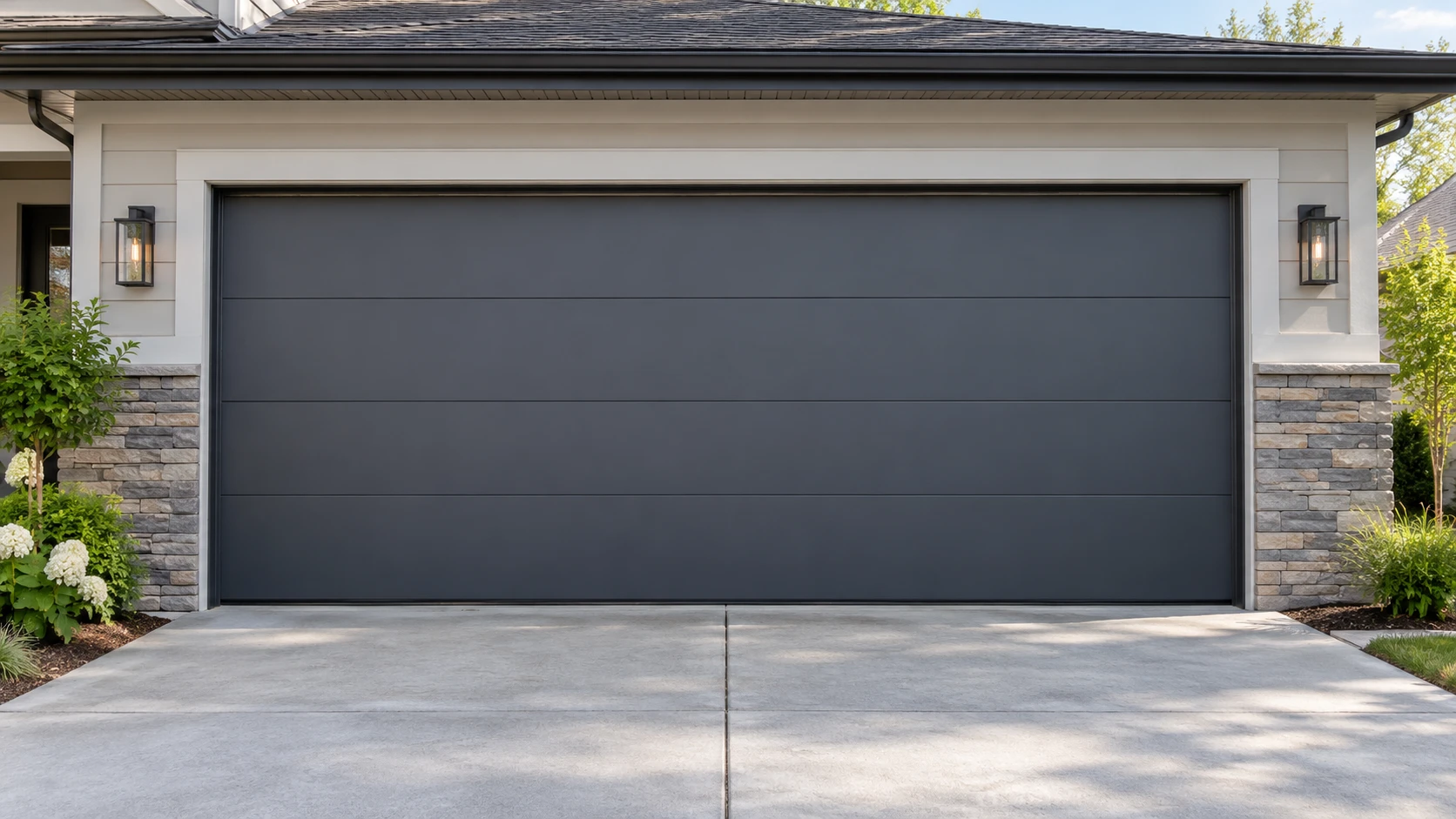
A 16×7 garage door — 16 feet wide and 7 feet tall — is the most common two-car garage door size in the US. Its weight matters more than most homeowners realize: the wrong spring setup, opener motor size, or installation method all depend on knowing how heavy the door actually is.
The short answer depends on what your door is made of, whether it’s insulated, and how many panels it has. Here’s the real breakdown.
The question almost always comes up for one of two reasons: a spring broke and the replacement has to be sized correctly, or an opener is struggling and the homeowner is trying to work out whether it’s underpowered. Both need a real number, not a guess — which is why the ranges below are broken out by construction type rather than lumped into one figure.
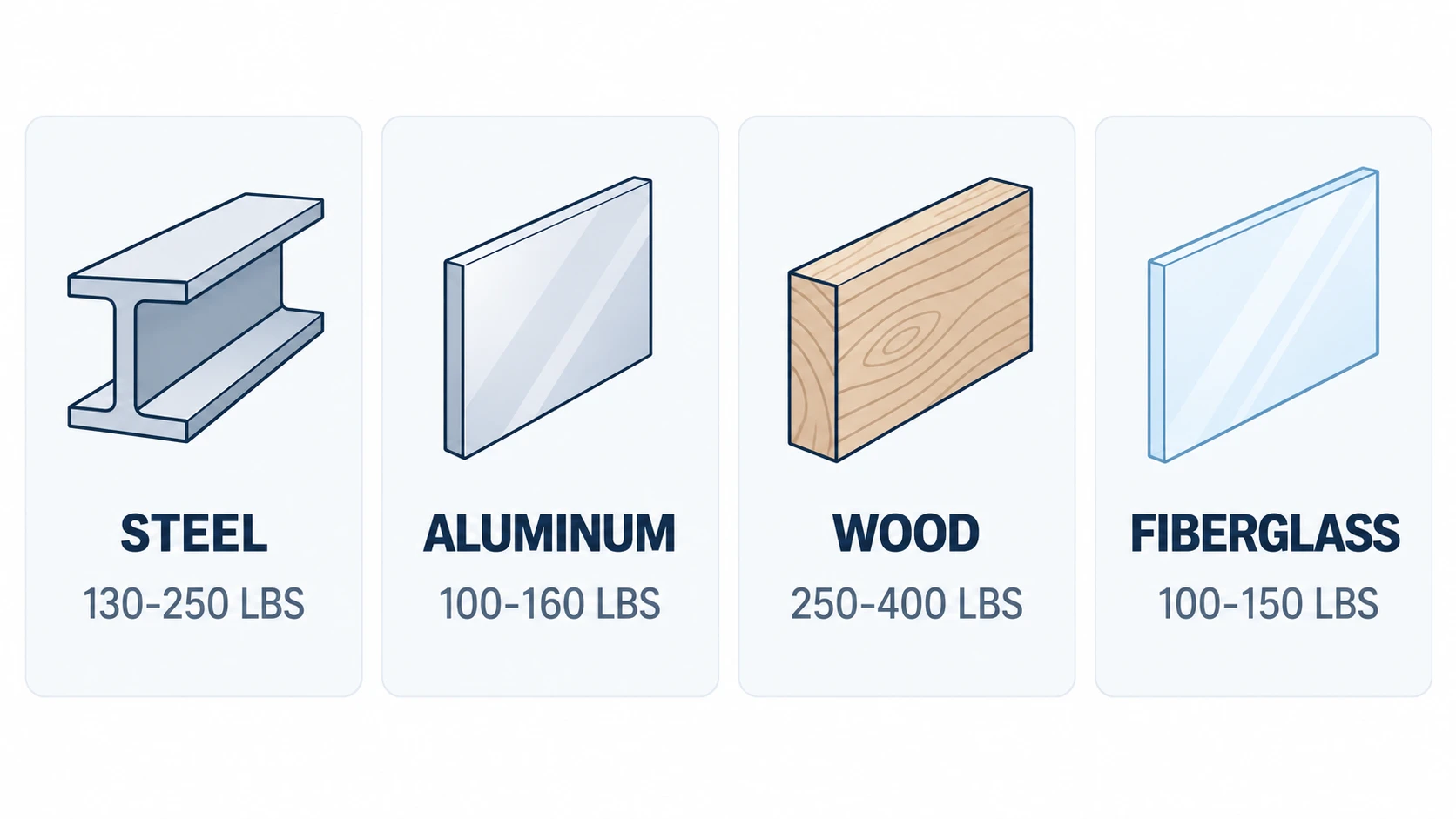
Short Answer: A standard 16×7 garage door weighs between 130 and 400 pounds depending on the material and insulation. A single-layer steel door runs 130–175 lbs. An insulated steel door weighs 175–250 lbs. Wood doors are the heaviest at 250–400 lbs. Knowing your door’s weight helps you choose the right torsion spring and opener motor size.
16×7 Garage Door Weight by Material
Material is the biggest factor in door weight. Here’s what each type typically weighs at 16×7:
| Door Material | Insulation | Typical Weight (16×7) | Notes |
|---|---|---|---|
| Steel (single layer) | None | 130–175 lbs | Lightest, least insulated |
| Steel (double layer) | Polystyrene | 175–220 lbs | Most common residential choice |
| Steel (triple layer) | Polyurethane | 200–250 lbs | Best insulation, moderate weight |
| Aluminum | None to light | 100–160 lbs | Lighter than steel, less durable |
| Wood (solid) | None (wood is natural insulator) | 250–400 lbs | Heaviest option |
| Wood composite | Polystyrene core | 200–320 lbs | Heavy but more stable than solid wood |
| Fiberglass/vinyl | Foam core | 100–150 lbs | Lightweight, low maintenance |
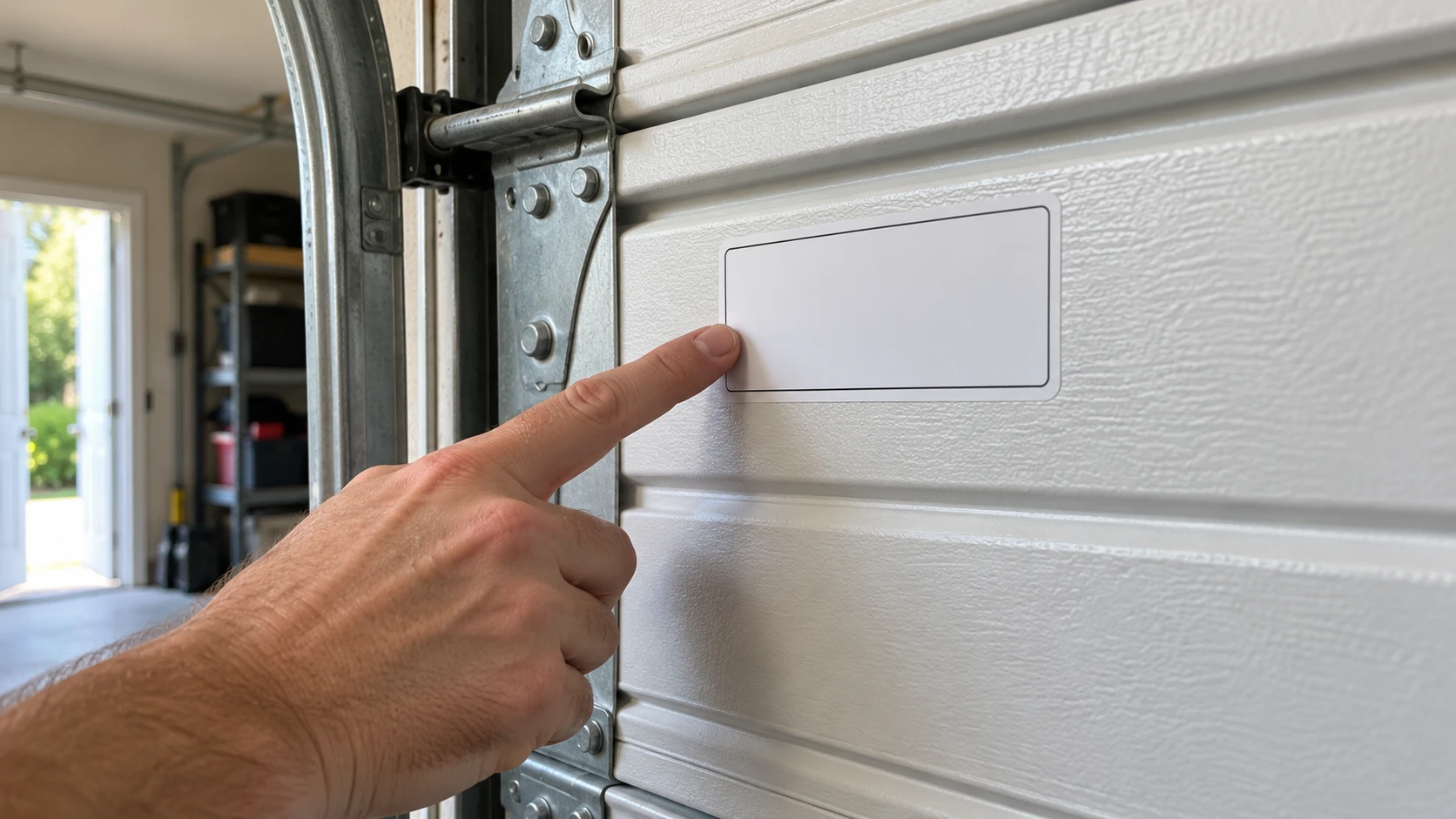
If you’re unsure what your door is made of, check the inside panel or the door’s original paperwork. Most manufacturers stamp the model number inside a panel — you can look it up online to find the exact weight spec.
Why Door Weight Matters
Door weight determines two critical things: your spring system and your opener motor.
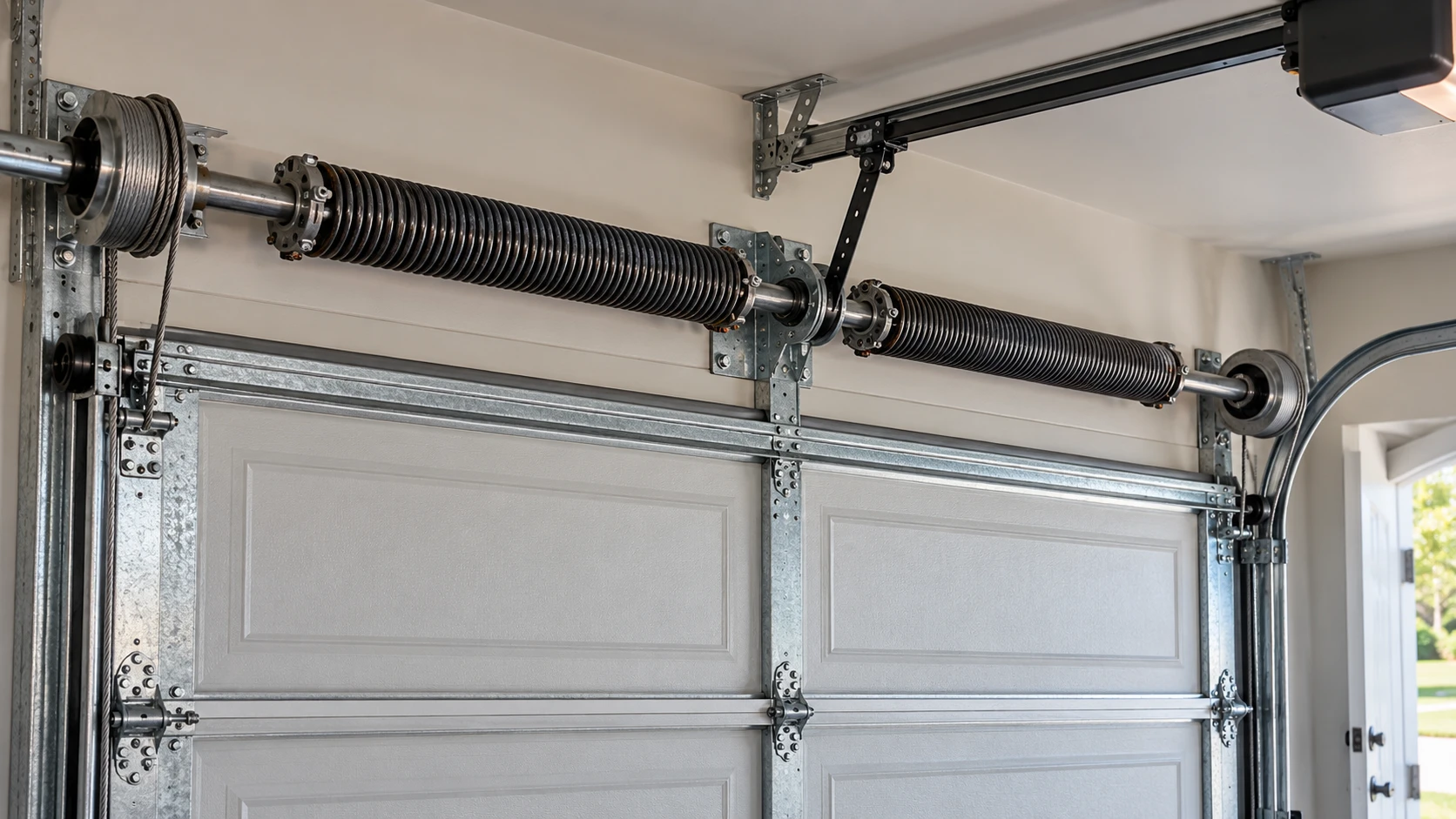
Torsion springs are calibrated to counterbalance the door’s weight exactly. If your springs are sized for a 175 lb door and you replace it with a 250 lb wood door, the springs won’t lift the new door properly — the opener will struggle, and springs will wear out early.
Opener motor sizing also depends on door weight. A 1/2 HP motor handles doors up to about 250 lbs. For heavier doors — solid wood or heavy insulated steel — you need 3/4 HP or more. Using an underpowered opener on a heavy door causes premature motor failure and slow operation in cold weather.
Our guide on best garage door openers for heavy doors covers which models handle heavier 16×7 doors reliably.
How to Find Your 16×7 Door’s Exact Weight
There are three reliable ways to find your specific door’s weight:
1. Check the manufacturer’s spec sheet. Clopay, Wayne Dalton, Amarr, Haas, and most major brands publish detailed weight charts by model, size, and insulation level on their websites. Search “[your brand] door weight chart” to find it.
2. Read the door’s label. Many manufacturers stamp or sticker the door’s weight directly on the top panel or inside one of the panels on the right side.
3. Estimate from the spring data. If you have torsion springs, a spring technician can identify the spring’s IPPT (inch-pounds per turn) rating, which tells you the door weight the springs were designed for.
| Method | Accuracy | Time Required | DIY Suitability |
|---|---|---|---|
| Manufacturer spec sheet | Exact | 5–10 minutes | Safe for DIY |
| Door label | Exact | 2 minutes | Safe for DIY |
| Spring data | Close estimate | 30 minutes | Professional recommended |
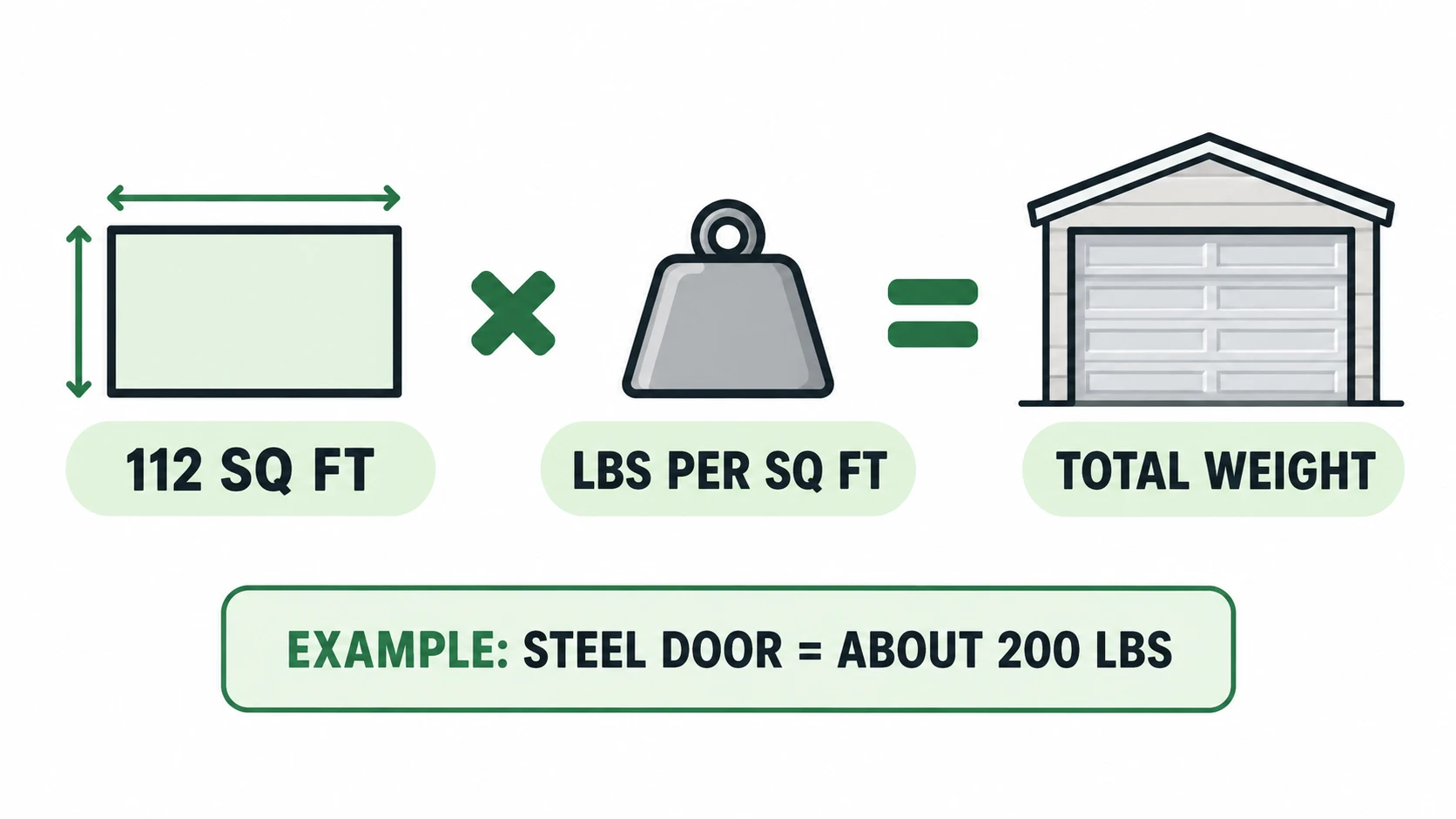
Quick estimate formula: multiply your door’s square footage by its weight-per-square-foot rate. A 16×7 door is 112 square feet. Steel runs about 1.5–2.0 lbs/sq ft (168–224 lbs), aluminum about 1.0–1.5 lbs/sq ft (112–168 lbs), and wood about 2.5–3.0 lbs/sq ft (280–336 lbs). This gets you within range fast, though the material table earlier in this guide and your door’s label are more precise.
One distinction worth knowing: manufacturers sometimes list a single section’s weight rather than the full door’s weight. A 7-foot-tall door has 4 to 5 horizontal sections, so multiply a per-section figure by the section count before comparing it to the whole-door ranges in this guide.
Does Insulation Significantly Change the Weight?
Yes — more than most people expect. Polyurethane insulation (used in triple-layer doors) adds about 30–50 lbs compared to a single-layer door of the same size. Polystyrene (double-layer) adds 20–35 lbs.
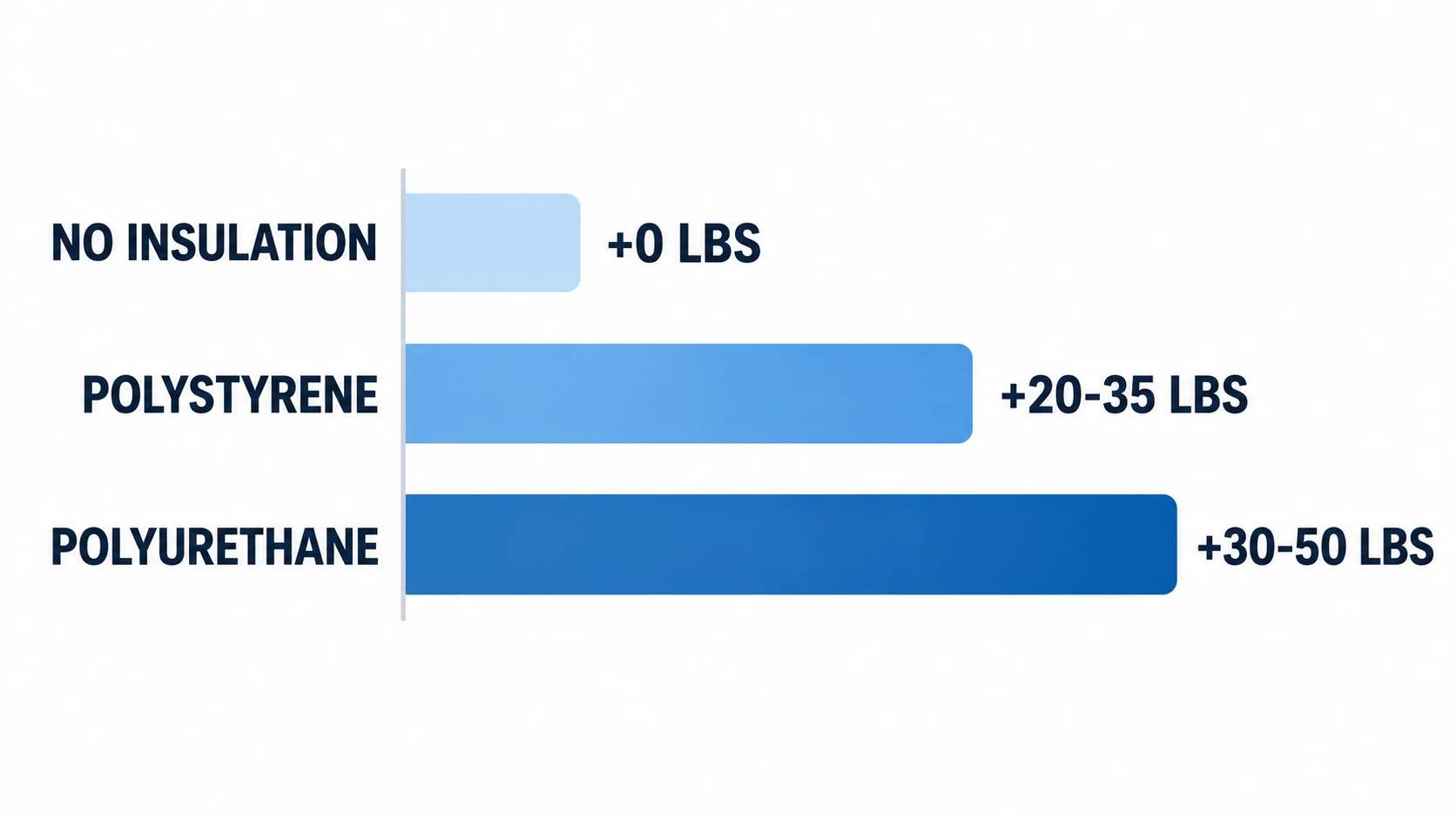
That weight difference is significant when sizing springs. If you upgrade from an uninsulated door to an insulated one — a common renovation — your existing springs almost certainly need to be replaced. Manufacturer spec sheets vary in how much detail they publish publicly, so if you can’t find a weight figure for your exact model, a garage door technician can weigh the door directly with a scale before ordering springs.
For context on what other garage door components weigh and how they affect balance, our guide on how heavy a double garage door is covers the full breakdown by material and configuration.
Do Windows Change the Weight?
Less than most people assume. On a 16×7 door, a row of factory windows typically adds somewhere in the range of 5 to 10 pounds — for example, a Wayne Dalton 9100 gains roughly 10 pounds with windows, while some lighter window options add closer to 5 to 8 pounds.
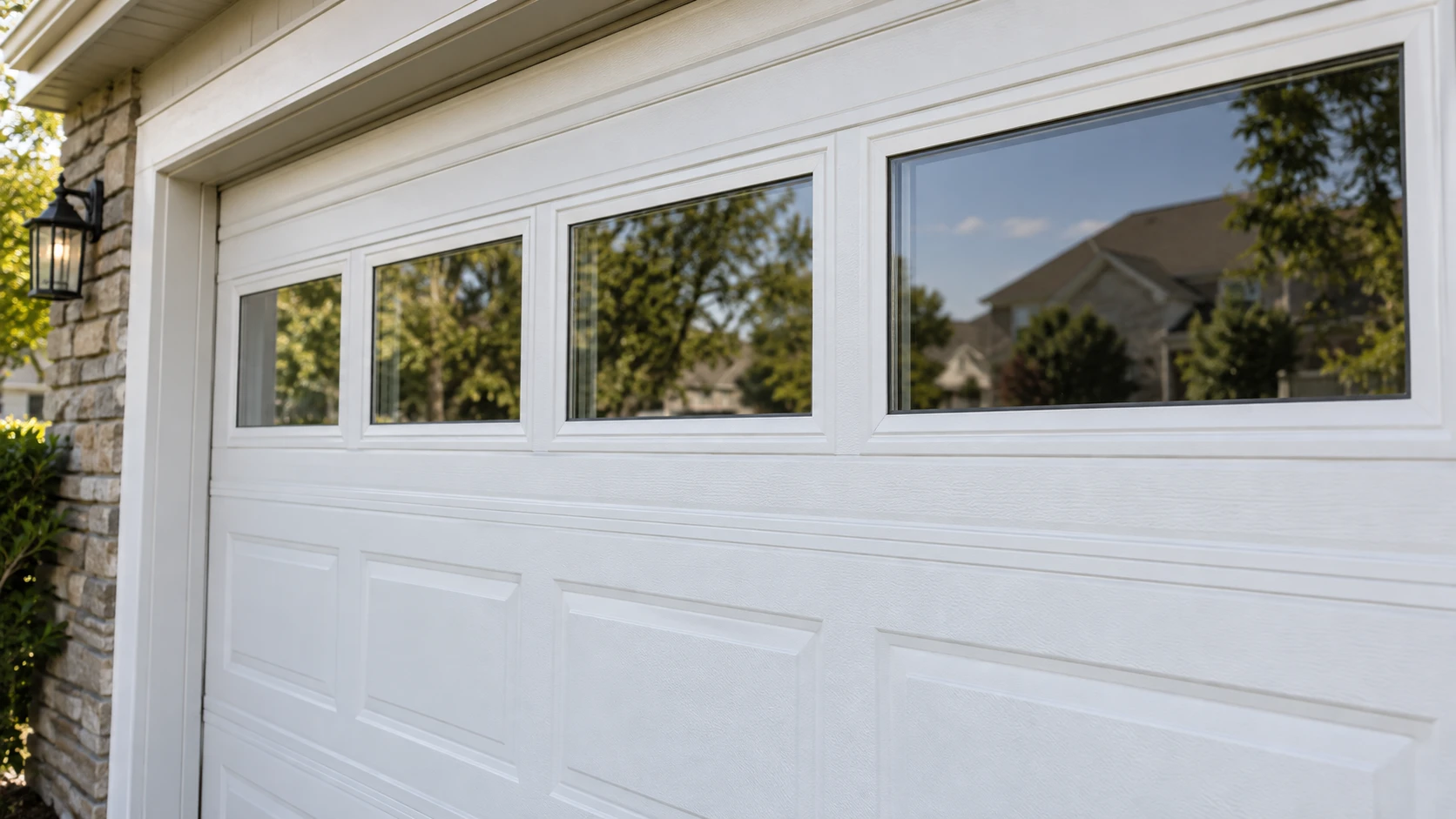
The reason the change is small is that the glass and framing replace steel that gets cut out of the panel. Depending on the glass type (single-pane, tempered, or insulated double-pane) and the frame material, the door can end up slightly heavier, slightly lighter, or close to unchanged.
It still matters for springs, though. If you’re retrofitting windows into an existing door rather than buying a door with them factory-installed, have the spring balance checked afterward — springs that are now slightly too weak or too strong both cause problems, and an over-sprung door that flies open is as much of a hazard as one that won’t lift.
How a 16×7 Compares to Other Common Sizes
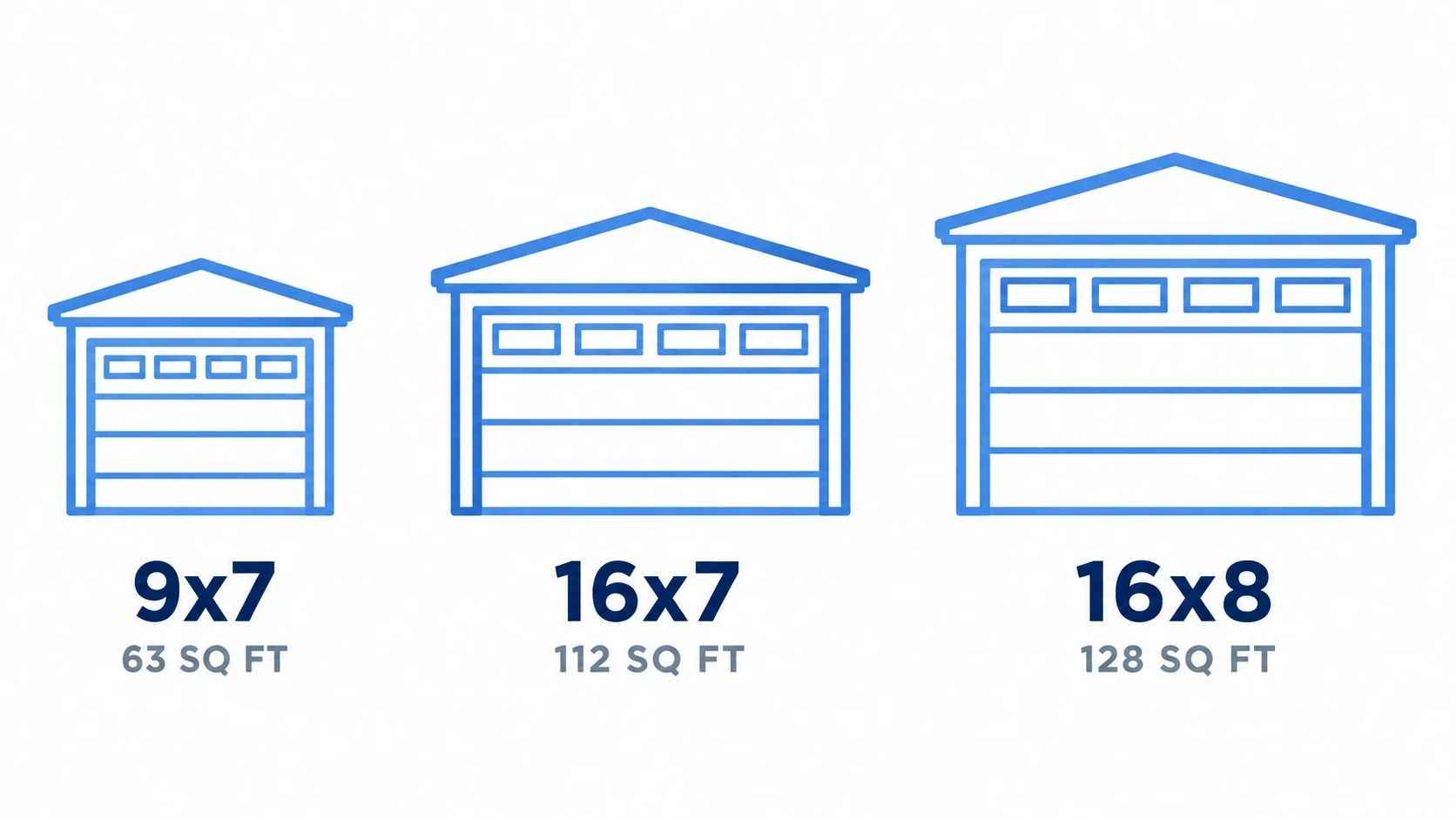
Because door weight scales with surface area, you can estimate a different size from the same material rate. A 16×7 door is 112 square feet. A 9×7 single door is 63 square feet — about 56% of the area, so roughly half the weight in the same construction. A 16×8 door is 128 square feet, about 14% more area than a 16×7, so add roughly 14% to the figures in this guide.
| Door Size | Square Feet | Weight vs. a 16×7 |
|---|---|---|
| 9×7 (single) | 63 sq ft | About 56% (roughly half) |
| 16×7 (standard double) | 112 sq ft | Baseline |
| 16×8 (taller double) | 128 sq ft | About 14% heavier |
| 18×7 (wide double) | 126 sq ft | About 13% heavier |
These are area-based estimates, not manufacturer specs — useful for sizing decisions and sanity checks, but confirm against the door’s label before ordering springs.
Spring and Opener Sizing for a 16×7 Door
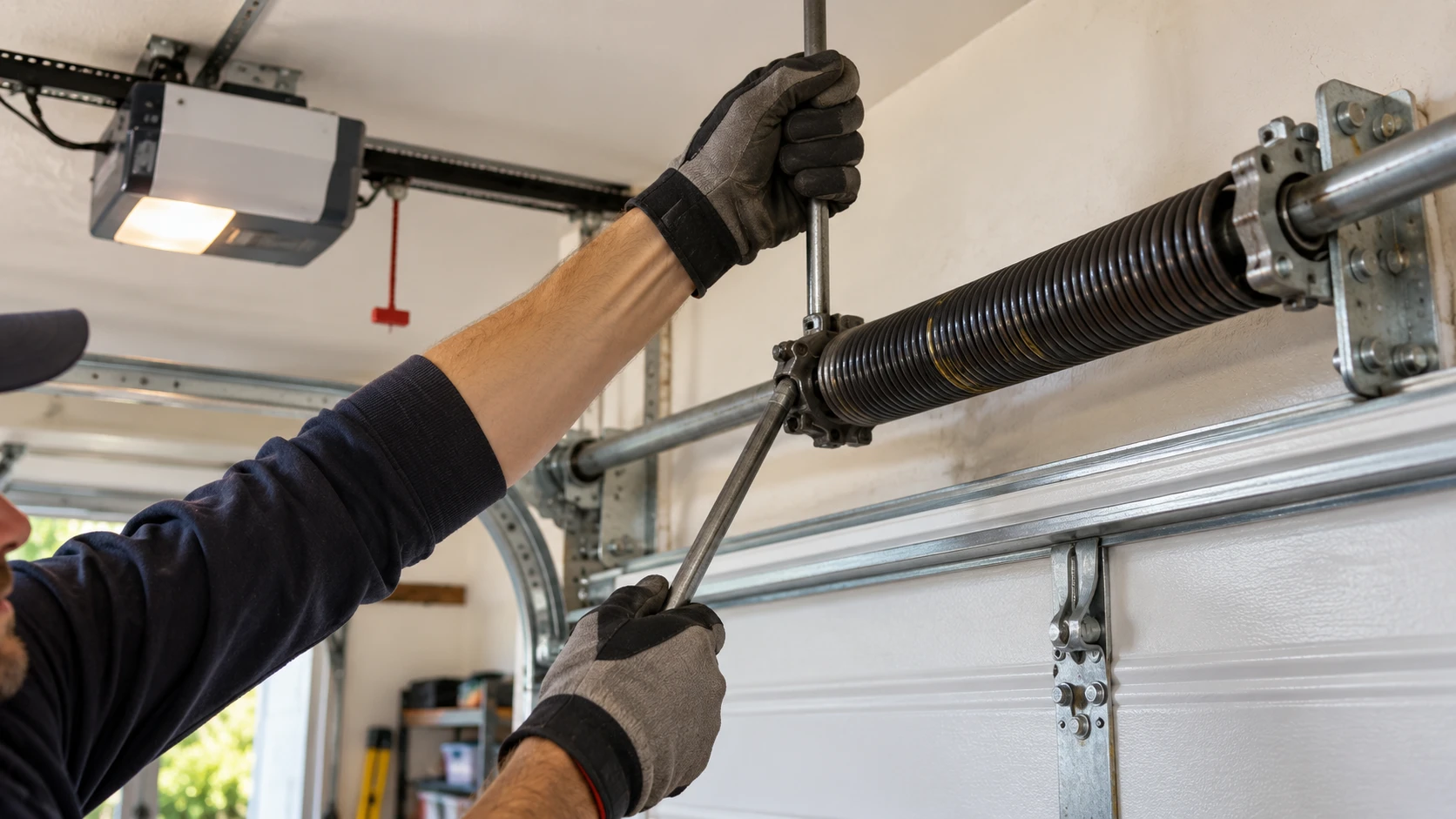
As a general reference, here’s what spring and opener setup most 16×7 doors require:
| Door Weight | Recommended Opener HP | Typical Spring Setup |
|---|---|---|
| 130–175 lbs | 1/2 HP | Single torsion spring, light duty |
| 175–250 lbs | 1/2 to 3/4 HP | Single or dual torsion spring |
| 250–350 lbs | 3/4 HP | Dual torsion springs |
| 350+ lbs | 3/4 HP or higher | Heavy-duty dual springs, professional sizing required |
Safety warning: never attempt to adjust or replace torsion springs yourself. They store significant mechanical energy under tension and can cause serious injury if released improperly. Spring replacement costs $150–$350 professionally and is worth every dollar for the safety tradeoff.
If you’re replacing your opener to handle a heavier door, our guide on openers for taller and heavier doors covers the specific models and HP ratings that handle 16×7 configurations reliably.
Frequently Asked Questions
How much does a standard 16×7 steel garage door weigh?
A standard single-layer 16×7 steel garage door weighs 130 to 175 pounds. A double-layer insulated steel door of the same size weighs 175 to 220 pounds. Triple-layer polyurethane-insulated steel doors run 200 to 250 pounds.
Is a 1/2 HP opener enough for a 16×7 garage door?
A 1/2 HP opener works for most single-layer and double-layer steel 16×7 doors up to about 250 pounds. For heavier insulated steel or wood doors above 250 pounds, upgrade to 3/4 HP to avoid motor strain and premature failure.
How many torsion springs does a 16×7 garage door need?
Most 16×7 residential doors use one or two torsion springs depending on door weight. Doors under 200 pounds typically use a single spring. Heavier doors above 200 pounds are better served by a dual-spring system, which also provides a safety backup if one spring breaks.
Does insulation add a lot of weight to a 16×7 garage door?
Yes. Polystyrene insulation adds roughly 20 to 35 pounds to a 16×7 steel door compared to an uninsulated version. Polyurethane insulation adds 30 to 50 pounds. If you’re upgrading from an uninsulated door to an insulated one, your torsion springs will likely need to be re-sized.
Do windows make a 16×7 garage door heavier?
Only slightly. Factory windows typically add about 5 to 10 pounds to a 16×7 door, because the glass and framing replace steel that was cut out of the panel. Depending on the glass type, the door can end up marginally heavier, lighter, or nearly unchanged — but if windows are retrofitted into an existing door, have the spring balance rechecked afterward.
Where can I find the exact weight of my garage door?
Check the manufacturer’s website for a weight chart by model and size. Many doors also have a label stamped on the inside of the top panel or on the right side panel listing the door’s specifications including weight.
Related Guides
For our garage door sizing and dimension guides, see 16 vs 18 Foot Garage Door: Which Size Is Best, 7 Foot vs 8 Foot Garage Door Comparison, 8′ Garage Door Header Size Guide, Ceiling Height for 10 Ft Garage Door, Garage Door 45 Degree Corners, What Size Header Do I Need for a 16 Foot Garage Door? and What Size Garage Door Opener Do You Need for 18 Foot Door?.
For official manufacturer guidance, see the Door and Access Systems Manufacturers Association (DASMA).