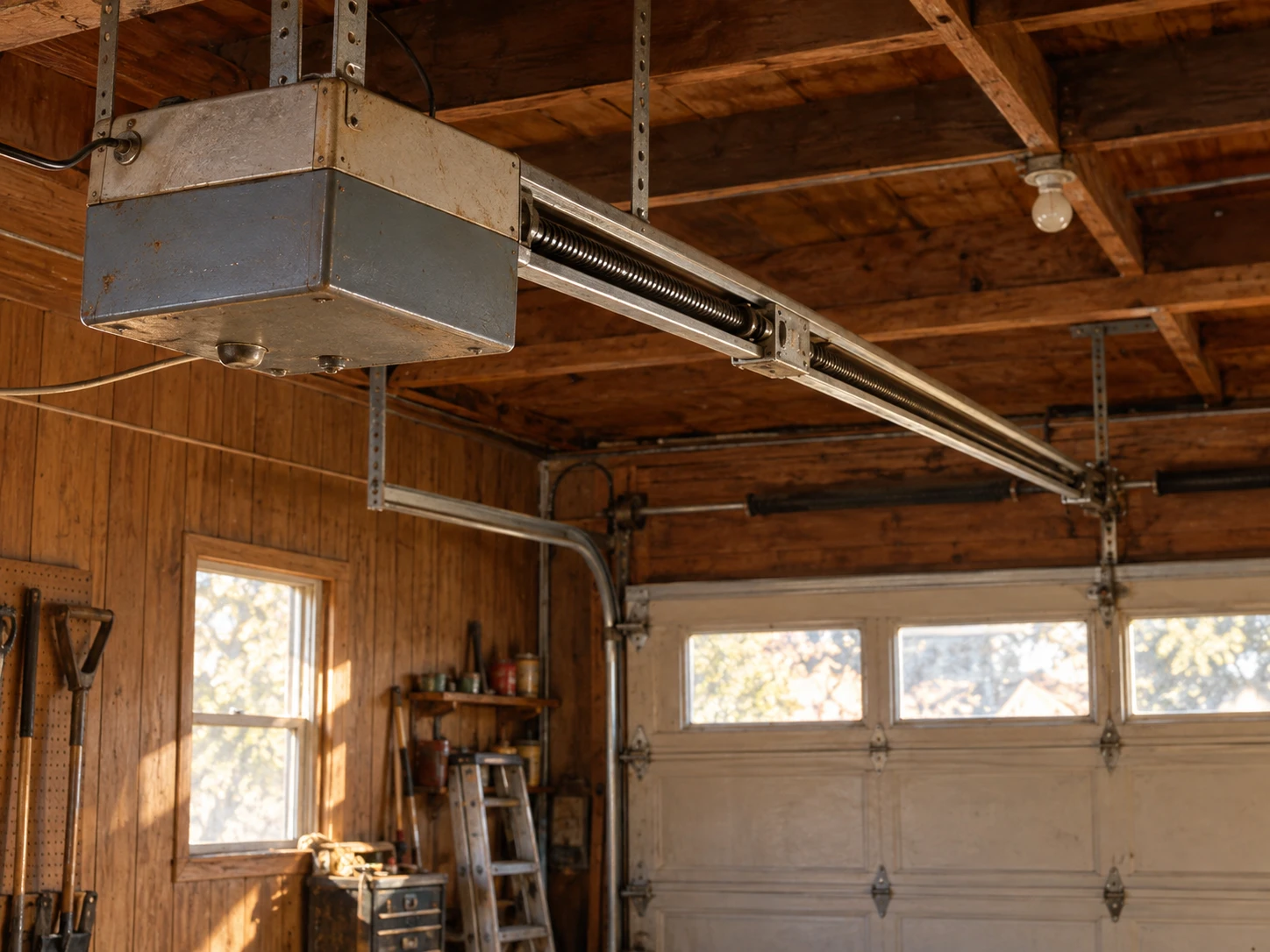
If you found a Genie Automatic Garage Door Opener Model 450 hanging in your garage, you’re looking at a piece of history. The Model 450 is a 1970s-era AC screw-drive opener, and if it still runs, it has outlasted most of the openers built after it.
The catch is that it was built before modern safety rules. It has no photo-eye sensors, Genie no longer makes parts or remotes for it, and a few common failures can still be fixed cheaply. This guide shows you how to identify it, fix what’s fixable, and decide when it’s time to retire it.
Short Answer: The Genie Model 450 is a 1970s AC screw-drive garage door opener. It predates the 1993 federal rule requiring safety sensors, so it has no photo eyes. Simple problems like a dry screw, a worn carriage or a bad limit switch can still be fixed, but Genie no longer supports the model. For most homes, a modern opener is the safer, better buy.
This post contains affiliate links. If you buy through our links, we may earn a small commission at no extra cost to you.
What Is the Genie Model 450?
The Model 450 is one of Genie’s early screw-drive openers. Genie itself shared a photo of one on social media and described it as a screw-drive unit from the 1970s. Back then Genie openers were built by Alliance Manufacturing, which is why some owners find “Alliance” on the label.
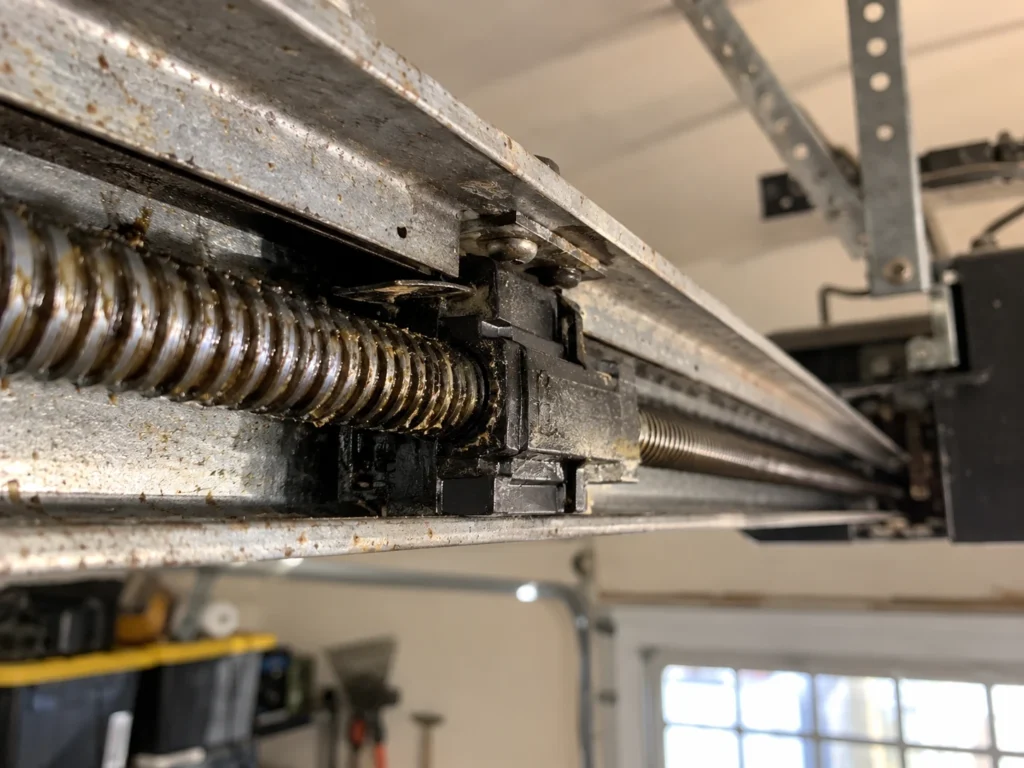
A screw drive works differently from the chain and belt openers sold today. A long threaded steel rod runs the length of the rail. When the motor spins it, a plastic carriage (also called the trolley) rides along the threads and pulls the door open or pushes it closed. There’s no chain to tighten and no belt to stretch.
Don’t confuse it with the Genie PCG450. That’s a much later AC chain-drive model from the ChainGlide family, and it uses completely different parts. Check the label on the motor unit before you order anything.
| Feature | Genie Model 450 | Genie PCG450 |
|---|---|---|
| Era | 1970s | Late 1990s to 2000s |
| Drive type | Screw drive (threaded rod) | Chain drive |
| Safety photo eyes | None | Yes (Safe-T-Beam) |
| Remote type | Old fixed-code or DIP-switch | Intellicode rolling code |
| Genie parts support | Discontinued | Many parts obsolete |
The Safety Problem You Can’t Fix
Federal law has required garage door openers built since January 1, 1993 to include a secondary safety system, usually the photo-eye sensors near the floor. This comes from UL 325, the safety standard for door operators. A 1970s Model 450 was built long before that rule, so it has no sensors at all.
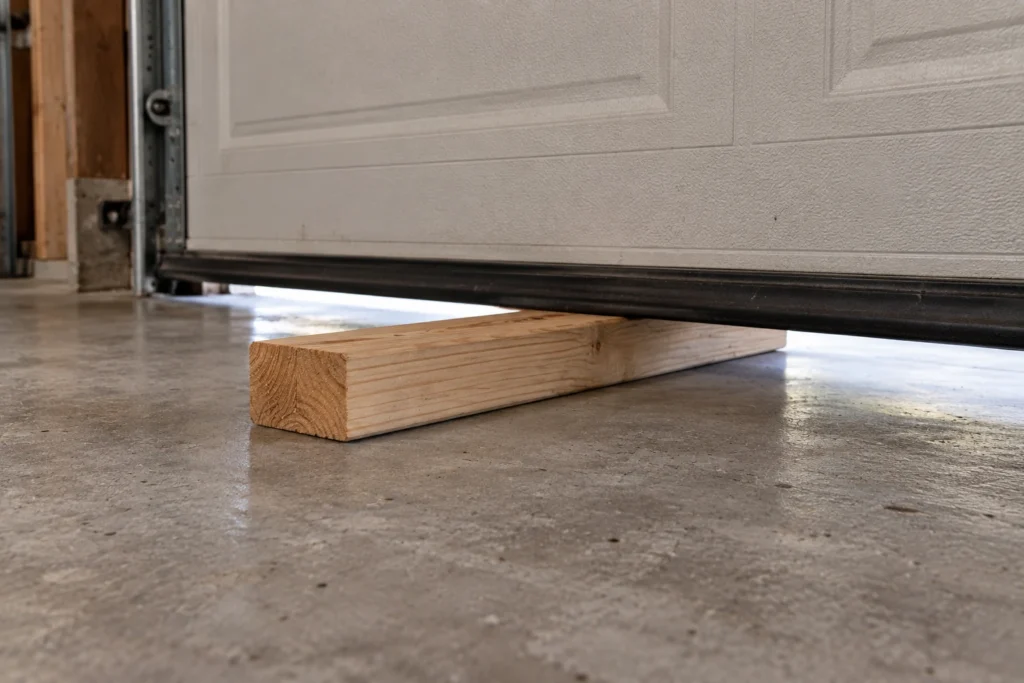
That means the opener only stops if the door physically presses against something. On a 50-year-old unit, that reversing force can drift or fail completely. Children and pets are the real risk here, since they move into the door path quickly and quietly.
Test it now. Lay a 2×4 flat on the floor under the center of the door and close it. The door should touch the board and reverse right away. If it pushes down on the board, stalls or stops without reversing, stop using the opener until it’s replaced.
Even when an old unit passes, the industry position is clear. LiftMaster publicly recommends replacing, rather than repairing, any opener built before 1993, because those units lack sensors and don’t meet today’s safety standard.
Common Problems and How to Fix Them
Most failures on a Model 450 are mechanical, not electronic. In our experience helping homeowners with old screw drives, the carriage and the grease on the screw cause far more trouble than the motor does.
| Symptom | Probable Cause | DIY Suitability | Cost Range | Time |
|---|---|---|---|---|
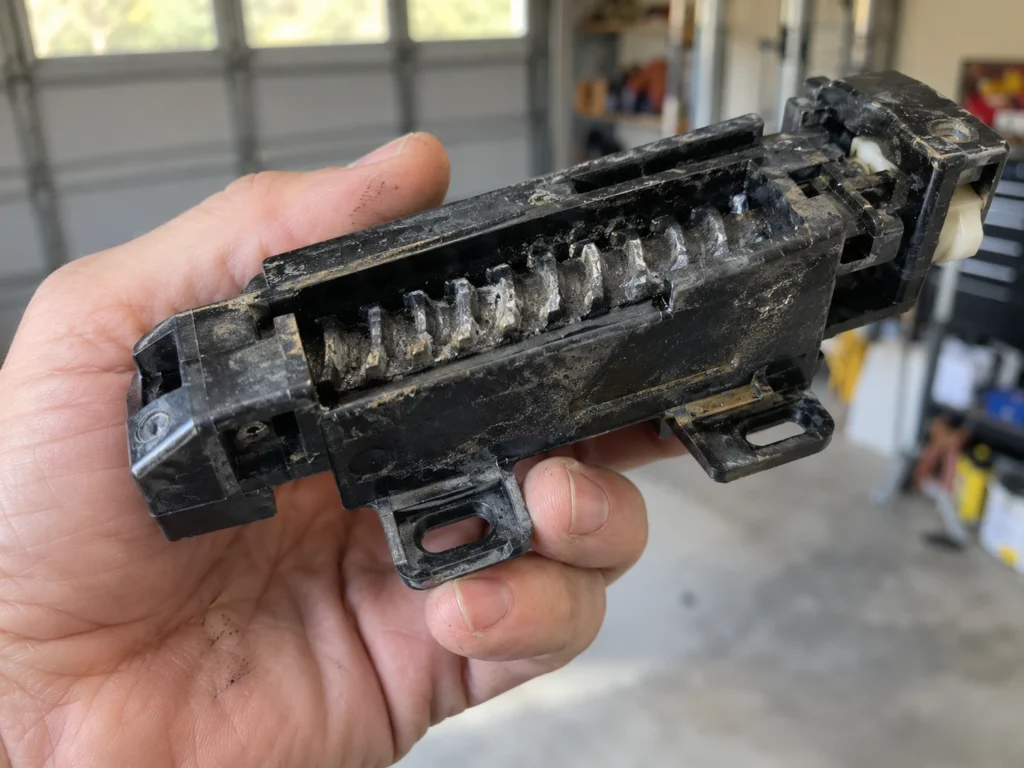
| Motor runs, door doesn’t move | Stripped carriage teeth or broken drive coupler | Safe for DIY | $25 to $45 | 1 to 2 hours |
| Grinding or squealing noise | Dry or dirty screw | Safe for DIY | $10 to $15 | 30 minutes |
| Door won’t stop at the top or bottom | Worn or misadjusted limit switch | DIY with care | $10 to $30 | 1 hour |
| Motor hums but won’t turn | Failed start capacitor or worn motor | Professional recommended | $20 to $150 | 1 hour |
| Remote doesn’t work | Dead remote or failed receiver | Safe for DIY (battery only) | $5 for a battery; no new remotes made | 5 minutes |
Motor Runs but the Door Doesn’t Move
This is the classic screw-drive failure. Pull the emergency release cord and run the opener. If the screw spins but the carriage sits still, its plastic teeth have worn smooth. If the screw doesn’t spin at all while the motor runs, the coupler that joins the motor to the screw has broken.
Both parts wear out by design. They’re cheap, soft pieces meant to fail before the motor does.
The Door Won’t Stop
Screw-drive Genies stop the door using limit switches on the rail. The moving carriage trips them at the top and bottom of travel. If the door keeps running or slams into the floor, unplug the opener and check that each switch is still firmly mounted and that its wires are intact. A loose switch can slide out of position after years of vibration.
Lubricating the Screw
A screw drive lives or dies by its grease. Old grease turns hard and collects grit, and that’s what makes these units grind and strain. Clean it off once a year and the carriage will last much longer.
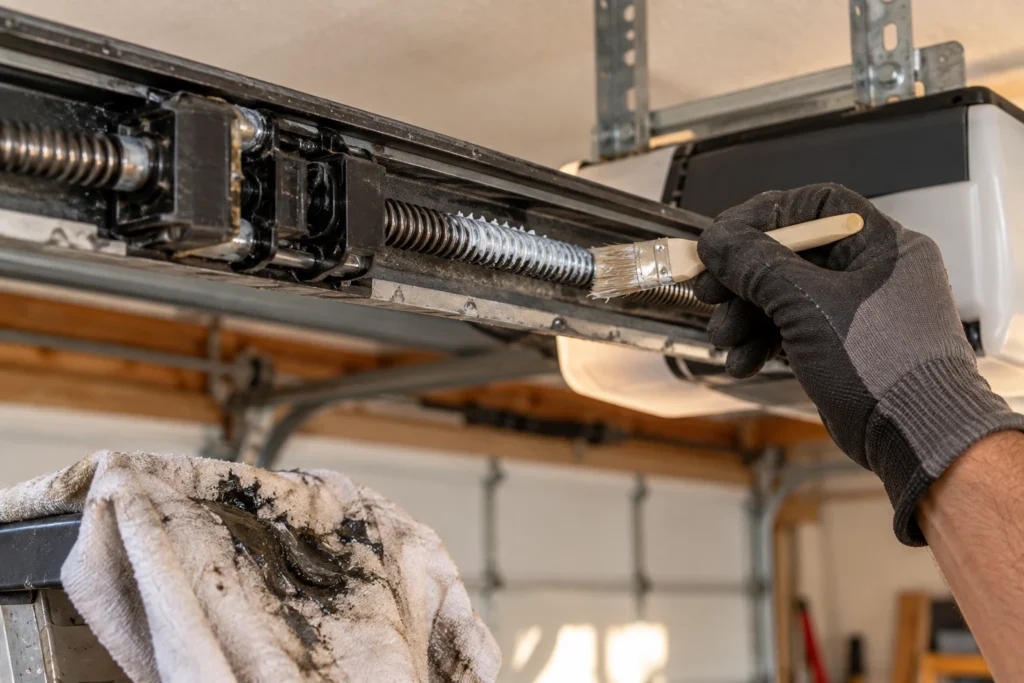
- Close the door and unplug the opener.
- Wipe the old, dirty grease off the full length of the screw with a rag.
- Apply a thin, even coat of white lithium grease or a screw-drive lubricant along the threads.
- Plug the opener back in and run the door up and down two or three times to spread it.
Skip WD-40 on the screw. It’s a cleaner, not a lasting lubricant, and it washes the grease away.
Parts You Can Still Find
Genie no longer supports the Model 450 directly, so you won’t find it in Genie’s official parts catalog. Several parts sellers still list screw-drive carriages as fitting older Genie screw-drive models, including the 450.
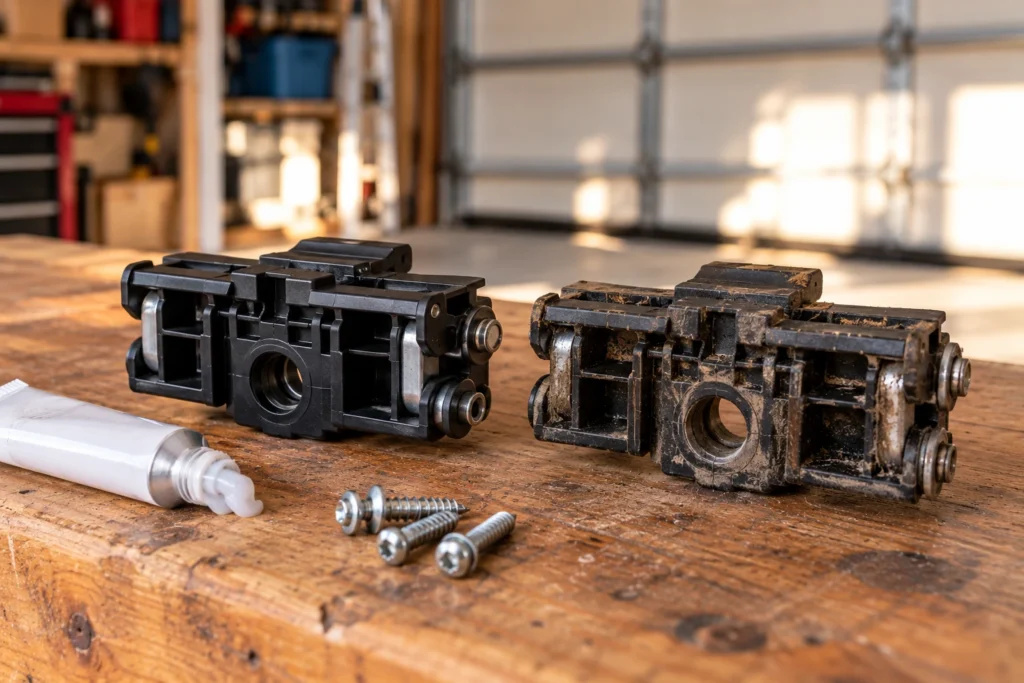
The current genuine carriage is the Genie 36179R.S screw-drive carriage, which replaces several older Genie carriage numbers. Before you buy, take your old carriage off and compare its size, tooth pattern and mounting with the photos of the new one. Rail designs changed over the decades, and a 1970s rail may not match.
Motors, control boards and the original receivers are another story. If one of those fails, there’s usually no practical replacement left.
Remote Control Options
The original Model 450 remotes are long out of production, and Genie’s current remotes won’t talk to the old receiver. Owners who ask Genie directly are told there is no replacement remote for the 450.
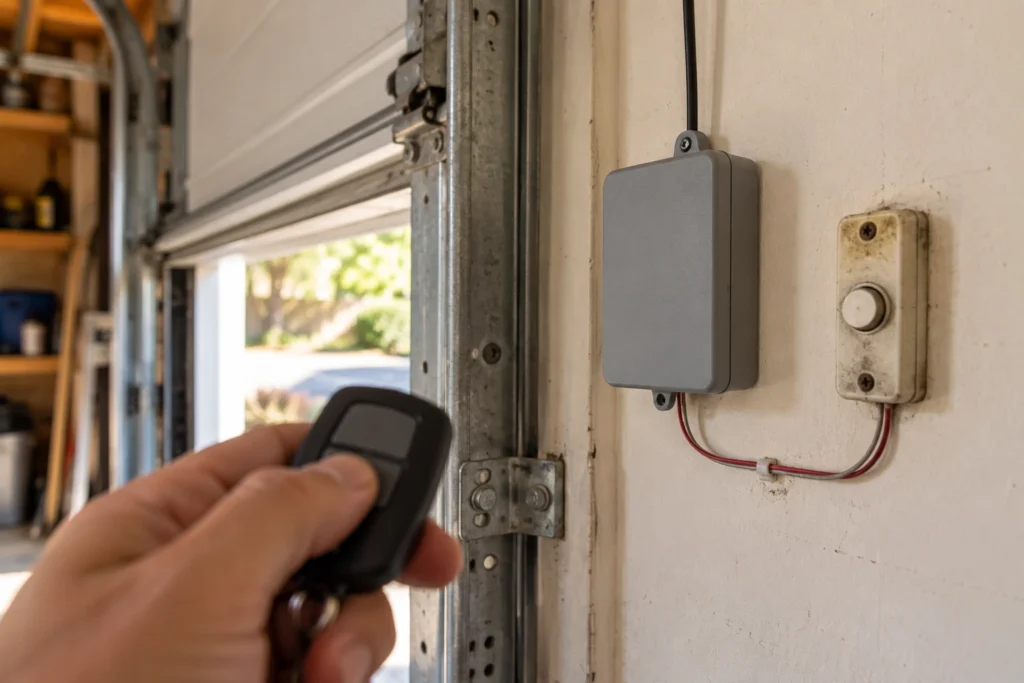
- Find a used original remote. Old Genie remotes still turn up on eBay, but you need the exact frequency and code type your receiver uses.
- Replace the opener. A new opener comes with rolling-code remotes, a keypad option and the safety sensors the 450 lacks. For most owners this is the real fix.
- Use the wall button only. It costs nothing and works fine if you rarely drive in and out.
You’ll see advice online to wire a universal receiver kit to the wall-button terminals. Be careful here. Genie’s own universal receiver kit states it only works with openers that have safety beams installed, and it specifically excludes older sensorless Genie models like the 404 and 420. That’s not a technical limit, it’s a safety one. Adding remote control to an opener with no photo eyes lets the door close while nobody is watching the opening, which is exactly the hazard the 1993 rule was written to stop.
\n\n\n\nOld fixed-code remotes also send the same signal every time, which makes them easy to copy. A modern opener uses rolling codes that change with every press.
Should You Repair or Replace the Model 450?
Repair makes sense when the fix is a carriage, coupler, grease or limit switch, and the door passes the 2×4 reverse test. Those jobs cost under $50 and take an afternoon.
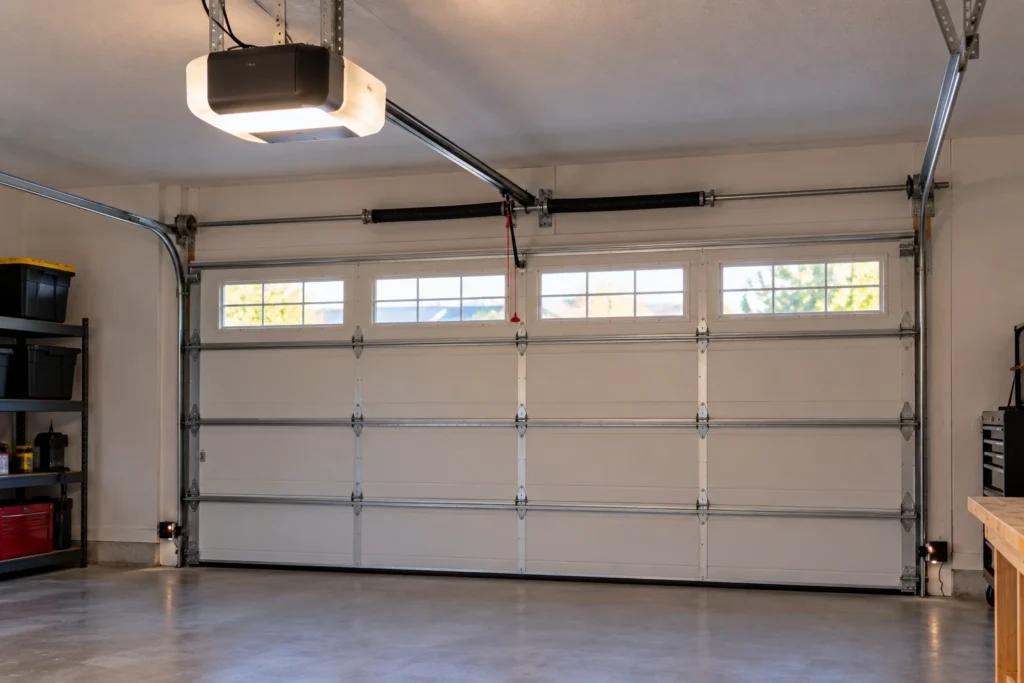
Replacement makes sense in every other case. A professional service call on an opener this old typically runs $100 to $200 before parts. A new opener costs $200 to $400 for the unit, or $350 to $600 installed, and brings photo-eye sensors, rolling-code remotes and usually smartphone control.
If you like the toughness of a screw drive, Genie still sells them, and our best screw drive garage door opener guide compares the current options. For a quieter upgrade, the Genie StealthDrive Connect 7155-TKV belt drive is the pick most owners of old Genies move to. On a tighter budget, the Genie ChainMax 1000 is a solid chain-drive option. See our best Genie garage door opener guide for the full lineup.
A new opener needs a standard grounded outlet near the motor unit. If you’re unsure about yours, read whether a garage door opener needs a dedicated circuit before installing.
Frequently Asked Questions
Is the Genie Model 450 still made?
No. The Model 450 is a 1970s screw-drive opener and Genie stopped making it decades ago. Genie no longer sells parts or remotes for it. Some aftermarket screw-drive parts, mainly carriages, are still listed as compatible, but motors, circuit boards and original receivers are essentially unavailable.
Is the Genie Model 450 a chain drive or a screw drive?
The Model 450 is a screw drive. A threaded steel rod inside the rail moves a plastic carriage that pulls the door. It’s often confused with the Genie PCG450, a later chain-drive model from the ChainGlide family. Check the model label on the motor unit to know which one you have.
Does the Genie Model 450 have safety sensors?
No. Photo-eye safety sensors became federally required on openers built from January 1, 1993. The Model 450 predates that rule by about two decades. It relies only on reversing when the door presses against an object, and that function can weaken with age. Test it with a 2×4 under the door.
Can I add safety sensors to an old Genie Model 450?
Not directly. The Model 450’s control system was never designed to read photo-eye sensors, so there’s nothing to plug them into. Genie’s Safe-T-Beam sensors only work with openers built from 1993 onward. If you want sensor protection, the practical route is replacing the opener.
What remote works with a Genie Model 450?
Genie’s current remotes don’t work with it, and Genie has told owners there is no replacement. Your options are a used original remote that matches your receiver’s frequency and code, using the wall button only, or replacing the opener. Universal receiver kits from the major brands are made for openers with safety sensors, so they aren’t a safe add-on for a 450.
How long does a Genie screw-drive opener last?
Screw drives are known for long service lives, and many Model 450 units are still running after 40 or more years. The motor usually outlasts the plastic carriage and coupler, which wear out first. Yearly cleaning and greasing of the screw is the biggest single factor in how long one lasts.
Related Guides
For other Genie opener guides, see Genie Garage Door Won’t Close Unless You Hold the Button, Genie Garage Door Limit Switch Problems, Genie Garage Door Opener Humming Sound, Genie Garage Door Opener No Learn Button, Genie Cryptar II Garage Door Opener, Genie Garage Door Opener Beeping, Does Genie Garage Door Opener Work With LiftMaster? and Genie Garage Door Opener Amp Draw.
For the official safety background, see the CPSC safety notice on non-reversing garage door openers. For current Genie products and support, visit The Genie Company’s support page.